

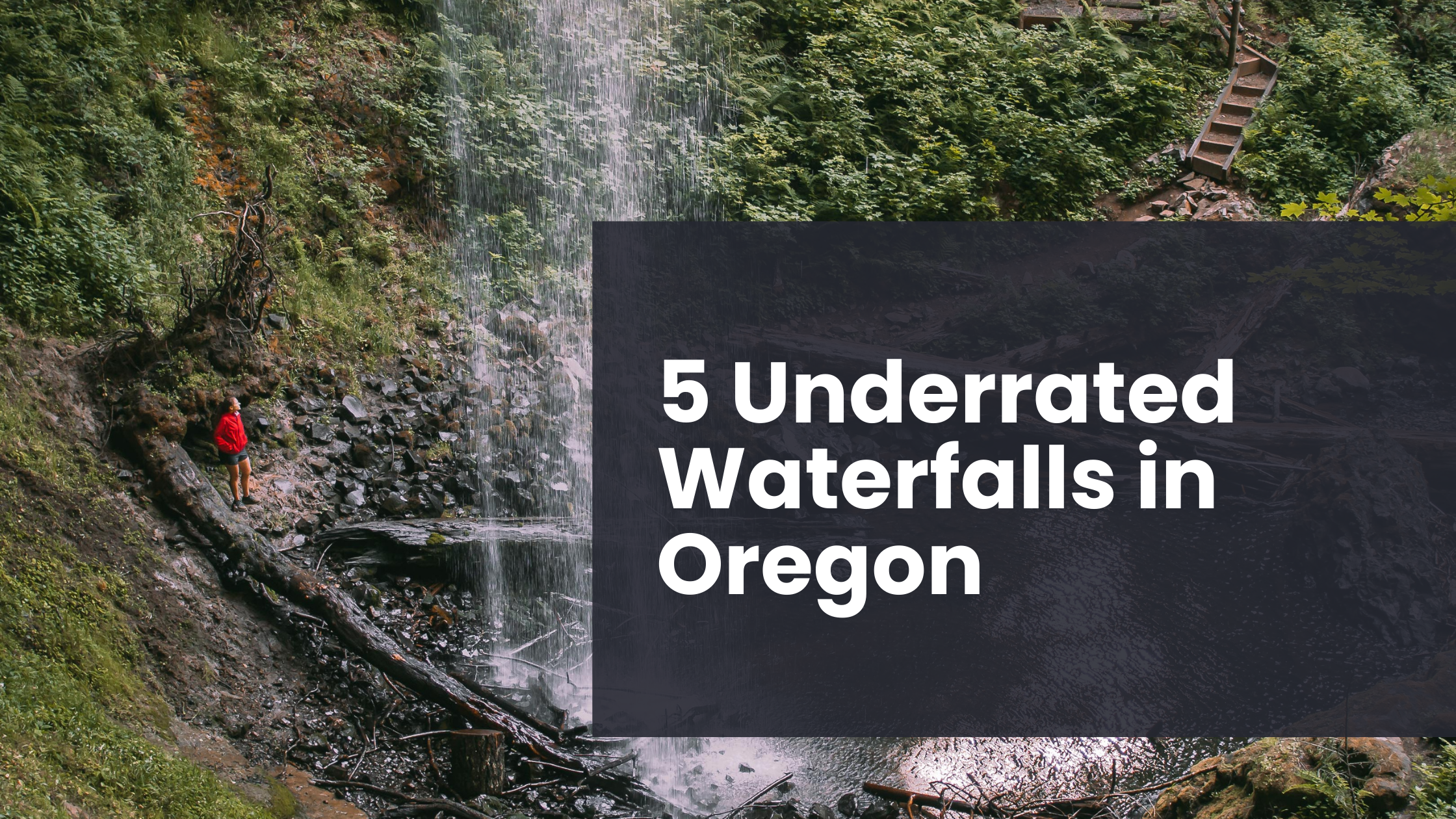
5 of the most underrated waterfalls in Oregon
Although Multnomah may be the most popular waterfall in Oregon, the state is home to at least 237 others! Here’s a list of 5 of the most underrated waterfalls, deep within the verdant forests of this mystical place. It’s time to break out the hiking shoes for these incredible adventures!
Please note: All information below is updated as of May 2023
Growing up just outside of Buffalo, New York, I had the luxury of being able to visit Niagara Falls whenever I wanted. Needless to say, with one of the seven natural wonders of the world in my backyard as a child, my standard for waterfalls may be a bit unfair - or so I thought!
Although Multnomah Falls may be the most well known and photographed waterfall in all of Oregon, the beaver state is home to over 230 others. It’s hard to find a hike in Central Oregon that doesn’t lead to a magical view of these natural wonders.
With a plethora of hidden gems all around, here are my top 5 most underrated waterfalls found in Oregon, USA. It’s time to break out the hiking shoes!
1. SHELLBURG FALLS
Located in the Santiam Foothills near Mehama, Oregon, Shellburg Falls is a 100ft tall cascading waterfall that flows over a stunning basalt ledge.
The hike starts by following a gravel road before entering the old-growth forest. Note: this road is private property and crosses through an open cattle range. Once you’ve reached a small bridge that crosses above Shellburg Creek, there will be stairs on the left that mark the beginning of the trail to the waterfall.
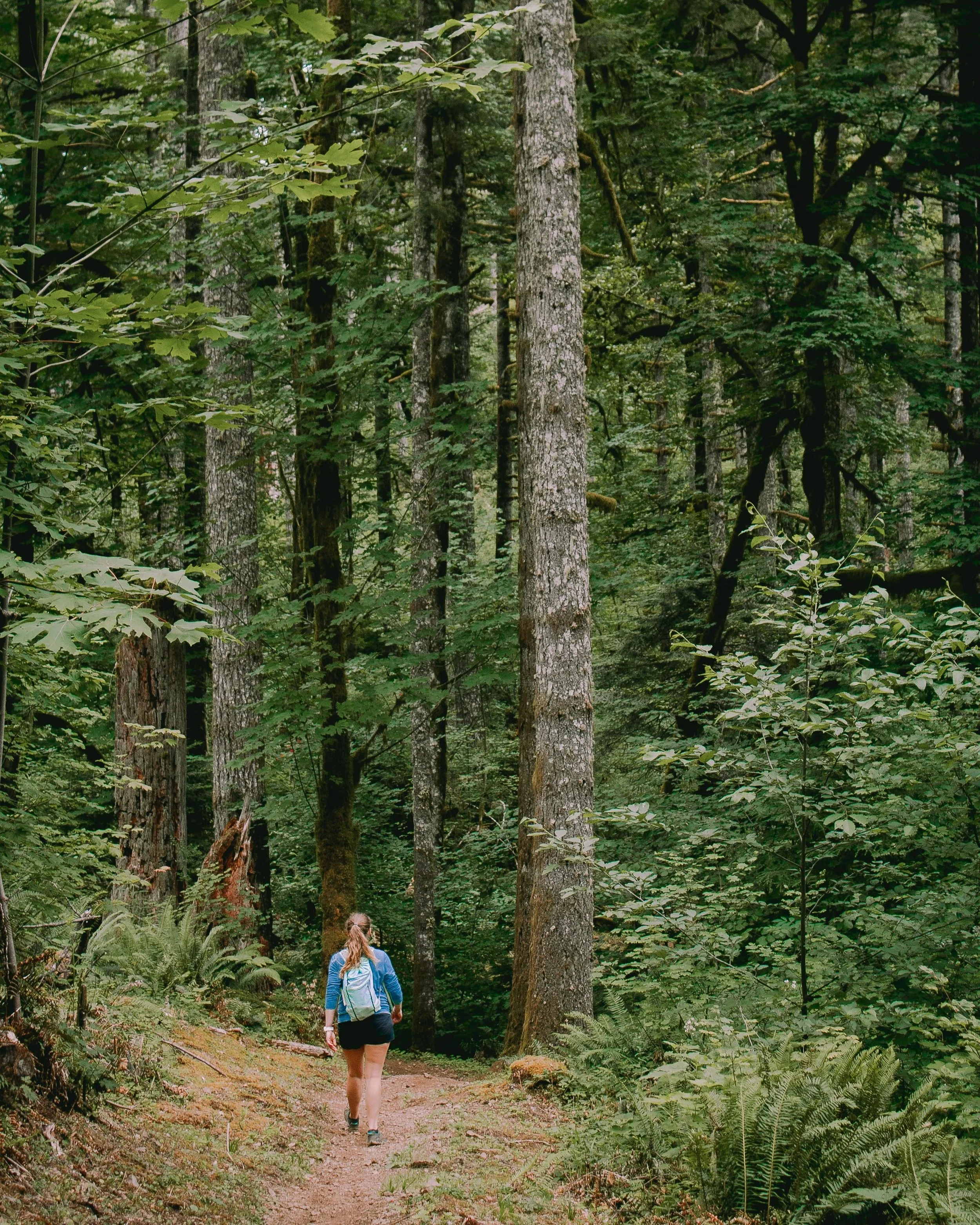
The path leads directly to Shellburg Falls and even takes hikers beneath the ledge and behind the flowing water, offering a unique perspective. Continue trekking through the forest and wildflowers before rejoining the gravel road at the other end of the loop. Pro Tip: Go early. This hike is easily accessible and good for all ages, making it heavily trafficked.
Hiking Distance: 6.0mi loop trail
Elevation Gain: 1,036 feet
Rating: Easy to moderate
Fee: None
Bathrooms: Vault toilets are located at the Shellburg campground, approximately 0.6mi past the waterfall


2. OPAL CREEK WILDERNESS (SAWMILL FALLS)
This trail is currently listed as CLOSED.
The Opal Creek Wilderness trail is a 6.9mi loop near Lyons, Oregon. Surrounded by stunning cedar trees, the hike flanks the Little North Santiam River as it winds its way through an abandoned mining operation from over a century ago.
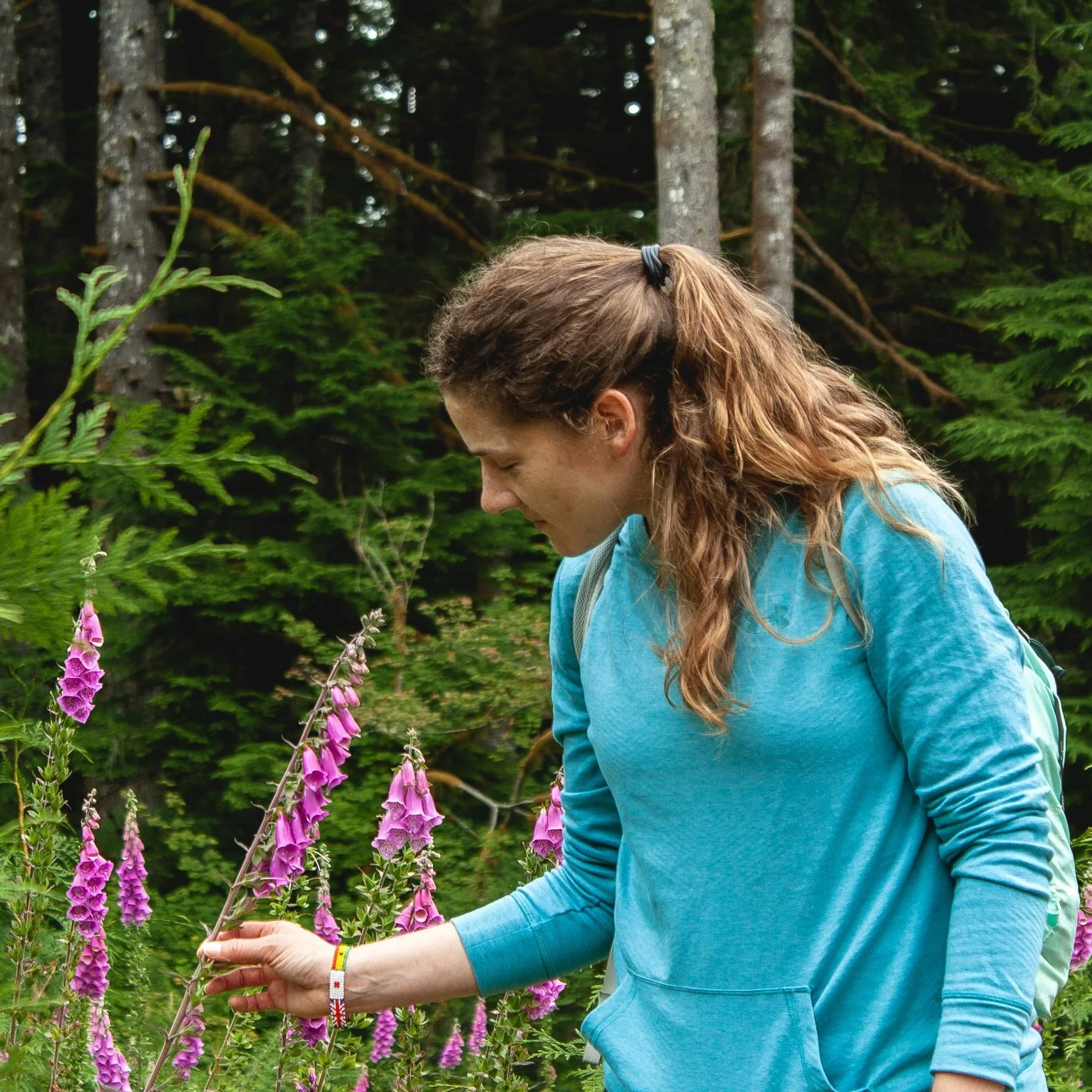
The real gem of this trail is the numerous cut-offs to various waterfalls and swimming holes along the way, the most beautiful of which is Sawmill Falls. Make sure to bring a swimsuit and take a dip in the beautiful blue water!
Hiking Distance: 4mi. out and back to Sawmill Falls, 6.9mi. loop through Jawbone Flats
Elevation Gain: 652 feet
Rating: Easy
Fee: $5.00
Bathrooms: Vault toilets located at trailhead parking lot and in Jawbone Flats

Sawmill Falls
3. ABIQUA FALLS
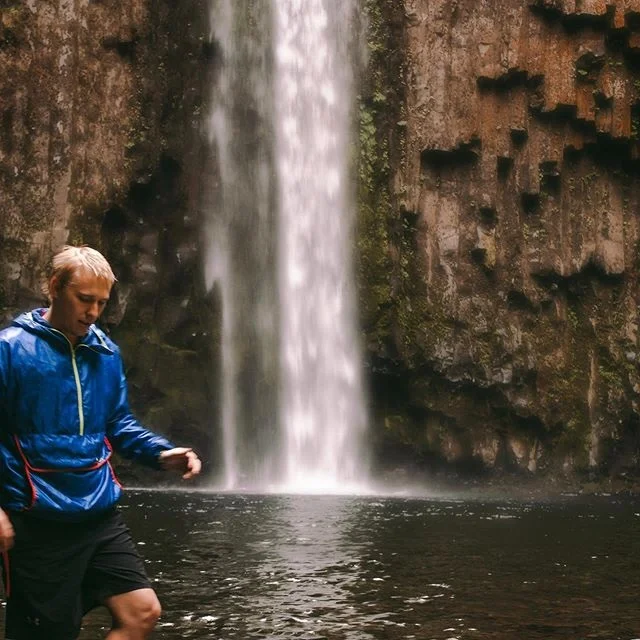
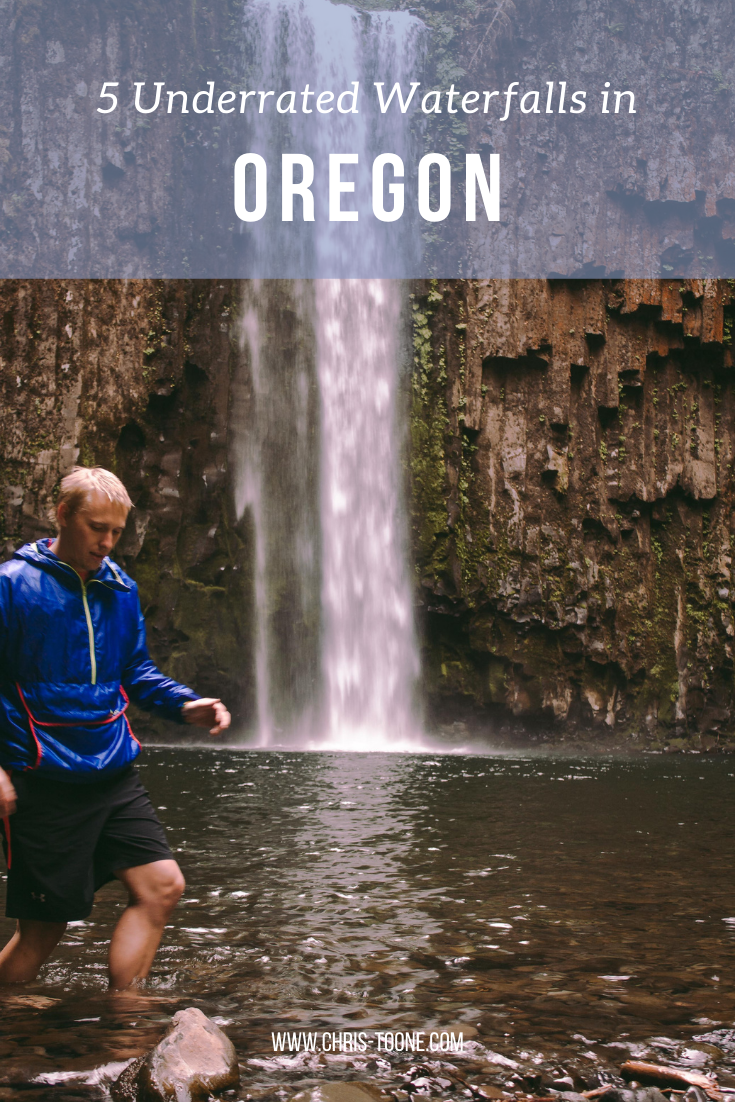
Abiqua Falls is an out and back 5.3mi trail located near Scotts Mills, Oregon that features a short hike through the forest and along a crystal clear river before reaching the 92ft. waterfall.
The trailhead can be found by following a single lane dirt road, with parking available in turnouts along the way. Continue following the road by foot as it descends deeper into the forest until reaching the trailhead. From here it’s a short 0.8mi. hike to the waterfall, but keep in mind the elevation gain becomes difficult on the way back out.
Keep telling yourself that it’s worth it because it is! If you’re daring like me, be sure to take a quick dip in the freezing, yet refreshing, pool below the falls. Note: The hike is on private property and can get steep at times. Exercise caution and be respectful.
Hiking Distance: 5.3mi. out and back (dependent on parking location), 0.8mi. to the waterfall from the trailhead
Elevation Gain: 1,397 feet
Rating: Hard (mostly due to the elevation gain on the way out)
Fee: None
Bathrooms: Not available



4. McDOWELL CREEK FALLS TRAIL (ROYAL TERRACE FALLS)
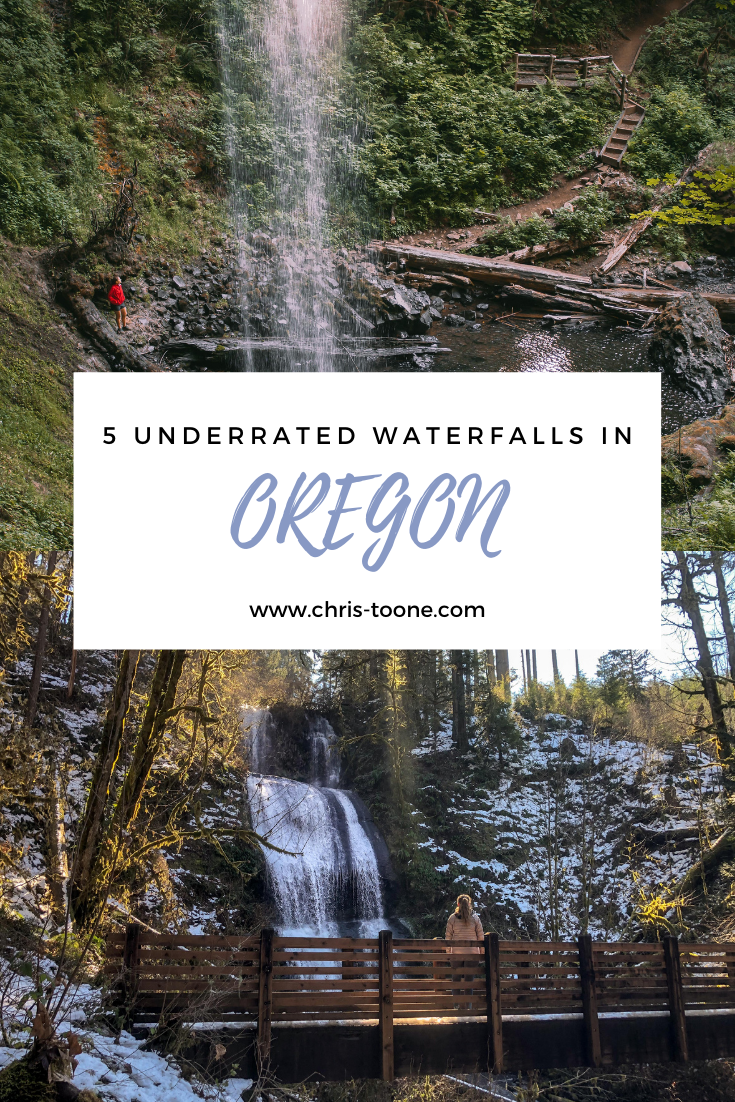
In search of a hidden wonder in Oregon? Look no further than McDowell Creek County Park, located 16mi. east of Lebanon. Here you’ll find McDowell Creek Falls Trail, a 1.8mi loop that leads to two beautiful waterfalls: Royal Terrace Falls and Majestic Falls.
Cascading a total of 119 feet between the two levels, Royal Terrace Falls was named from its unique terraced appearance, often found in royal palaces around the world. The trail itself winds its ways through the lush forest, taking hikers along bridges, stairs, and platforms, all providing the perfect views of the falls.
A great day trip for all ages!
Hiking Distance: 1.8mi. loop trail
Elevation Gain: 288 feet
Rating: Easy
Fee: None
Bathrooms: Not available


5. KOOSAH AND SAHALIE FALLS
Do you recognize any of the pictures below? Dig deep into the 90’s Disney movie vault… Sahalie Falls was featured in Homeward Bound! Still not ringing a bell? It’s ok - it’s still worth a visit!
The Waterfall Trail is a 2.6mi loop that runs adjacent to the McKenzie River as it winds past Koosah (70ft) and Sahalie (100ft) falls.
Along the way, accessory paths veer off and provide viewpoints of the area that many hikers fail to experience, so make sure to wander a bit! The main trail is marked, making it easy to stay on course. Pro Tip: Park at and start the hike from Koosah Falls instead of Sahalie. This lot is typically less congested.
Hiking Distance: 2.6mi. loop trail
Elevation Gain: 357 feet
Rating: Easy
Fee: None
Bathrooms: Vault toilets are available at Sahalie Falls parking lot


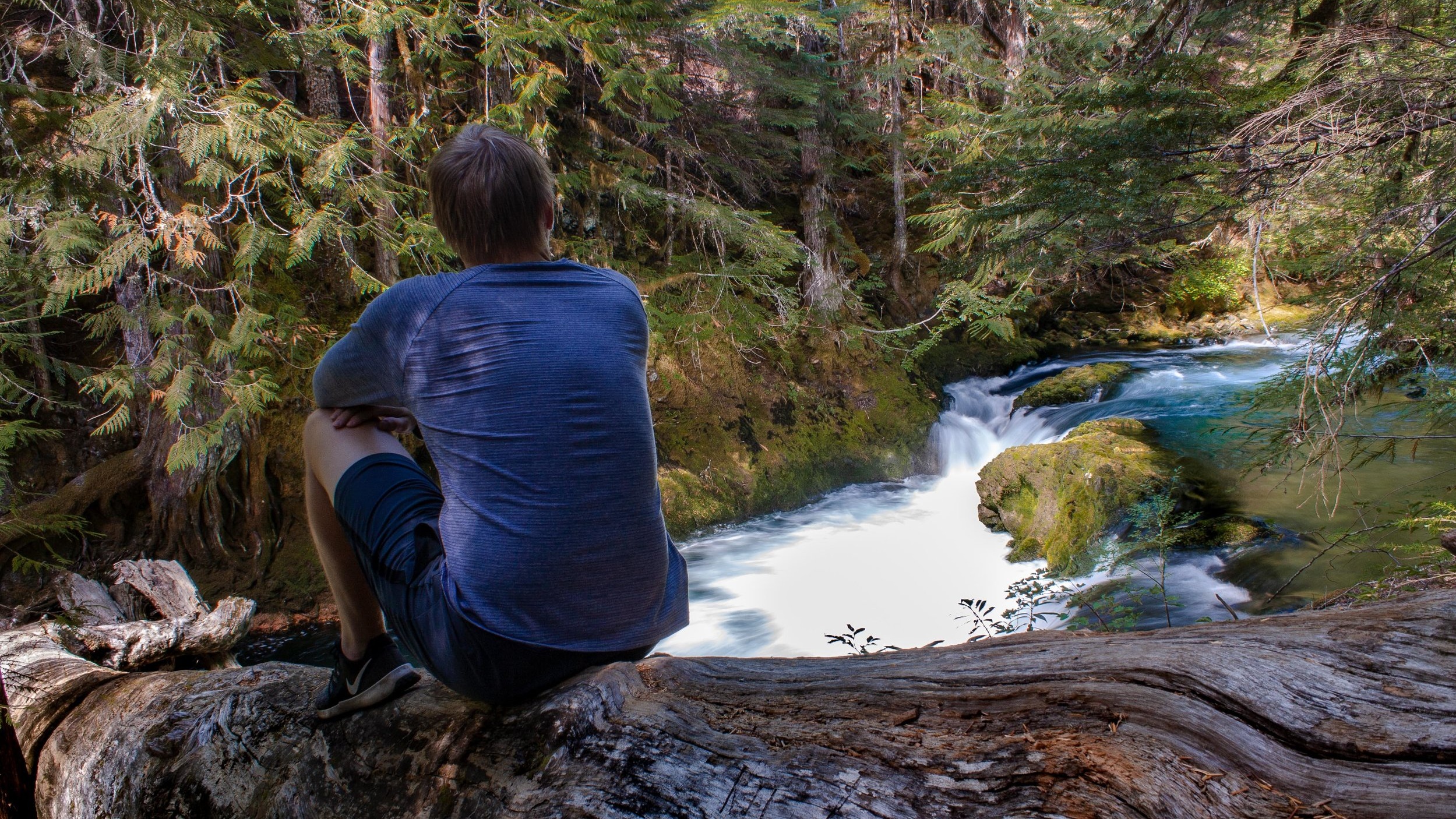
Ready to get out and explore yet? Wherever you are the world, make sure to leave time for a new adventure and, if you ever find yourself in Oregon, be sure to check out one of these hikes!
Thanks for reading and as always, stay safe & happy travels.
Enjoy what you read? Pin this post and share with others!




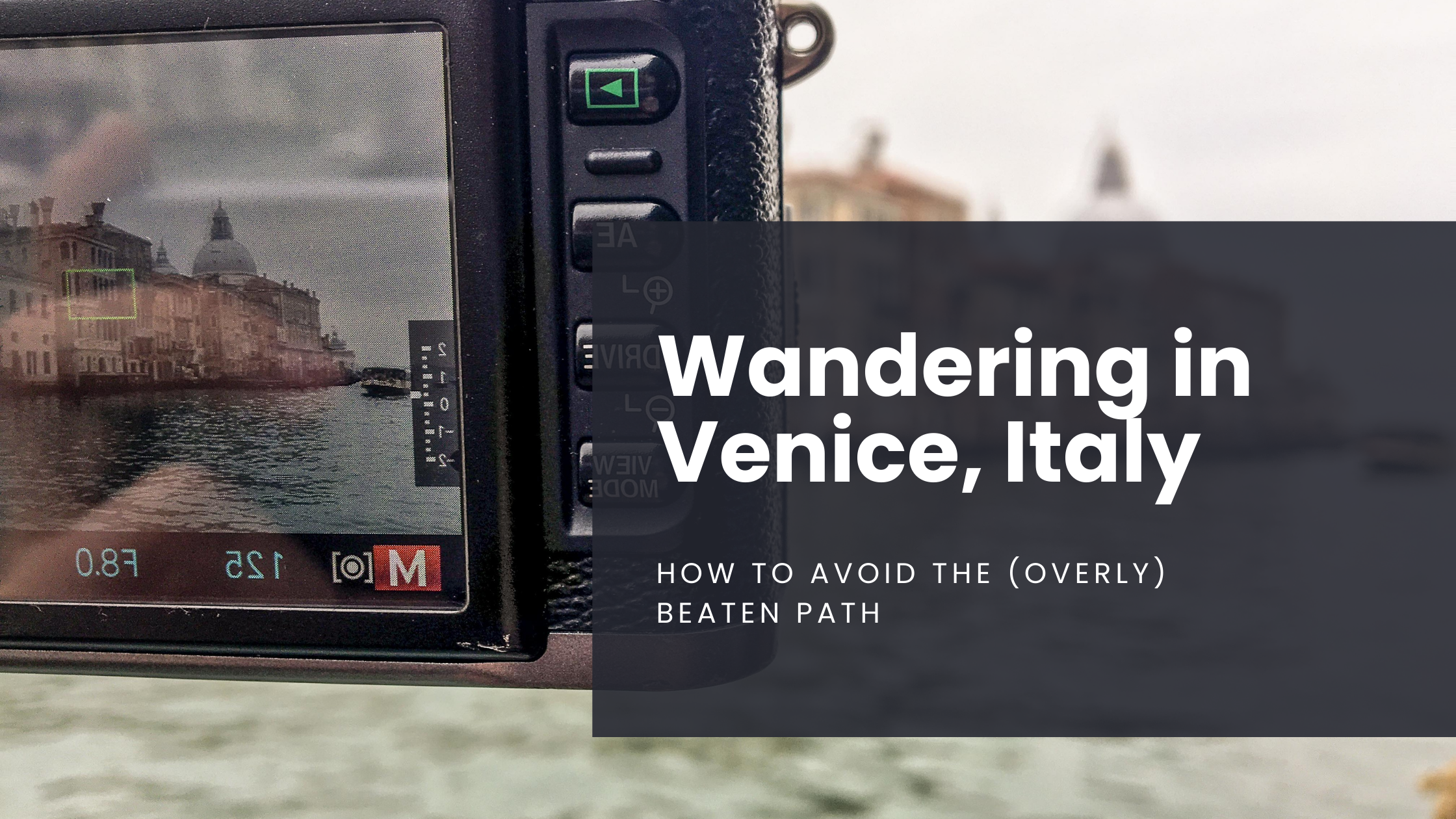
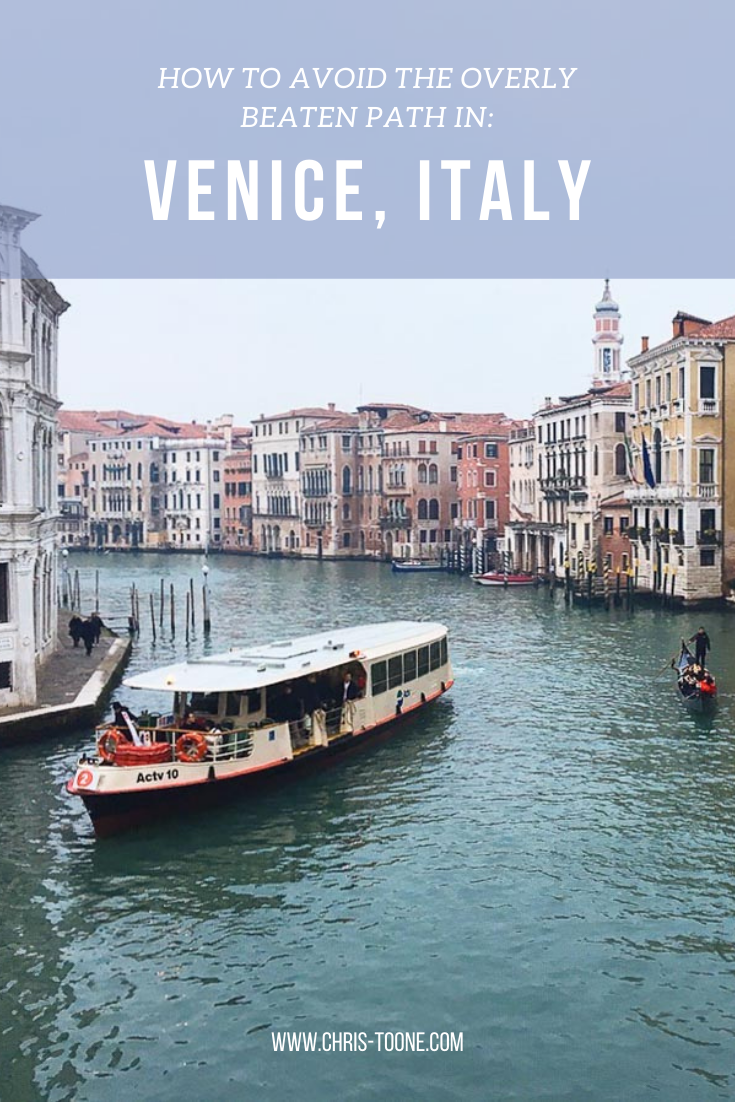
Wandering in Venice, Italy: How to avoid the (overly) beaten path
Stepping foot into Venice is like entering an alternate universe. A world where the mundane is replaced by endless wonders; where even the simplest of things, whether a door or a narrow street, are transformed into a romanticized version of their previous selves. With so much splendor to offer, it’s no wonder why more than 36 million tourists are flocking to the Venetian canals on an annual basis. We must do our part as mindful travelers to reduce our footprint and protect the integrity of the people. Here’s how to ethically plan your next trip!
Please note: All info below is accurate as of May 2023
Stepping foot into Venice is like entering an alternate universe. It's a world where the mundane turns into endless wonders, where even the simplest things, whether a door or a narrow street, are transformed into a romanticized version of their previous selves. With so much splendor, it's not hard to imagine why more than 36 million tourists flock to the Venetian canals annually. In fact, between April and October, nearly 32,000 cruise ship passengers disembark in the beautiful city per day.
There has been much debate over tourism in Venice in recent years and the local government is consistently exploring ways to minimize the burden that foreigners leave behind. Day-trippers will need to pay between 3 and 10 euros once the newest tax system is activated, and air travelers will need to pay a surcharge of 2.50 euros to depart the Venice Marco Polo Airport . In 2018, the city went as far as experimenting with turnstiles during a holiday weekend, restricting tourist access to more local parts of the city in an attempt to give residents a reprieve from the endless stream of international visitors.
Despite these efforts, the cruise ships keep docking and the tourists keep coming. Local Venetians continue to flee to mainland Italy at an alarming rate, often disgruntled at the feeling of living in an “open-air museum.”
These problems won’t be resolved anytime soon. While the local government continues their efforts, here are some helpful tips and tricks to get the full Venice experience without contributing to the demise of the place we all covet so much!
In this post we’ll discuss:

WHEN TO GO
Tourist season in Venice lasts from April to October. During this time, 13-story cruise ships cast looming shadows over St. Mark’s Square, a steady stream of selfie-taking foreigners disembarking from these modern marvels on a daily basis.
This is when overcrowding is at its worst. Sure, the weather is beautiful more days than not, but do you really want to be bumping into droves of sweaty human beings as you try to maneuver across the narrow bridges, elbowing people out of the way as you fight for even a glimpse of the Bridge of Sighs?
Instead, consider planning a visit during the shoulder season; either March or November. These months tend to be less crowded due to the cooler temperatures, with highs hovering around mid to upper 50s. It's a small price to pay to truly experience the magic of Venice without thousands of others around.
Pack a light jacket, bask in the sunshine as you wander along the water, and, if all else fails at keeping you cozy, don’t forget how cheap the wine is there! There are plenty of ways to enjoy your time in Venice without the 70 degree temperatures and high humidity of July.
My first visit was in March and the second one in February. Each time included sunny weather, lower prices, fewer crowds and, most importantly, no cruise ships. It wasn’t hard to find an empty piazza to enjoy a mid-morning Aperol spritz!
WHERE TO STAY
Venice’s historic city center, or centro storico, is divided into six main districts:
San Marco - 5 star hotels and tourists galore
Cannaregio - known as an old 16th century Jewish Ghetto
Castello - stretches eastward from the tourist center
Dorsoduro - the university district
San Polo - Rialto Markets and surrounding area
Santa Croce - close to the bus terminals
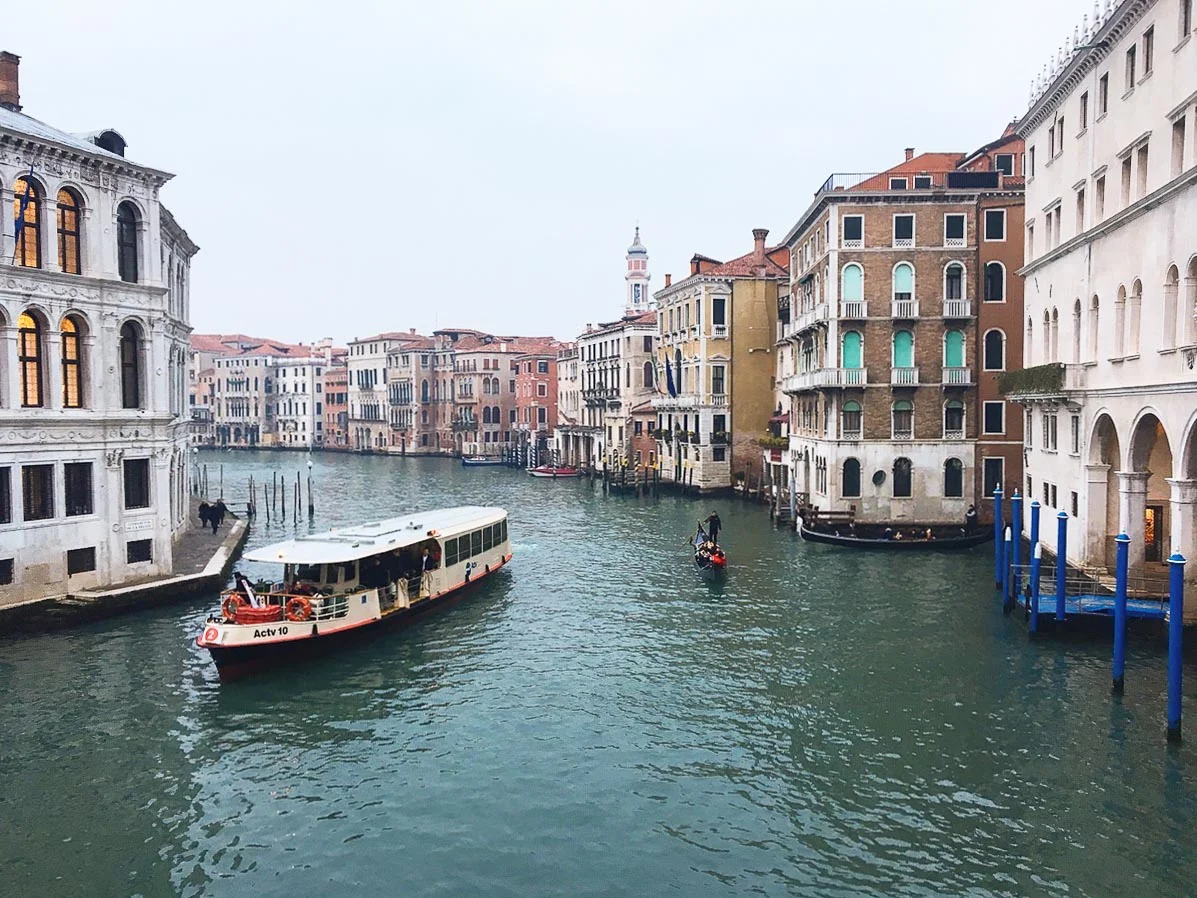
If looking to avoid crowds, I’d recommend searching for accommodation in Cannaregio. Not only does this neighborhood provide everything you need - easy access to the Vaporetto (water taxi), quiet streets and alleys to wander, shopping along the Strada Nova, and more - staying here also helps to disperse the effects of tourism beyond the saturated San Marco district, leaving a little more space for the locals in that area to breathe. Consider it a way to respectfully reduce your travel footprint.
Cannaregio is located on the northern end of the city, adjacent to Venice’s Santa Lucia train station and Piazzale Roma bus terminal. Both are just a short 10-15 minute walk away. Once in the neighborhood, you’ll find it simple to navigate your way to San Marco (this is where many of the “must-see” sights are located) via land or boat. Several of our days were spent lazily wandering the surrounding streets of the old Jewish Ghetto, admiring the architectural wonder that is Venice as a whole.
EXPLORING OFF THE BEATEN PATH
The fact of the matter is that Venice is experiencing an age of over-tourism, but going against the flow and looking beyond the “top 10 sights to see” is just one way in which we can combat the negative effects.
Think of it like this: If 1,000 people are running up and down an ancient staircase each day, those steps will likely require more routine maintenance whereas if this number were distributed across several other lesser-known, but equally magnificent staircases, the overall cost of maintenance would decrease, removing the financial burden from those that care for it.
Am I saying to avoid places like St. Mark’s Square altogether? No, not! I’m simply advocating that going beyond the crowds will lead to a better experience for you as a traveler as well as the local people. It doesn’t have to be one or the other.
Here are some helpful hints to uncover the hidden gems of Venice — it’s easier to get off the beaten path than you might think!
“Venice never quite seems real, rather an ornate film set suspended on the water.”
1. Avoid the lines of St. Mark’s Campanile and head to San Giorgio Maggiore instead
San Giorgio Maggiore is a small island located across the water from St. Mark’s Square and is easily accessible via Vaporetto or private water taxi. Wandering the grounds of the church is worth the trip in its own right, but the real thrill is riding the elevator to the top of the bell tower and taking in the sweeping views of Venice below. A truly unique way to see the city in all its glory.
Here’s everything you need to know to visit:
Opening Hours:
May - September: 8:30am - 6:00pm; Sundays: 2:00pm - 6:00pm
April - October: 9:00am - 7:00pm; Sundays: 2:00pm - 7:00pm
Getting There:
The island is accessed via Line 2 on the Vaporetto. Available throughout Venice, he most convenient place to catch the boat is from the San Marco-San Zaccaria stop which is located just east of St. Mark’s Square. A 3 minute ride later and you will be on the steps of the Church of San Giorgio.
Tickets:
A ticket to the top will cost 6 euros.

Looking towards San Marco from the San Giorgio bell tower
2. Attend a Venezia F.C. match at Stadio Pier Luigi Penzo
On the easternmost shore of Venice lies the Stadio Pier Luigi Penzo. Opened in 1913, it is the second oldest continually used soccer stadium in all of Italy and home to Venezia F.C. The club has a shaky history marred by multiple bankruptcies, but New York lawyer Joe Tacopina came to the rescue, purchasing the organization in 2015. The team now competes in the Italian Second Division (Serie B).
Italians are passionate about their soccer, many supporters even making the commute from nearby Mestre on the mainland to support their beloved Leoni Alati (Winged Lions). Widely unknown to the rest of the tourist trail, this makes for a culturally intimate and unique experience.
Where else will you be able to attend a professional soccer match where the players, fans, and staff all arrive via boat?
Getting There:
Walking from Cannaregio will take around 50 minutes, or you can take the Vaporetto to the Sant’Elena Stop. Lines 1, 4.1, 5.1, 6, and N all service this station.
Tickets:
Tickets can be purchased upon arrival to the stadium or in advance at Better.Marte souvenir store in Venice (Calle dei Albanesi 42/61). Be sure to bring your ID.
Prices typically range from 10 euros for a spot in the supporters section, also known as “Curva Sud”, to 30 euros for a midfield seat in the main stand. If you’re looking for the passionate experience that gets you in on the action, definitely look no further than Curva Sud.
Interested in learning more about Venezia F.C? Check out this post:
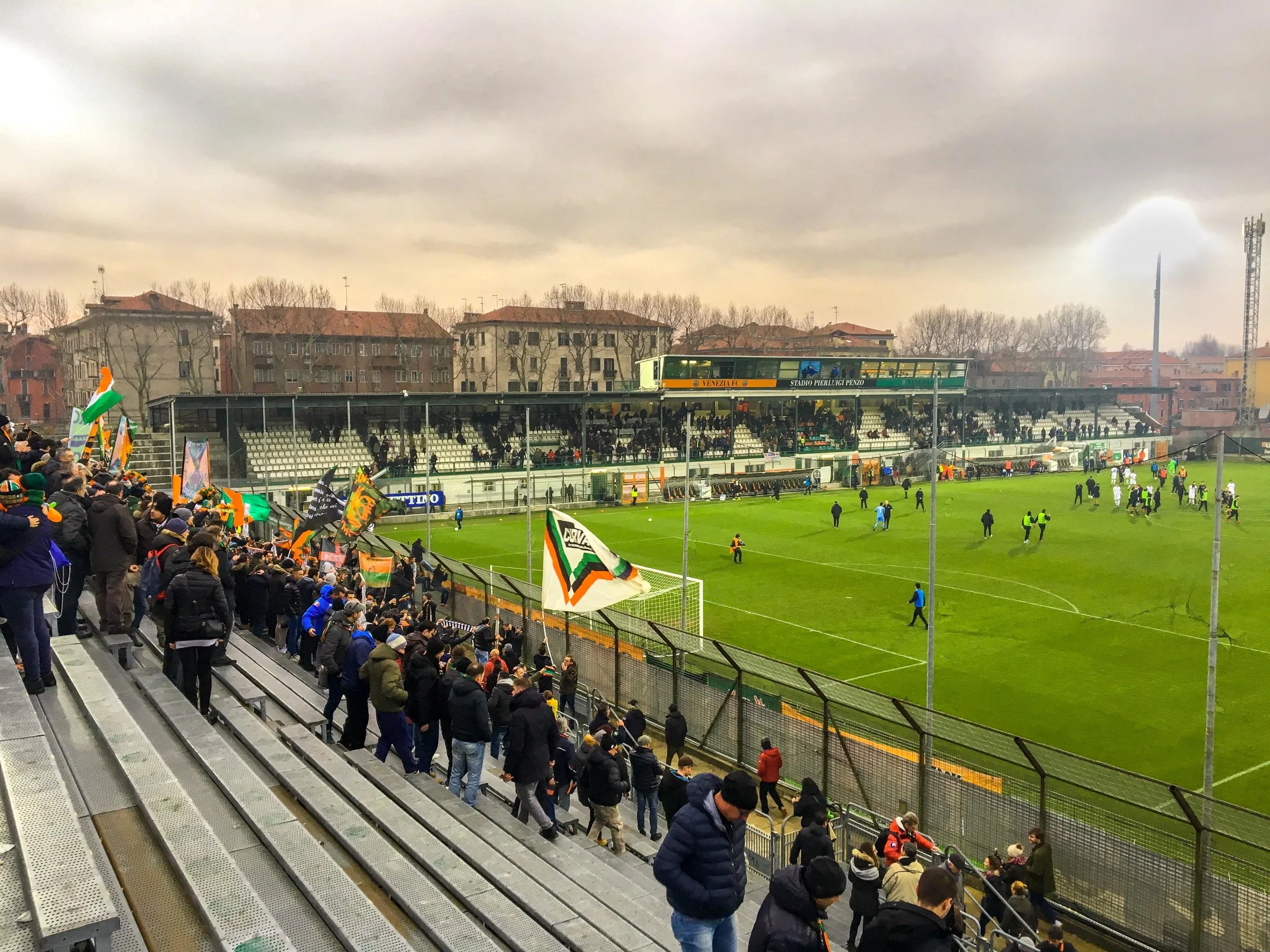
Venezia FC match at Stadio Pierluigi Penzo
3. Explore Venice from the water via Vaporetto
Made up of 150 canals, Venice begs to be explored from the water, but be mindful that overcrowding has created a negative effect here, too. As I mentioned above, it’s estimated that cruise ships inject nearly 32,000 tourists per day into the city during the high season. Even if only 50% of these visitors opted to explore the area via private taxi or gondola, that’s still a boatload (pun intended) of vessels traversing the waterways!
Considering that the Grand Canal sees 60% of Venice’s traffic yet is only 2.5 miles long and 350 feet across at its widest point, you can picture the congestion that ensues. The solution? Ride like a local.
A 24-hour ticket for the ACTV Vaporetto (water taxi) costs only 25 euros and gives the flexibility to hop on and off all around the city, including stops at the islands of Murano, Burano, and Torcello! It’s the perfect way to experience life as a Venetian while exploring at your own pace and reducing your travel footprint!
4. Visit St. Mark’s Square at Dawn
Heather and I casually strolled over to St. Mark’s Square during our first afternoon in Venice, gleefully following the winding paths as we went. Upon arrival, we were greeted by a mob of tourists playing with pigeons and taking selfies with St. Mark’s Basilica in the background. It was enough for us to keep on walking, straight through the square and to a different part of the city.
Luckily our good friend, Giorgio, had informed us about the San Giorgio Bell Tower, but we still wanted to experience St. Mark’s Square. After all, so many people must be drawn here for a reason.
The solution? Visit at dawn.
Our alarm clocks pierced the silence of the apartment at 5 a.m. as we aimlessly rolled out of bed. Forcing our eyes open, we waltzed down the stairs and out onto the empty streets of Cannaregio. By the time we reached St. Mark’s Square, we were fully awake and greeted by a beautiful sunrise. The best part? Aside from a local street sweeper, other savvy travelers, and a few locals passing through, we had the place to ourselves! No pushing, no shoving, no selfie sticks - just the two of us and the beautiful plaza illuminated by the sun’s first light.

San Marco at sunrise
6. Meander Through the Rialto Fish Market
Situated along the banks of the Grand Canal, the Mercato di Rialto is a 10-century old fish and vegetable market offering the chance to explore all that the surrounding waters have to offer. It’s the perfect place to grab a basket of fresh fruit for breakfast and sit along the canal, watching the fishmongers prepare and sell their catch of the day.
We made our way here after our exploring St. Mark’s Square at dawn. It was the perfect way to cap off a morning of watching Venice come alive!
Hours:
Fish Market: 7:30am - 1:00pm Tuesday through Saturday
Fruit & Vegetable Market: 7:30am - 1:00pm Monday through Saturday
Getting There:
From Cannaregio, walk across the Rialto bridge and continue to follow the Grand Canal (to your right). You won’t miss it.
Vaporetto Line 1 to Rialto Mercato
7. Witness the Making of Gondolas
Venice has approximately 400 gondolas in service, but how are they made? Look no further than the gondola repair shop located at the Squero di San Trovaso. In the oldest and most famous yard, visitors can catch a glimpse of what it takes to build these hand-crafted, romanticized vessels.
Technically speaking, the workshop isn’t open to the public but there’s no harm in respectfully looking on from a distance. If luck is on your side, a few gondolas will be out in the open as artisans tirelessly work to create their masterpieces.
Getting There:
The Squero di San Trovaso can be easily reached from the Zattere waterfront promenade, but I’d suggest simply heading towards the Dorsoduro district and stumbling upon it at your own pace. You never known what other hidden gems you might find!
8. Tour the Teatro la Fenice
Did you know that Venice is home to one of the most famous landmarks in all of Italian theatre? I didn’t either!
Originally opened in 1792, the opera house once held the likes of Napolean in its midst and continues to elegantly stand within the heart of Venice despite a history filled with devastating fires and destruction. Most recently, it was re-commissioned in 2003 following the 1996 arson.
Admittedly, I have not visited here yet, but it’s on the list for the next time I find myself wandering the canals of Venice.
Tours:
Self guided audio tours are available within normal operational hours and last approximately 45 minutes. Languages include English, French, Italian, Spanish, Portuguese, Russian, and German. Please note that you must bring a valid ID to obtain an audio device.
Tickets:
The book and gift shop in the lobby can be accessed without purchasing a ticket.
Full price tickets are 12.65 euros, however a discount applies to students up to the age of 26 and visitors over 65 (9.20 euros). Children up to 6 years old are free.
Address:
Campo San Fantin, 1965, 30124 Venice VE
Hours:
La Fenice is typically open daily from 9:30am until 6:00pm according to the official website.
9. Heighten your Senses in Burano
Heather and I decided to hop on the Vaporetto and head to the islands of Murano and Burano one afternoon, the latter being our favorite of the two.
As we stepped off the boat, we were immediately taken aback by the brightly colored homes that lined the canals of this sleepy fishing village. Legend says the vibrant hues served as a way for fishermen to navigate their way home through the dense fog of the lagoon.
Beyond the colorful homes, Burano is also known for its lacemaking tradition that dates back as far as 1500.
Before leaving town, be sure to take a stroll past the leaning bell tower and soak up all the tranquility you can before heading back to the hustle and bustle of Venice.
For a unique view of the Venice skyline, head to the southwest corner of the island and walk along the Fondamenta di Cao Moleca.
Getting There:
The only Vaporetto that services Burano is line 12. The ride lasts around 45 minutes, which gives you plenty of time to enjoy the cruise across the lagoon. Don’t miss catching a glimpse of Islo di San Michele, Venice’s cemetery island, as you pass by.
The most direct route departs Venice from Fonte Nova “A”.

Burano, Venice
10. Get “Lost” as You Wander Through the Streets
It’s often said that there is no such thing as a “wrong turn” in Venice, and I completely agree! It’s an explorer’s dream, enabling curious folk to wander without a plan. After all, Venice is a collection of islands, so you can’t get too lost!
My three favorite districts to discover on foot were Cannaregio, Dorsoduro, and Castello, each offering their own unique atmosphere. We spent countless hours happily walking with no destination in mind, excited to see what might lay around the corner ahead.
Bonus: Take in the Sights From a Distance
Similar to seeking out views from above, I’m a big fan of learning about a place by simply observing everyday life as it passes me by. Two of my favorite spots to sit and watch from are:
The Basilica di Santa Maria - Located at the entrance of the Grand Canal and across from St. Mark’s Square, this viewpoint is the perfect place to study the traffic along the waterway.
The Arsenale Vaporetto stop - Glance at a map of Venice and you will immediately notice the reverse s-shape curve of the Grand Canal. Stroll far enough east and eventually the curvature will yield a view looking back towards the heart of the city. This viewpoint was especially breathtaking at sunset.
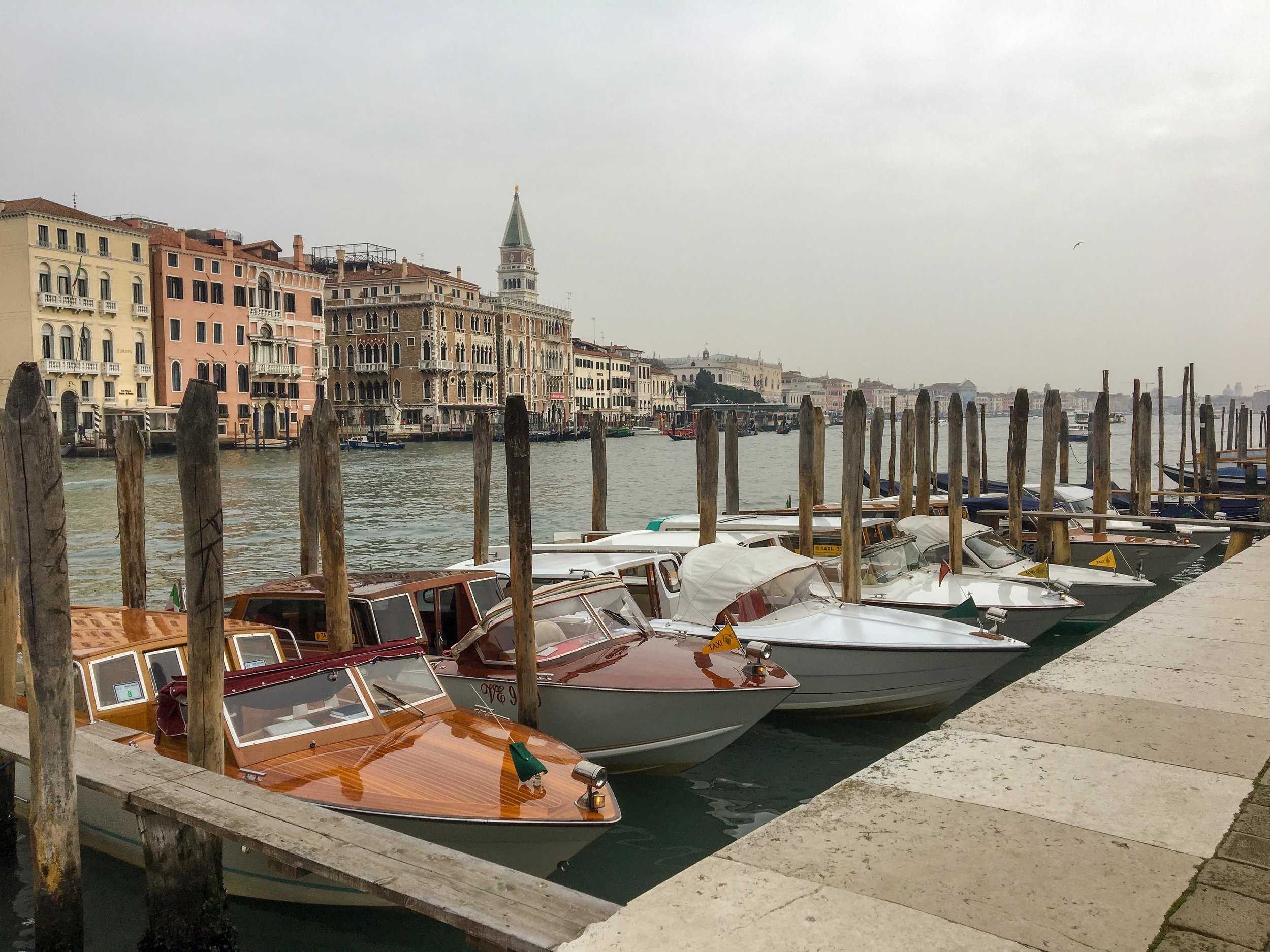
Looking from the steps of the Basilica di Santa Maria
Venice is a truly magical place; a wanderer’s paradise, if you will. It’s up to us, as respectful and mindful travelers to do our part in preserving the culture and integrity of this awe-inspiring place.
As Alexander Herzen once said, “To build a city where it is impossible to build a city is madness, but to build there one of the most elegant and grandest of cities is the madness of genius.”
Have you been to Venice before? Do you have any “off the beaten path” tips of your own? Be sure to comment below.
Thanks for reading and as always, stay safe & happy travels!
Find this post helpful? Pin and share with others!



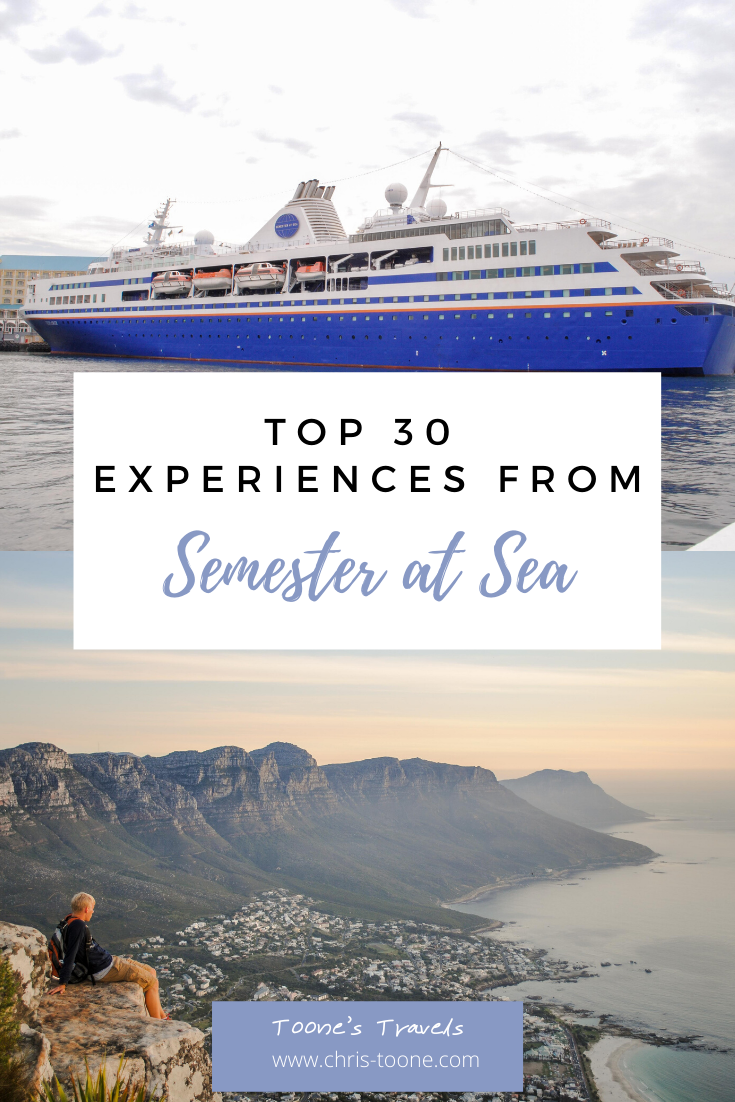
Top 30 Experiences from a Semester at Sea: Here's what a 110 day trip around the world is like
It has now been nine years since I stepped off of North American land, onto a ship, and straight into the unknown. To be honest, it still feels like yesterday and I think part of me is still processing the experience all these years later. I never imagined that an introvert such as myself would thrive in an environment like that, circumnavigating the globe for 110 days with complete strangers. As it turned out, it was truly the journey of a lifetime...

I’m not the most outgoing person in the world. If you find me in a social setting, I’ll be the person that happily sits there silently until spoken to. With that said, there are a few things that, if you get me going, I won’t be able to shut-up about: soccer, travel, and Semester at Sea.
Consider yourself warned!
This week marks nine years since embarking on my semester abroad.
Wait, what?
That’s right; NINE YEARS since I stepped off North American soil, onto a ship, and straight into the unknown.
To be honest, it still feels like yesterday. I think part of me is still processing the experience all these years later. I never imagined that an introvert such as myself would thrive in an environment full of strangers, all the while circumnavigating the globe.
As it turned out, it was truly the journey of a lifetime.
To celebrate the anniversary of the Fall 2010 Voyage, here are the top 30 experiences from my Semester at Sea!
ITINERARY
Halifax, Nova Scotia
Cádiz, Spain
Casablanca, Morocco
Takoradi, Ghana
Cape Town, South Africa
Port Louis, Mauritius
Chennai, India
Singapore
Ho Chi Minh City, Vietnam
Hong Kong
Shanghai, China
Kobe, Japan
Yokohama, Japan
Honolulu, Hawaii
Hilo, Hawaii
San Diego, California
SPAIN
1. Bull Fighting in Seville
Fresh off of a turbulent seven days at sea and ready to immerse ourselves in a different culture, we found our way over to the Plaza de Toros de la Real Masetranza de Caballería de Sevilla (talk about a mouthful). Little did we know there was a bullfight scheduled for that evening!
Did I stay past the first event? No, I did not. I opted for gelato over watching bulls die a slow death. Was I glad that I went to get the experience? Absolutely.
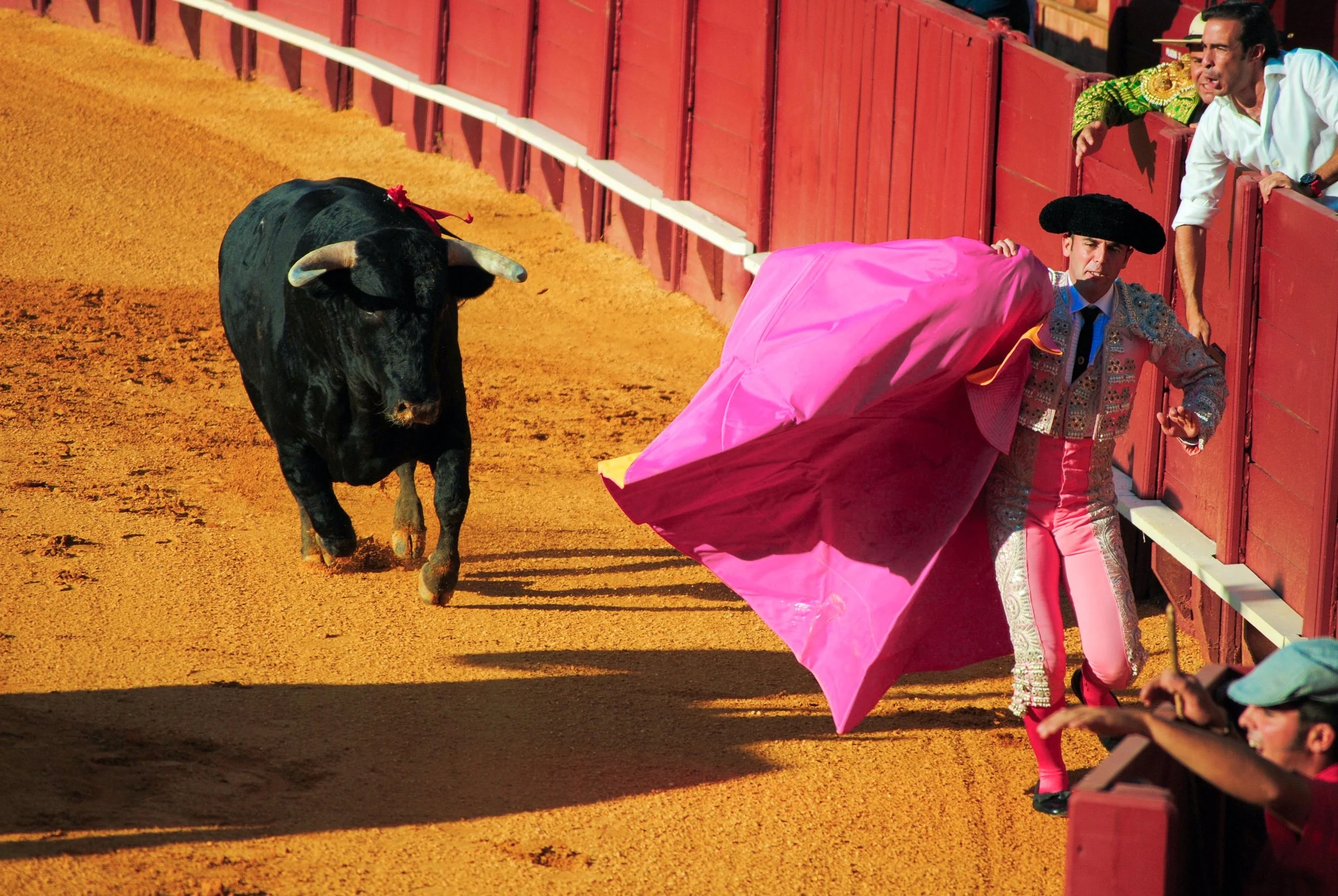
A bull chasing a matador in Sevilla, Spain
MOROCCO
2. The Train That Broke Down
The ship docked in Casablanca, but a group of us decided that we wanted to make our way to the Djemaa el-Fnaa market in Marrakech to get our first taste of bartering.
Halfway through the 2.5-hour ride, the train stopped. Stranded on the rails with nothing in sight, we passed the time by attempting to communicate with the locals in our compartment through charades, broken French, and awful drawings.
Miriam and Abdul have likely forgotten about the time they shared a seat with the crazy college students from America, but I still vividly remember the laughter that filled that day.
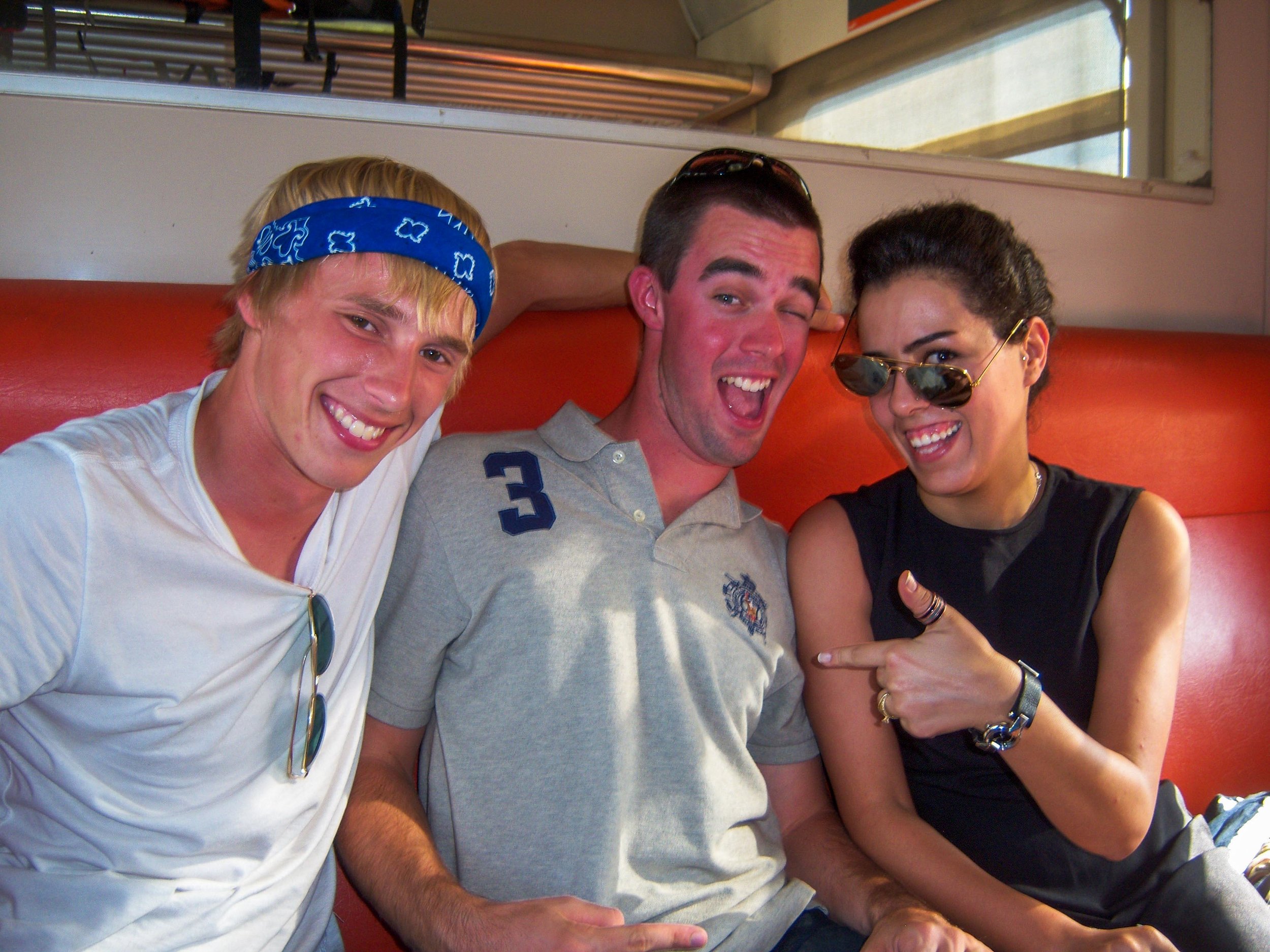
My roommate and I with Miriam on the broken-down train
3. Djemma el-Fnaa market at the end of Ramadaan
On a normal evening the market is buzzing with vendors and snake charmers. Clouds of smoke fill the sky with beautiful aromas from the food carts as music blares from all around.
Our trip coincided with the end of Ramadaan. I’ll always remember meeting a couple from the UK on the hotel shuttle en route to the market, a look of concern on their faces as we told them it was our first time in a place like this.
We stepped out of the van and stood on the sidewalk like a herd of deer staring directly into oncoming headlights. “It’ll be fine,” they said as we watched our new friends disappear into the chaos.
4. Haggling in the markets of Marrakech
This was my first experience of bartering and to put it bluntly, I was terrible. With that being said, learning how to negotiate a price, the acting skills needed to portray disinterest, and the guts to walk away from something I actually wanted - it was all thrilling.
GHANA
5. The Broken Down Van
The moment we stepped off of the ship, a group of us piled into a rickety van and drove 8 hours north to the village of Senase.
As the smooth pavement gave way to potholes beneath our wheels, the homes along the road vanished. All of a sudden the van came to a slow halt, moving only as far as gravity would take it.
The only thing in sight was a narrow path that led to a church. The driver caught a cab back to the closet village and we decided to wander the path while we waited.
The family that lived on the premises didn’t speak any English and we certainly didn’t speak their local dialect, but someone spotted a soccer ball in our periphery and that was enough to break any invisible barriers that lay between us.
6. Drumming & Dance Ceremony
As we prepared to depart Senase, the village had prepared a traditional drumming and dance performance.
The sounds of the beating drums, the vibrant colors, and the dazzling movements were enough to overload my senses. We were informed that it was our turn to dance for the village.
One minute I was sitting in a chair and the next I was making an utter fool of myself in front of hundreds of strangers. To tell you the truth, I loved every second of it!

Traditional drumming and dance in Senase, Ghana
7. Getting Soaked in the Back of a Truck
We whipped down the dirt roads of Ghana as I tried to take it all in with my eyes half-shut, shielding myself from the pounding rain while dodging overgrown tree branches along the way.
It was a rush of pure joy and remains one of my favorite parts about returning to Ghana.
SOUTH AFRICA
8. Climbing Table Mountain
I have an affinity for birds-eye views, so the second that we docked in Cape Town and saw Table Mountain rising high above the city skyline, I knew I needed to climb it.
We ended up hiking farther than required, but once we reached the summit no one cared. The sweeping views across the cape were worth it.
9. Visiting Robben Island
A humbling, sober, and powerful experience, to say the least.
10. Lion’s Head Peak at Sunset
Lion’s Head remains one my favorite hikes in the world.
Sure, the views from Table Mountain were spectacular as well, but reaching the peak as the sun dipped below the horizon capped off my South African explorations in the best possible way.

View from the top of Lion’s Head Peak in Cape Town, South Africa
MAURITIUS
11. Stranded in Grand Baie
One taxi driver, a major miscommunication, and hours of driving later, a friend and I found ourselves stranded in Grand Baie with no money left to make it to the ship in Port Louis. There was only one thing to do: take a swim in the Indian Ocean and enjoy the sunset! We made it back, eventually.
INDIA
12. Ganges River at Sunrise
I felt compelled to take a trip here the second I read about the field excursion planned through Semester at Sea. Why? I’m not entirely sure.
As our boat gently glided across the calm waters of the Ganges at sunrise and watched the local people cleanse their bodies along the banks, it all made sense. Serene is the only way to describe it.

Early morning scenes at the Ganges River in Varanasi, India
13. Driving a Rickshaw in Varanasi
My friend and I jokingly asked our driver if we could take a turn. Without missing a beat, he scooted to his right and made room for me in the front seat. It was the ultimate driving test: could I avoid the densely packed streets and roaming cows? Barely.
14. Taj Mahal
Usually I’ll try to avoid the tourist trail, but this was one experience I couldn’t pass up. I found a spot in the lush grass and simply sat and stared for what felt like hours. I’ll never forget that view.

The Taj Mahal in Agra, India
SINGAPORE
15. Playing with Monkeys
During a nature walk through the city’s forest we happened to stumble upon a family of monkeys waiting to steal food from unsuspecting tourists. The term “playing” is used loosely here, but nonetheless it was fun to watch these bandits carry out their business.
VIENTAM
16. Tourist-napped in Saigon
No, we weren’t actually kidnapped although it certainly felt like it at the time.
We knew that we could hire a boat that would take us along the Mekong Delta if we could reach the town of My Tho . What we didn’t know was that the taxi driver we hired from Ho Chi Minh City worked with a tour company and would take us straight to a boat dock, accompanying us the entire day.
We begrudgingly went along with the tour, plotting our “escape” as we went. In the end, we paid the guide to drive himself back to Ho Chi Minh City and continued wandering My Tho in search of our own adventure on the Mekong Delta.
It was worth it!

Cruising the Mekong Delta in My Tho, Vietnam
17. Playing Frogger in Ho Chi Minh City
It’s common to be taken aback by the sheer amount of motorbikes on the road in all of Vietnam, but especially in a city as densely packed as Ho Chi Minh.
The moment we thought we had mastered the art of crossing the road without hesitation, we learned of another version of the game: car vs. car.
As we rode in a cab through a torrential downpour, we couldn’t figure out what the tiny white lights in front of us were. It was only when our driver took a hard left that we realized we had taken an exit ramp onto the highway and had been heading into oncoming traffic.
In all likelihood, it wasn’t as exciting as this story sounds, but with the rain clouding our vision, it sure got the adrenaline pumping!
18. Hy Vong 8 School for the Deaf in Ho Chi Minh City
Semester at Sea did a phenomenal job of organizing service trips in nearly every port that we visited.
This was the first one I was able to squeeze my way into and I enjoyed it so much that I ended up visiting the school twice. We watched the students dance, chaperoned a field trip to the local zoo, and laughed so hard our stomachs hurt as we tried to learn sign language.
CHINA
19. Overnight buses
I stepped onto the overnight bus in Shenzen only to find that my ticket didn’t correspond with a seat, but rather a bottom bunk that came complete with a pillow and comforter.
Amazing.
Later on, when it was time for another overnight trip, I didn’t think twice. Another night spent falling asleep in a comfy bed while watching a movie in Mandarin, creating the plot in my own head? No problem!
Except for this time, my ticket led me to the back of the bus, into the middle row, and onto the top bunk.
I’m not sure if it was the sticky mat that served as my bed or the fear of being flung over the metal railings that were far too small to provide any sort of protection, but I didn’t catch a wink of sleep that night and I loved every second of it.
20. Cruising the Li River in Yangshuo
The Li River was one of the most picturesque landscapes that I have had the privilege of experiencing.
Surrounded by limestone cliffs that rose majestically towards the sky, we gently floated along with the current.
As beautiful as the mountains were, I’ll never forget the group of Asian tourists that passed us by and, in the process, gleefully sprayed our bamboo raft with water guns. Why? Your guess is as good as mine!

Floating along the Li River outside of Yangshuo, China
21. Entering Zizhou Park
The overnight bus had dropped us in Guilin at 5 am, so we decided to go wander Zizhou Park before finding breakfast.
As we reached the gates and realized it was closed, a woman appeared and offered to have her husband take us into the park via his raft. With nowhere else to go, we agreed.
Before we knew it, the three of us were on floating down the Lijiang River under the cover of darkness, accompanied only by a Chinese man puffing a cigarette and a dimly lit lantern that illuminated the way.
The park itself was beautiful, but entering before the sun rose above the horizon was the true adventure.

The man and boat that brought us into the park before dawn
22. Eating Our Way Through the Streets
Dumpling, dumplings, and more dumplings. Maybe this is the reason why I constantly find myself seeking out the best jiaozi (Chinese dumplings) wherever I go!
JAPAN
23. Sleepless in Tokyo
We took the train from Yokohama with one thing in mind: visiting the famous Tsukiji Fish Market and arriving early enough to watch the giant tuna auctions unfold.
In order to save money, we decided to migrate between 24-hour restaurants throughout the night. As the clock turned to 3 am, we headed to the market only to find a sign that read: “Today is a regular holiday.”
In the moment we were flabbergasted, feeling completely exhausted and disheveled, but that night is now one of my favorite memories.
I’ve been to Tokyo on one other occasion and again, the fish market was closed. What are the odds of that?
24. Feeding the Deer in Nara
Deer are considered sacred to the Shinto religion and, as a result, roam freely around the streets of Nara.
As with any other species that has had extensive contact with humans, it’s not uncommon for the deer to approach people in search of food (which is conveniently sold throughout the parks).
The result? Endless amounts of fun.
25. Yokohama F. Marinos Soccer Game
Japan is well-known for it’s rambunctious baseball games, but while most of our fellow sport-fanatic shipmates headed to the Tokyo Dome, we opted to attend a soccer match in Yokohama. The pageantry from the fans did not disappoint!

Fans of Yokohama F. Marinos passionately cheer their team on
LIFE AT SEA
26. Stargazing on the Observation Deck
Periodically throughout the voyage, the Semester at Sea staff onboard the ship would organize an evening of stargazing. As the Captain temporarily shut off the outdoor lighting, the sky was immediately illuminated with millions of stars.
27. Sunsets at Sea
It didn’t matter what the weather was; overcast, stormy, or even as sunny as could be. Each and every sunset was amazing.

Sunset in the middle of the Pacific Ocean
28. Crossing 0° Latitude and 0° Longitude at the Same Time
During our passage from Ghana to South Africa, the Captain veered in order to bisect the prime meridian and equator at the same time.
As the shipboard community gathered on the deck, we knew that as the ship’s horns bellowed across the open ocean, for a split second, we were indeed at the center of the world.
29. Early Morning Port Arrivals
Nothing quite brought the shipboard community together like standing outside on the deck at 5 am, huddling together for warmth as we all stared at the twinkling lights on the horizon.
It quickly became my favorite pastime throughout the voyage, each time eliciting a feeling of excitement and anticipation of what was to come.
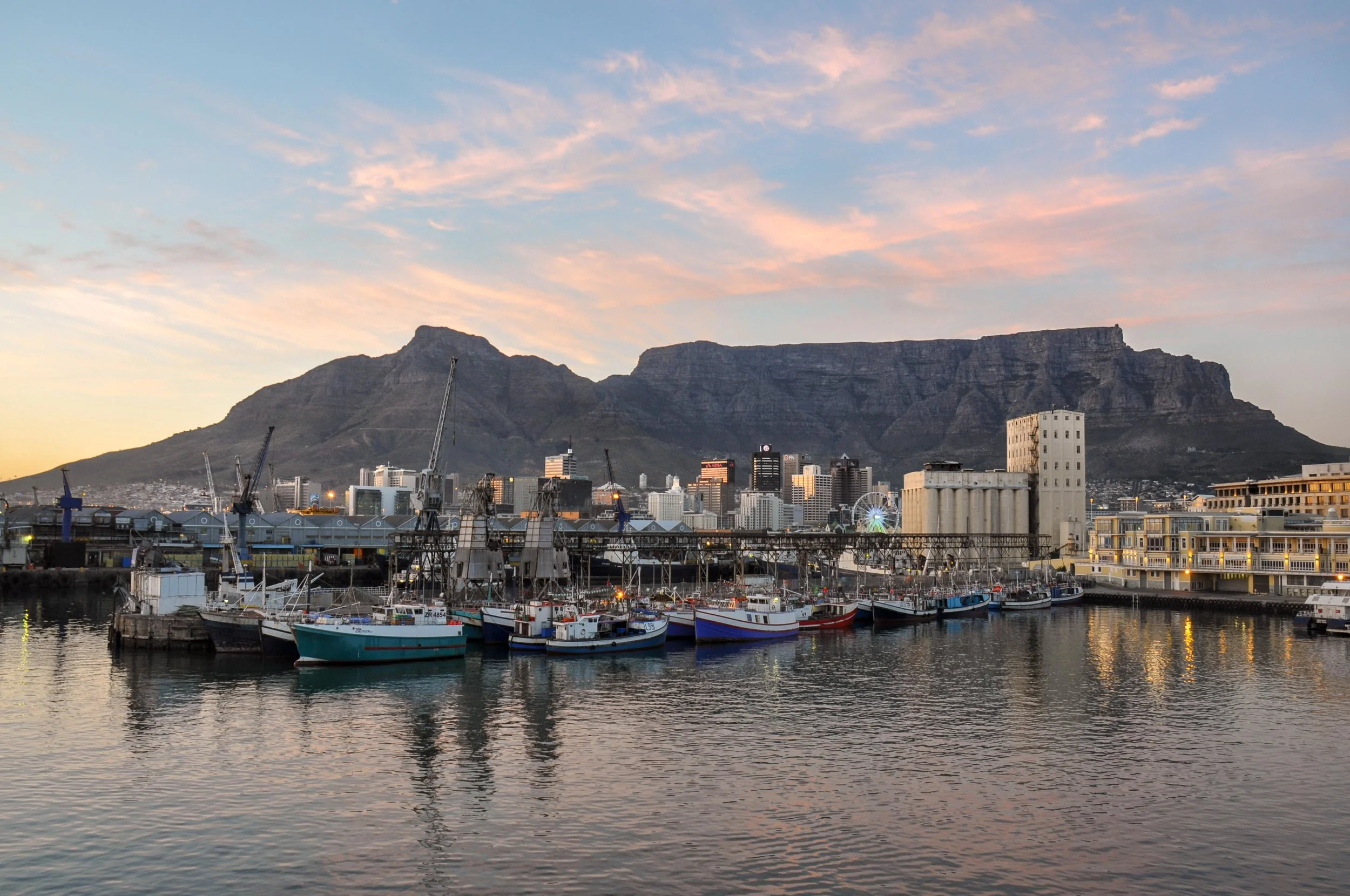
Arriving in Cape Town, South Africa at dawn
30. Work Study
One of the many benefits of Semester at Sea was the vulnerability it took to build a brand new community within the confines of the ship. Between classes, roommates, clubs, and volunteering, there were plenty of opportunities to do so. I was fortunate enough to receive a work-study scholarship and had a blast helping out in the field office!
BONUS
31. Embarkation
The mixed emotions I felt - anticipation, nervousness, disbelief, excitement - as we departed Halifax and the last remaining visible piece of land disappeared below the horizon is what hooked me to travel.
It’s a feeling that I still chase to this day.
32. Diverse Faculty and Staff
Part of the allure to go on the Fall 2010 voyage was the opportunity to live alongside Archbishop Desmond Tutu and his wife, Leah.
Needless to say, the entire 110-day journey was filled with “pinch me” moments as the Archbishop went about his business, casually fist-bumping students and spreading joy as he sauntered the halls.
I often contemplate what defines me as a person; what words or phrases might come to mind when someone mentions “Chris Toone.”
I’m confident that Semester at Sea is one of them. It not only opened my eyes and shattered my views of the world, but challenged me on a personal level in ways that I never could have imagined.
For that, I am eternally grateful.
Thanks for reading and as always, stay safe & happy travels!
Pin this post!

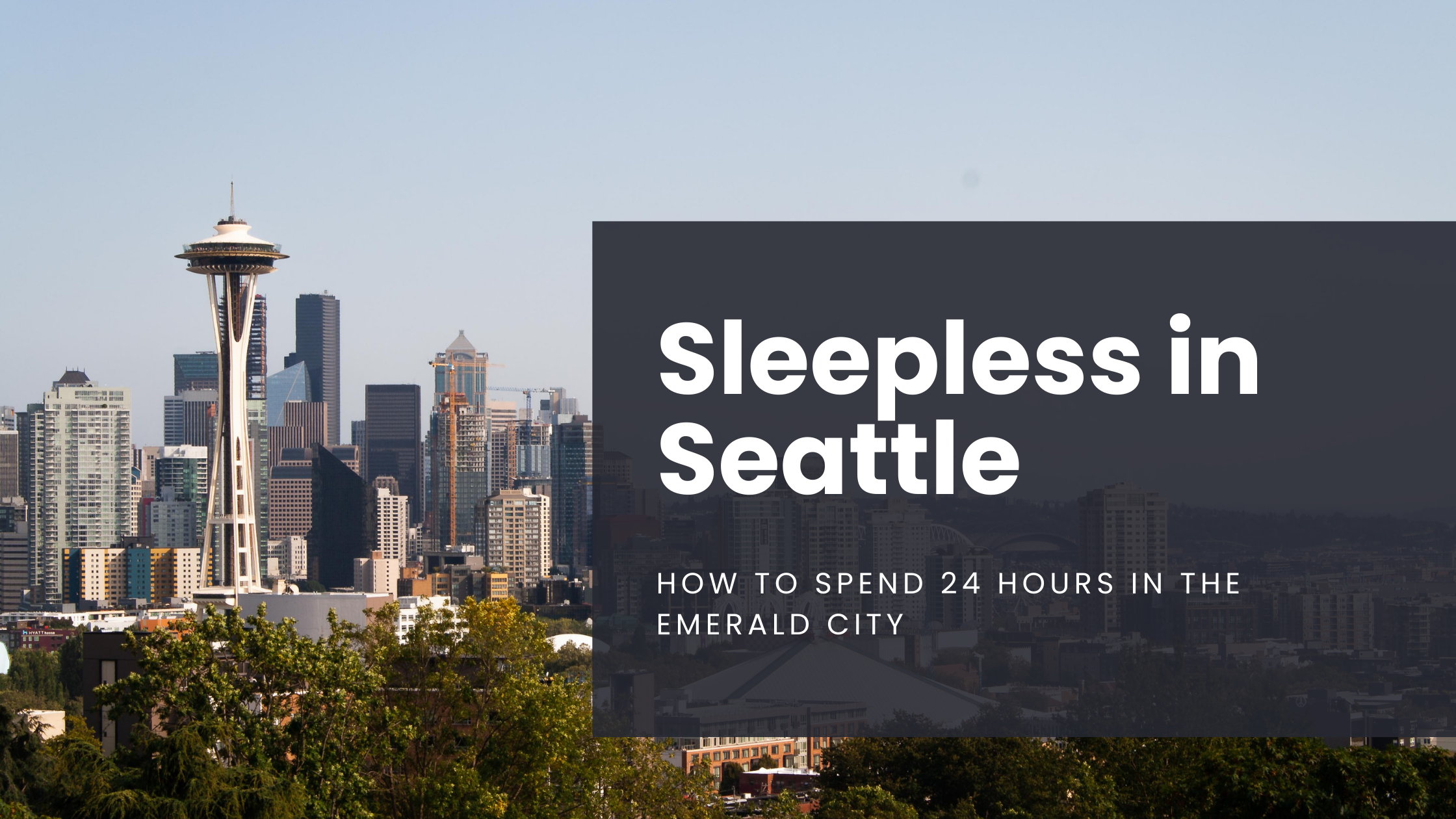
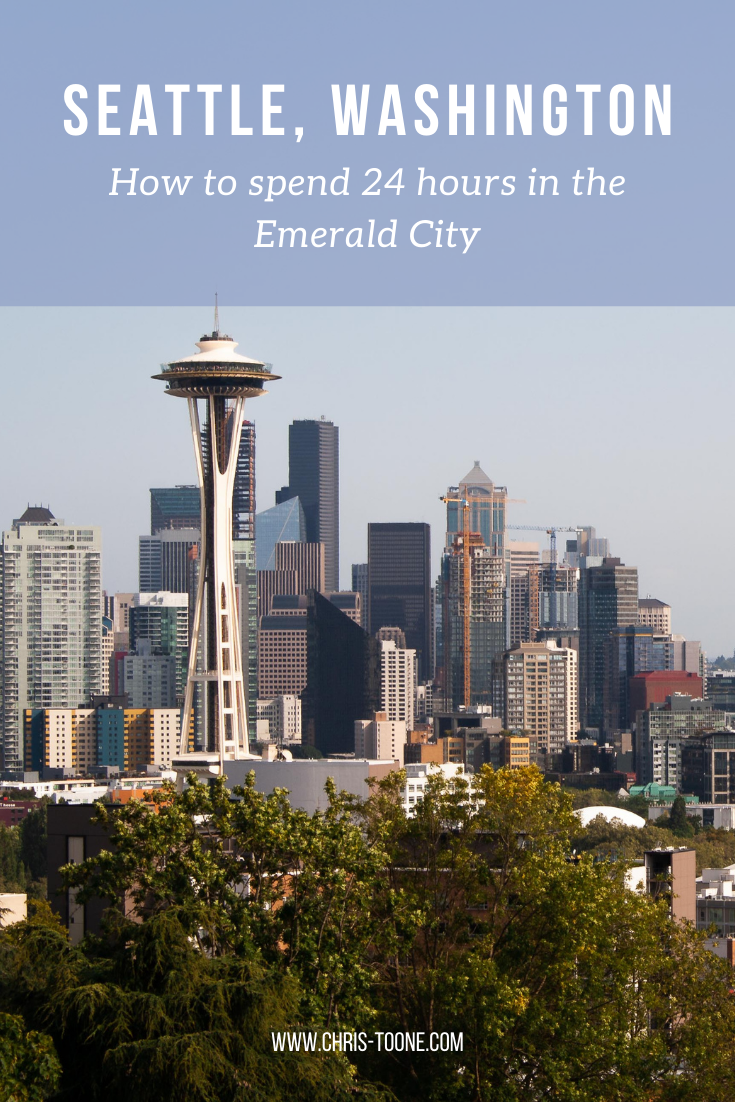
Sleepless in Seattle: How to spend 24 hours in the Emerald City
Weekend getaways are the perfect opportunity to get out of your comfort zone and experience something new, especially if your time is limited. But with so many things to see and do, how do you decide on what to pack into your schedule? Here are 7 “off the beaten path” recommendations for Seattle, Washington!
All info and prices are updated as of February 2023
Weekend getaways are the perfect opportunity to get out of your comfort zone and experience something new, especially if your time is limited. But with so many things to see and do, how do you decide what to pack into such a tight schedule?
Here’s a piece of friendly advice: go for it! Whatever you do and wherever you end up is all part of the journey, right? With that said, here are some recommendations to get you started in Seattle, Washington!
If 24 hours isn’t enough for you (and it likely won’t be), then be sure to check out some of the top places to stay for the weekend in Seattle!
1. SEATTLE JAPANESE GARDENS
Located inside the Washington Arboretum in northeast Seattle, this 3.5-acre Japanese-style park has opened its doors to the public since 1960. Landscaper Juke Iida’s plans for the garden were based around the principle of shinzensa, meaning the essence of nature, combining Japanese plant materials with those native to the Pacific Northwest.
Today, visitors are welcomed inside the gates to slowly wander the stone paths along the koi pond and take a moment to enjoy the sounds and smells. It’s the perfect place to mindfully sit and rest, escaping the hustle and bustle outside of its walls. If looking for more, sign up to participate in a 40-minute tea ceremony for an extra $15 per person. Reservations are required.
Adults between the ages of 18-64 can enter for $10, while senior citizens (65+), students, youths 6-17, and the disabled can enjoy the park for $6. Children under 5 are free (prices are accurate as of February 2023). There is no charge for parking and admission into the garden is waived on the first Thursday of each month. Please note that tripod photography, picnics, and pets are not allowed inside the gates to preserve the sanctity of the garden.
Address: 1075 Lake Washington Blvd.
Getting there: Metro Bus #11 (stop at Madison St.) or light rail to University of Washington (25min walk from there)
2. RIDE THE COMMUTER FERRY
Not wanting to spend the time or money on a boat tour of Seattle’s waterfront? Riding the commuter ferry is a great cost-effective way to see the city from the Puget Sound. At only $9.45 per passenger as of February 2023, you can choose to take a 30min ride to Bainbridge or opt for the lengthier 60min to Bremerton. Ferries are scheduled to depart all ports (Seattle included) every 60-90min, making it easy to grab a return ticket and jump back on board the boat. By the time you dock in Seattle again, you’ll still have plenty of time left in your day!
The vessels themselves are equipped with everything you need to enjoy the ride. Grab a snack from the shop on the passenger level and get your fix of vitamin D on the upper decks as you take in the sweeping views of the city. This was one of my favorite parts of our weekend adventure!
Seattle’s ferry terminal is located at 801 Alaskan Way, south of Pike Place Market and a short walk away from Pioneer Square.
You can purchase tickets ahead of time, however, it’s a simple process to do it in person at the terminal. It is recommended that you arrive 20-30min before the scheduled departure time.

3. CHEER ON THE SOUNDERS WITH 40,000 OF YOUR CLOSEST FRIENDS
There aren’t many cities in the United States that can regularly fill an NFL stadium for Major League Soccer matches, but Seattle is one of them.
These dedicated Sounders fans treat every game as do-or-die, making for an unbeatable atmosphere inside CenturyLink Field. Grab a beer, chow down on a Seattle Dog (complete with cream cheese and onions… oddly delicious), and cheer on the Sounders with 40,000 of your closest friends!
If your schedule permits, make your way to Occidental Park in Pioneer Square about 90 minutes before kick-off to get the full supporters club experience. Here you’ll find a pep rally with performances by Sound Wave, the official band of Seattle Sounders FC, as well as giveaways, games, and more. Be sure to visit The Ninety (located at 406 S Occidental Ave.) and learn about the club’s storied past before marching to the stadium alongside the supporters, chanting and singing as you go. Maybe you’ll get lucky and their sworn enemy, the Portland Timbers, will be in town!

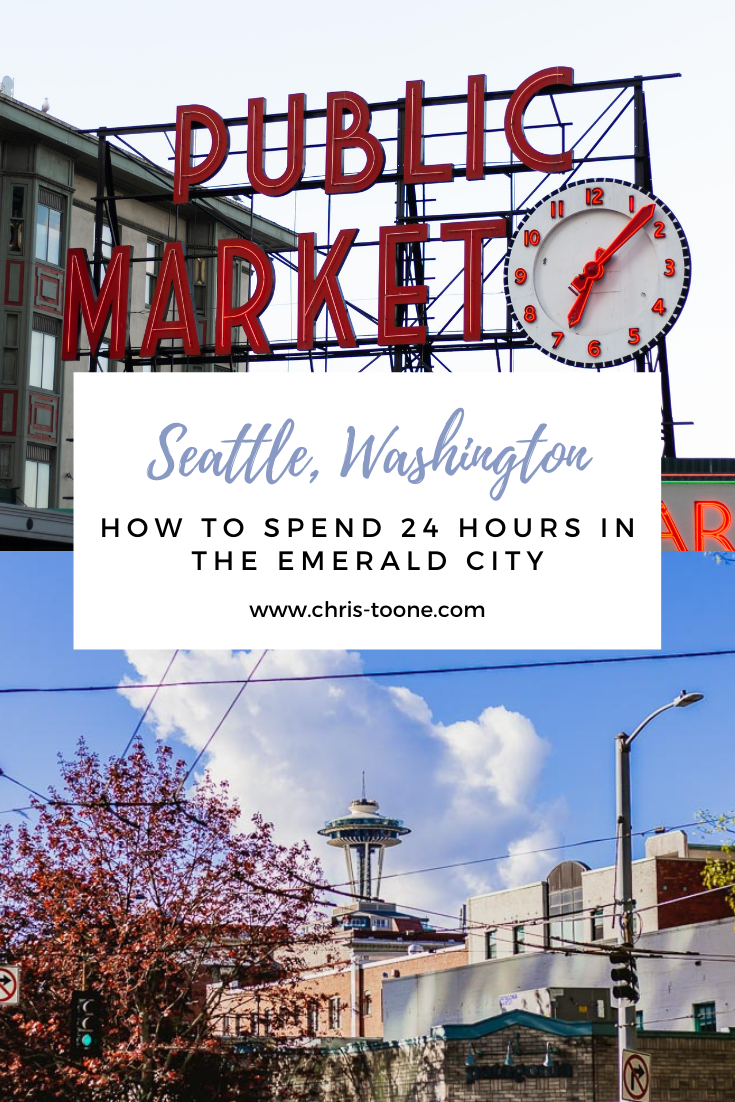
4. PIKE PLACE MARKET… AT 7AM
Yes, I know, this isn’t off the beaten path, but go at the right time of day and you’ll find yourself surrounded by local shoppers instead of selfie-hungry tourists.
The fish market’s operations begin at 6:30am, while most of the other vendors open their doors around 9am. This makes it the perfect time to enjoy zero lines and grab a breakfast-to-go from the well known Mee Sum Pastry or Piroshky Piroshky (try the smoked salmon pate) and wander the halls of this hallowed place.
You’ll be treated to a sense of how large the operations are, with employees unloading trucks of fresh flowers while fishermen chop ice and unveil their catch of the day. It’s a far more authentic feel than what you'll find later in the afternoon.
Take a moment to sit on the deck located on the top floor of the main market building (the one with the clock sign) and enjoy the crisp morning air as you look out over the Puget Sound. It’s a great spot to watch ships coming into port and sip on a cup of coffee!

5. WATCH THE SUNSET ON PIER 66
If you’ve looked into the best sunset views of Seattle, then it’s likely you’ve stumbled upon Kerry Park. Yes, this small overlook offers the picture-perfect postcard scene with the Space Needle front and center, but it comes at a cost of fighting mass quantities of tourists and photographers alike.
Instead, head to the waterfront and enjoy the views from Pier 66, also known as the Bell Street Pier. This public observation deck comes complete with viewing binoculars and provides breathtaking sights over downtown Seattle, Mt. Rainier, and the Olympic Mountains. Face back towards the city and you’ll even catch a glimpse of the Space Needle!
This place remains largely hidden as compared to the rest of the tourist trail in Seattle, so it’s the perfect setting to enjoy an evening gelato (our favorite is Gelatiamo, just a few blocks from Pike’s Place) and snap some pictures without the crowds. You can access this rooftop deck via the Bell Street Pier Pedestrian Bridge from Elliott St., or by climbing the stairs that are located near the entrance of Anthony’s Restaurant along Alaskan Highway.

6. STROLL ALONG LAKE UNION
Are you looking to do as the locals do? Then make your way over to Lake Union. Here you’ll find an abundance of walkers, runners, and cyclists as they make their way along the 8-mile loop that surrounds this freshwater lake.
From here you’ll be able to hop on a cruise, rent kayaks and paddleboards (look for Moss Bay Kayaks), or simply sip on a latte from the Tripod Coffee trolley (located near the Center for Wooden Boats) and enjoy the views as seaplanes take off throughout the day. Lime and Jump ride-share bikes are widely available and a great way to meander around the area.
With plenty of places to eat and shop, exploring South Lake Union is a great way to experience one of Seattle’s most lively neighborhoods!
7. GAIN SOME PERSPECTIVE
As mentioned above, Kerry Park is the most famous overlook in Seattle, however, a favorite of mine is the Jose Rizal bridge located on the western slope of Beacon Hill.
This is the perfect spot for night photography as tail lights from the I-90 below lead straight into the city, while providing views of CenturyLink Field, T-Mobile Park (home of the Mariners), as well as the Olympic Mountains across the sound.
Relatively unknown outside of the photography community, you’re guaranteed an enjoyable experience in the otherwise crowded Seattle area.
Note to photographers: the bridge tends to shake when buses drive across, so make sure to time your shots accordingly.
Address: 1008 12th Ave. S

If you have any questions or suggestions of your own, feel free to leave a comment below! Thanks for reading and I hope you enjoy your time exploring Seattle.
As always, stay safe & happy travels!
Pin this post for later!


Touring The DMZ in South Korea: What it's like to stand at the most heavily guarded border in the world
A mere thirty miles outside of Seoul sits one of the most heavily guarded borders in the world. Spanning the entire 160-miles across the peninsula, the demilitarized zone creates a 2.5 mile wide proverbial “no-man’s land” that does more than simply divide the two countries…
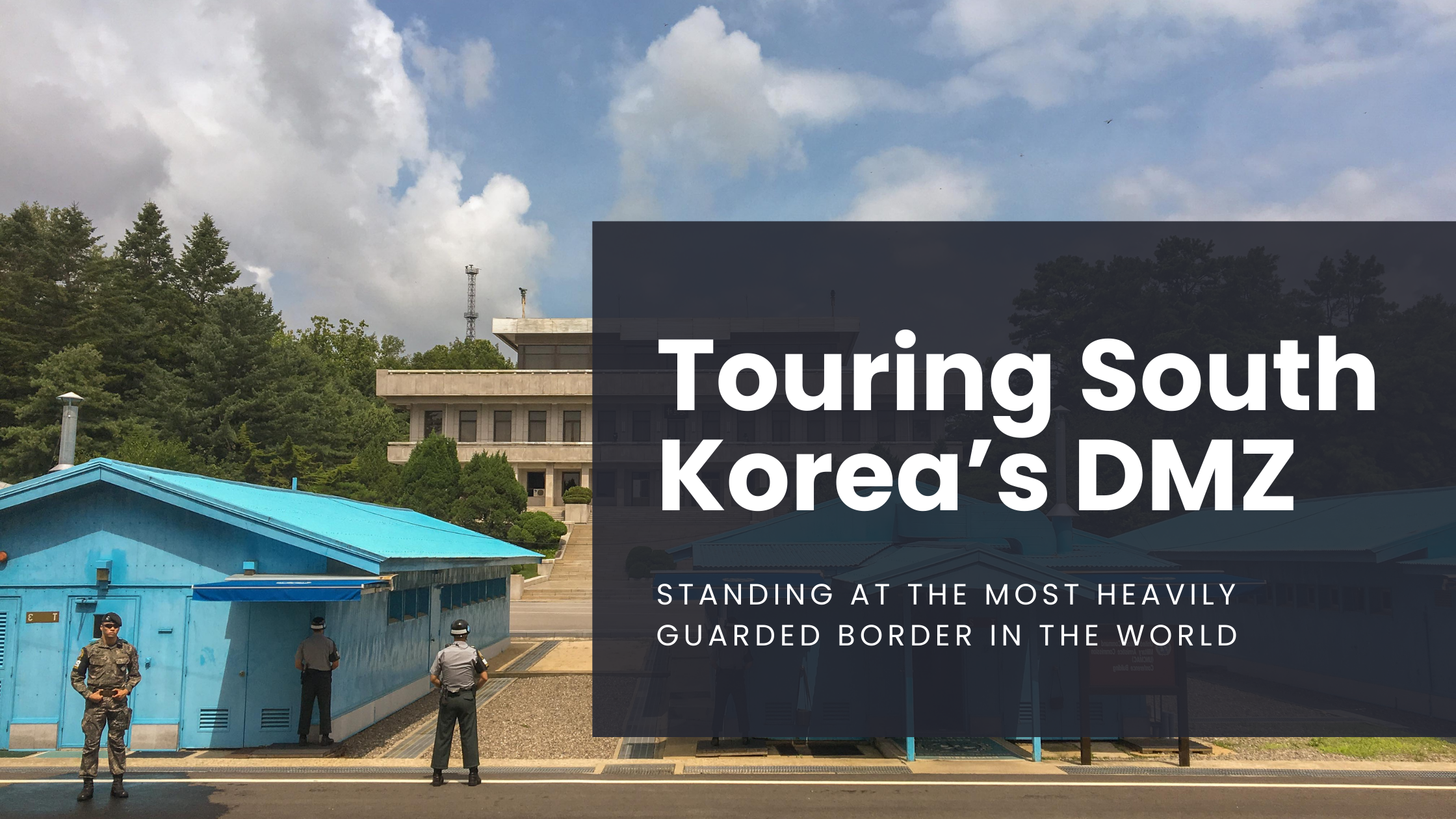
A mere thirty miles outside of Seoul sits one of the most heavily guarded borders in the world. Spanning the entire 160-miles across the Korean peninsula, the demilitarized zone creates a 2.5-mile wide proverbial no man's land.
The following piece documents what it felt like to stand on the border of North and South Korea, also known as the scariest place on Earth,coined by Bill Clinton after his visit in 1993.
Heather and I would normally never hop on a tour. Sitting on a bus and listening to a voice through a speaker is not in our travel DNA at this point in our lives. We’d much rather wander the streets of a new place, immersing ourselves in its surroundings.
In fact, that’s how most of our memorable adventures have started. It’s a rush of raw emotions when we turn a corner and discover something beautiful when we least expect it.
We had booked flights to South Korea with no set plans, knowing little about the country itself other than it was the cheapest ticket to Asia then.
Amidst the hours of reading, there was one tour that kept surfacing: visiting the border with North Korea. At first it was a joke. Both of us had come across it, brought it up to the other with a hint of a chuckle, and brushed it aside. It was a “hah, can you imagine if we went there?” moment more than anything else, but each successive time we laughed, the more real it became.
By the second day of researching, we had convinced ourselves to visit the Demilitarized Zone (DMZ), hoping for an opportunity to step over the line of demarcation and into the territory of their neighbors to the north. We booked the tour, gave each other a “what the hell are we doing” smile, and packed our bags.
Before we knew it, we awoke at dawn in Seoul, anxious to see where the day would take us.
With any new adventure comes adrenaline. There’s excitement for what lies ahead, accompanied by a nagging fear of the unknown. That’s normal. Yet as we stood on the street corner in the crisp morning air, something seemed off. I could feel a slight wrench in my gut, not out of concern but curiosity. We had traveled nearly 6,000 miles around the world and were about to visit an active war zone, one that continues to affect the daily lives of millions of people. It was going to be different than anything I had ever experienced before.
We arrived at the meeting point, handed over our passports for verification, and boarded the bus. The seats were far from full and we quickly realized we were the only Americans present.
After a short wait, a middle-aged South Korean woman climbed the steps and explained that she would be our guide today. It was time to go.
The first stop was the War Memorial of Korea. We didn’t have nearly enough time here to visit every exhibit, so we quickly shuffled our way to the “History of the Korean War” wing. It was here that we relived our days as college students, cramming as much knowledge as possible into our heads. As is the history of the world’s largest conflicts, that of the Korean War is quite complex and convoluted. This isn’t the platform to expand on it, but I would encourage you to look far beyond what the media presents to gain a better understanding.

War Memorial of Korea
Alas, it was time to continue the tour. Our driver turned right out of the parking lot, trading the sanctity of the museum for the chaotic streets of Seoul.
We continued driving along highway 77, flanked by the Han River to our left. I began tracking the bus’s movement on my phone’s GPS. Sure enough, we were heading due north, straight toward North Korea.
As I glanced out the window the skyscrapers of Seoul had been replaced by barbed wire fences. This was the first sign that we had reached the DMZ.
We veered to the right and began heading east, continuing to follow the fence line as we went. Guard towers whizzed by our windows every mile until we reached Imjingak Park.

DMZ border along Han River estuary
Constructed in 1972, this park was built on the southern side of the Bridge of Freedom as a sign of hope for unification. It has since expanded on that role, now serving as a popular tourist destination.
As we left the comforts of the air-conditioned bus and surveyed our new surroundings, we were both immediately taken aback by old photographs of Korean families sitting along the barbed wire fence, hanging messages of hope and peace as they prayed. Messages, to this day, still cover the barrier that separates them from their loved ones in the north.

Flags for peace at Imjingak Park
It all felt delicate. Physically it was there: The reinforced fencing, the beautifully placed banners, and more. It was palpable and sturdy.
The environment, however, was fragile. Yet within it grew a mob of tourists, elbowing and shoving for the perfect selfie of the South Korean flag that, although weathered, hung proudly on the fence and symbolized the strength of the people that placed it there.

Imjingak Park, South Korea
Maybe it was out of respect that we felt we had to quietly shuffle along the walking path, observing and learning as we went. After all, we showed up as tourists to a place that has experienced so much grief and heartbreak. To this day, South Koreans still ride the DMZ train from Seoul to sit in the park, stare north through the fence, and patiently wait for the day it comes crumbling down. They continue to tell themselves that somewhere out there exists an alternate universe, one where they can move freely throughout the peninsula and reunite with their families.
We took a break to eat lunch, trying to process what we had just witnessed. After slurping the final drops of broth we made our way up to the third floor where a viewing platform provided our first look at the expanse of no man’s land.
I’m not sure what I was expecting. War ruins? Abandoned homes? I found none of that. Pure is the only I can describe it.

Looking into “no-man’s land”
It has been reported that around 800,000 landmines are buried throughout this 160-mile long sliver of land. In a way, these weapons serve as protectors, allowing nature to grow without intervention from the human race.
Humbled by our visit, we returned to the bus. It was time to head farther north towards the Joint Security Area.
As we sat back down in our seats, the mood shifted. The chatter in the back of the bus was silenced by our guide explaining that we now must display our “United Nations Command” visitors pass at all times.
From that point on, we would be inside an active war zone. The bus began to slowly swerve as we continued on. Left, right, then back to the left, avoiding barriers as we crossed a bridge that spanned the Imjin River below.
A slight feeling of unease came over me as we passed through the military checkpoint, but it was time to visit the Joint Security Area (JSA), also known as the village of Panmunjom. It was here that we hoped to step foot into North Korea.
Our bus rolled to a stop at the entrance to Camp Bonifas, located just 400m south of the border. A mere quarter of a mile is all that separated us from the border. We filed into an auditorium, joining with other tour groups. As the seats filled, our new guides from the U.S. Army began dispersing visitor declarations. These documents stated that the U.S Army, UN Command, and the Republic of Korea could not guarantee the safety of visitors and may not be held accountable in the event of a “hostile enemy act.” Comforting, to say the least.
We signed on the dotted lines, nervously laughing at one another’s slight hesitation, then climbed the stairs onto a new bus and continued driving north.
Finally, we reached the Freedom House. Located on the South Korean side of the Joint Security Area, the structure was built to house the reunification of Korean families. It has yet to see such a day.
We received final instructions from our leader: At no time should we place our hands in our pockets. If we wish to use our phones for pictures, we must hold them the entire time. No waving, pointing or making any motion towards the North Korean side.
We were to remain in a single file line at all times. The Korean People’s Army would be closely monitoring our movements from their guard towers. Any misstep may be recorded and used as propaganda.
Interested in learning more about South Korea? Check out these posts:
With these warnings in mind, we were led into the foyer, up the stairs, and to the back doors. One by one we silently walked onto the platform outside, getting our first glances at North Korea.
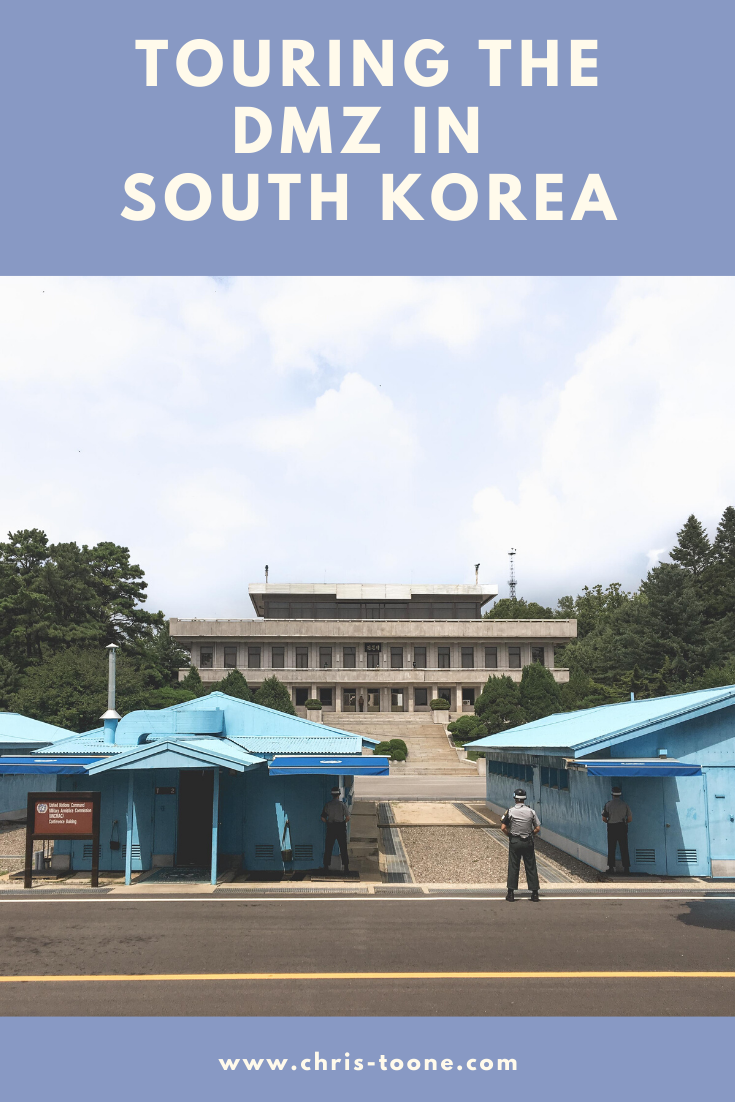
Across from where we stood was the north’s version of the Freedom House, built taller than it’s South Korean counterpart as a sign of strength. Motionless in front of the door was a lone soldier from the Korean People’s Republic Army. To the far right was a guard tower, monitoring our every move. Directly in front of us stood three South Korean soldiers, attentive and facing the border.
Separating the two countries were three long, blue buildings that served as conference rooms. Here is where leaders from both sides come together for negotiations. Horizontally bisecting these buildings was a small block of cement; the official demarcation line between North and South Korea.
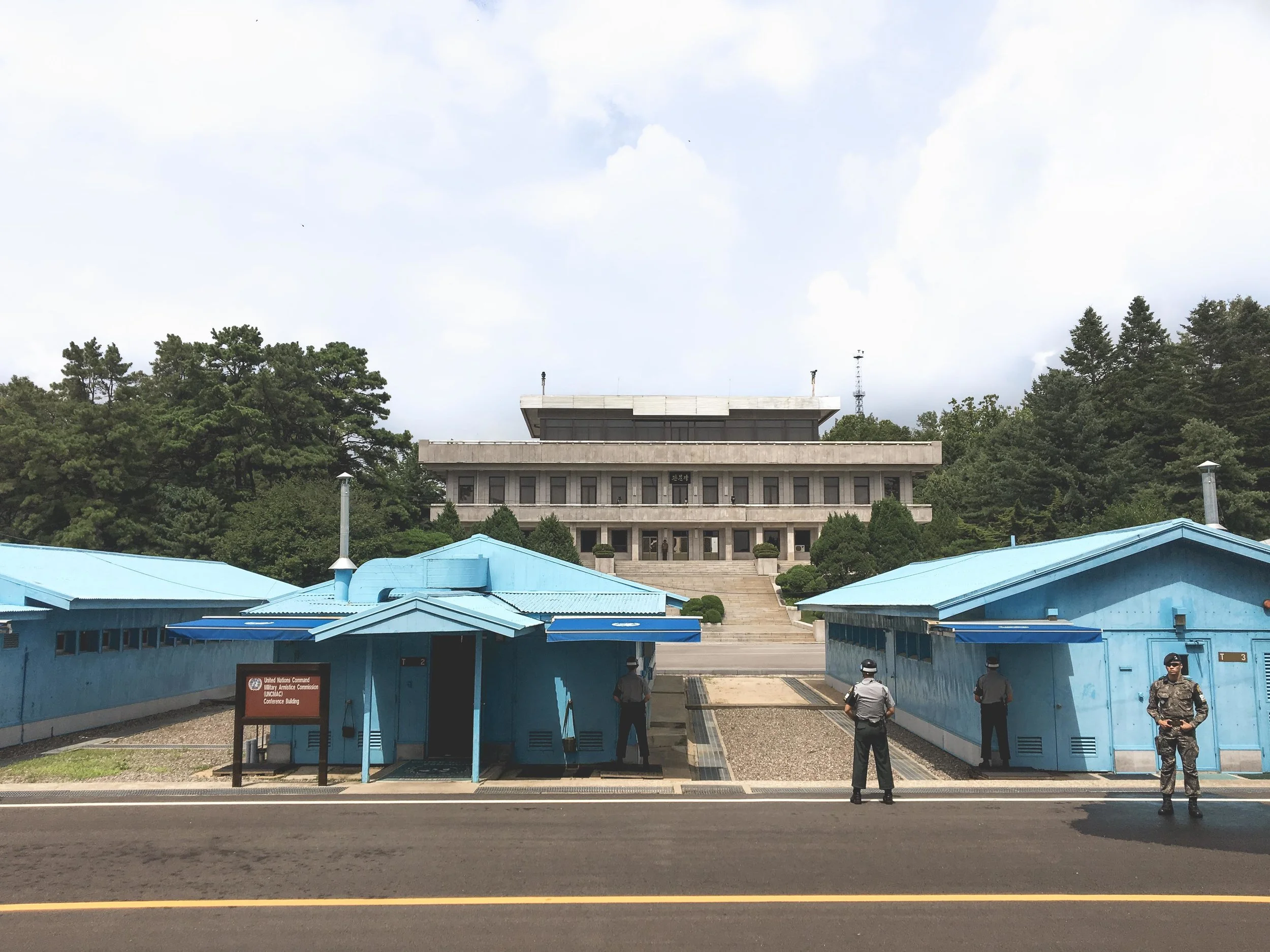
Joint Security Area, South Korea
Part of me couldn’t believe what I was looking at. It wasn’t awe-inspiring or beautiful beyond words by any means. Rather, to visualize where we were on a map of the world simply dumbfounded me. I was being watched by actual North Korean soldiers. I could see one for myself, close enough to yell at across the way.
The person next to me began to move, breaking my thought as we were ushered into the center building; an empty conference room awaited.
Three more South Korean soldiers were standing guard inside, one firmly planted in front of the door directly across from where we entered. That door led outside, straight into North Korea.
I took about ten steps forward, flanking the edge of the large conference table in the middle of the room. As I turned to glance out the window, I realized that I was looking back towards the cement demarcation line. Technically speaking, I had just crossed into North Korea.

Demarcation line between North and South Korea
After twenty minutes we were escorted back out of the southern entrance of the building, returning to the steps of the Freedom House for one final glance at North Korea. It was quite possibly the last one I’ll ever have.
What we didn’t know at the time was that those same buildings would be where Oh Chong Song dashed across the border, making his daring escape from North Korea a mere four months later.
To be honest, I’m still unsure what to make of the whole experience. Yes, we had just stepped foot in an active war zone, but the reality is that it’s as safe as possible. Up to 3,000 people tour the area each day.
Is it for everyone? Certainly not.
Was it one of the most humbling experiences of my life? Absolutely.
As we rode the bus back to Seoul that afternoon, I couldn’t help but admire the strength, resiliency, and patience of the South Korean people. Although the struggle for peace continues, many feel that it has never been closer.
I truly hope that’s the case.
Thank you for reading and as always, stay safe & happy travels.
Sharing is caring… pin this post for later!


Chasing Choclon Waterfall: Discovering paradise in the Panamanian jungle
As I combed through the research prior to our trip to Panama, I came across a picture of a swimming hole that blew me away. The moment I saw it, I knew we needed to experience it. There was only one problem: nothing I read would tell us where it was located…
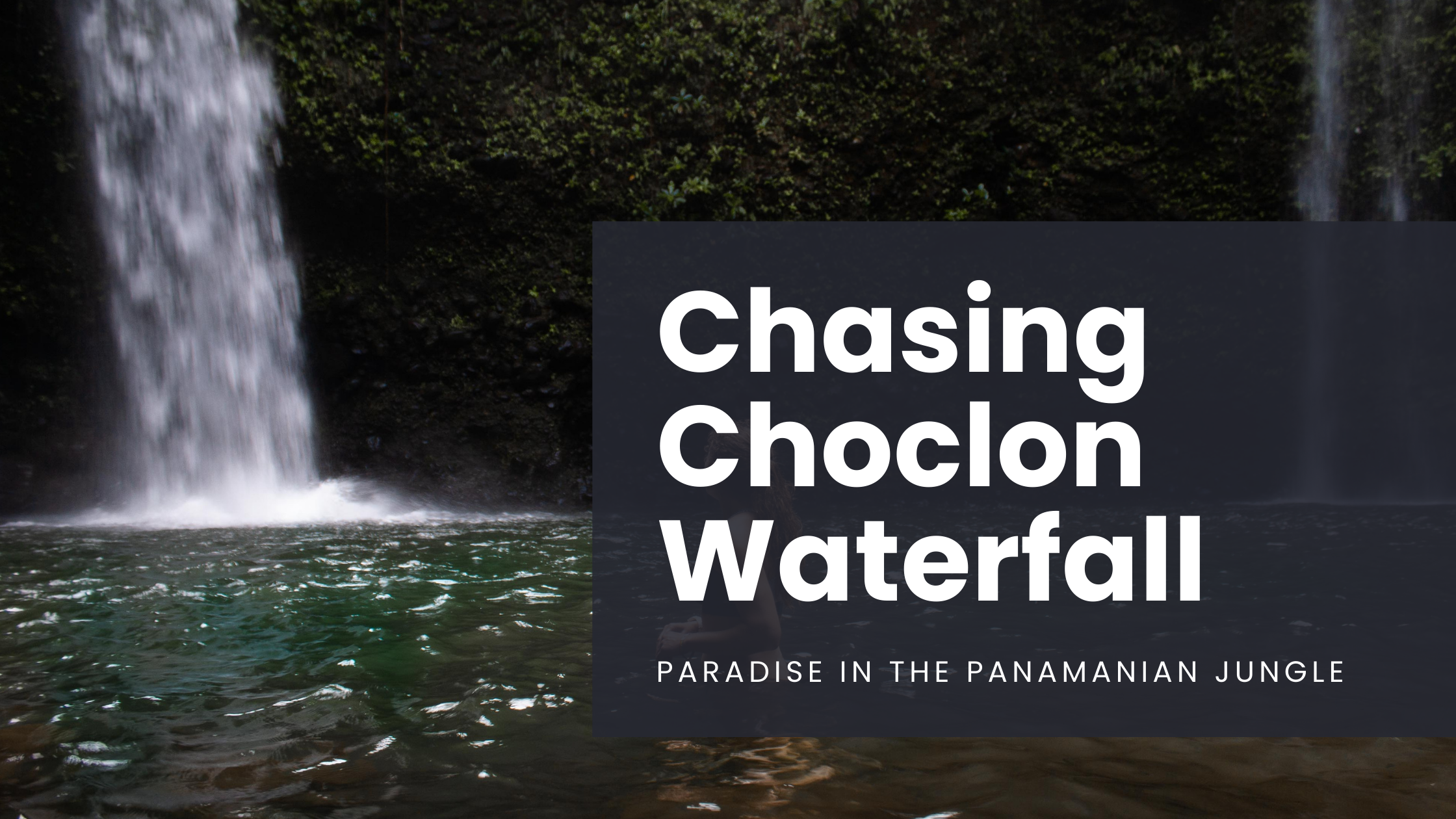
Let me clarify one thing right from the beginning: we weren’t actually in the middle of nowhere. That’s simply how it felt, and to be honest, that’s just the way we like it!
As I combed through the research before our trip to Panama, I came across a picture of a swimming hole that blew me away. The moment I saw it, I knew we needed to experience it (click here to see the original post I found).
There was only one problem: nothing I read would tell us the location, let alone how to navigate the hike.
I stumbled deep into the black hole of the internet, searching for any clues that might point us in the right direction. The only objective I accomplished that day was leaving a solid imprint of my butt on the couch cushion. Disappointing, to say the least.
That might be enough to call it quits for some, but it only fueled the fire within. The longer I went without finding what I was looking for, the more determined I became. We were going to find a way to Cascada Choclón. There was no doubt in my mind.
All of the sudden a beam of sunlight shot into the living room. No, it wasn’t actually that dramatic, but shortly after opening the window blinds I came across our first solid lead.
It’s possible that “solid” is a gross overstatement. The website merely provided the GPS coordinates for the trailhead. It wasn’t much to go on, but that was enough to get the ball rolling!
Discover more of Panama. Don’t miss these posts:
I continued scouring every piece of information that I could find. When I took a closer look at satellite imaging, there was a portion where the jungle appeared to part along the river, providing a much-needed hint to where the falls may be.
Now that I had a starting point and a general direction, it seemed like this may pan out. Fast forward to arriving in Panama: it was time for the adventure!
As soon as we turned off the main road in Boquete, we quickly became grateful that we opted for the SUV rental. The pavement disappeared, our cell service wasn’t far behind.
The farther we drove, the slower we went, carefully maneuvering over every bump, boulder, and hole in the road. As the minutes ticked by, so did our confidence even though neither of us would ever vocalize it.
After what felt like hours, we had reached the starting point.
The car came to a halt and a cloud of dust from our tires quickly engulfed our field of vision. Once it cleared, we realized how “off the beaten track” we were. The sounds of the jungle beckoned beyond the open field that lay ahead. One last look at our maps and we were off.
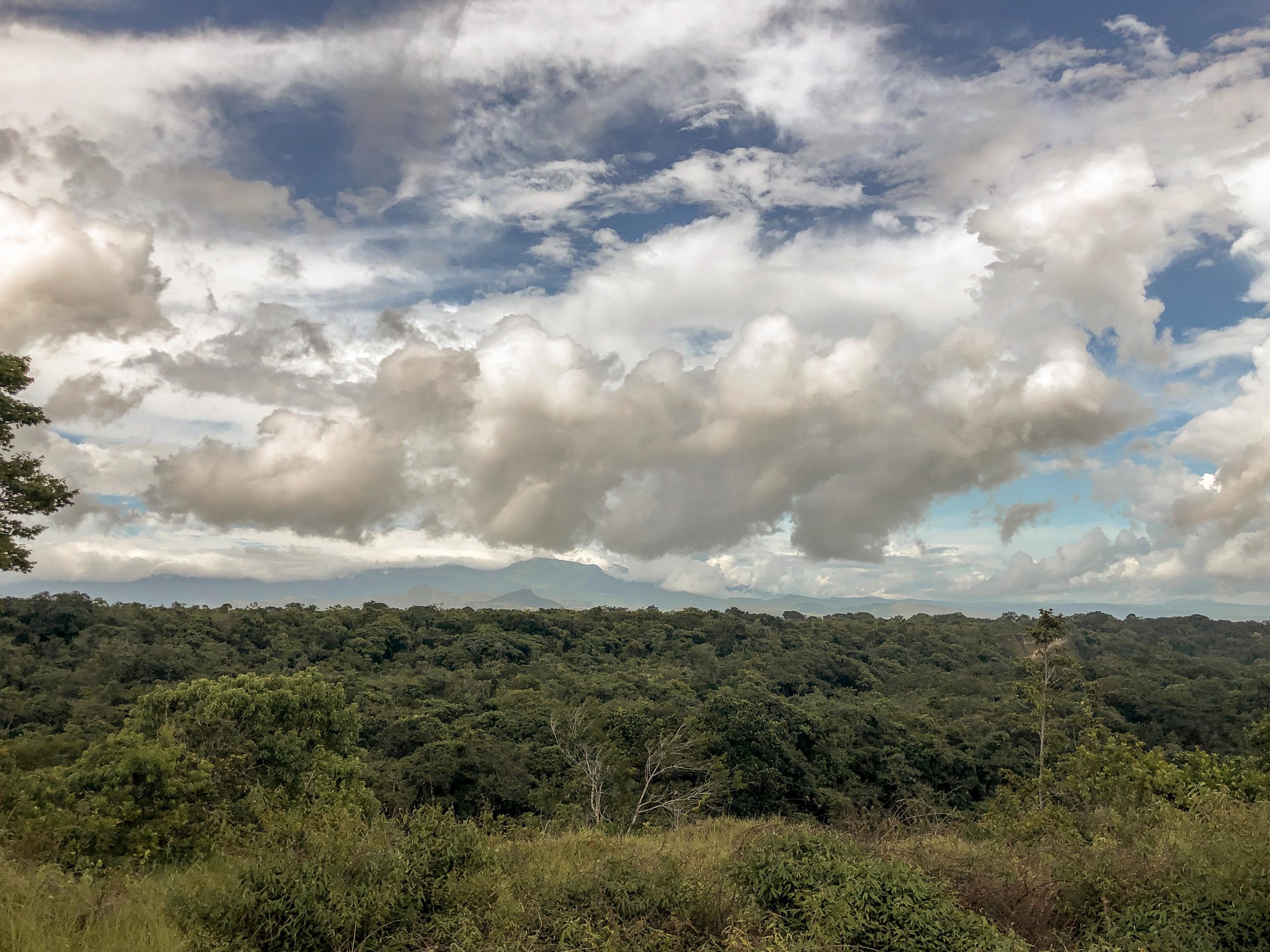
The hike started by traversing through an open meadow as the sun beat down our backs, the humidity making it impossible for any relief. Upon reaching the first junction, we referred to our makeshift maps and descended to the forest floor, following the sounds of the river below.
As we trekked deeper into the brush, the canopy quickly began to rise straight towards the sky, providing a much-needed relief from the heat. Our compass instructed us to go left around a closed gate, but our ears directed us to the right, towards the sound of the rushing water. We stood there confused, unsure of what to do.
At this point the sun forced us to perspire off our umpteen layers of sunscreen and bug spray, leaving us susceptible to the mosquitoes that began swarming around. We were in no position to have a lengthy debate. Lacking confidence in either direction, we climbed back out to the trailhead.
Maybe we had incorrectly interpreted our map. Maybe if we walked another direction we would discover a different, easier way to reach the river.
It seemed like a good idea at the time but, as it turned out, we were wrong. Very wrong.
As we continued down the gravel road the intensity of the sun drained all of our energy. I could feel my body temperature rising, but I was too exhausted to do anything about it. Each step we took was met with an unsuccessful prayer for cloud cover.
Ten minutes and a new sunburn later, we had reached another dead end.
This was the point that every ounce of my being was telling me to pack up and call it a day. Our motivation was waning, the heat was relentless, and we were out of ideas as we slowly retreated back to the car. I remember Heather cracking jokes along the way, trying to make light of the situation and keep my morale in tact.
A second look at the scattered research revealed a small access path farther down the dirt road. Maybe that was what we were looking for, so we decided to keep driving north.
No luck.
I could tell that Heather wasn’t too sure about continuing and, to be honest, even after regrouping in the air-conditioned car, I wasn’t either. As a rainstorm moved through, we took the time to reevaluate what we were doing.
We felt assured and frustrated at the same time. Confident that we were in the general vicinity. Annoyed that no matter how we approached it, we couldn’t find what we were searching for.
The road back to the original trailhead provided some much-needed perspective as we passed run-down homes with missing walls and children playing in the rain. I couldn’t help but think of the number of tourists that travel through Panama each year and yet had no idea that this part of the country existed. Although we concluded that we would give our adventure one more try, I decided that after the experience we had up to that point, I would be content no matter what. After all, it was Dan Eldon that once said, “The journey is the destination.”
Once we descended back into the jungle, reached the gate, and shuffled our way around it, we were back on track and heading in the right direction.
We quickly descended farther into the forest floor, hugging a makeshift PVC pipe railing along a ridge and using the vines as support as we worked our way down into the canyon. The path was completely overgrown with thick brush rising far above our heads. Thrusting the branches aside, we did our best to stick to the trail quickly narrowed with each step.
The ecosystem of any jungle is the most diverse in the world, often-times leading to regular discoveries of new plants and animals. Panama alone is home to over 1,500 kinds of trees and five species of cats, including jaguars, ocelots, and pumas. It feels eerie yet humbling to be amongst it; a place where the silence is deafening and only broken by an occasional howler monkey crying out in the distance or a bird rummaging amongst the fallen leaves for food.
We silently trekked along the forest floor, remaining vigilant of our surroundings.
The moment we began to feel comfortable, a loud crash echoed through the forest and left us frozen in our tracks. We exchanged nervous glances, trying to control our breathing and telepathically communicate what to do next.
Tip-toeing forward as quietly as possible, we did our best to avoid the branches that covered our path. Needless to say it was a humbling reminder that regardless of how isolated we felt, we weren’t alone.
Finally, the thick brush parted and the bank of the river appeared, reinvigorating the idea that we could find these waterfalls.

We searched up and down the river for a way to cross, but it quickly became clear that it wouldn’t be as simple as jumping between rocks. We would have to carefully select the path of least resistance.
Although our faces may have expressed doubt, we were so close that we could feel it. There was no turning back.
The path continued to disappear before our eyes, winding its way through the overgrown brush before depositing us back onto the rocks and leaving us with newly acquired scrapes up and down our legs.
We continued moving northwest, systematically evaluating every step we took as our feet slipped off the rocks. The energy in the forest changed from nervousness to excitement as we inched closer. We were nearly there.
Just beyond the final bend of the river, the waterfalls were waiting to greet us. It was even more majestic than I had seen in the pictures.
We were left speechless as we peered towards an amphitheater of hanging vines and cascading waterfalls.
The beautiful blue waters of the pool were irresistible. We couldn’t help but jump in and soak up the moment. A rush of emotions engulfed us, leaving nothing but a sense of relief, gratefulness, peace. We had uncovered paradise in the Panamanian jungle. More importantly, we never gave up.

The forest floor quickly grew dark as the sun began to drop below the horizon, signaling that it was time to pack up and move out.
Back on the trail we went, accompanied by the beautiful silence, this time with no unexpected noises.
We made it to the car unscathed, feeling sunburnt and dehydrated yet eternally grateful for all that had happened that day. After all, we had found our own slice of Panama that, at that moment, felt truly untouched.
As I reflect on the adventure we had, I can’t help but think of one of my favorite quotes from the late Anthony Bourdain: “The journey is part of the experience - an expression of the seriousness of one’s intent. One doesn’t take the A train to Mecca.”
What have been some of your greatest journeys? Feel free to share in the comments below.
Thanks for reading and as always, stay safe & happy travels.


