
Three Years Living in Africa: 10 Experiences I’ll Never Forget
After three years living in Ghana, these are ten of the most unforgettable travel experiences across Africa that changed how I see the world…
Three years isn't a lifetime, but it's long enough for a place to change you. When I packed up my apartment in Chicago and moved to Ghana in 2022, I expected a change of scenery, maybe an adventure here and there or at least a good story to come home and tell when I, what I figured would be inevitably, decided to return home.
What I didn't expect was how dramatically my perspective on travel, nature, and life would shift; how the journey would become much more impactful than the destination.
Looking back, these aren't necessarily the "best" places I've visited. They're simply the moments that have stayed with me the most.
Three Years, Ten Experiences That Changed Everything
10. Wechiau Hippo Community Sanctuary, Ghana
Imagine yourself in a dugout canoe with a single paddle, a rushing Volta River in one of the most remote parts of Northern Ghana, and a bloat of hippos staring you down while you hang onto the shoreline branches.
In Ghana’s Upper West Region, along the border with Burkina Faso, the Wechiau Community Hippo Sanctuary protects a 40-kilometer stretch of the Black Volta River and the surrounding woodlands.
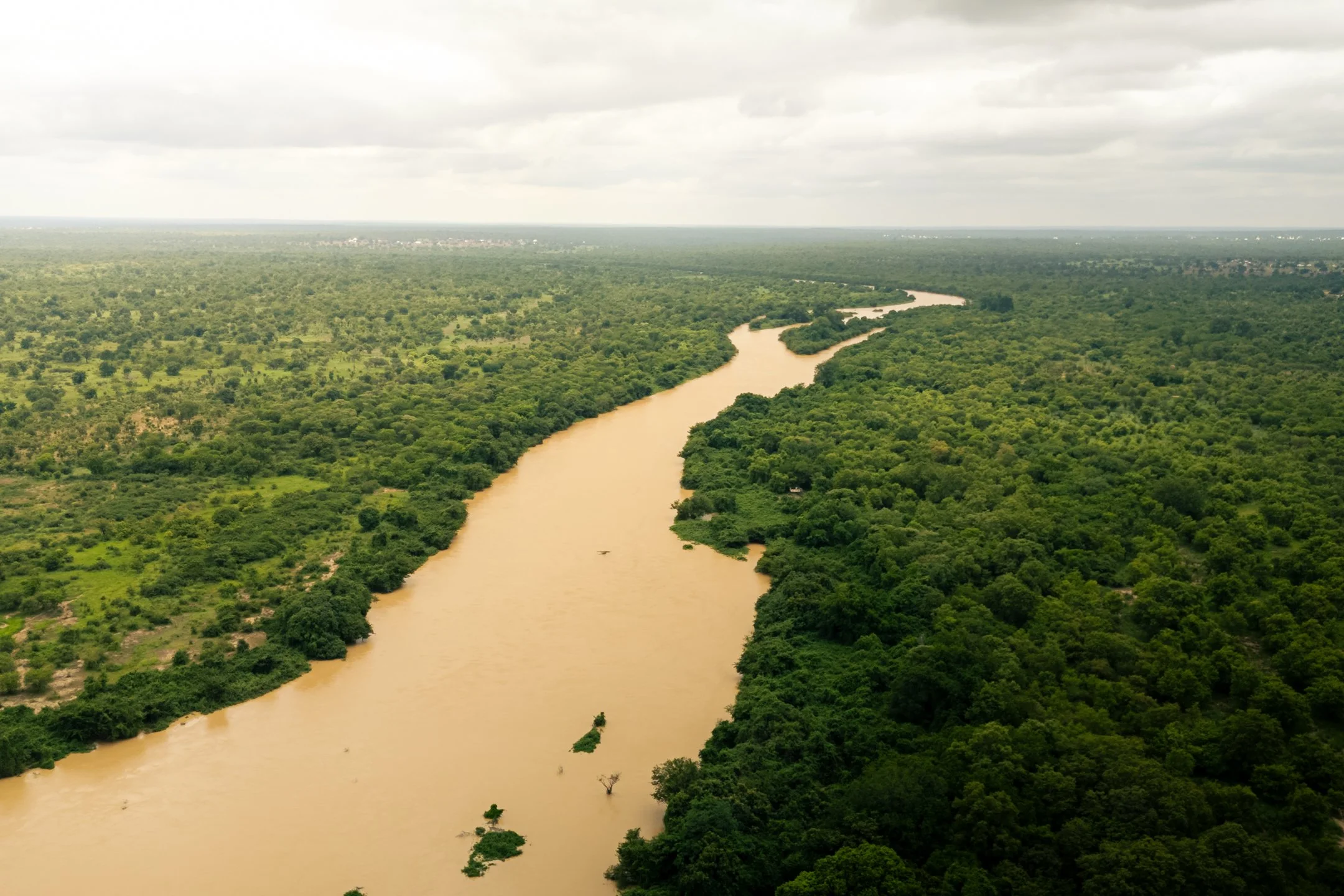
The flooded waters of the Black Volta River, separating Ghana (right) from Burkina Faso (left)
It’s not easy to reach; we managed to arrive after 3 days of driving endless dirt roads from the Eastern Region, but it was well worth the effort. We had spoken to someone who had visited the week prior, spent hours on the river, and didn’t manage to see a single hippopotamus.
As we entered the small house that doubled as a museum, our guides were excited to tell us they had just concluded a census and knew exactly where to look, so we hopped back in the car, picked up our boat captain at the next village en route to the river bank, and off we went. Within ten minutes of paddling against a heavy current, we found ourselves face to face with these majestic animals, nothing but a wooden canoe between us and turning into their afternoon snack.
It sounds a bit crazy, right? It was, but it was also raw and stripped down; the purest form of seeing these hippos in Ghana in their most wild state.
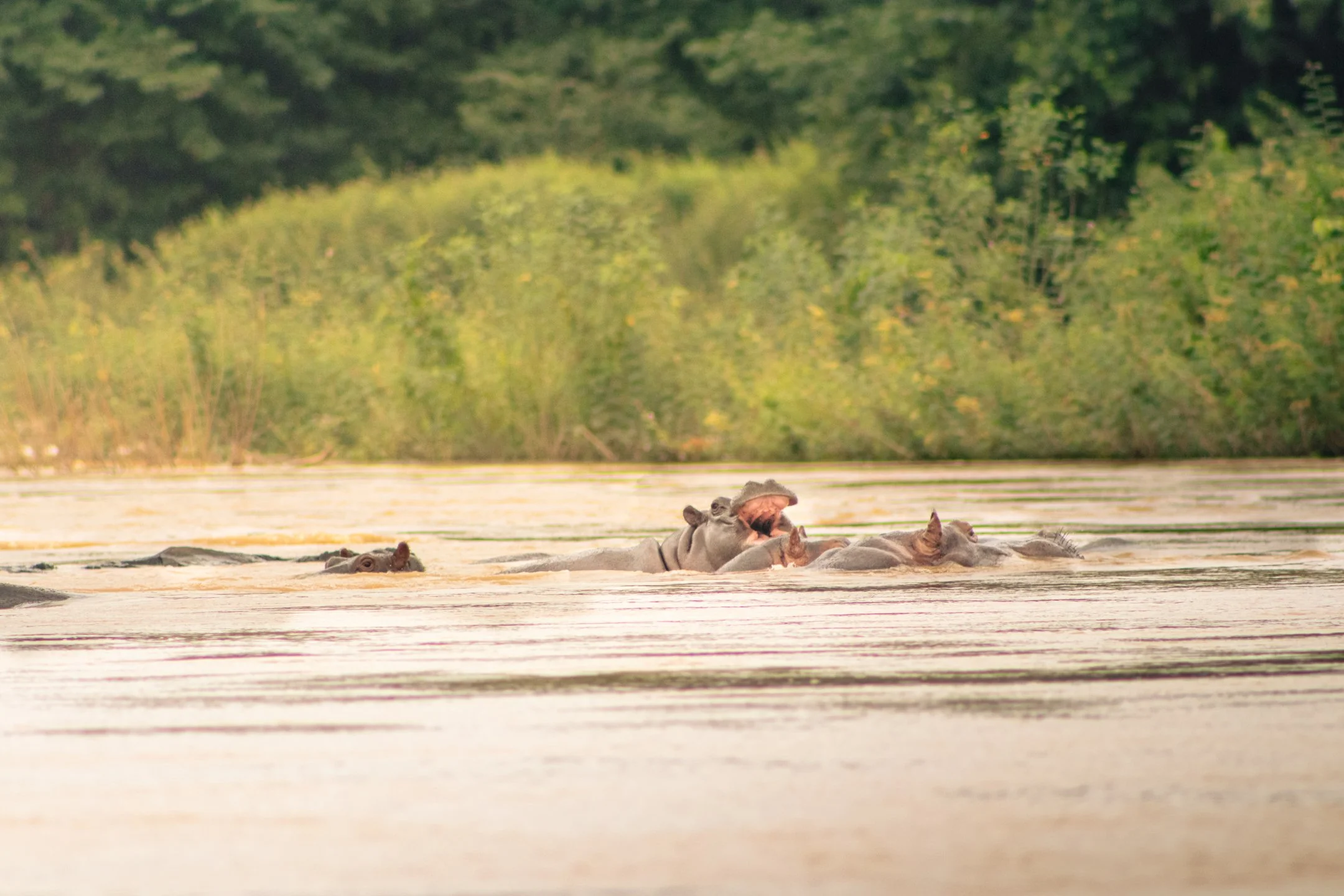
A bloat of hippos in the flooded Black Volta River, part of the protected Wechiau Hippo Sanctuary in Ghana
9. Lake Kivu, Rwanda
Central Africa had been brewing in my mind. Ever since reading Heart of Darkness in high school, the Congo and its mysteries have been tucked away into my subconscious. The longer I stay in Africa, the more I find myself daydreaming about it.
Traveling to Rwanda was a last-second decision, less than a week between booking the ticket and boarding the plane, so I didn’t have much planned beyond knowing I wanted to at least see the Congo, even if I couldn’t enter. Lake Kivu was the closest I could get.
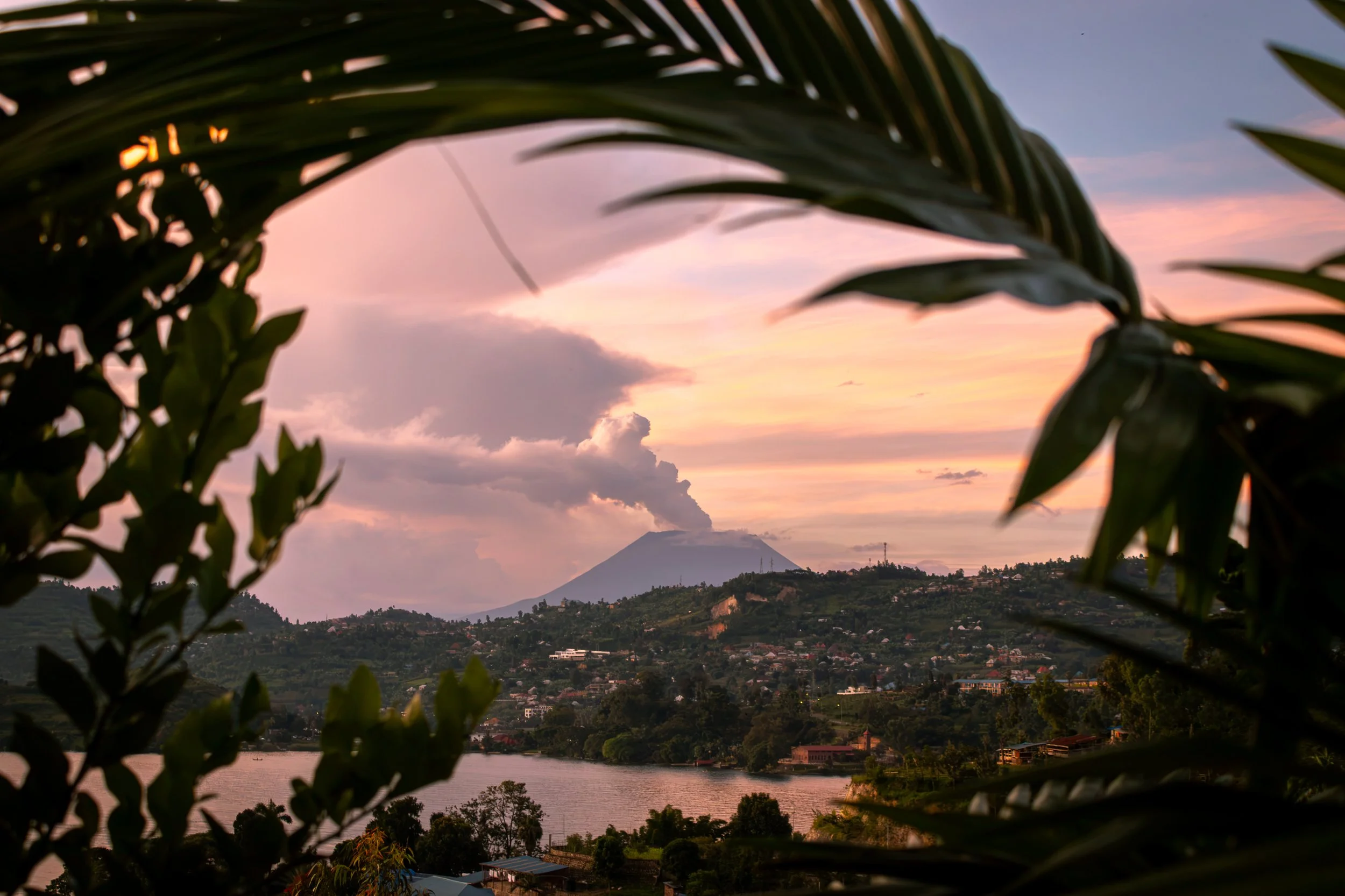
Mount Nyiragongo, in the Democratic Republic of the Congo, with Lake Kivu in the foreground
Rwanda is a complex country with a dark history, having endured the 1994 Tutsi genocide. It’s a tiny nation filled with greenery and rolling hills, but one gets the sense of something “deeper” going on, and the truth is, the fallout from the genocide is a major driving force behind the current conflict in Eastern Congo, but I digress.
Lake Kivu straddles Rwanda and the Congo and sits at the base of active volcanoes with tectonic plates nearby. Why is this important? Large amounts of carbon dioxide and methane gas are trapped at the bottom, and scientists believe a volcanic eruption or earthquake may just be enough to shake the water levels and release the toxic gas.
One can’t deny the natural beauty, though. At the time of my visit, both the Rwandan and Congolese Governments were set to reopen the border at Gisenyi. I spent my time staring across Lake Kivu, into the Congo, and listening to stories from my Belgian host about growing up in Bukavu and her experience living in post-genocide Rwanda, and, of course, swimming in Lake Kivu, flanked by conflict to the west and volcanoes to the east.
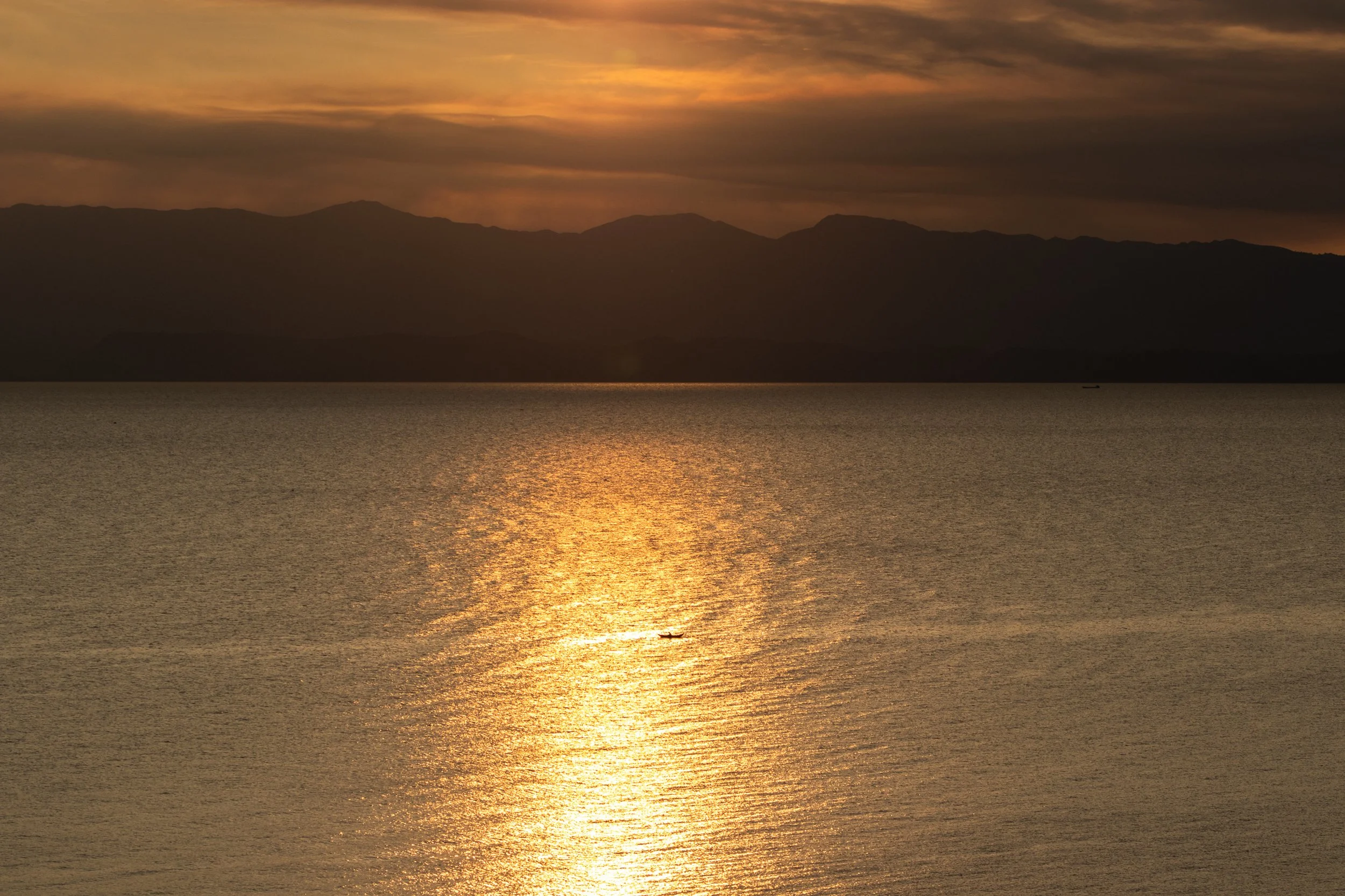
A boat floats on Lake Kivu at sunset as a storm rolls in, shot looking towards the Democratic Republic of the Congo
Rwanda left me with more questions than answers. A country scarred by its unimaginable history, embroiled in regional conflict, and a lake that’s one natural event away from disaster - how much can one place endure? Time will tell. In the meantime, I’ll carry the stunning scenery of Lake Kivu with me for a long while.
8. São Tomé and Príncipe
The second smallest sovereign state in Africa, one of the least visited countries in the world, São Tomé and Príncipe is less than a two hour flight from Accra and, seemingly, a convenient place to explore for someone living in Ghana.
Although a short flight, São Tomé and Príncipe isn’t the easiest to visit. The country isn’t on the international banking system, which means credit cards don’t work outside of higher end hotels and most foreign debit cards aren’t accepted at ATMs. That means that a certain level of planning and foresight (neither are a strong suit of mine) are important to ensuring you don’t run out of cash during your stay.
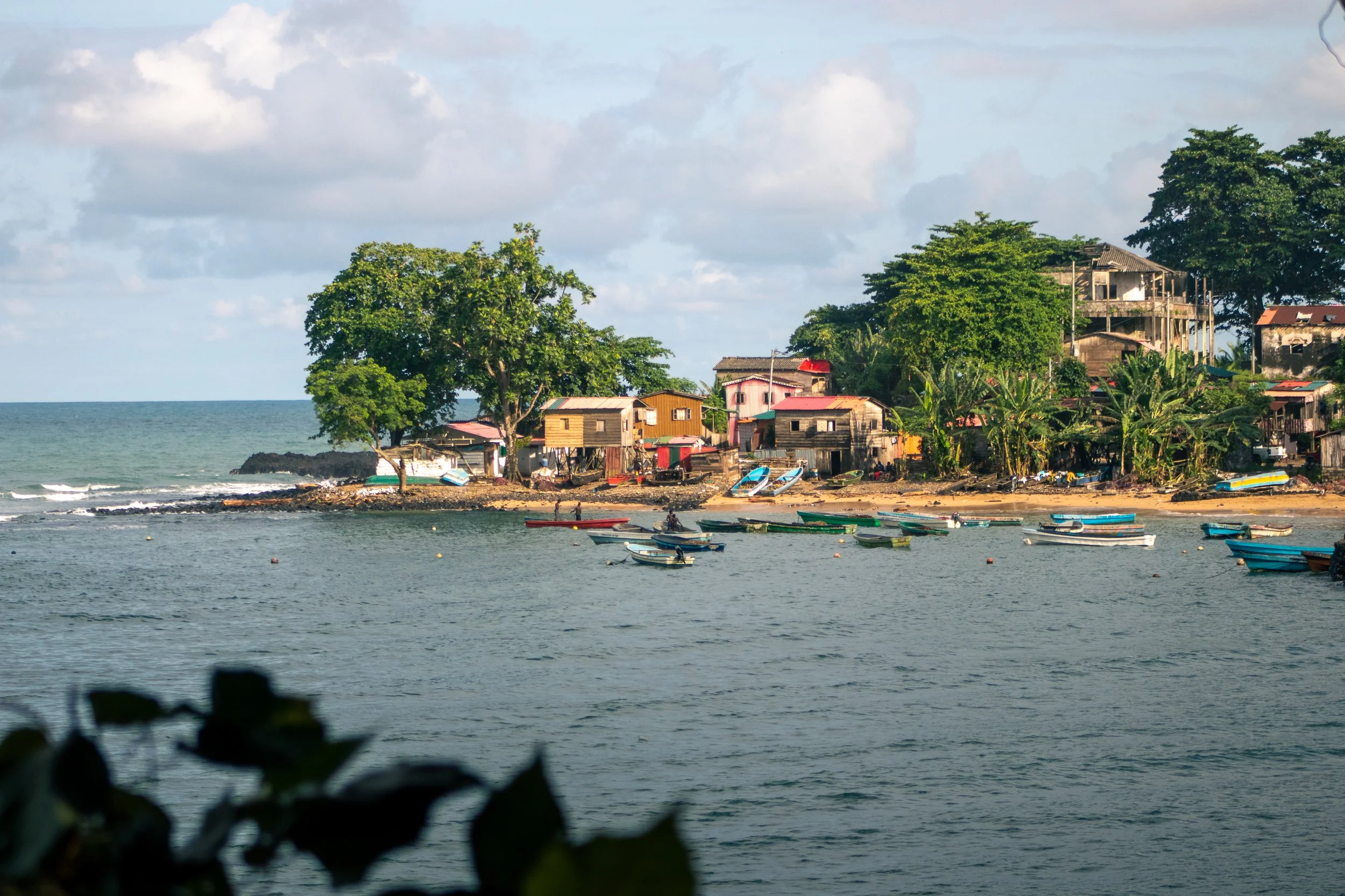
Porto Alegre, a remote village on the southern part of São Tomé, is one of the more difficult places to reach on the island
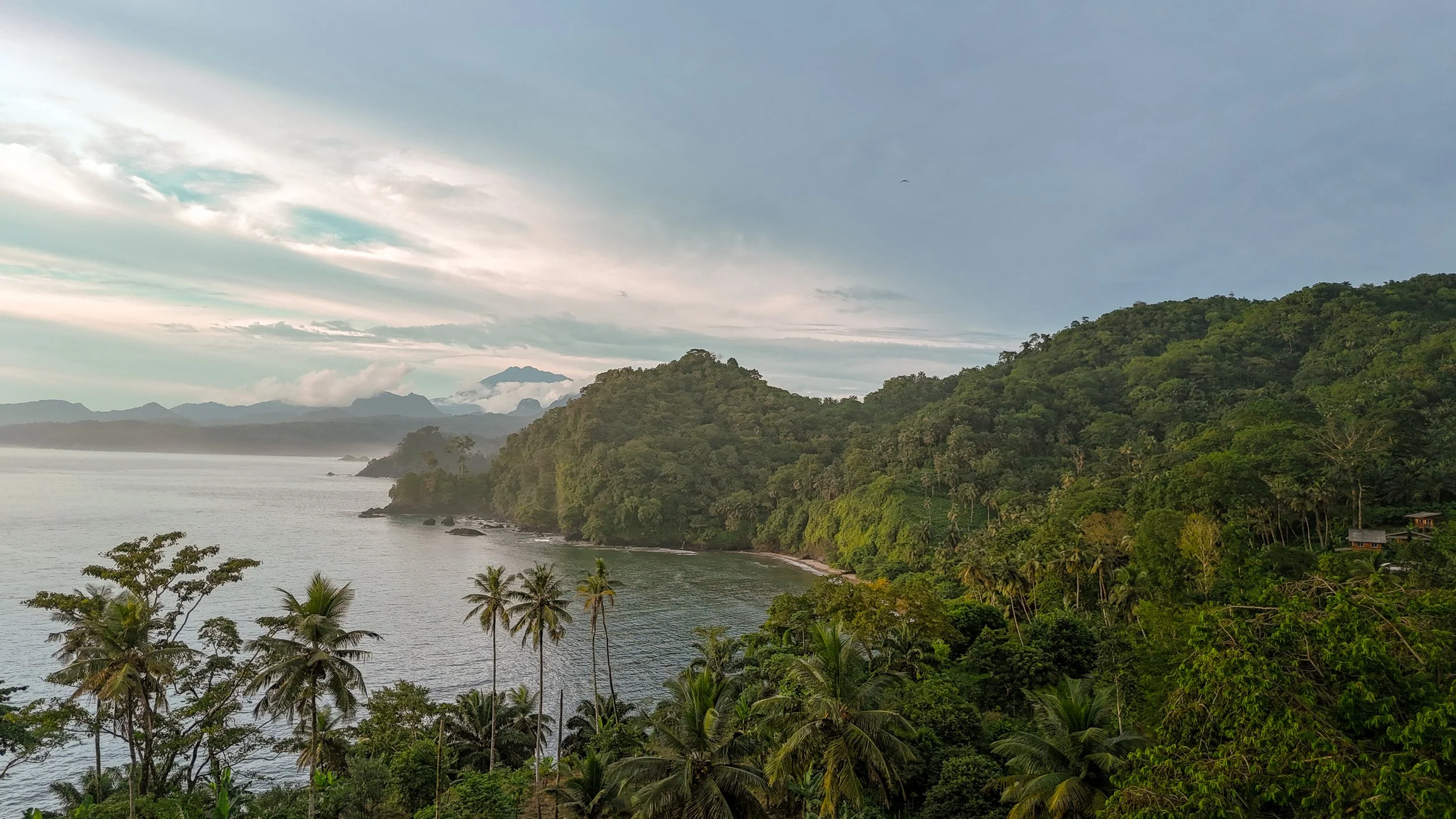
A few torrential rain storms and an overheated rental car later, São Tomé treated me to unspoiled nature like I’ve never seen, highlighted by coastal drives, coffee plantations, and the majestic Pico Grande, a volcanic plug that dominates the interior landscape of the country.
Such low tourism numbers also come with poor infrastructure. Roads are often difficult to navigate, especially after rain, power and phone networks frequently cut out, and healthcare is challenging to access. São Tomé and Príncipe isn’t necessarily a place to vacation, rather a trip to see, experience, and be a part of.
It’s one of the few places I’ve traveled where I truly felt disconnected from the outside world, where being present was the norm, not the exception.
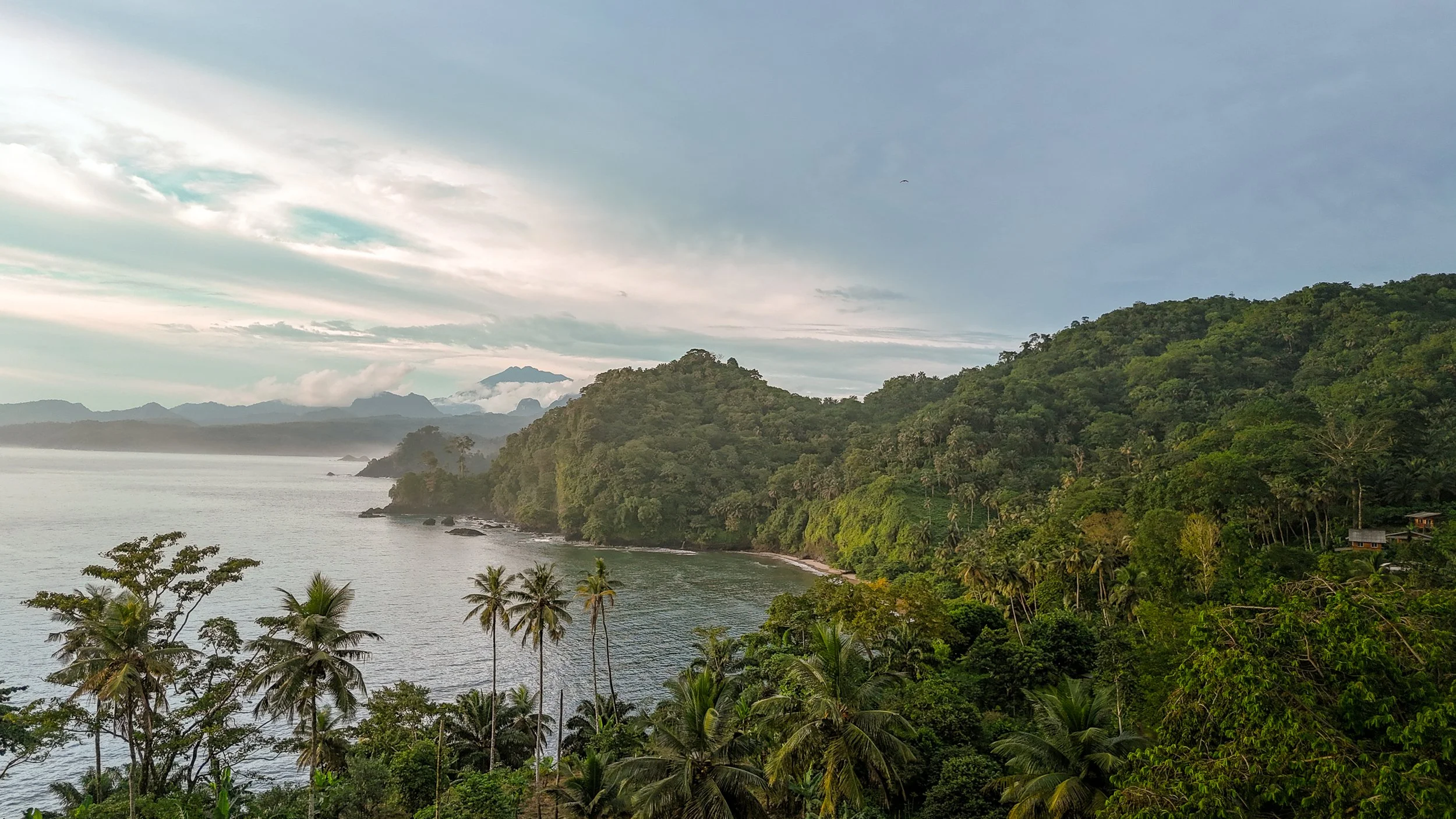
The island of São Tomé is filled with unspoiled nature and landscapes
7. Liwonde National Park, Malawi
Liwonde National Park encompasses 54,000 hectares of land and stretches along the Shire River, making it one of the premier wildlife destinations in Malawi.
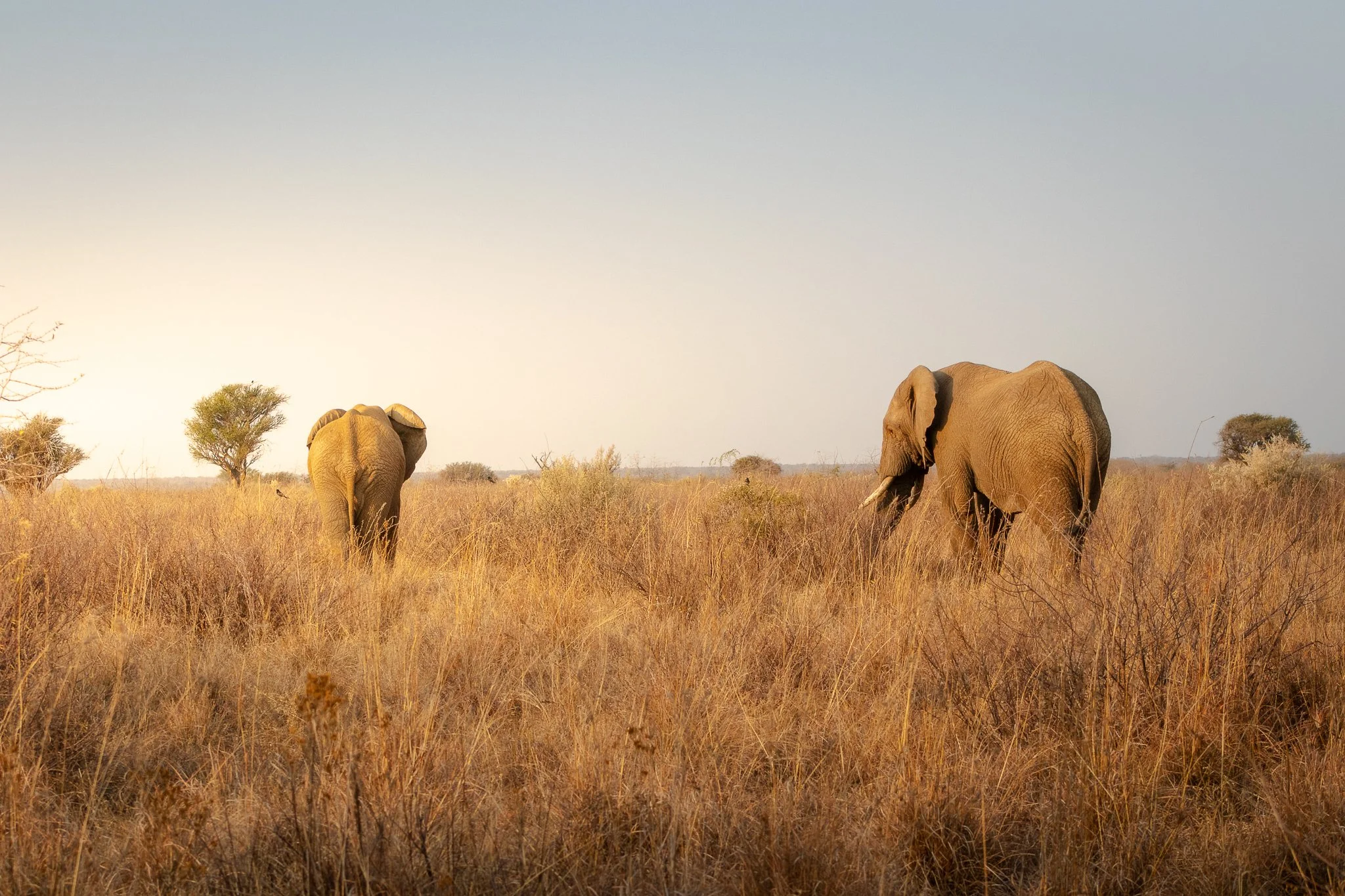
By day, the winding dirt roads yielded spectacular sightings: juvenile elephants attempting to assert their dominance, a cheetah digesting a fresh kill, and more.
As the scorching sun started to dip, I, along with the few other guests, clamored onto a boat and headed towards the Shire River.
Out in the open water, we quickly heard grunting, and a hippopotamus surfaced from below. Then another. And another. “Behind us”, our guide shouted as three more surfaced with a loud noise. “Look ahead,” another person said as five more appeared in the distance.
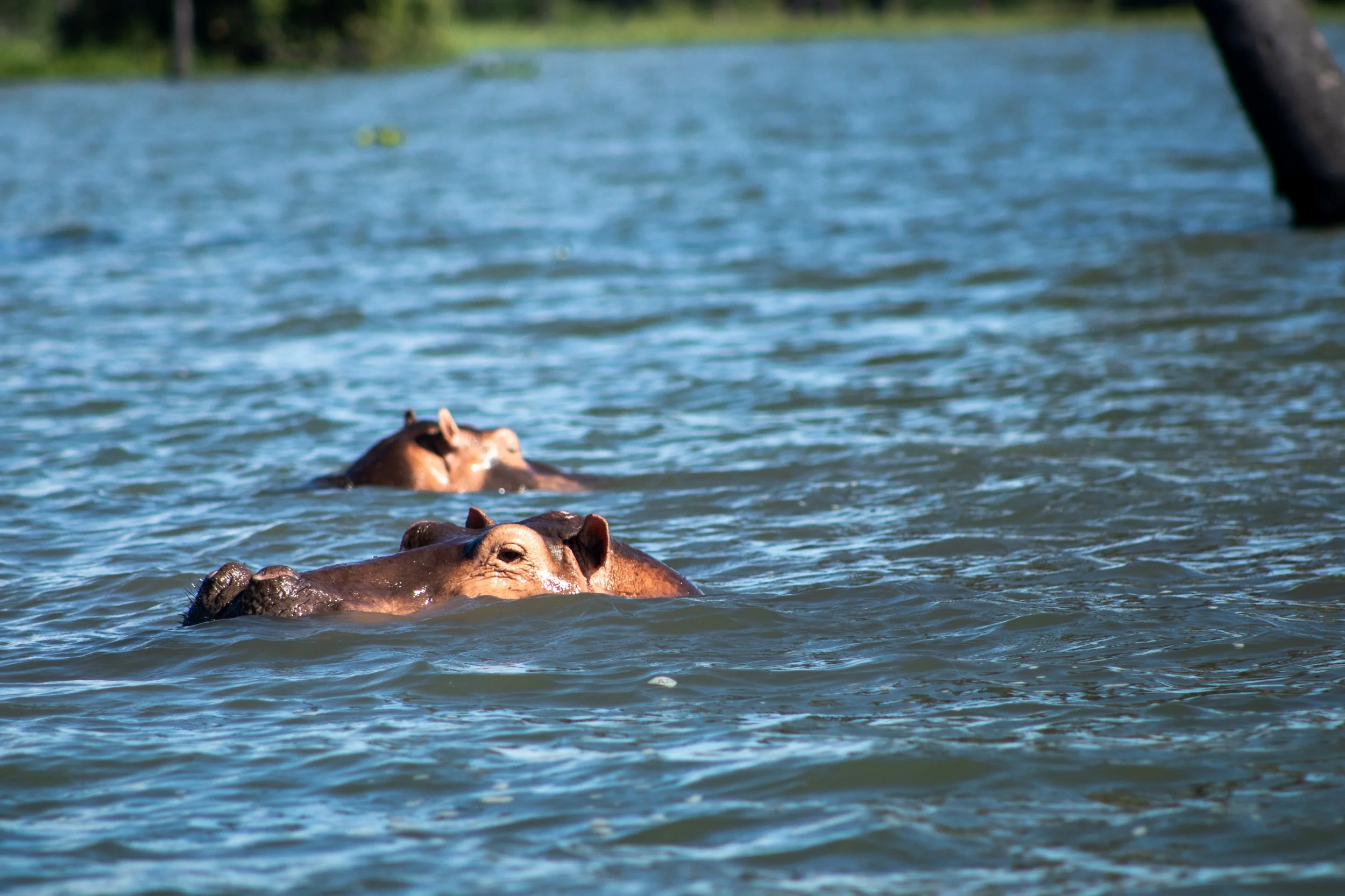
Hippos breach the surface of the Shire River inside Liwonde National Park, Malawi
For a period of time, I didn’t know where to look. As we bobbed up and down in the boat, hippos kept coming and going, seemingly nonstop, so much so that I lost count. I later found out that Liwonde National Park is home to an estimated 2,500 of them!
We continued making our way through the traffic, approaching a family of elephants on the riverbank as they cooled themselves in the water with the evening glow perfectly illuminating the scene. Again, a splash of water, a grunt, and an exclamation: “more hippos, turn around”.
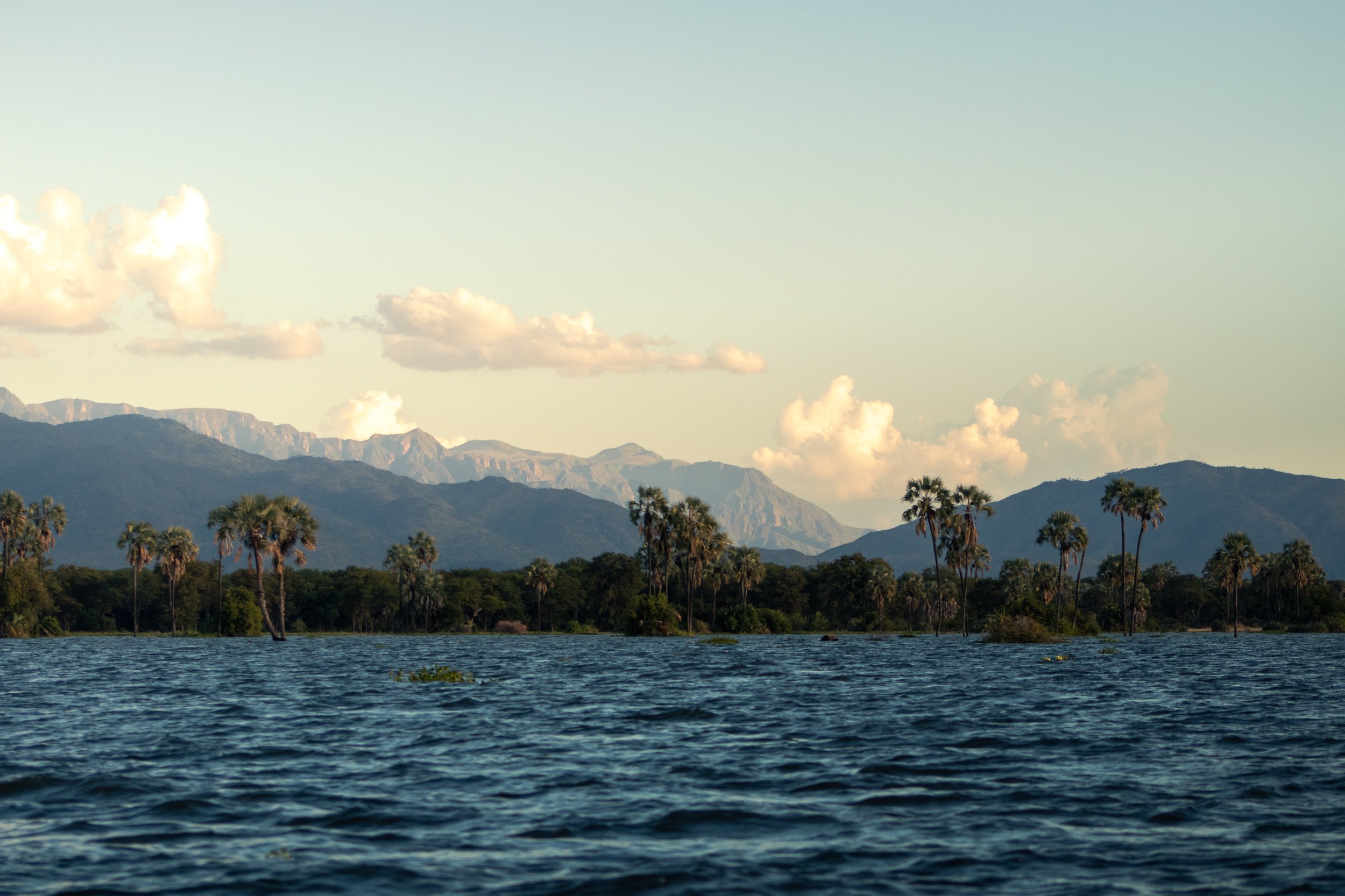
The sun sets along the flooded shores of the Shire River in Liwonde National Park, Malawi
I had come across these majestic, yet volatile animals one other time before this trip, but never in this quantity and certainly not from the confines of a rickety boat with nowhere to go.
As we returned to camp at sunset, all I can remember was the feeling of peace and gratitude, ready for a good night’s sleep after a full day immersed in nature.
6. Sunrise Whale Watching in Hermanus, South Africa
Ever since whale watching in Kaikoura, New Zealand, I constantly find myself researching whale migration patterns anytime I take a trip that’s remotely near the coast. As it turns out, August is one of the peak viewing months for Southern Right Whales and the town of Hermanus, South Africa, located less than two hours' drive from Cape Town, is considered to be the whale watching capital of the world.
Too good to be true since I happened to have a month off work in August, right?
My thoughts exactly.

The morning light illuminates the bay in Hermanus, South Africa
Working with a small budget, I opted for the cheapest excursion I could find, which meant waking up at 4 am, bundling up in layers, sleepily making my way to the harbor, boarding a boat in the frigid dark, and heading out to the bay.
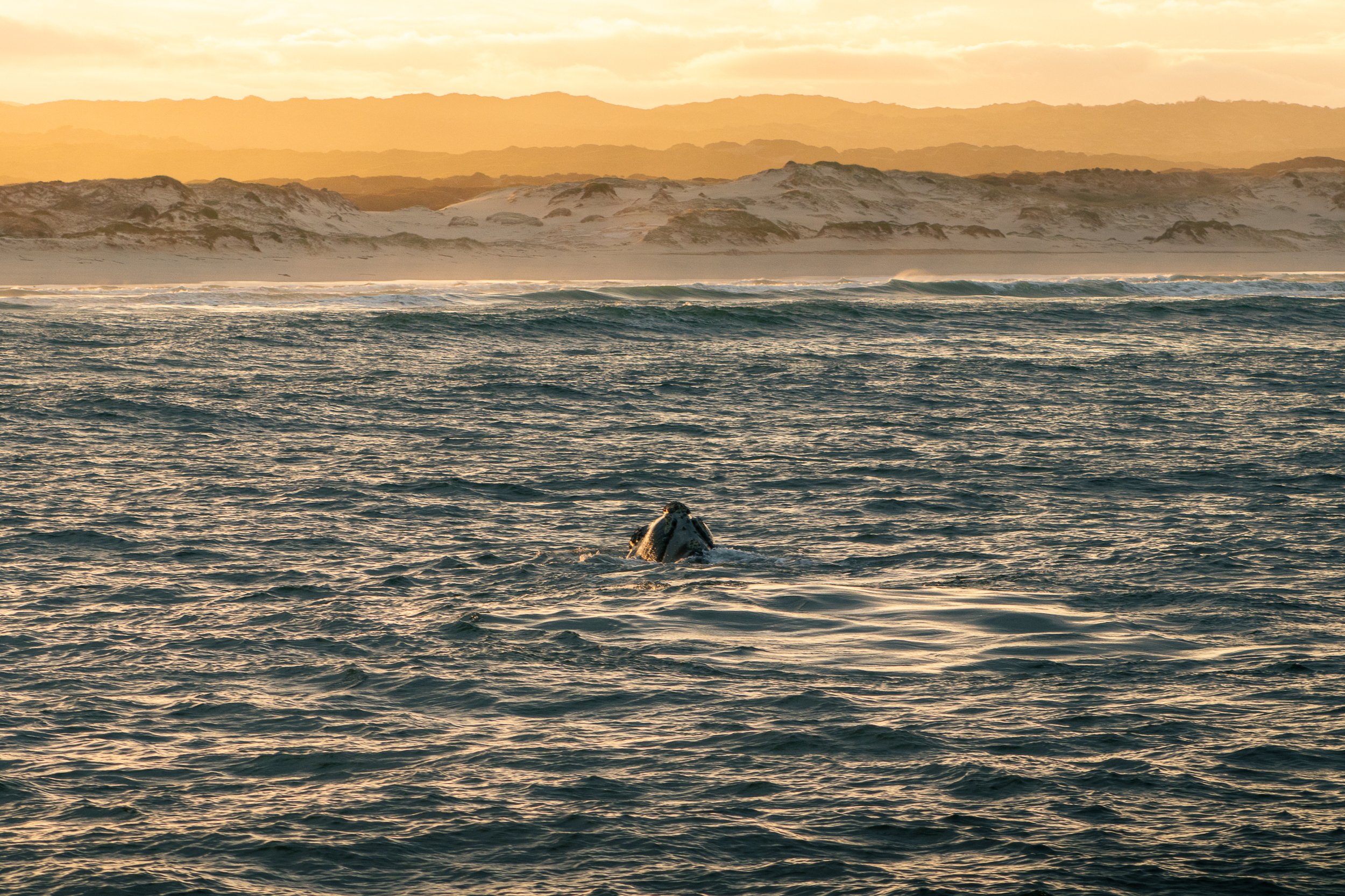
Soon enough, the orange glow of the sun warmed the cool South African winter morning as whales played in the waves around us.
Between an unbeatable sunrise scene and several whale sightings, this was one of the highlights of my time spent in South Africa, and an experience I won’t soon forget.
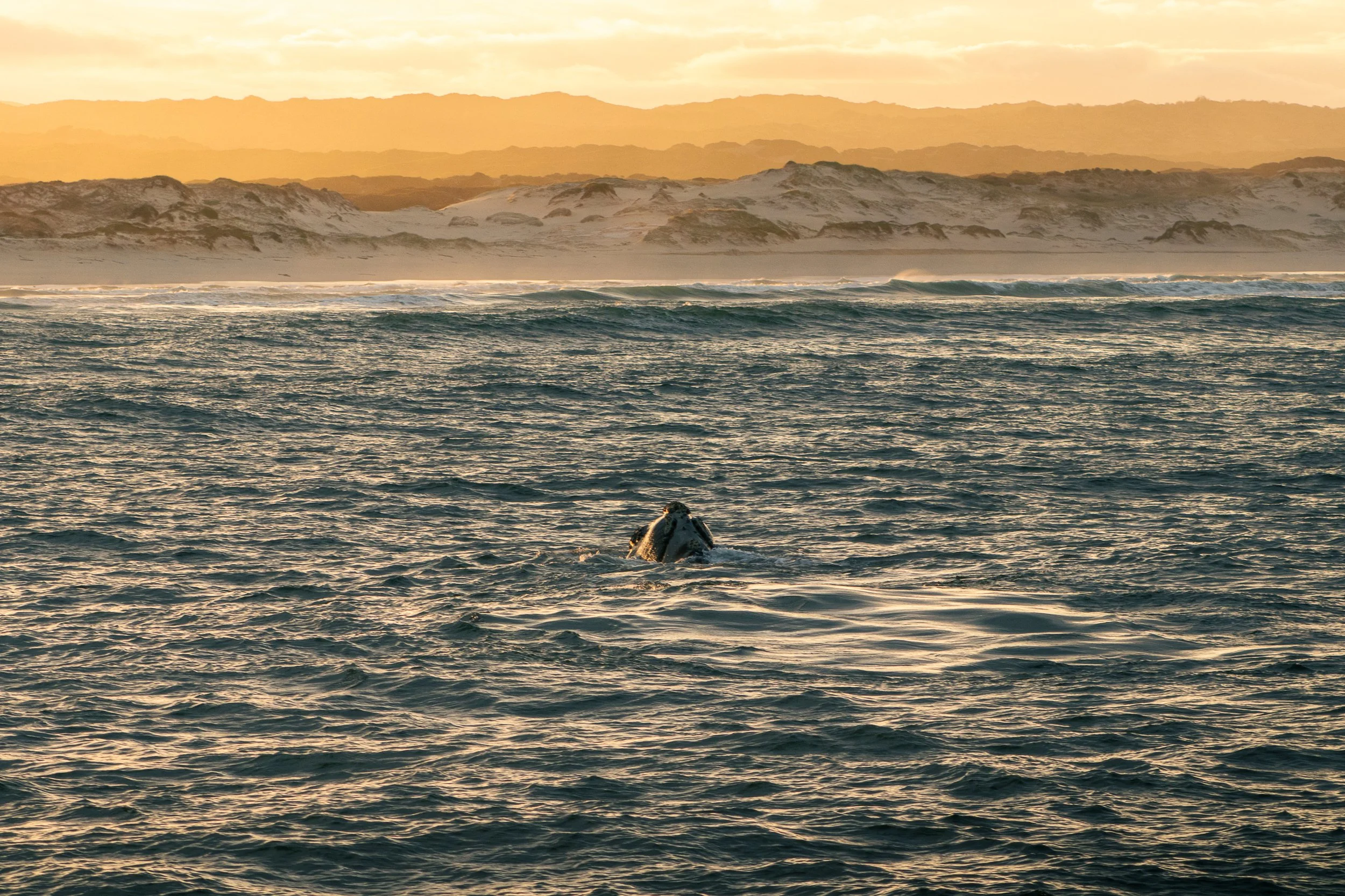
A whale breaches the water in the morning light in Hermanus, South Africa
5. Nyika National Park, Malawi
A quick internet search labels Nyika National Park as one of the most remote and hardest-to-get-to parts of Malawi.
Located in the Northeast of the country, the park itself spans into neighboring Zambia; however, it’s only accessible from the Malawian side.
Sitting on a plateau that rises to 2,600m, the name “Nyika” is derived from the phrase “where the water comes from.”
As Malawi’s largest, Nyika National Park is home to herds of zebra and is said (unsubstantiated in recent years), to have the highest density of leopards in Central Africa. From the logistics just to reach the entry gate to the unique and remote landscapes that awaited, I knew it was a must-visit.
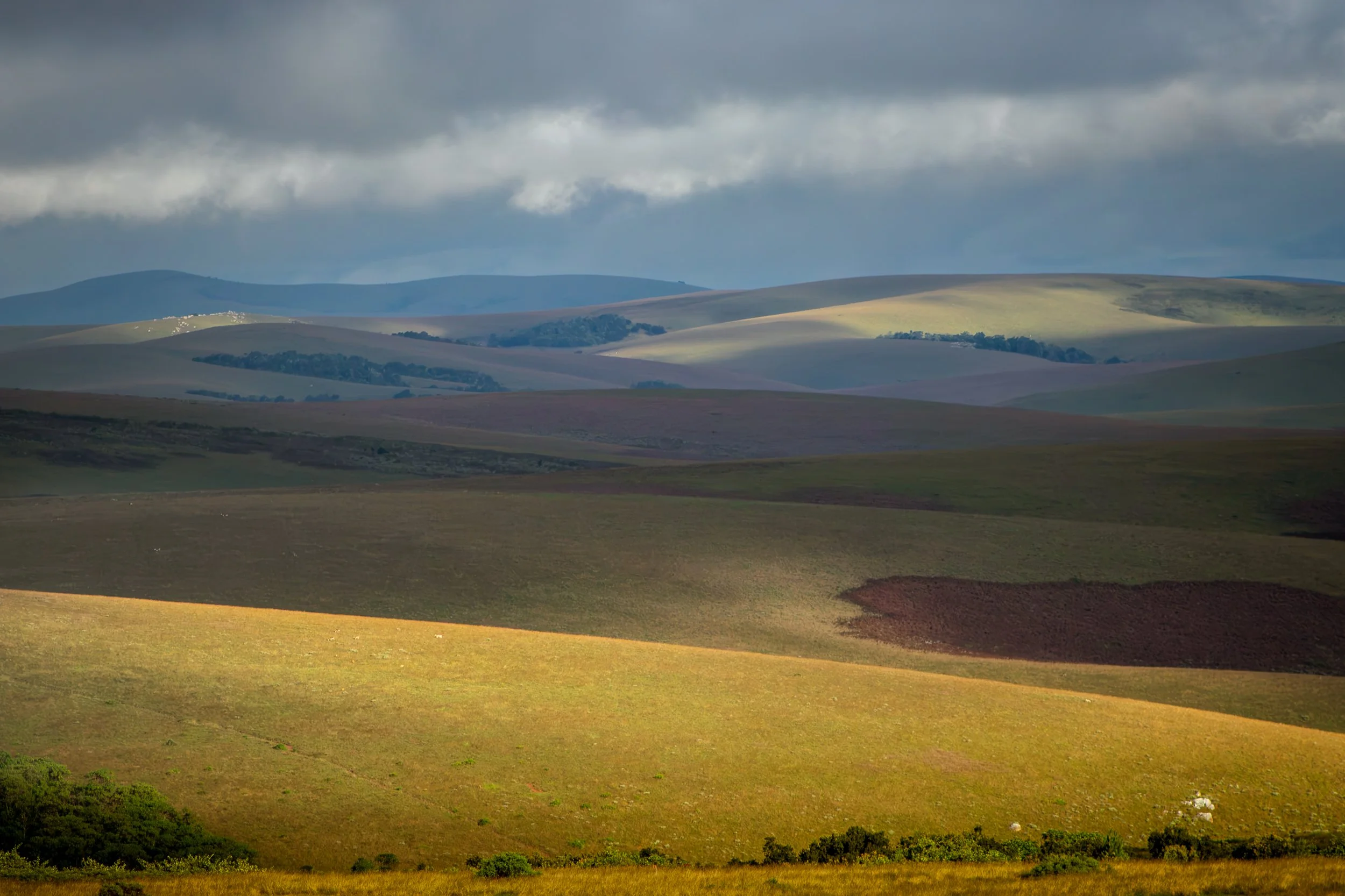
The rolling hills of Nyika National Park are often compared to the Scottish Highlands
So, I made my way from Southern Malawi to the north, using any means necessary, from car to moto to public ferry (see MV Ilala below), and finishing with a shared taxi to Mzuzu. Here, I picked up my Toyota Fortuner and set off.
Each time I mentioned “Nyika” as my destination at the police checkpoints, the officer grinned and said, “car might not make it, good luck.” A normal human being might get deterred after the fifth time, but it simply made me more intrigued.
The further I drove, the more the roads narrowed, and I began to question Google Maps. This seemingly endless, single-lane dirt road with no one in sight isn’t the best way to reach the park, right?
Wrong.
Sure enough, after hours of contemplating the repercussions of bursting a tire or overheating the car alone in the middle of nowhere in Malawi, a small cluster of homes appeared and led to the gates of Nyika National Park.
To describe the park as remote is an understatement. So much so that a worker asked to hitch a ride to the campsite; otherwise, he would have to walk the 60km to work and hope that a ride passed by. As it turns out, my new friend was extremely helpful when the car bottomed out and got stuck in the dense mud tracks 30km into the park.

Zebras are one of the most dense animal populations inside Nyika National Park
I finally reached the campsite by nightfall, pitched my tent, dressed in every layer possible (admittedly, as I’m sure you can tell, I did not extensively research this trip before doing it and was severely underprepared), and settled in as one of three visitors in the entire 1250 square mile park.
The morning sun and campfire was a welcomed warmth to a shivering night. My guide walked me through the rolling hills, spotting herds of zebra along the way, before a solo mountain bike around the campsite in the evening.
I’m not sure if it was the nature itself or the effort it took to get there, but either way, Nyika National Park is a top thing to do in Malawi, as far as I’m concerned.
4. Togo’s Akodessawa Voodoo Market
Imagine you’re on the back of a motorbike in Lome, Togo. You arrive at your destination, step onto the sandy road with the afternoon sun beating down, and breathe in.
You nearly gag at the stench, turn a corner, and see an open space; stalls of dead animals line an open space, with a sculpture covered at the center, blackened by sundried blood sacrifices.
Welcome to Togo’s Akodessawa Fetish Market, the largest of its kind in the world.
For West Africans, it’s the one-stop shop for ingredients needed for the Voodoo religion, but for me, it was one of those moments that was a stark reminder of where I was in the world.
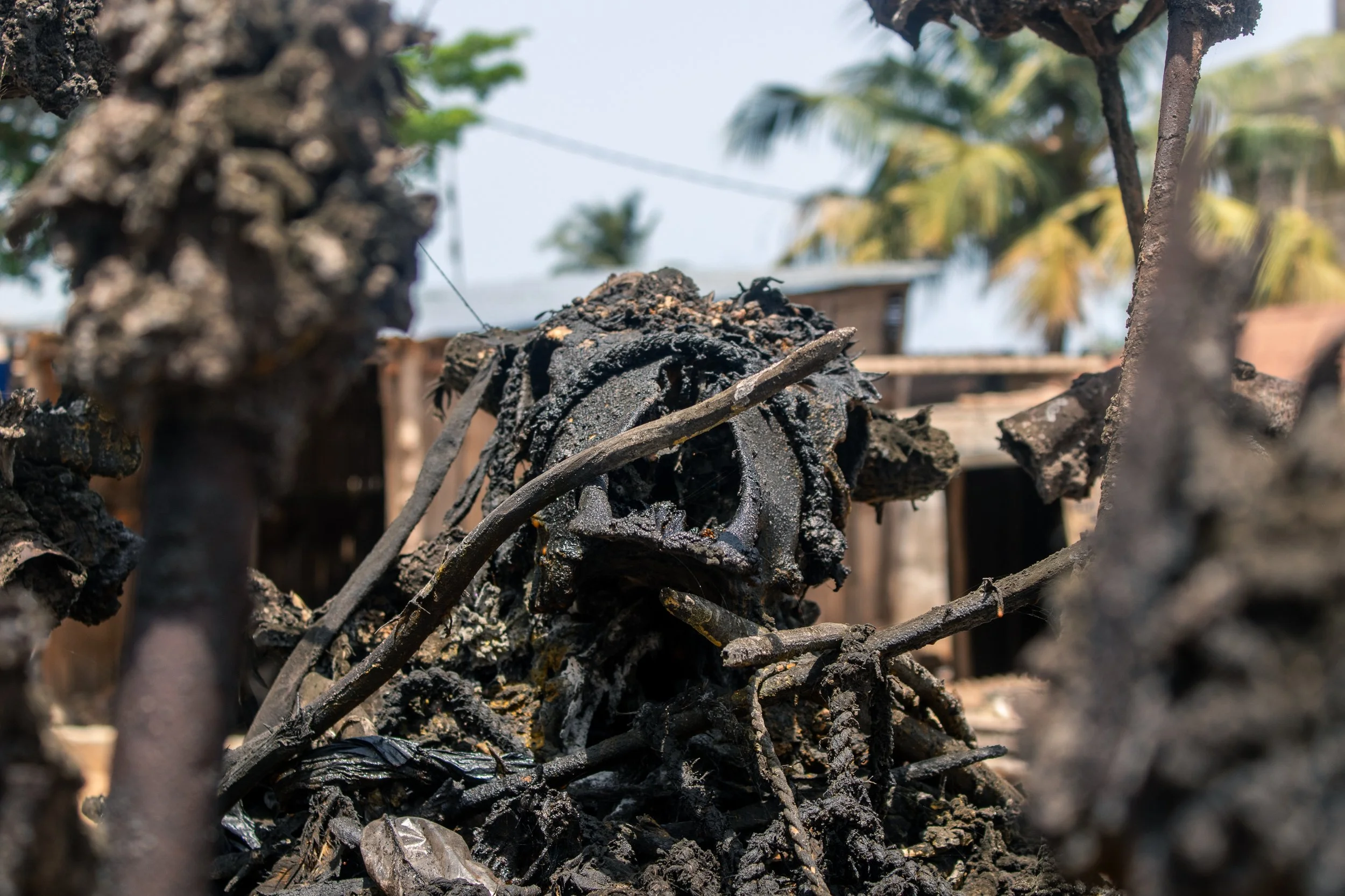
Regular blood sacrifices turn the sculpture black from the sunlight
I didn’t quite know what I was getting myself into. The only concepts I had of Voodoo were dolls used as a source of revenge and curses, but, as I learned, the term “Black Magic” came with colonial roots. A way to fearmonger and create divide, to justify ongoing occupation of Africa.
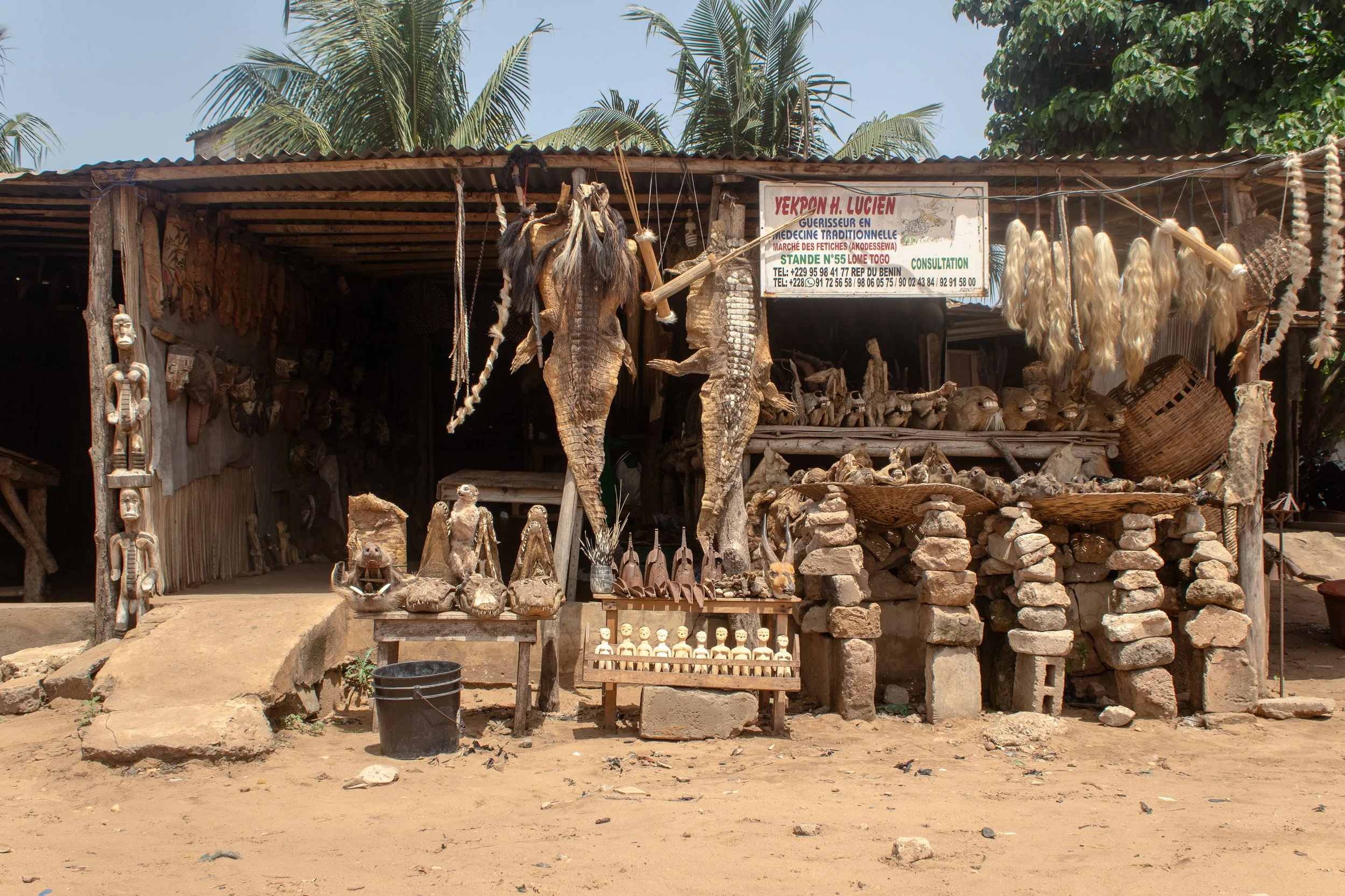
Strolling around the market, we encountered everything from monkey tails to puppy heads, snake skin, and more. But what we didn’t find was anything “dark”. Instead, Voodoo priests consult with visitors on intrinsic desires, like ensuring safe travels, finding love, or obtaining financial security.
Needless to say, I went into this day with zero expectations, but came away with a deeper, more meaningful understanding and respect of the parts of West African culture that we don’t often learn about.
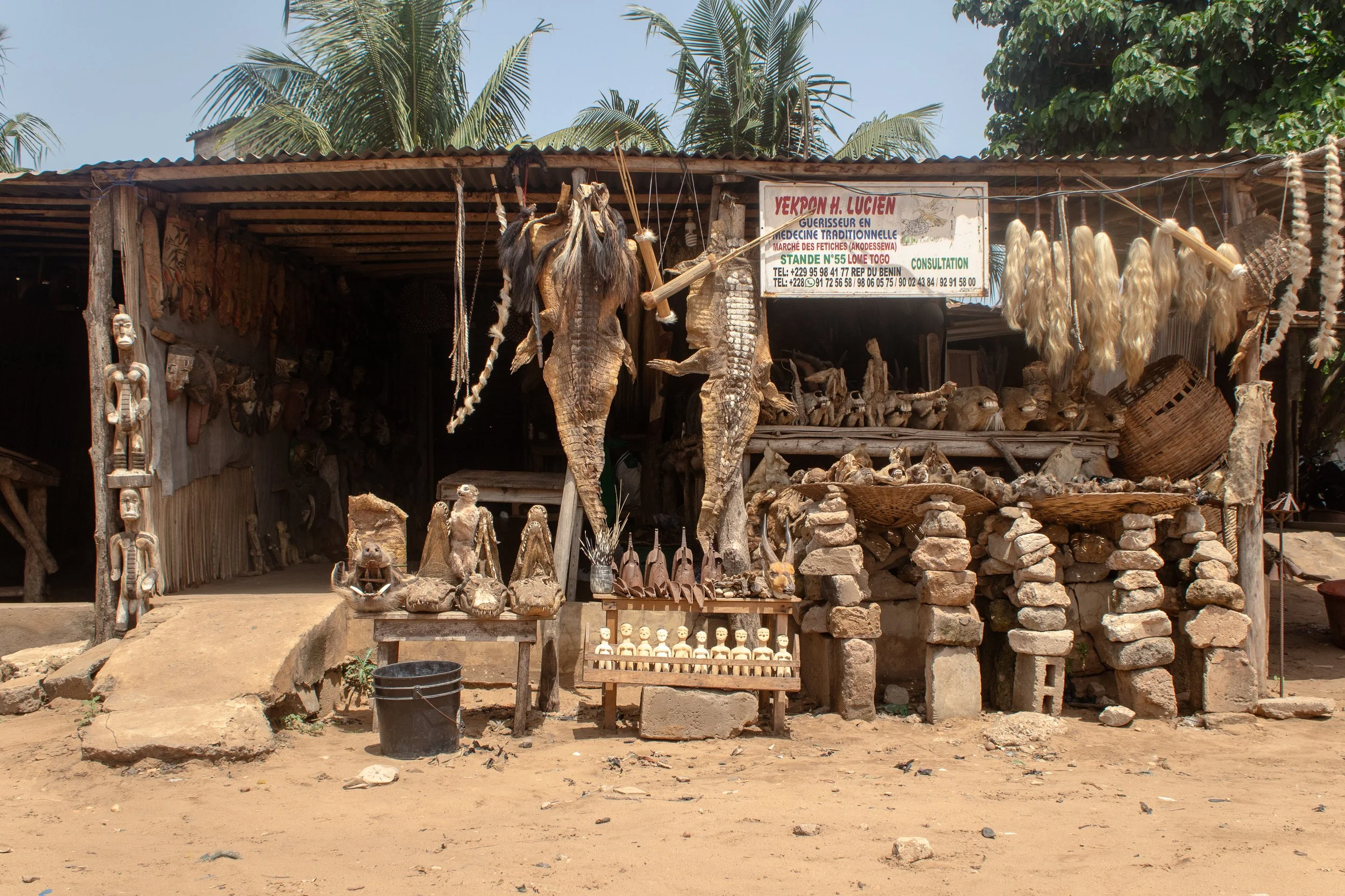
A dusty stall sells common ingredients for Fetish Priests, just one of many at Akodessawa Festish Market
3. Sani Pass, Lesotho and South Africa
As I planned for a month in South Africa, I kept coming back to the Sani Pass. A 9km stretch of tumultuous road descending from the Mountain Kingdom of Lesotho and into South Africa, often described as one of the most thrilling 4x4 roads in the world, it’s commonly touted as the “Roof of Africa”.
What could possibly go wrong, right?
In this case, a failed 4x4 car rental, an adjusted itinerary, no phone working in Lesotho, and that’s just the beginning.
When the car rental agency said they couldn’t honor the 4x4 reservation, my brain immediately went to “how do I make this work?” I had planned to drive up the pass from South Africa into Lesotho, but surely coming down would be easier.
I took the next few hours to adjust my itinerary, working in reverse, and drove into Lesotho at another order before reaching the pass at the top.
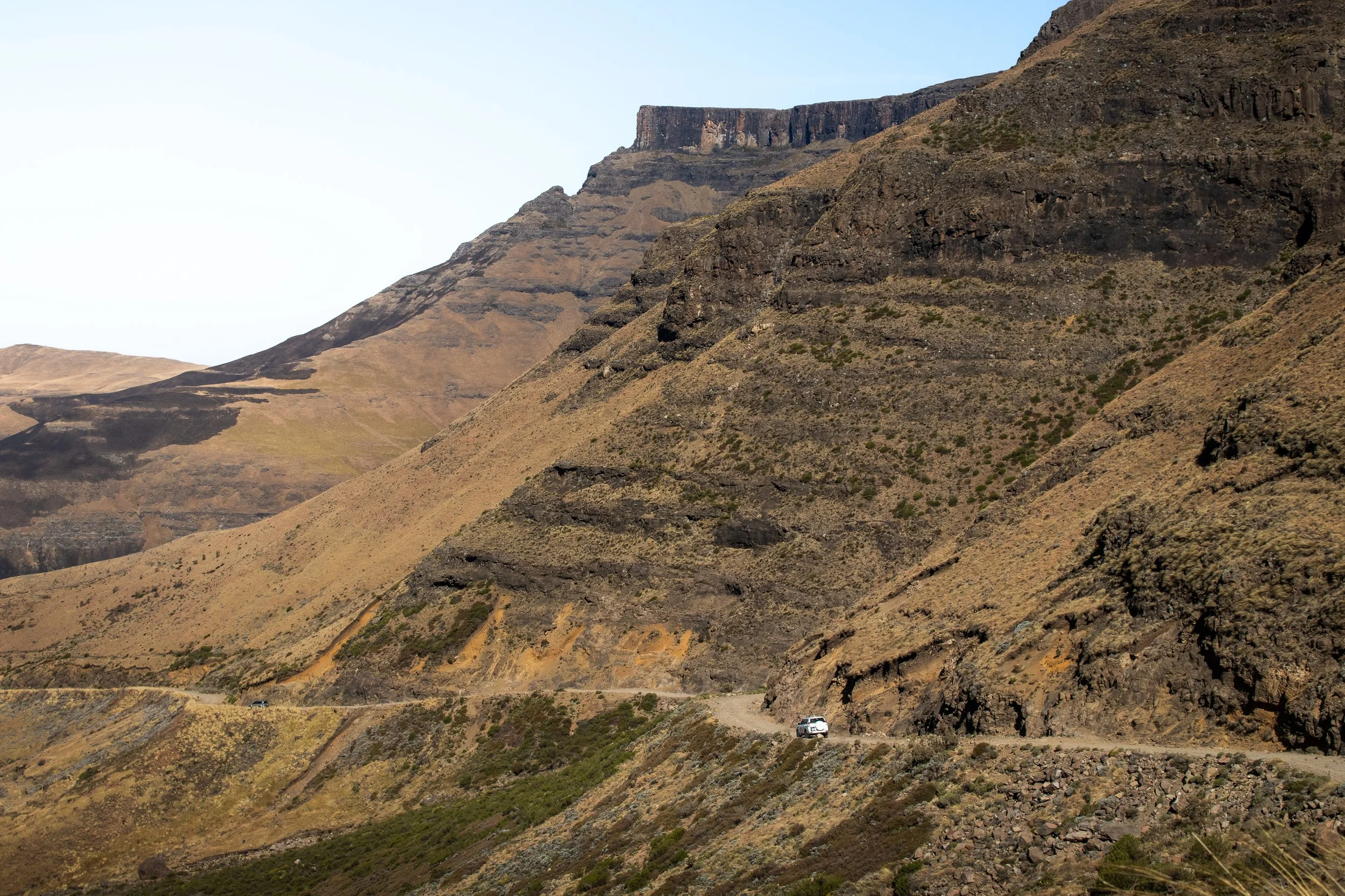
A car carefully navigates the start of the Sani Pass, descending from Lesotho into South Africa
It was a windy morning, so much so that I could barely open the car door and stand up straight. I sat at the Sani Mountain Escape for hours, warming myself with a cup of coffee, watching vehicles struggle up the pass and constantly questioning myself and what I was about to do.
As the afternoon rush of tourists from the South African side entered the pub, it was now or never. I walked across the empty road into the Lesotho immigration shack, stamped my passport, got behind the wheel, and slowly started the solo descent in my Rav4.
Thirteen hairpin turns later, each with a comforting name such as “Suicide Bend” and “Devil’s Corner”, I hit the tar again on the South African side, stamped my passport, thanked my lucky stars for the experience, and carried on my way.
To this day, I still vividly hear the final words from the South African Immigration Officer at the bottom border: “This is a 4x4, right?”
“I think so,” I mumbled, before jumping back in the car and driving off.

A view from the bottom of the pass, in South Africa, and back up towards Lesotho, the “Roof of Africa”
2. Hiking Ghana’s Waterfalls
I’m ashamed to admit that I had been visiting Ghana since 2010 as part of Aya, a non-profit founded on the belief that everyone has the right to quality education. That meant that most of the time in the country was spent on hours-long busses between Accra and Berekum instead of exploring.
When I relocated in 2022, I settled in Ghana’s Eastern Region and was exposed to the natural beauty.
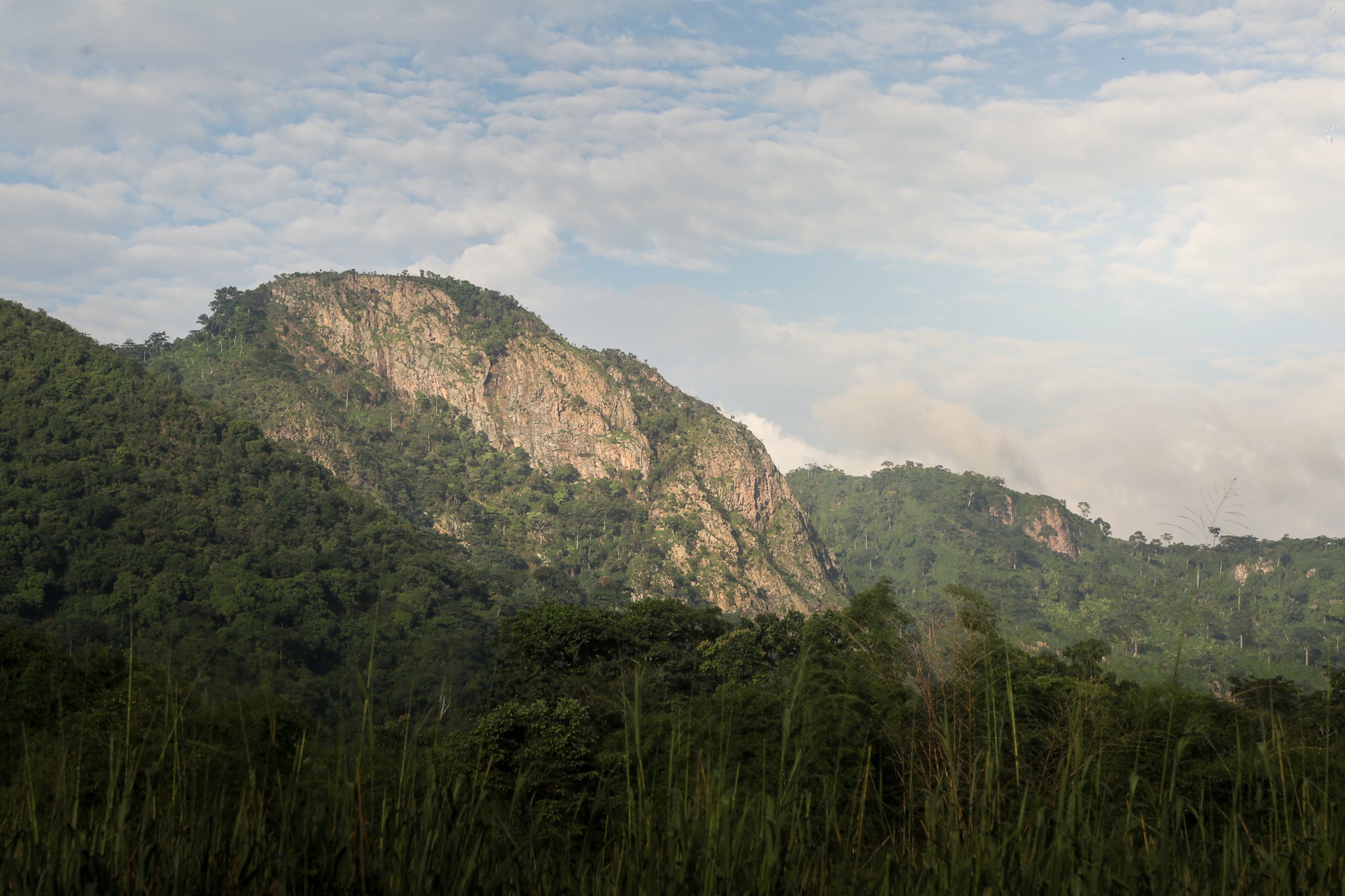
The Akuapem-Togo mountain range, as seen from Ghana, which makes up part of the border with Togo
Fast forward three years and some of my favorite places to explore are the mountains of the Volta Region, on the border with Togo. Not only will you find Mount Afadjato, Ghana’s tallest peak, here, but the area is also home to stunning waterfalls and hikes.
Nothing beats an early evening stroll to Wli Waterfalls or a morning hike and swim at Tagbo Falls. Make a weekend of it and unwind at Tagbo Falls Ecolodge, one of the best places for some rest and relaxation.
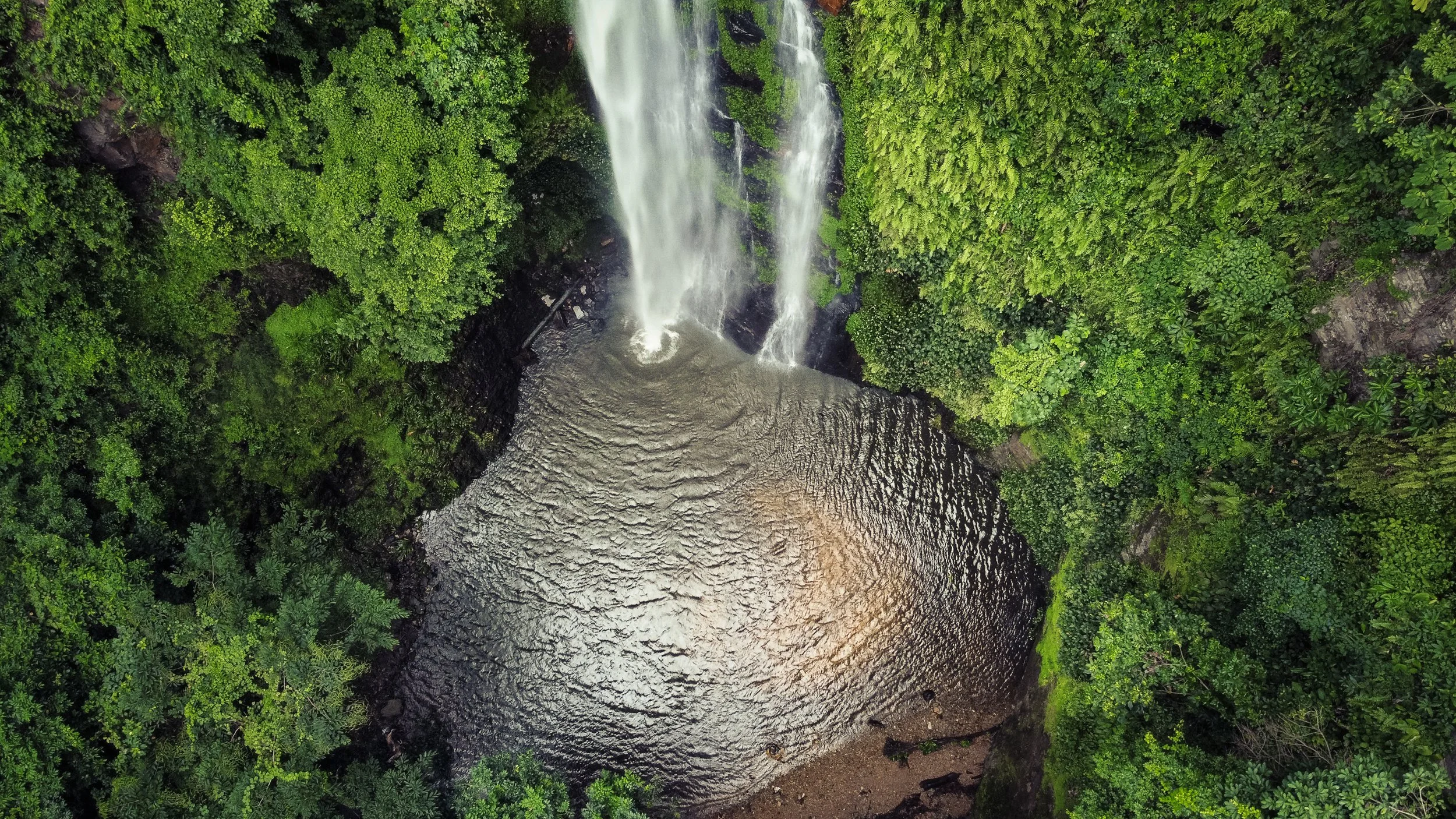
Tagbo Falls as seen from above in Liati Wote, Ghana
1. MV Ilala Ferry, Lake Malawi
Many people ask “why Malawi,” and, to be honest, I don’t really have an answer. I had a month off from work, a flight credit to use, and Malawi fit the criteria of within budget, filled with nature, and plenty of unknowns. So, my response to this question ends up being “why not.”
One experience that I kept coming back to while researching the country was the MV Ilala.
This historic ferry was built in 1949 in Scotland and has since been ferrying passengers and cargo up and down the shores of Lake Malawi since its launch in 1951. Carrying up to 360 passengers and 100 tons of cargo, the MV Ilala runs the length of the lake, from Monkey Bay up to Chilumba near the Tanzanian border, on a weekly schedule.
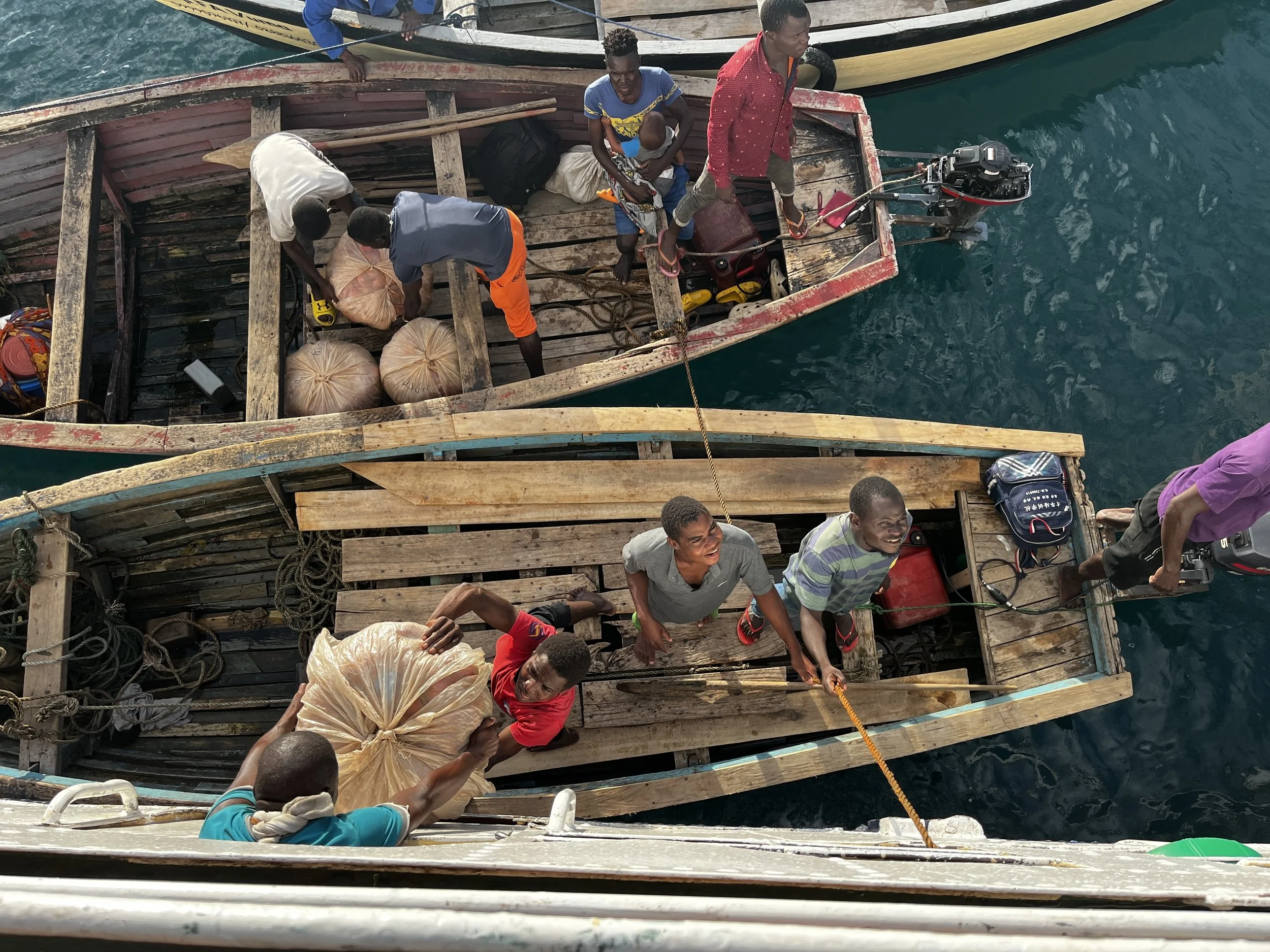
Passengers help load both cargo and people into fishing boats below, the only way to get to shore at many ports
I needed a way to connect the southern part of my Malawi itinerary to Nyika National Park, and what better way to do that than spend 40 hours on a ferry, packed to the brim with 300+ new friends?
Skeptical that the email I sent a week in advance was enough to secure a cabin, I arrived in Monkey Bay early in the morning to a throng of people and cargo, waiting in line, and was pleasantly surprised by the ease of the process.
Ticket in hand, I navigated the crowd and boarded, watching from the top deck as passengers loaded everything from mattresses to stoves, and more. Soon enough, we left the port and were on our way.
Many of the ports of call along the route are too shallow for the ferry to dock, so it was a shock to me when we dropped anchor and fishing boats came out to collect people and baggage, a stream of traffic climbing up and down the side of the ship.
At the second stop, one of the MV Ilala’s official shore boats stalled its engine and was left stranded bobbing up and down in the lake’s waves, signaling for help from shore. By the time that was solved, the weather had turned, winds picked up, and the captain was afraid of capsizing, so we stayed put off the shores of Senga Bay, effectively delaying our travel by 7+ hours.
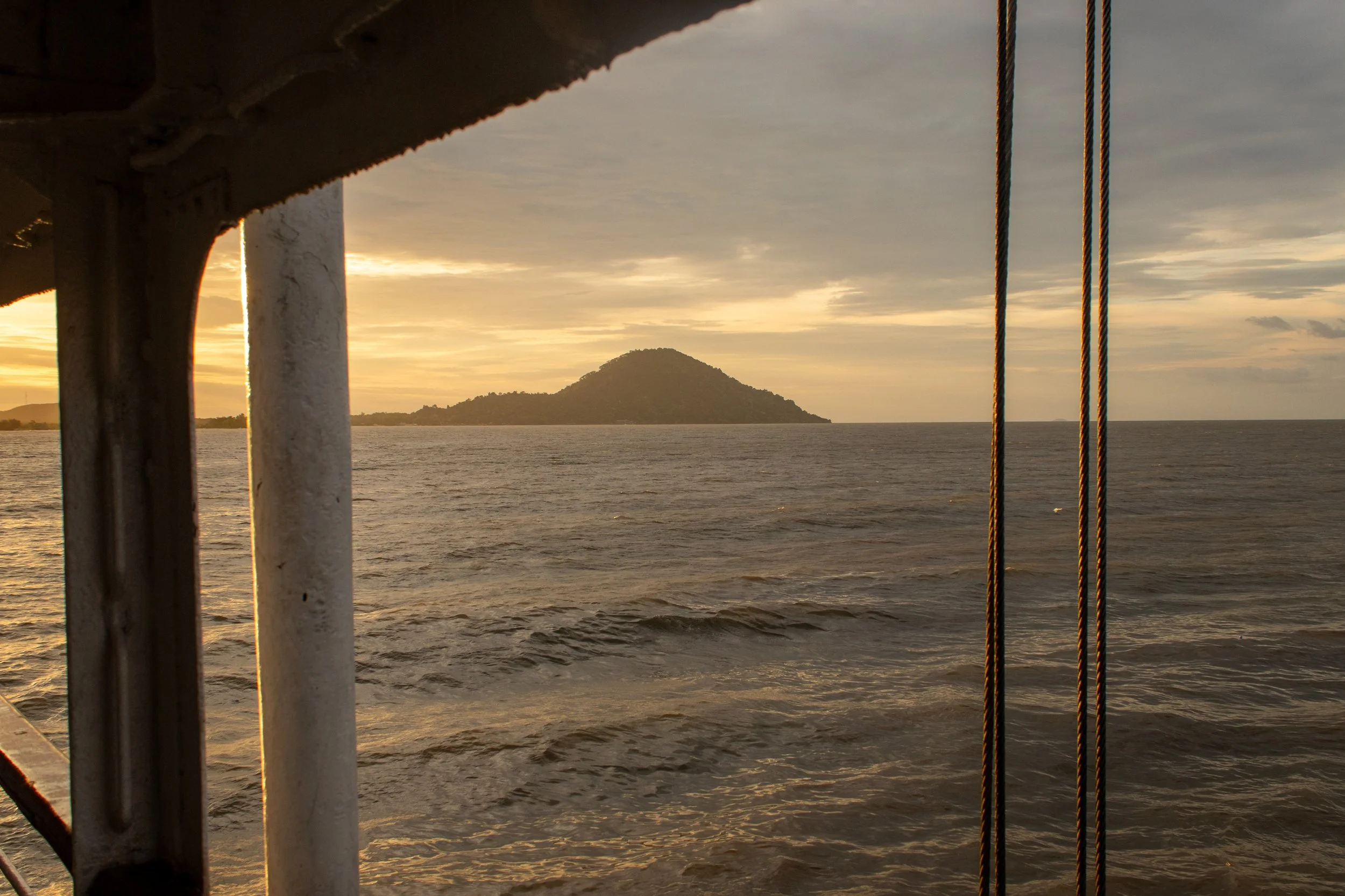
The sun sets along Lake Malawi as we dropped anchor and spent the night after winds picked up
After waking the next morning and wondering why it felt like we weren’t moving (in reality, because we weren’t), the captain cleared us to continue.
A fellow traveler and I decided to disembark at Likoma Island to stretch our legs. As the sun set, we made our way back to the port, elbowed our way into one of the wooden shuttle boats that were so deep you had to stand and use each other for support, before making our way back to the ship in the dark.
I’m convinced that re-boarding is a special skill, having to wait until the waves lift your boat up, grabbing hold of the railings at the right time, and hoisting yourself back onto the ferry with the help of people behind you making sure you don’t fall backwards.
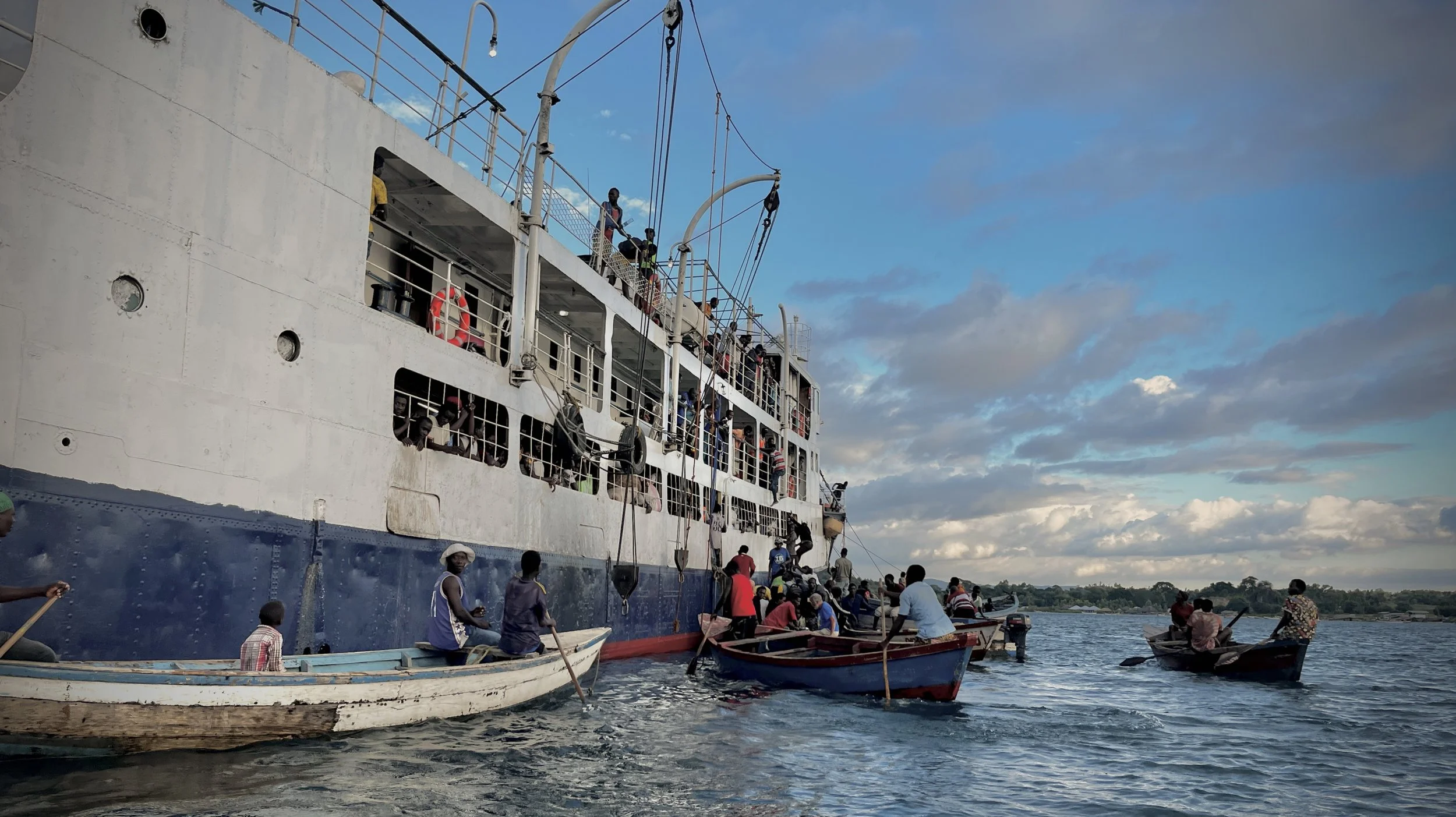
Getting on and off the MV Ilala is often an adventure in itself, climbing from the side of the sip into awaiting fishing boats
On we went, eventually reaching Nkhata Bay at 3 am. I descended below deck to the massive crowd crush trying to disembark, tossed my bags into a waiting boat, and climbed through the dark to reach them. We finally made it to shore after 2+ days traveling Lake Malawi, I pitched my tent in the dead of night, and watched the MV Ilala Ferry pull out of port the next morning from shore.
An experience I won’t forget anytime soon.
Looking Back
I’m now on year four of living in West Africa, and although it’s taught me so much, there’s plenty more to learn and absorb.
This move and these experiences have brought a necessary shift in my perspective, a boost in resilience and adaptability, and, despite the chaos, a level of calmness I never experienced living in the United States.
Thanks for reading, and cheers to whatever adventures may lie ahead in this crazy life of ours.
What are some of your favorite travel stories? Share in the comments below and, until next time, stay safe & happy travels.
Ready to upgrade your camera gear? Here’s what travels with me on every trip:




Sharing is caring! Pin this post for later.



Embracing Adversity Through Travel: How a trip to Ghana changed my outlook on life
Through all of my adventures over the years I've learned plenty of lessons. One that has stuck with me is just how much travel has changed the way I think and embrace challenges on a day-to-day basis. Here's a story about a trip to Ghana that tested my patience, but proved important to my growth.
Traveling isn’t always comfortable, in fact, it’s the moments in which I feel too comfortable that I begin to question what I’m doing.
Why is that? Why do I actively seek to put myself in those challenging situations?
For as much thought as I've put towards solving this internal conundrum, I still don't have an answer.
With that being said, one thing I have come to learn throughout all of my adventures is that when it feels as though the universe is relentlessly breaking me down, it may actually be working to build me up.
It’s certainly a not foolproof theory, but more times than not it seems to be the case.
As I reflect back on the countless times I’ve faced this lesson over the years, one particular experience comes to mind.
Here’s a short story about a trip to Ghana that was full of mishaps and close calls, but ultimately forced me to embrace the adversity and ultimately feel an overwhelming sense of gratitude. Enjoy!
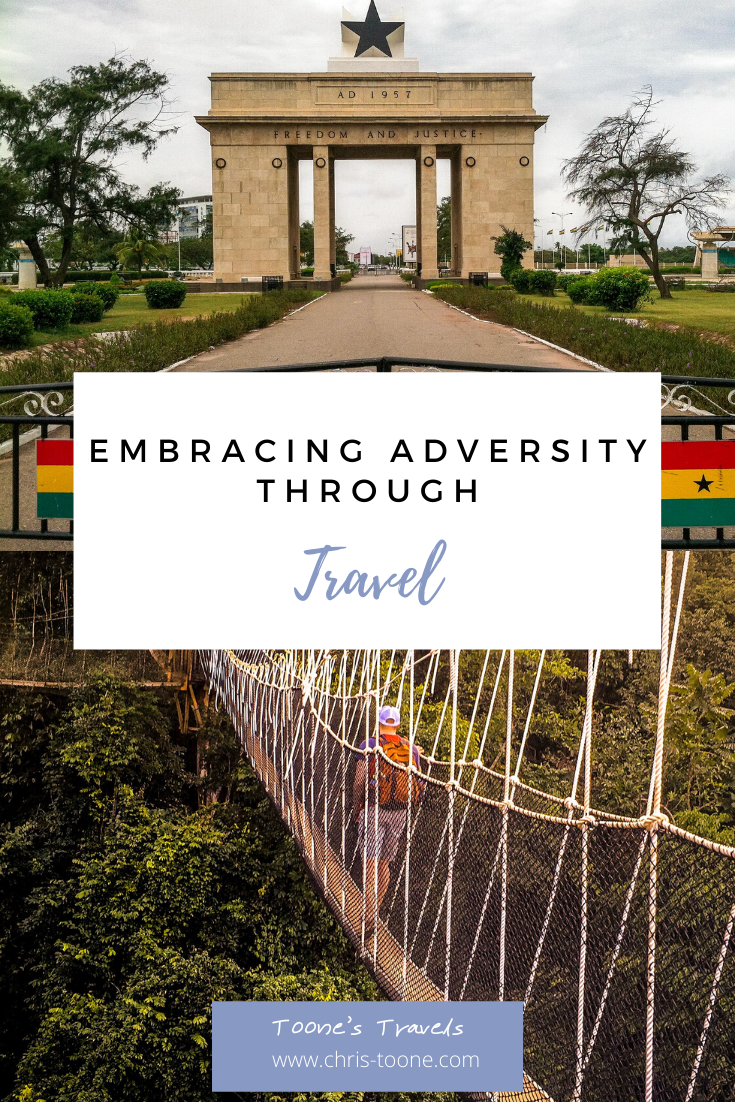
Located just outside of the historical city of Cape Coast lies Kakum. A national park of Ghana that encompasses nearly 150 square miles of protected forest, the famed canopy walkway offers visitors the chance to meander through the treetops across a series of swinging bridges.
It was only natural that when two new volunteers, Heather and Courtney, came to Ghana to help with The Senase Project for the first time, a visit to Kakum National Park was at the top of our to-do list… but we almost didn’t make it.
The morning started off like any other: a casual breakfast of eggs and white bread accompanied by a warm cup of Milo, Yoo-hoo chocolate milk’s Ghanaian sibling, before packing up and heading out.
After a quick taxi ride through the bustling streets of Accra, the three of us were dropped off on the side of the highway at Kaneshie Station. This is where we’d find a tro-tro to take us to Cape Coast.
If you’re not familiar with the various modes of transportation in Ghana, tro-tros are essentially private vans that operate as shared taxis, traveling fixed routes between towns and all around the major cities.
Some are in good shape while others you can’t help but look at and question the number of remaining trips before the wheels inevitably fall off.
Once obtaining a ticket, it’s best to send up a quick prayer and hope for a window seat so the breeze can relieve the inevitable sauna-like environment that comes with passengers squeezing together, some sharing seats or commandeering laps.
It might sound miserable to those who haven’t experienced one, but it makes me smile just thinking about it.

Tro-tro packed to the brim in Accra, Ghana
The station itself was filled with a cacophony of sounds and a confusing aroma, somewhere along the spectrum of sewage and lukewarm seafood.
Hawkers worked the pathways, trying their best to sell dried fish and bofrot, Ghana’s version of a donut, while young teenagers shouted destinations from the open windows of the vans.
It seemed as though we might struggle to find our way amidst the madness, but luckily there’s an important caveat that accompanies this mode of travel: the drivers won’t depart until all of the seats are full.
So, when a group of wide-eyed and clueless foreigners roll up, someone will inevitably ask for a destination and provide a personal escort to their friend’s van.
After what felt like an hour of waiting around, the driver and his team had sold enough tickets. The three of us piled into the back seat, carefully ducking under the exposed metal of the ceiling as we shuffled over the bags of produce that filled the aisle.
Off we went.
Interested in learning about how I first caught the travel bug? Check out this post:
The drive between Accra and Cape Coast typically takes less than 3 hours and although we had lost some time waiting for the tro-tro to fill up with passengers, we were still optimistic for the day ahead. After all, we were cruising the open road and catching views of the Gulf of Guinea as we went… nothing could bring us down!
That is until we arrived at a police barricade.
These checkpoints are a routine part of life in Ghana; simply a way for the police to patrol traffic. The driver rolled down the window and sheepishly handed over the required documents.
The officers paused and looked at one another, took a second glance at the provided papers, and then began to speak.
It was clear that something was off.
Our once vivacious driver appeared to curl up like a puppy, tail between his legs and all. We continued to sit in silence until a fellow passenger turned around and informed us that the driver has been caught using a fraudulent license.
“Well, that’s a new one,” I thought to myself.
I was eager to see how this was going to play out. Would the driver be arrested? Would the vehicle be seized? Would all of us be left stranded on the side of the road? My imagination was running wild.
No, none of that happened. Simply a slap on the wrist, an order to obtain a legitimate license, and a modest bribe.
Back to the open road, we went, laughing it off as a story to tell our friends and unaware that it was just the beginning of what the day had in store.
All of a sudden we heard a massive “pop” immediately followed by the sound of metal dragging along the asphalt.
The three of us simultaneously lifted our feet out of sheer confusion and panic, unsure of if the floor was giving way. It wouldn’t have been the first time a tro-tro had bottomed out and been stripped to the bones.
Thankfully it wasn’t the floor, but the noise crescendoed to a point of no return and the driver was forced to gently guide the van to the side of the road, thankfully finding what appeared to be a makeshift garage along the way.
One by one we all exited, our fellow passengers seemingly annoyed but ultimately unsurprised by this turn of events.
The driver, with the help of his friends, rolled the van onto a set of cinder blocks and disappeared for a moment before resurfacing with a busted muffler. I’m no car expert by any means, but it surely seemed un-reparable.
I couldn’t believe our luck. It felt as though that was the end of the line for us, our day foiled by a piece of fraudulent paper and faulty van. As disappointing as that was to accept, we couldn’t help but chuckle.
There we stood, huddled together under a metal awning on the side of the road in Ghana, completely at the mercy of the universe.

Stranded in Ghana
Without missing a beat, the driver obtained a hammer, a blowtorch, and went to work.
The sound was deafening as he gave it his all, strategically heating the muffler and using the hammer to approximate the edges before welding it back together.
Over an hour later he was done, had re-attached it to the van, and was eagerly encouraging everyone to pile back in. We obliged, silently questioning the integrity of the muffler that had been given a new lease on life.
It couldn’t have been more than ten minutes of driving before we heard another “pop” and a sense of defeat quickly replaced the panic and confusion we had felt the first time.
The driver frantically pulled out his phone, sensing the looming mutiny from his customers if he attempted to fix the muffler again. “Ok, wait here. Another person will come to pick you up,” he said. Sure enough, a white van appeared.
After a brief deliberation as to whether or not we should call it quits and retreat back to Accra, we collectively decided to press on. What else could possibly happen?
Much to our relief, we finally reached Cape Coast and on top of that, we were all still in one piece!
The sense of accomplishment was quickly forgotten as we approached the taxi stand and asked for a ride to Kakum National Park.
“Are you sure? It’s nearly closing time,” a driver replied.
We glanced down at our watches and, to our disbelief, it was nearly 3:00 pm. With the park closing at 4:00 pm, it seemed as though all hope was lost.
Sensing our disappointment, the driver opened his door.
“Go ahead, get in. I will try my best” he exclaimed.
The road from Cape Coast to Kakum is technically paved, but I use that term loosely as the concentration of potholes is more than anywhere else I’ve been in the world. Hence our unofficial petition to name it Pothole Alley.
Up, down, left, right. The driver clearly had years of experience navigating this route as he seamlessly zig-zagged his way forward, shaving off minutes with each kilometer traveled. We tried to remain positive, but that’s always easier said than done.
Our hearts sank as we pulled into the entrance of the park. A truck full of guards was on its way out and that meant they had closed for the day. It seemed as though all the trouble we had endured was for nothing.
Without a second thought, our taxi driver rolled down his window and began pleading our case. We sat there silently crossing our fingers. A guard then hopped out of the bed of the truck and squeezed into the backseat with Heather and Courtney. He was willing to reopen the canopy walk for an extra fee and subsequently restored our faith by doing so!
The three of us silently hiked through the forest, eagerly listening to our guide identify various species of flowers and trees along the way. Once at the top, we carefully stepped out onto the first bridge, a single plank of wood suspended 30m above the ground.

Kakum National Park, Ghana
It was beautifully silent as we made our way across and I couldn’t help but feel grateful for the journey that had brought us there.
Despite the frustrations, if we hadn’t been shuttled to that specific tro-tro, with that particular driver, on that precise morning, we would not have been there in that moment, soaking up the serenity.
The sun began to set and it was time to go.
We made our way back down the trail, gleefully smiling in disbelief and appreciation as to how quickly our luck had turned around. Somehow we had secured a private hike through one of the most popular tourist spots in all of Ghana, a feat that I’m unlikely to ever experience again.
So, what’s the lesson here?
It’s not that we should avoid traveling via tro-tros at all costs, nor is it that we should roll over at the first sign of trouble. There’s something bigger at play here and when I find the words to express it, I’ll be sure to let you know.
In the meantime, I’ll leave you with this: Don’t shy away from the frustrations of traveling.
Instead, as hard as it may seem, challenge yourself to embrace them. After all, you never know what the universe has in store.
The beautiful feeling of complete fulfillment amidst intense exhaustion is the reason why I travel. It helps me grow, it stimulates learning, and it’s why I’ll always advocate for others to get out and experience the world as well.
Thanks for following along! Have any lessons you’ve learned abroad of your own ? Feel free to share in the comments below!
As always, stay safe & happy travels.
Enjoy what you read? Pin the post and share it with others!


Venezia Football Club: Venice's best kept secret
In a city that welcomes 30 million visitors each year, it seems unlikely that something has been left undiscovered, right? Think again. Venezia Football Club has remained raw, authentic, and full of passion despite the modern age of overtourism. Sport fanatic or not, it’s worth checking out. Here’s why…
Before reading: Venezia FC was promoted to Serie A in 2021 for the first time in 19 years but was forced to cope with relegation and is currently back competing in Serie B.
Travel writer Thomas Watkins once wrote, “There is no country so much frequented yet so little known by foreigners as Venice [Italy].” That was back in 1788, but hundreds of years later it’s still true.
The reality is that 30 million people tour the Venetian Lagoon each year, eager to capture the perfect selfie in St. Mark’s Square. They pay hundreds of dollars for gondola rides, put out for overpriced cocktails in the famed piazzas, and live their fantasy of calling this lustful place home, even if only for an afternoon.
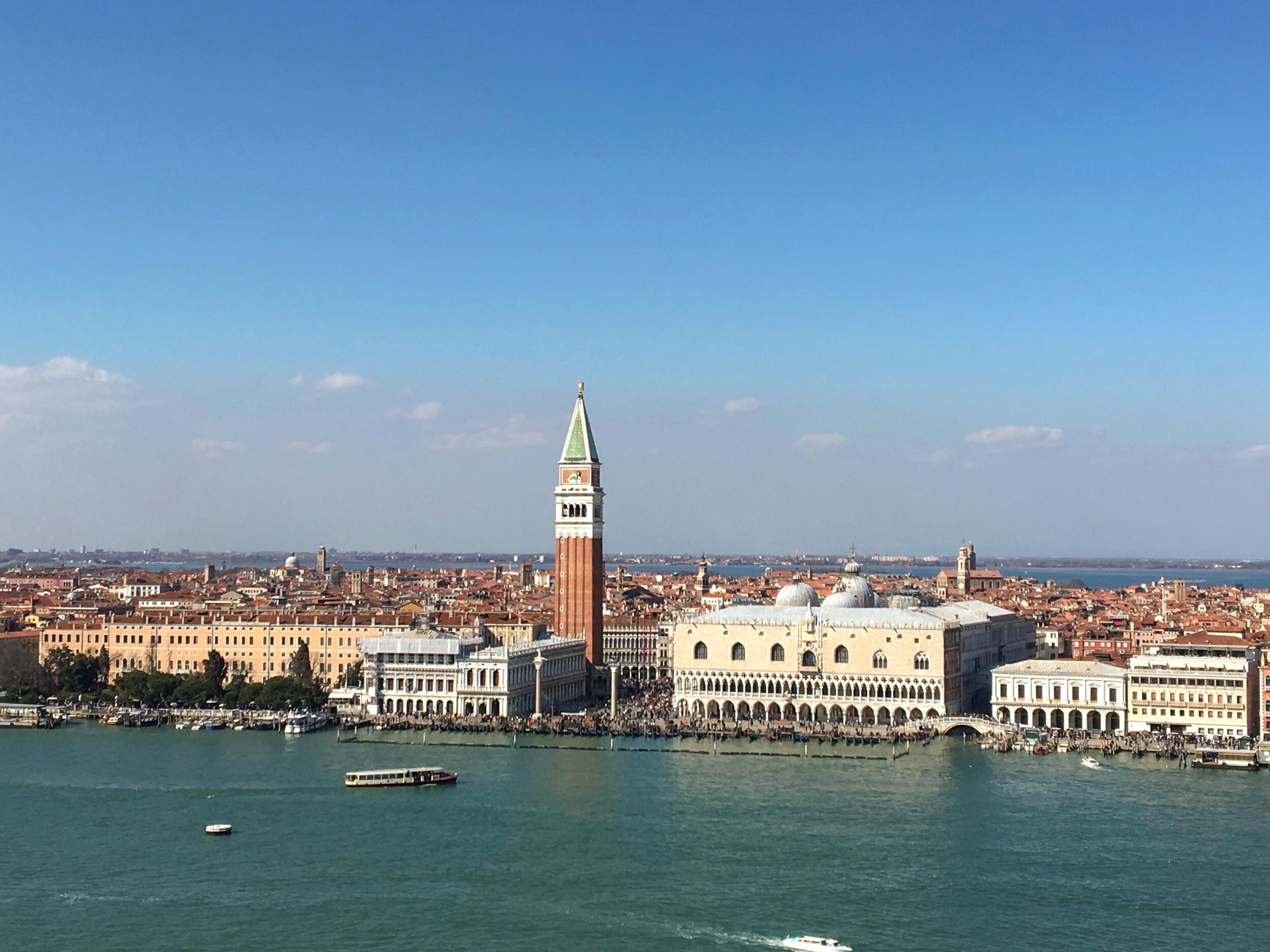
St. Mark’s Square as seen from the San Giorgio Bell Tower
It’s not easy to look beyond the facades of the San Marco district and why would anyone need to? There is natural beauty and history at every turn. Despite this, I couldn’t help but feel there was more to Venice than meets the eye.
Cue the Venezia Football Club. A professional soccer team formed in 1907 that competes in Italy’s second division (Serie B) and, despite the high volume of foot traffic within the city’s limits, is still undoubtedly hidden within the easternmost confines of the city. It has a history. It has a culture. It has passion. Yet rarely do foreigners ever experience it.
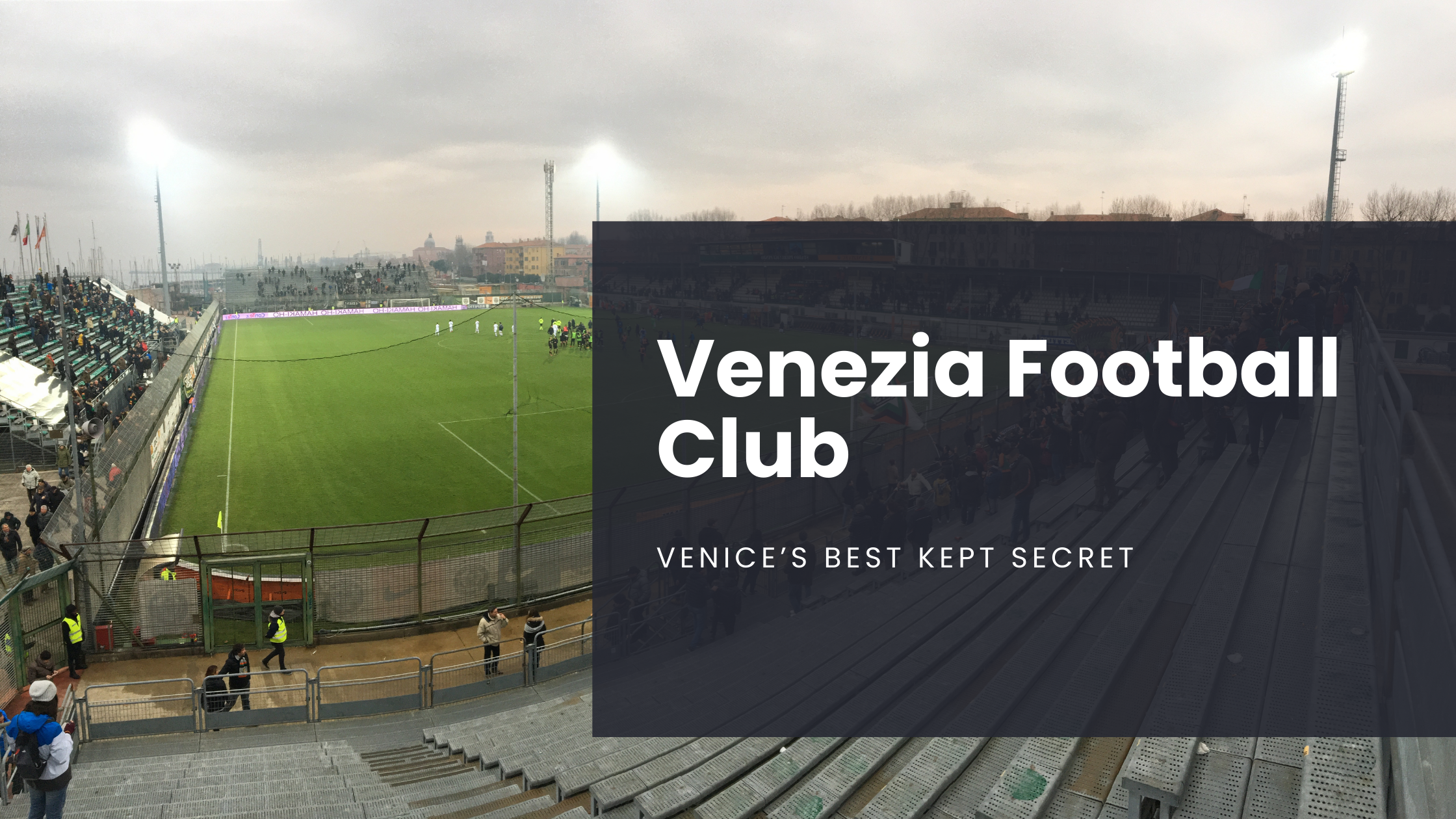
The club plays its home matches at the Stadio Pierluigi Penzo, a cozy 11,150-seat stadium that’s tucked away deep within the Sant’Elena district. A quick search of the web will explain how it’s the second oldest continually used venue in all of Italy. That’s quite an impressive feat when you consider the deep history of Italian football but somehow remains largely invisible to a majority of the city’s visitors.
It’s certainly not the easiest place to find. There are no banners, no yellow signs indicating a point of interest like those seen plastered around the tourist trail, and no walking tour in sight. The stadium is simply there, hidden in plain sight for better or for worse and serving as a discrete monument of stability within a city that’s constantly changing.

Inside Stadio Pierluigi Penzo - Venice, Italy
During my first visit, I didn’t learn of the club’s existence until the day after they had played at home. I wasn’t about to make that same mistake the next time I found myself aimlessly wandering the canals of Venice and sure enough, the stars aligned a year later.
On the day of the match, indescribable energy filled the air. Fans from Mestre, Venice’s mainland neighbor, packed the water taxi like a can of sardines, disembarking at the Sant’Elena pier before making their way to the stadium. It wasn’t a long walk from the docks by any means, but I’ll always remember the roar of the crowd directing the newcomers, guiding us through the streets, and growing louder with each step.
Once inside, I couldn’t help but feel as though I was witnessing a religious experience of sorts. Sure, Venice is full of cathedrals, but the Stadio Pierluigi Penzo is one that never receives attention. It’s a different kind of church, of course. A holy place where Venetians gather, rain or shine, to pay tribute to what many refer to as the most beautiful game in the world.
I took my seat in the Curva Sud section, home to the club’s diehard supporters. Organized chaos is the only way to describe it as a couple of delirious individuals led continuous chants throughout the entire 90 minutes, never once taking their eyes off the crowd. This was the heartbeat of everything, setting the tone for fans and players alike.
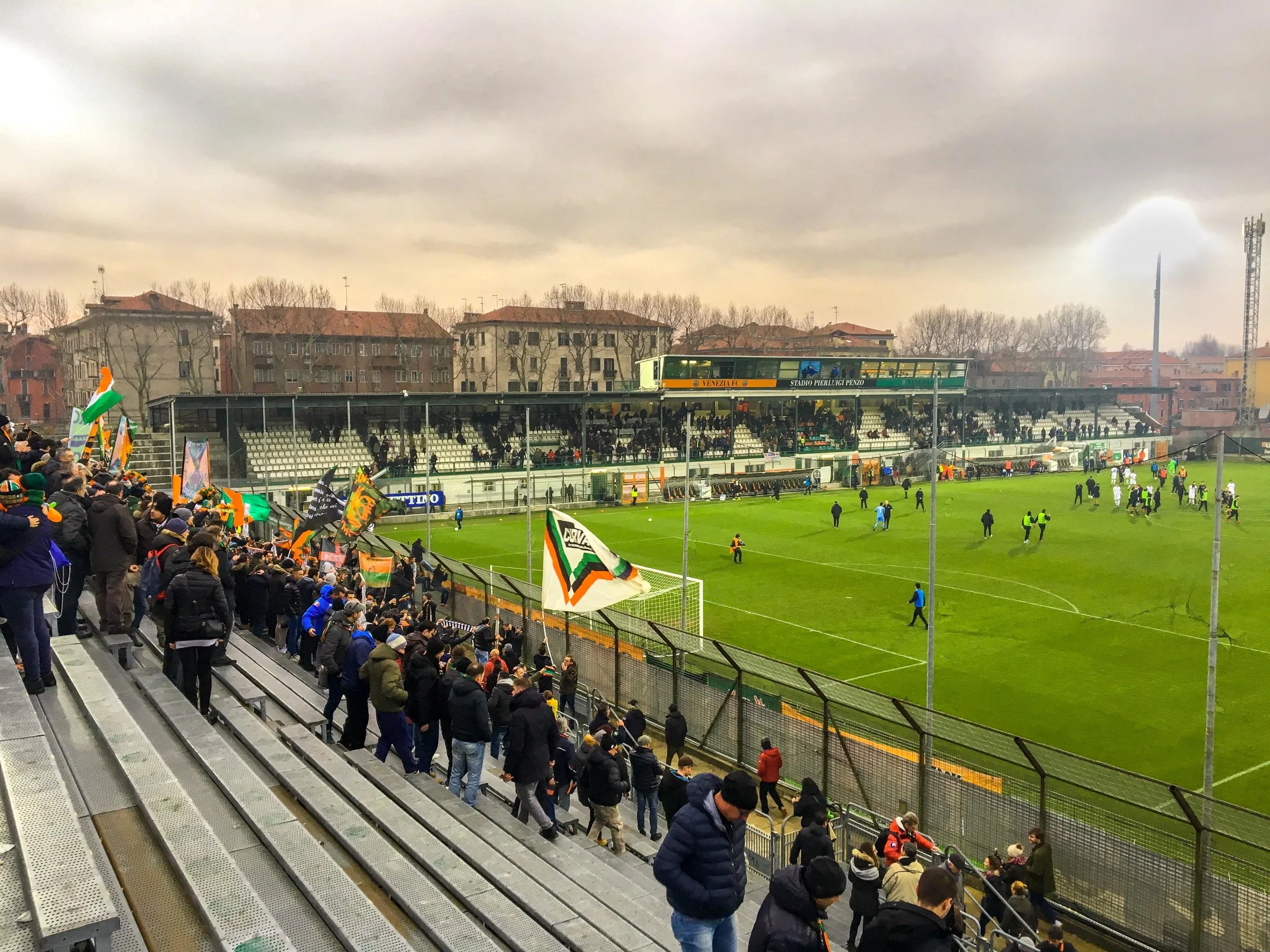
On the northern end of the stadium stood the away supporters, valiantly trying to make their presence felt with flags and cheers of their own, all the while seemingly un-phased by the uphill battle they faced. It was to no avail on this particular afternoon.
The atmosphere was a far cry from the luxury and sophistication that exude the shops along the Grand Canal. There was nothing “high end” about it, nor should there have been. Instead, the beauty of this moment came from within the people, their raw emotion filling the stadium like a pressure cooker that could only be released when the ball struck the back of the net in favor of the home side.
Anyone who knows me is well aware that I consider myself to be completely infatuated with the sport of soccer.
It’s only natural that I would come away loving the experience, but trust me when I say that this was different. On a gray, dreary, and otherwise lifeless February afternoon, the Sant’Elena district was alive and well thanks to an overlooked staple of Venetian life: The Venezia Football Club.
Wander amongst the canals of Venice and it’s easy to feel the rich history oozing from the walls of the city but step inside the Stadio Pierluigi Penzo on match day and you suddenly become part of it, living amongst the pages as they’re written.
This was the first time that I felt as though I had been gifted a small glimpse into the real life of Venice and for that, I will forever be a fan of Venezia F.C. Grazie, thank you, Winged Lions!
Thanks for reading and as always, stay safe & happy travels!
Enjoy this post? Make sure to pin it for later!
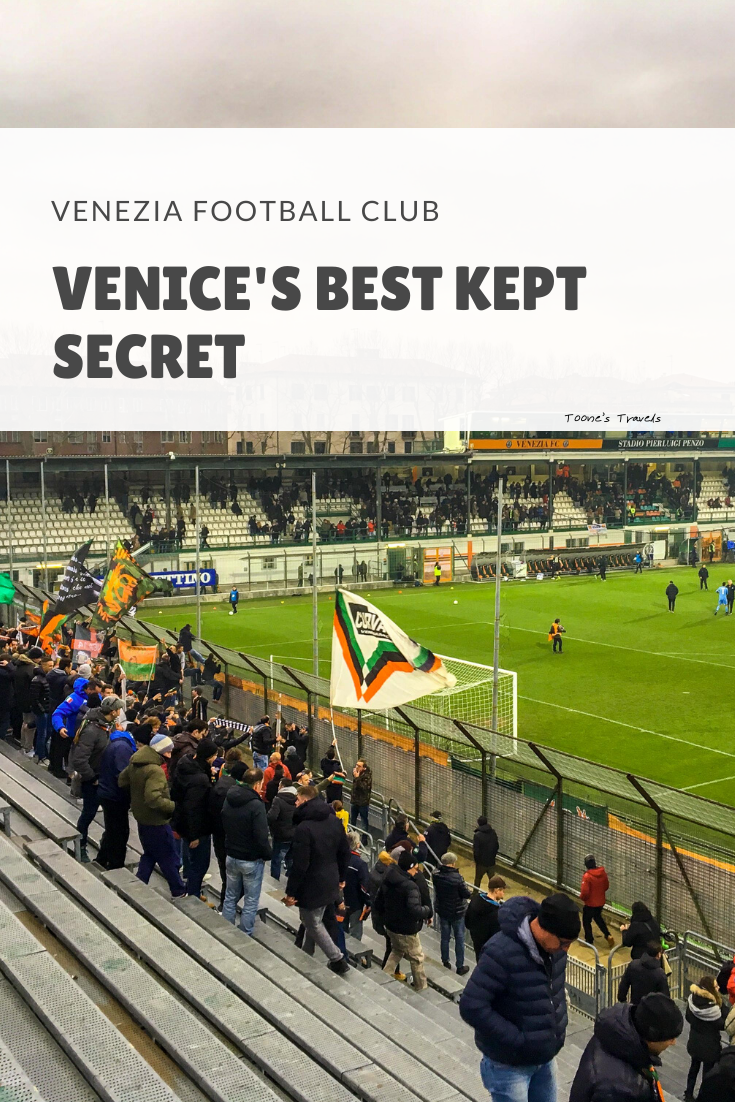


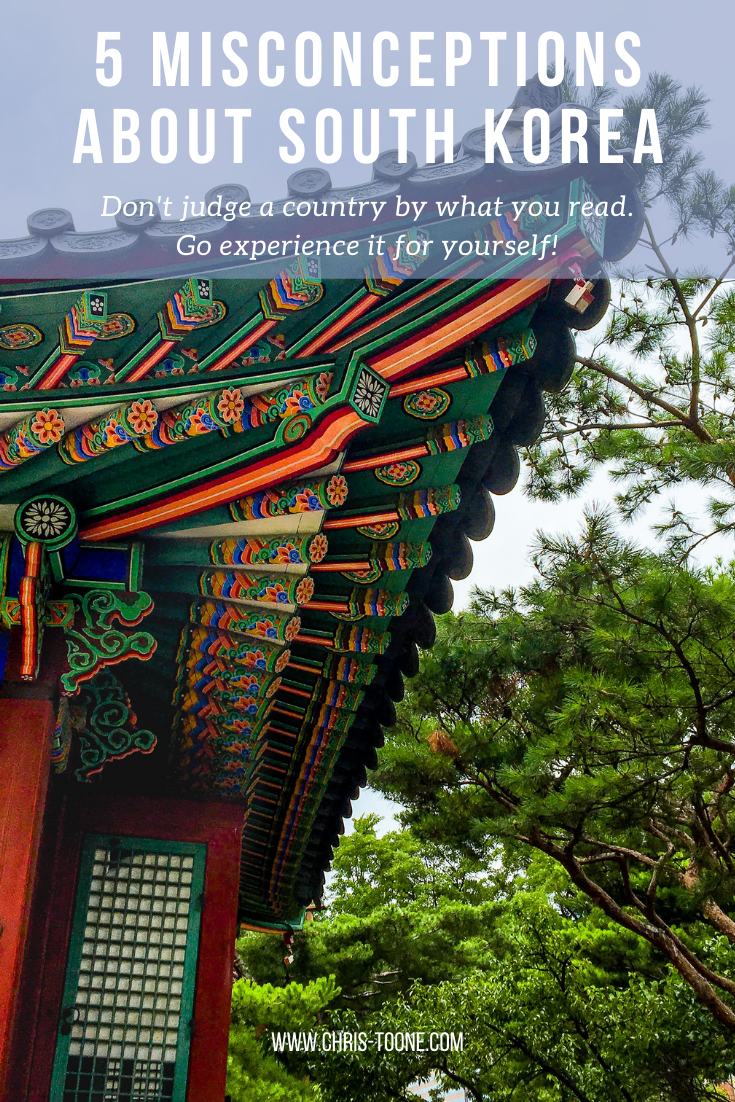
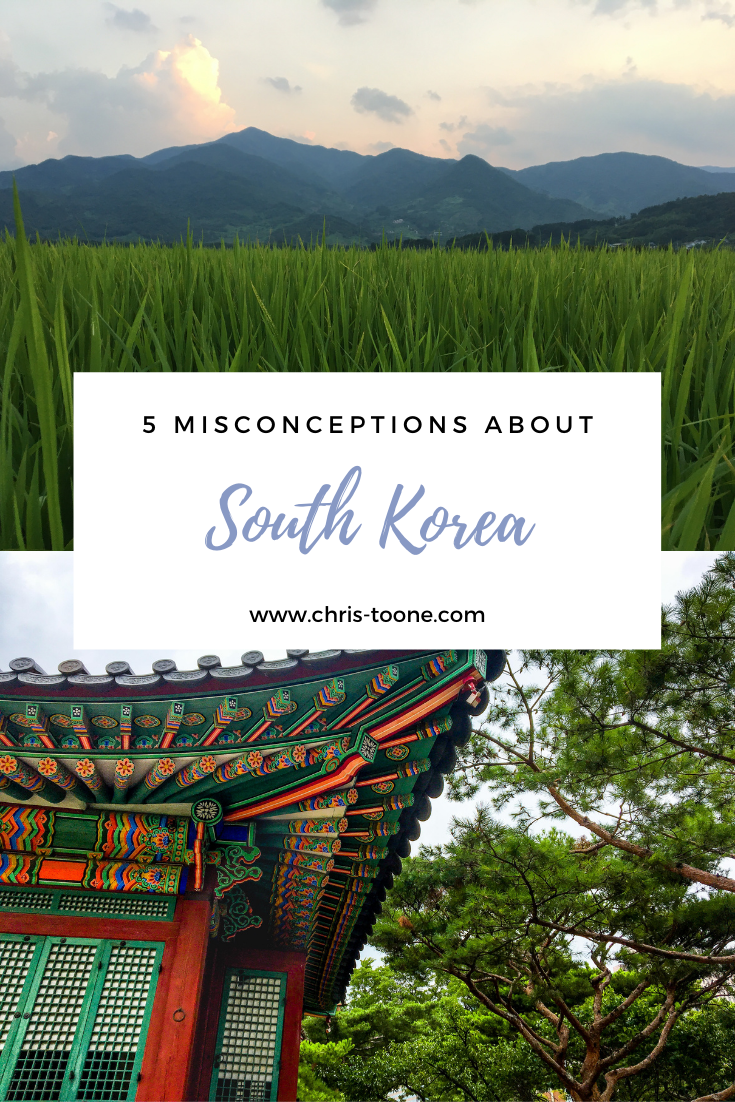
5 Common Misconceptions About South Korea: Here's what I learned during my first visit
Take a moment to think about South Korea. What comes to mind? Odds are it includes something along the lines of North Korea, kimchee, Buddhism, and not much more. That’s ok! Here are 5 common misconceptions about this stunningly beautiful and wildly underrated country, because their neighbors to the north shouldn’t be a reason to stay away.
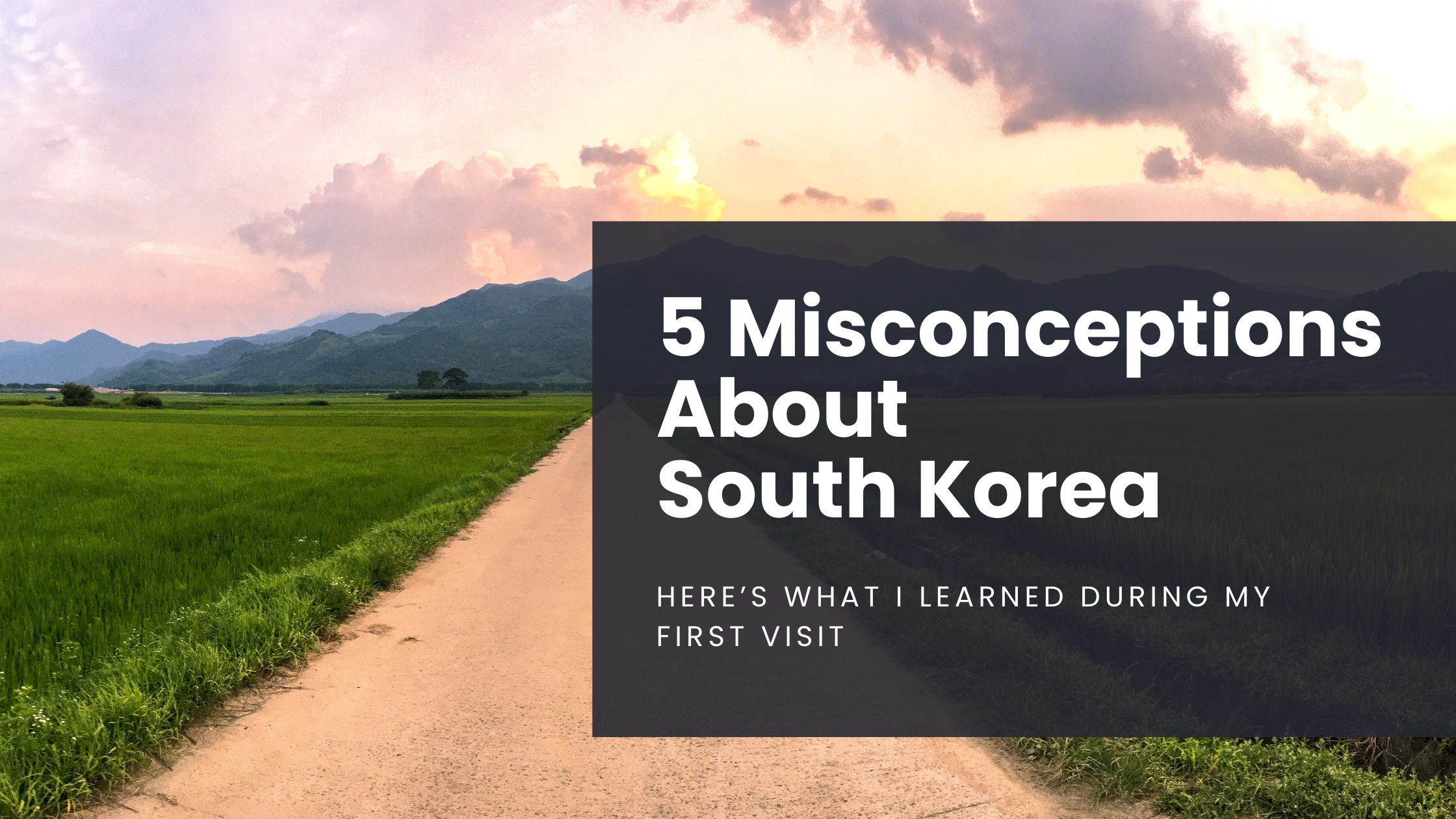
Take a moment to think about South Korea. What comes to mind? Something along the lines of North Korea, kimchee, and Buddhism. I knew next-to-nothing about the country before I spontaneously booked plane tickets two weeks in advance — I'm not very planning-oriented when it comes to travel (learn from my mistakes and do a bit of preparation ahead time before visiting South Korea)!
Once word had spread about my upcoming adventure, it was only natural that my inbox was filled to the brim with a slew of questions:
Is it safe? What if North Korea attacks?
What if you don’t like the food?
How will you communicate? What happens if you need help?
To be honest, I couldn’t answer any of those questions at the time. I would simply stumble my way through a response to not only calm the nerves of those asking but my own as well.
It wasn’t until I arrived in South Korea and experienced all that it has to offer that I realized there was nothing to fear. So, here are 5 common misconceptions about this strikingly beautiful, amazingly peaceful, and wildly underrated country. Enjoy!
MISCONCEPTION #1: IT’S NOT SAFE
It’s only natural that when one thinks of South Korea, North Korea comes to mind. Technically speaking, the two countries are still at war (an armistice agreement was signed in 1953 that effectively ended all combat). There must be a plethora of safety concerns that come from this, right? Wrong.
Unless traveling to the demilitarized zone, there is seemingly no tension, emotional or physical, among South Koreans. Instead, the 10 million people living 50km away from the border in Seoul go about their daily life uninterrupted. It was easy to forget where I was in the world until I checked a map.
At the end of the day, South Korea is a very safe country to visit; don’t let its location in the world keep you away!
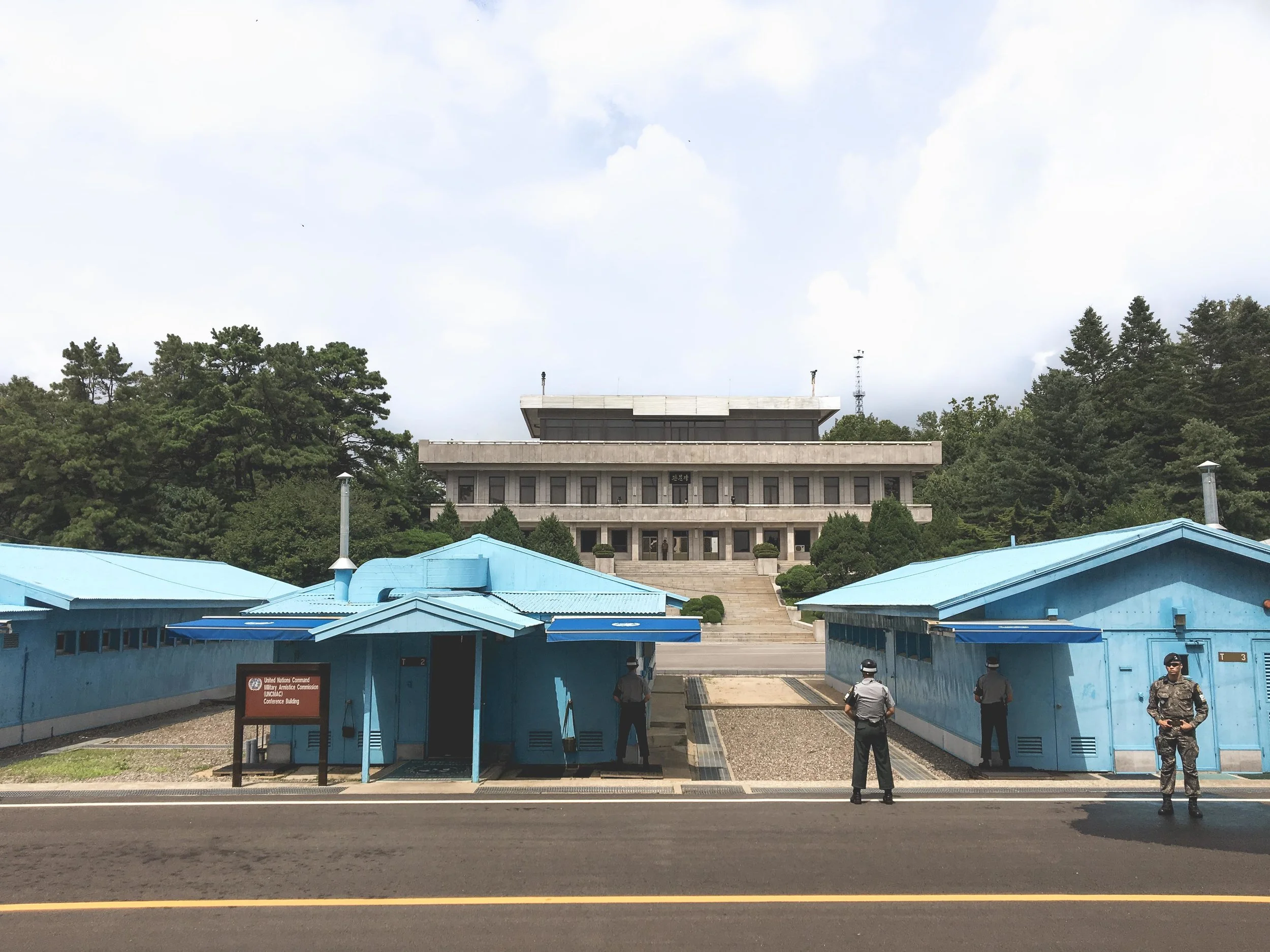
Demilitarized Zone at Joint Security Area - South Korea
MISCONCEPTION #2: IF YOU DON’T ENJOY BUSY CITIES THEN SOUTH KOREA ISN’T FOR YOU
Did you know that South Korea has the fastest internet in the world? Or that nearly 51.5 million people co-exist within a country similar in size to Tennessee?
There are numerous facts that may lead one to believe that South Korea is a type of futuristic, technologically-advanced, population-dense country, especially when cities such as Seoul and Busan are often at the forefront of itineraries. What many don’t realize until they arrive is that over half of South Korea is covered in forests and mountains.
The best part? You don’t have to travel far to reach them!
Bukhansan National Park is located a mere 13km from Seoul, making it easy to trade in the city streets for a mountainside temple. If flora and fauna peak your interest over rocky cliffs, then be sure to wander around Dadohaehaesang, South Korea’s largest national park. Here you’ll spot over 1,500 species of plants and 140 different kinds of birds.
Mountains don’t do it for you? That’s fine. South Korea is also home to 2,313 km of coastline, including Jeju, the country’s own island paradise.
With so much to offer, there’s an adventure for everyone!
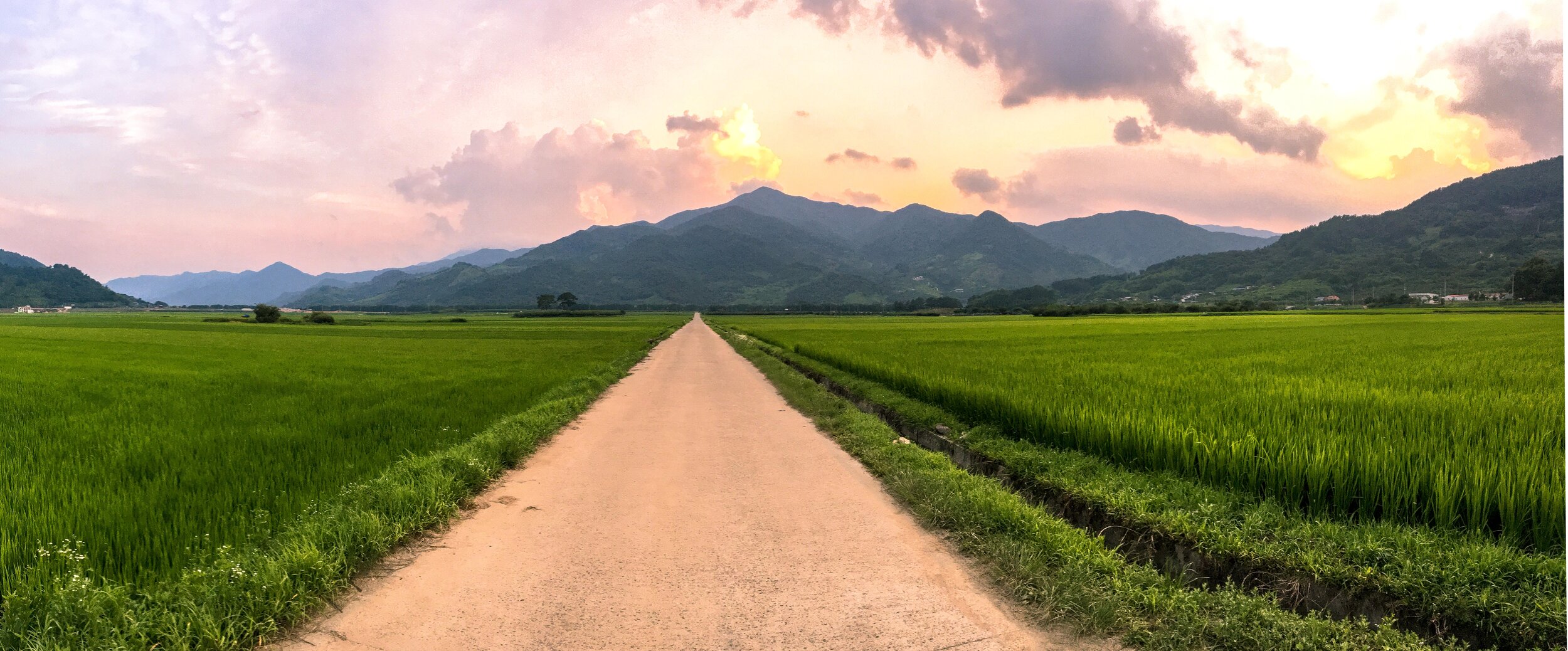
Hadong, South Korea
MISCONCEPTION #3: ALL SOUTH KOREANS SPEAK ENGLISH
Although English lessons are part of the modern-day South Korean education system, it’s important to realize that the language isn't always widely spoken.
As a result, English comprehension is generally, not always, limited to people under the age of 40. Older generations may know a few keywords and phrases but often aren’t comfortable conversing with someone fluent. There’s no harm in that, but what do you do when you’re lost and in need of help? Find a younger adult.
Seeking a more meaningful interaction and fewer charades?
Take a stab at learning Korean! Rather than relying on a plethora of confusing symbols, the language is based on a 24 character alphabet known as Hangul and is widely considered to be easier to learn than other languages such as Japanese and mandarin. The language wasn’t organically grown over time. Instead, the Hangul alphabet was specifically invented to be easy to use, in large part due to its phonetically-friendly nature.
Think of it as your passport into Korean society without much effort.
For more reading on South Korea, check out these posts:
MISCONCEPTION #4: BUDHISM REIGNS SUPREME
Buddhism may be one of the oldest religions in South Korea (established in 372), but the country has developed into a holy melting pot as centuries have passed. Yes, Buddhist beliefs remain a pillar of South Korea’s cultural heritage, as does Confucianism, but it’s only the second most practiced religion. A 2015 census showed that 19.7% of South Koreans identified as Protestants (thanks to North American missionaries dating back to the 19th century), which was more than both Buddhism (15.5%) and Catholicism (7.9%). Islam also continues to grow since the inception of the Islamic Society of Korea in 1955.
It’s hard to ignore the tens of thousands of temples constructed throughout the country but peel away the surface and you’ll find yourself staring deeper into a religious spectrum that many never realize exists, let alone experience.

Daewonsa Temple - South Korea
MISCONCEPTION #5: IT’S IMPOSSIBLE TO FIND NON-TRADITIONAL FOOD
South Koreans love their kimchee. Whether it’s served as a traditional side dish (known as banchan), stuffed inside of a dumpling, or simply a meal of its own, this spicy fermented cabbage is widely available for consumption at every turn. The same can be said of other traditional Korean dishes such as bibimbap (mixed vegetables and rice), tteokbokki (spicy Korean rice cakes), and makgeoli (a milky, off-white fermented rice drink).
Although the traditional culture and food are well preserved and respected throughout the country, the younger generation has grown up with more options that seemingly expand each day. South Korea ranks fourth in the world for the most Starbucks stores per capita (with 1,008 stores total, that’s one outlet for every 50,000 people) and it’s not uncommon to stumble upon the golden arches of McDonald’s as you meander through city streets. Despite what some may lead you to believe, it’s relatively easy to satisfy even the most western of taste buds.
It doesn’t have to be all big-business, though. How do fried chicken and beer sound?
Together, the two are known as “chimaek” and the obsession runs deep. So deep in fact that Daegu hosts an annual festival dedicated solely to this delectable combo — all the more reason to visit in July! You can read more about how this craze came to be by clicking here.

Gwangjang Market - Seoul, South Korea
So, what do you think? I hope that, in the very least, a trip to South Korea sounds more enticing than it might have prior to reading this post. Give it a go. After all, how do you know if you enjoy something if you don’t try it?
Thanks for reading and as always, stay safe & happy travels!
Pin this post and share with others!





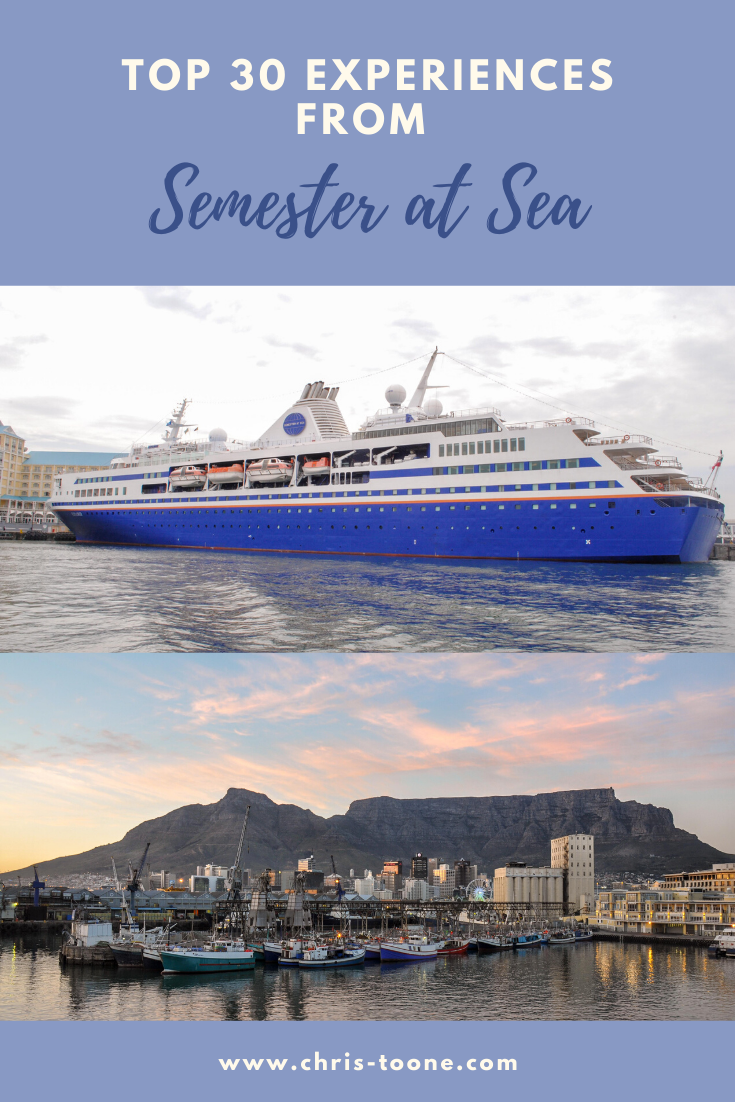
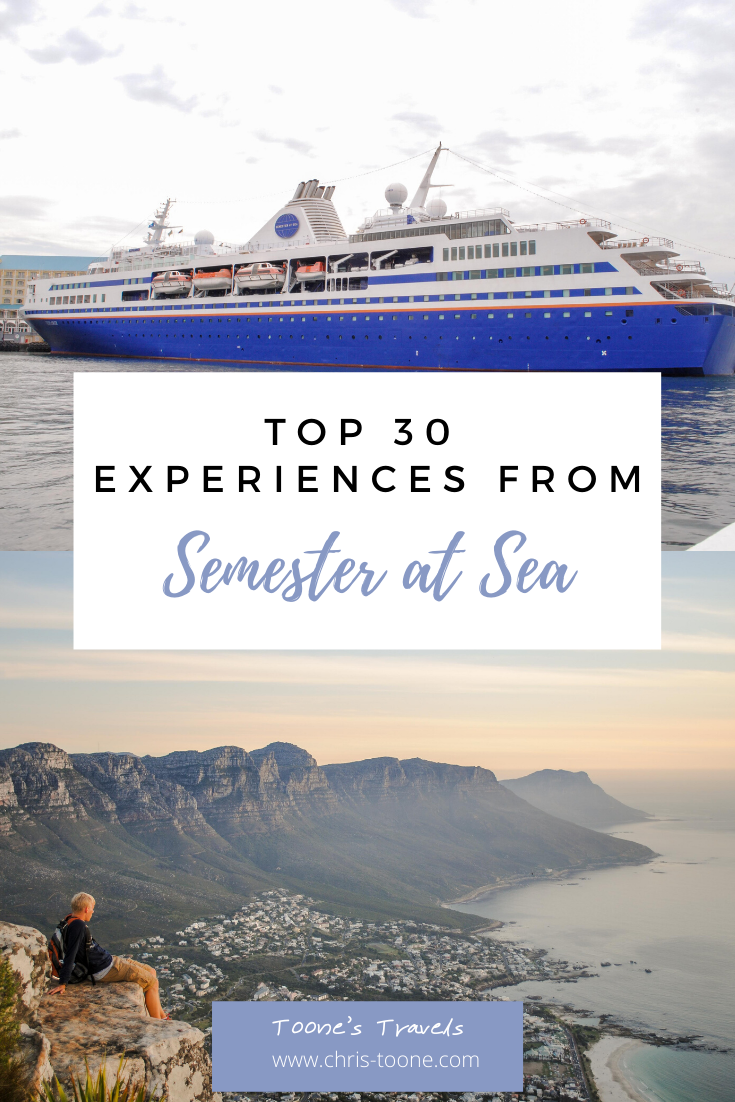
Top 30 Experiences from a Semester at Sea: Here's what a 110 day trip around the world is like
It has now been nine years since I stepped off of North American land, onto a ship, and straight into the unknown. To be honest, it still feels like yesterday and I think part of me is still processing the experience all these years later. I never imagined that an introvert such as myself would thrive in an environment like that, circumnavigating the globe for 110 days with complete strangers. As it turned out, it was truly the journey of a lifetime...

I’m not the most outgoing person in the world. If you find me in a social setting, I’ll be the person that happily sits there silently until spoken to. With that said, there are a few things that, if you get me going, I won’t be able to shut-up about: coffee, travel, and Semester at Sea.
Consider yourself warned!
This week marks nine years since embarking on my semester abroad.
Wait, what?
That’s right; NINE YEARS since I stepped off North American soil, onto a ship, and straight into the unknown.
To be honest, it still feels like yesterday. I think part of me is still processing the experience all these years later. I never imagined that an introvert such as myself would thrive in an environment full of strangers, all the while circumnavigating the globe.
As it turned out, it was truly the journey of a lifetime.
To celebrate the anniversary of the Fall 2010 Voyage, here are the top 30 experiences from my Semester at Sea!
ITINERARY
Halifax, Nova Scotia
Cádiz, Spain
Casablanca, Morocco
Chennai, India
Singapore
Ho Chi Minh City, Vietnam
Hong Kong
Shanghai, China
Kobe, Japan
Yokohama, Japan
Honolulu, Hawaii
Hilo, Hawaii
San Diego, California
SPAIN
1. Bull Fighting in Seville
Fresh off of a turbulent seven days at sea and ready to immerse ourselves in a different culture, we found our way over to the Plaza de Toros de la Real Masetranza de Caballería de Sevilla (talk about a mouthful). Little did we know there was a bullfight scheduled for that evening!
Did I stay past the first event? No, I did not. I opted for gelato over watching bulls die a slow death. Was I glad that I went to get the experience? Absolutely.
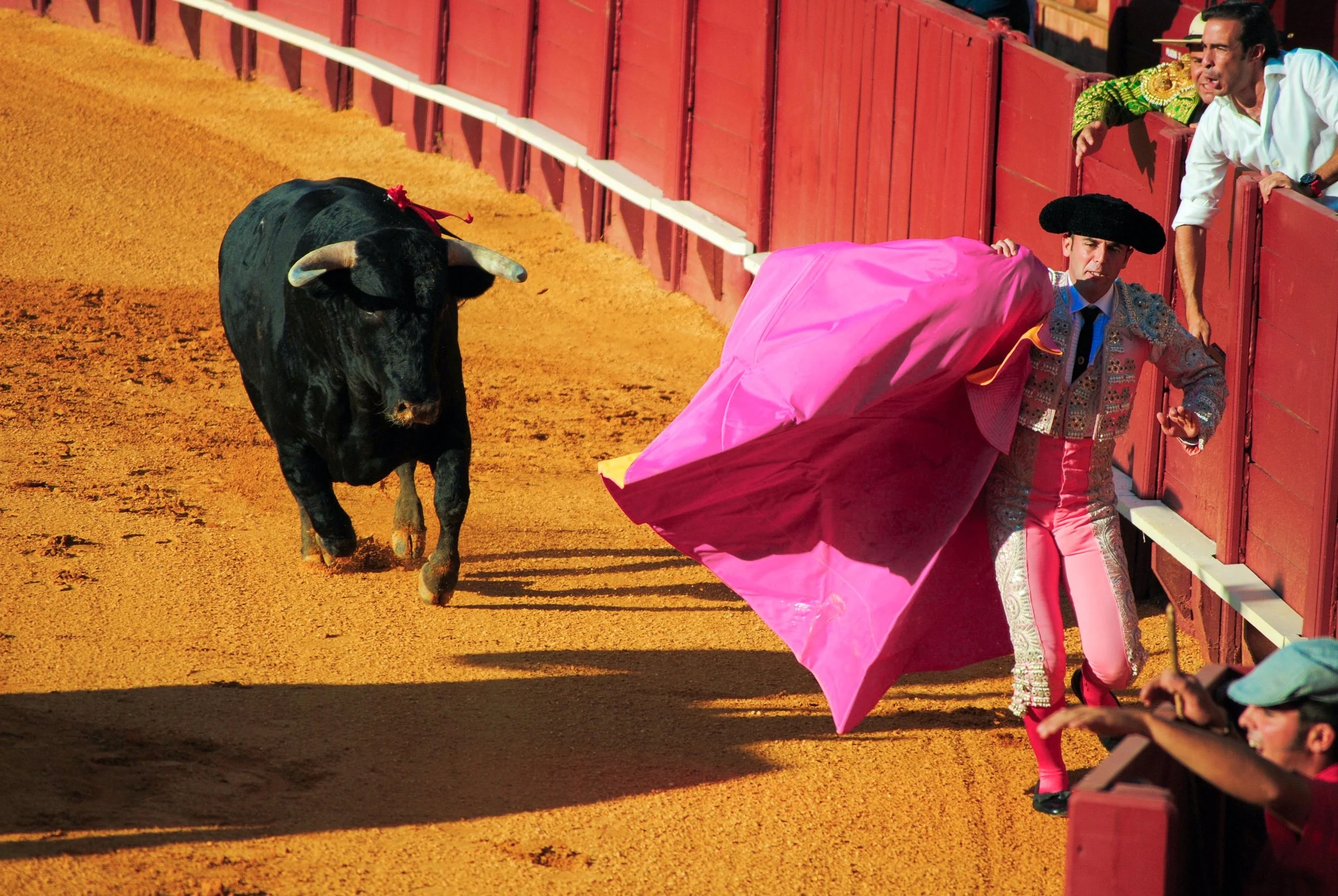
A bull chasing a matador in Sevilla, Spain
MOROCCO
2. The Train That Broke Down
The ship docked in Casablanca, but a group of us decided that we wanted to make our way to the Djemaa el-Fnaa market in Marrakech to get our first taste of bartering.
Halfway through the 2.5-hour ride, the train stopped. Stranded on the rails with nothing in sight, we passed the time by attempting to communicate with the locals in our compartment through charades, broken French, and awful drawings.
Miriam and Abdul have likely forgotten about the time they shared a seat with the crazy college students from America, but I still vividly remember the laughter that filled that day.
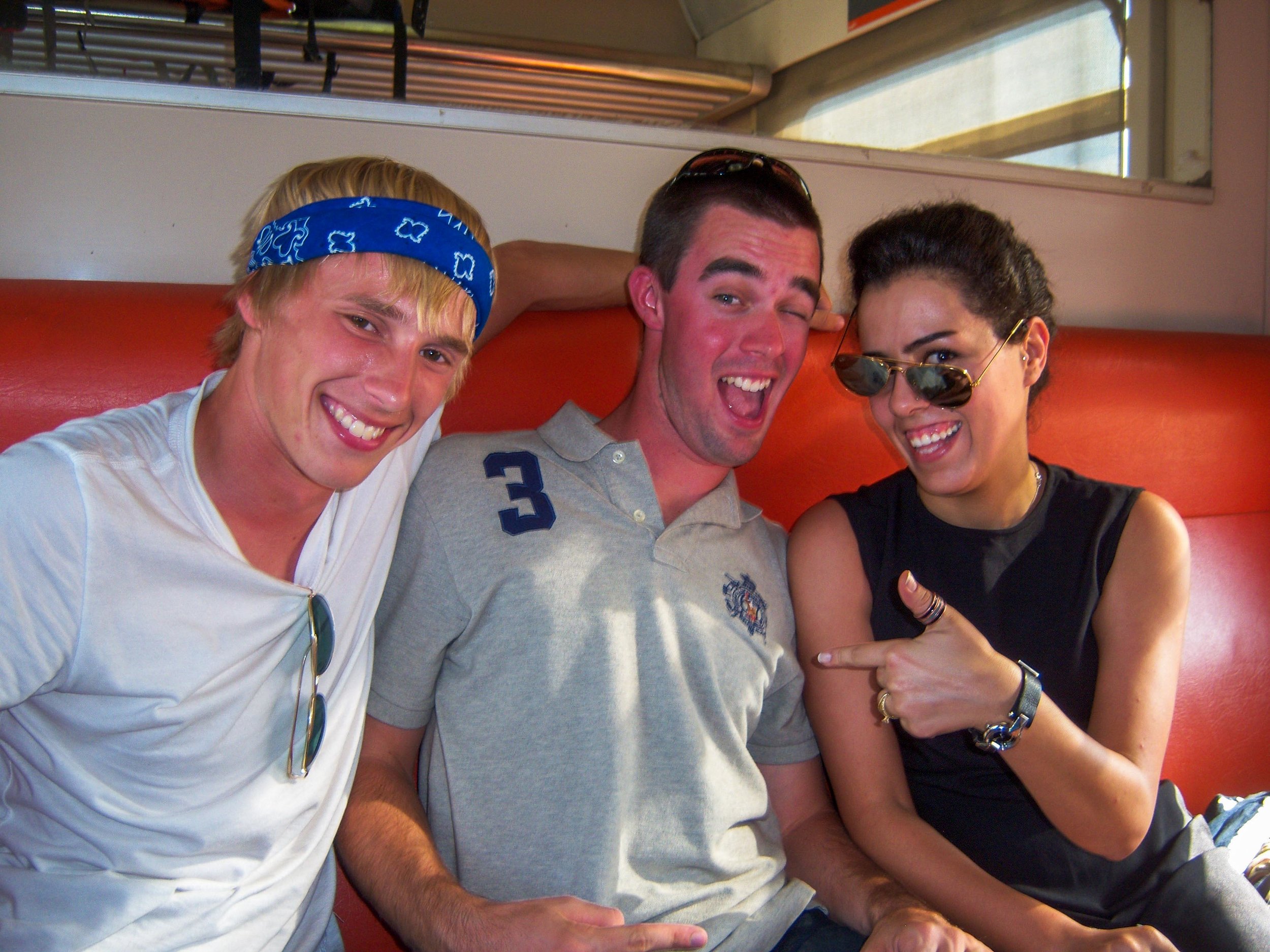
My roommate and I with Miriam on the broken-down train
3. Djemma el-Fnaa market at the end of Ramadaan
On a normal evening the market is buzzing with vendors and snake charmers. Clouds of smoke fill the sky with beautiful aromas from the food carts as music blares from all around.
Our trip coincided with the end of Ramadaan. I’ll always remember meeting a couple from the UK on the hotel shuttle en route to the market, a look of concern on their faces as we told them it was our first time in a place like this.
We stepped out of the van and stood on the sidewalk like a herd of deer staring directly into oncoming headlights. “It’ll be fine,” they said as we watched our new friends disappear into the chaos.
4. Haggling in the markets of Marrakech
This was my first experience of bartering and to put it bluntly, I was terrible. With that being said, learning how to negotiate a price, the acting skills needed to portray disinterest, and the guts to walk away from something I actually wanted - it was all thrilling.
GHANA
5. The Broken Down Van
The moment we stepped off of the ship, a group of us piled into a rickety van and drove 8 hours north to the village of Senase.
As the smooth pavement gave way to potholes beneath our wheels, the homes along the road vanished. All of a sudden the van came to a slow halt, moving only as far as gravity would take it.
The only thing in sight was a narrow path that led to a church. The driver caught a cab back to the closet village and we decided to wander the path while we waited.
The family that lived on the premises didn’t speak any English and we certainly didn’t speak their local dialect, but someone spotted a soccer ball in our periphery and that was enough to break any invisible barriers that lay between us.
Read More About How Travel Has Taught Me to Embrace Adversity:
6. Drumming & Dance Ceremony
As we prepared to depart Senase, the village had prepared a traditional drumming and dance performance.
The sounds of the beating drums, the vibrant colors, and the dazzling movements were enough to overload my senses. We were informed that it was our turn to dance for the village.
One minute I was sitting in a chair and the next I was making an utter fool of myself in front of hundreds of strangers. To tell you the truth, I loved every second of it!
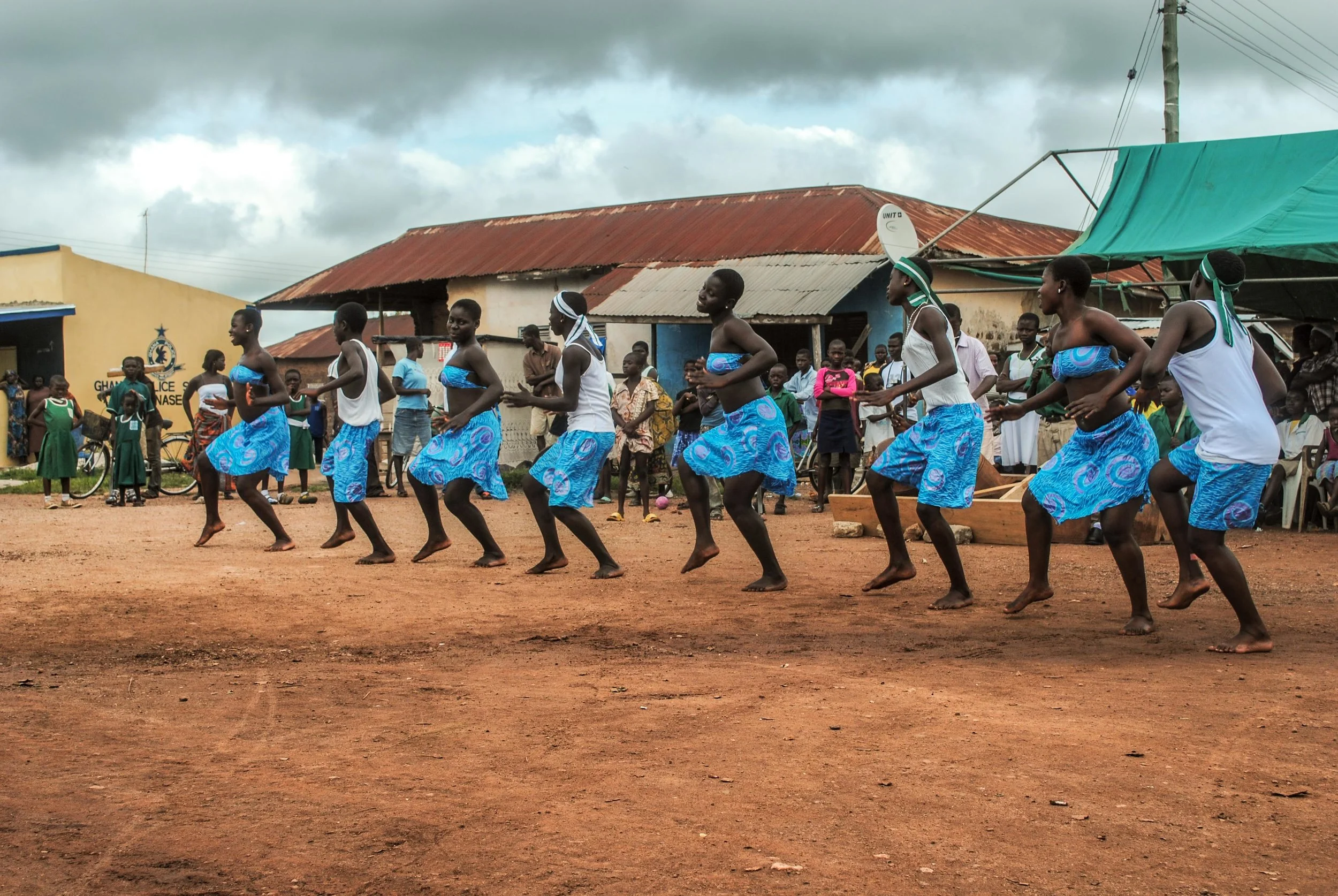
Traditional drumming and dance in Senase, Ghana
7. Getting Soaked in the Back of a Truck
We whipped down the dirt roads of Ghana as I tried to take it all in with my eyes half-shut, shielding myself from the pounding rain while dodging overgrown tree branches along the way.
It was a rush of pure joy and remains one of my favorite parts about returning to Ghana.
SOUTH AFRICA
8. Climbing Table Mountain
I have an affinity for birds-eye views, so the second that we docked in Cape Town and saw Table Mountain rising high above the city skyline, I knew I needed to climb it.
We ended up hiking farther than required, but once we reached the summit no one cared. The sweeping views across the cape were worth it.
9. Visiting Robben Island
A humbling, sober, and powerful experience, to say the least.
Ready to explore more of South Africa? Don’t miss these posts:
10. Lion’s Head Peak at Sunset
Lion’s Head remains one my favorite hikes in the world.
Sure, the views from Table Mountain were spectacular as well, but reaching the peak as the sun dipped below the horizon capped off my South African explorations in the best possible way.

View from the top of Lion’s Head Peak in Cape Town, South Africa
MAURITIUS
11. Stranded in Grand Baie
One taxi driver, a major miscommunication, and hours of driving later, a friend and I found ourselves stranded in Grand Baie with no money left to make it to the ship in Port Louis. There was only one thing to do: take a swim in the Indian Ocean and enjoy the sunset! We made it back, eventually.
INDIA
12. Ganges River at Sunrise
I felt compelled to take a trip here the second I read about the field excursion planned through Semester at Sea. Why? I’m not entirely sure.
As our boat gently glided across the calm waters of the Ganges at sunrise and watched the local people cleanse their bodies along the banks, it all made sense. Serene is the only way to describe it.

Early morning scenes at the Ganges River in Varanasi, India
13. Driving a Rickshaw in Varanasi
My friend and I jokingly asked our driver if we could take a turn. Without missing a beat, he scooted to his right and made room for me in the front seat. It was the ultimate driving test: could I avoid the densely packed streets and roaming cows? Barely.
14. Taj Mahal
Usually I’ll try to avoid the tourist trail, but this was one experience I couldn’t pass up. I found a spot in the lush grass and simply sat and stared for what felt like hours. I’ll never forget that view.

The Taj Mahal in Agra, India
SINGAPORE
15. Playing with Monkeys
During a nature walk through the city’s forest we happened to stumble upon a family of monkeys waiting to steal food from unsuspecting tourists. The term “playing” is used loosely here, but nonetheless it was fun to watch these bandits carry out their business.
VIENTAM
16. Tourist-napped in Saigon
No, we weren’t actually kidnapped although it certainly felt like it at the time.
We knew that we could hire a boat that would take us along the Mekong Delta if we could reach the town of My Tho . What we didn’t know was that the taxi driver we hired from Ho Chi Minh City worked with a tour company and would take us straight to a boat dock, accompanying us the entire day.
We begrudgingly went along with the tour, plotting our “escape” as we went. In the end, we paid the guide to drive himself back to Ho Chi Minh City and continued wandering My Tho in search of our own adventure on the Mekong Delta.
It was worth it!

Cruising the Mekong Delta in My Tho, Vietnam
17. Playing Frogger in Ho Chi Minh City
It’s common to be taken aback by the sheer amount of motorbikes on the road in all of Vietnam, but especially in a city as densely packed as Ho Chi Minh.
The moment we thought we had mastered the art of crossing the road without hesitation, we learned of another version of the game: car vs. car.
As we rode in a cab through a torrential downpour, we couldn’t figure out what the tiny white lights in front of us were. It was only when our driver took a hard left that we realized we had taken an exit ramp onto the highway and had been heading into oncoming traffic.
In all likelihood, it wasn’t as exciting as this story sounds, but with the rain clouding our vision, it sure got the adrenaline pumping!
18. Hy Vong 8 School for the Deaf in Ho Chi Minh City
Semester at Sea did a phenomenal job of organizing service trips in nearly every port that we visited.
This was the first one I was able to squeeze my way into and I enjoyed it so much that I ended up visiting the school twice. We watched the students dance, chaperoned a field trip to the local zoo, and laughed so hard our stomachs hurt as we tried to learn sign language.
CHINA
19. Overnight buses
I stepped onto the overnight bus in Shenzen only to find that my ticket didn’t correspond with a seat, but rather a bottom bunk that came complete with a pillow and comforter.
Amazing.
Later on, when it was time for another overnight trip, I didn’t think twice. Another night spent falling asleep in a comfy bed while watching a movie in Mandarin, creating the plot in my own head? No problem!
Except for this time, my ticket led me to the back of the bus, into the middle row, and onto the top bunk.
I’m not sure if it was the sticky mat that served as my bed or the fear of being flung over the metal railings that were far too small to provide any sort of protection, but I didn’t catch a wink of sleep that night and I loved every second of it.
20. Cruising the Li River in Yangshuo
The Li River was one of the most picturesque landscapes that I have had the privilege of experiencing.
Surrounded by limestone cliffs that rose majestically towards the sky, we gently floated along with the current.
As beautiful as the mountains were, I’ll never forget the group of Asian tourists that passed us by and, in the process, gleefully sprayed our bamboo raft with water guns. Why? Your guess is as good as mine!

Floating along the Li River outside of Yangshuo, China
21. Entering Zizhou Park
The overnight bus had dropped us in Guilin at 5 am, so we decided to go wander Zizhou Park before finding breakfast.
As we reached the gates and realized it was closed, a woman appeared and offered to have her husband take us into the park via his raft. With nowhere else to go, we agreed.
Before we knew it, the three of us were on floating down the Lijiang River under the cover of darkness, accompanied only by a Chinese man puffing a cigarette and a dimly lit lantern that illuminated the way.
The park itself was beautiful, but entering before the sun rose above the horizon was the true adventure.

The man and boat that brought us into the park before dawn
22. Eating Our Way Through the Streets
Dumpling, dumplings, and more dumplings. Maybe this is the reason why I constantly find myself seeking out the best jiaozi (Chinese dumplings) wherever I go!
JAPAN
23. Sleepless in Tokyo
We took the train from Yokohama with one thing in mind: visiting the famous Tsukiji Fish Market and arriving early enough to watch the giant tuna auctions unfold.
In order to save money, we decided to migrate between 24-hour restaurants throughout the night. As the clock turned to 3 am, we headed to the market only to find a sign that read: “Today is a regular holiday.”
In the moment we were flabbergasted, feeling completely exhausted and disheveled, but that night is now one of my favorite memories.
I’ve been to Tokyo on one other occasion and again, the fish market was closed. What are the odds of that?
24. Feeding the Deer in Nara
Deer are considered sacred to the Shinto religion and, as a result, roam freely around the streets of Nara.
As with any other species that has had extensive contact with humans, it’s not uncommon for the deer to approach people in search of food (which is conveniently sold throughout the parks).
The result? Endless amounts of fun.
25. Yokohama F. Marinos Soccer Game
Japan is well-known for it’s rambunctious baseball games, but while most of our fellow sport-fanatic shipmates headed to the Tokyo Dome, we opted to attend a soccer match in Yokohama. The pageantry from the fans did not disappoint!

Fans of Yokohama F. Marinos passionately cheer their team on
LIFE AT SEA
26. Stargazing on the Observation Deck
Periodically throughout the voyage, the Semester at Sea staff onboard the ship would organize an evening of stargazing. As the Captain temporarily shut off the outdoor lighting, the sky was immediately illuminated with millions of stars.
27. Sunsets at Sea
It didn’t matter what the weather was; overcast, stormy, or even as sunny as could be. Each and every sunset was amazing.

Sunset in the middle of the Pacific Ocean
28. Crossing 0° Latitude and 0° Longitude at the Same Time
During our passage from Ghana to South Africa, the Captain veered in order to bisect the prime meridian and equator at the same time.
As the shipboard community gathered on the deck, we knew that as the ship’s horns bellowed across the open ocean, for a split second, we were indeed at the center of the world.
29. Early Morning Port Arrivals
Nothing quite brought the shipboard community together like standing outside on the deck at 5 am, huddling together for warmth as we all stared at the twinkling lights on the horizon.
It quickly became my favorite pastime throughout the voyage, each time eliciting a feeling of excitement and anticipation of what was to come.
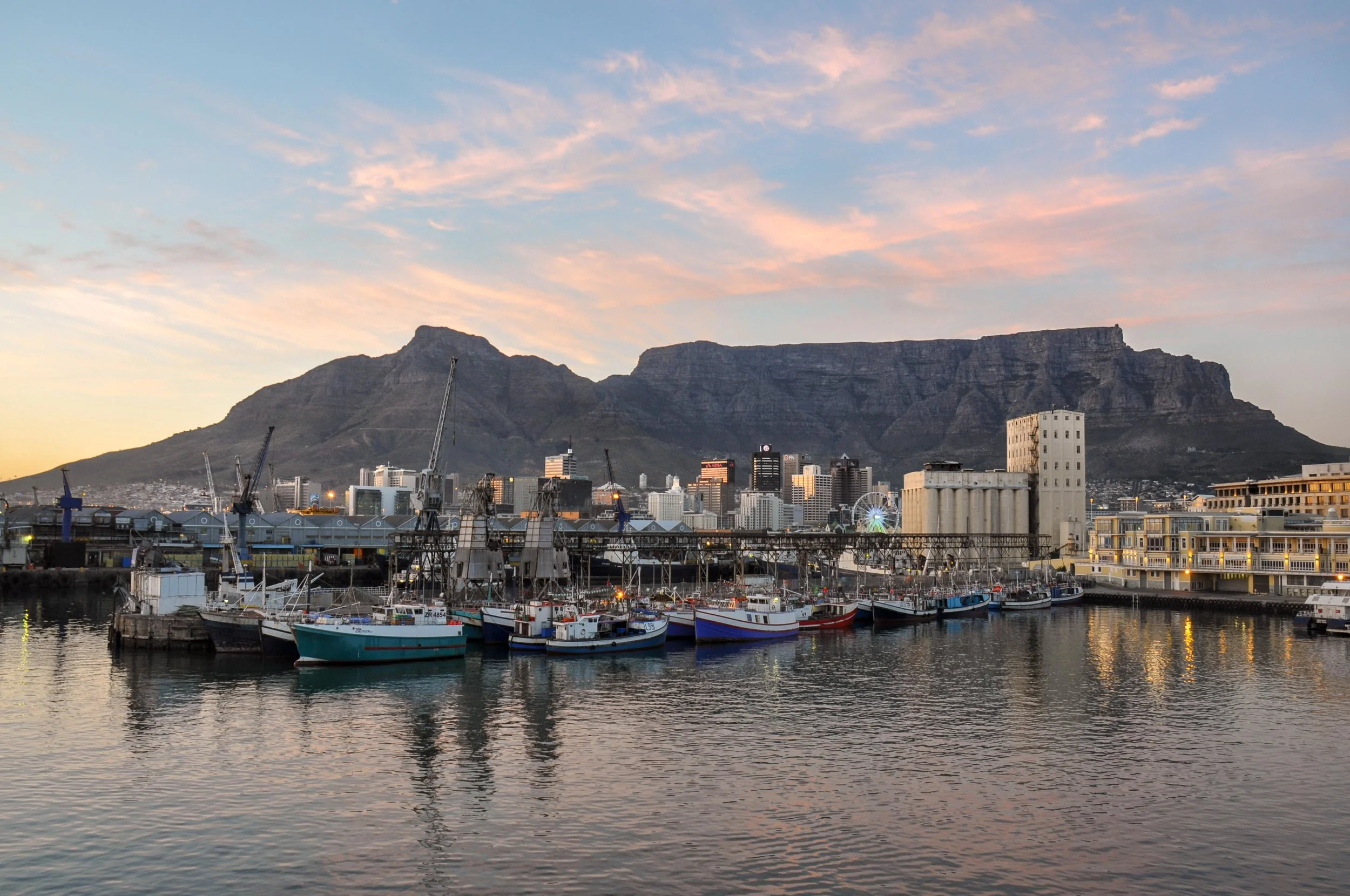
Arriving in Cape Town, South Africa at dawn
30. Work Study
One of the many benefits of Semester at Sea was the vulnerability it took to build a brand new community within the confines of the ship. Between classes, roommates, clubs, and volunteering, there were plenty of opportunities to do so. I was fortunate enough to receive a work-study scholarship and had a blast helping out in the field office!
BONUS
31. Embarkation
The mixed emotions I felt - anticipation, nervousness, disbelief, excitement - as we departed Halifax and the last remaining visible piece of land disappeared below the horizon is what hooked me to travel.
It’s a feeling that I still chase to this day.
32. Diverse Faculty and Staff
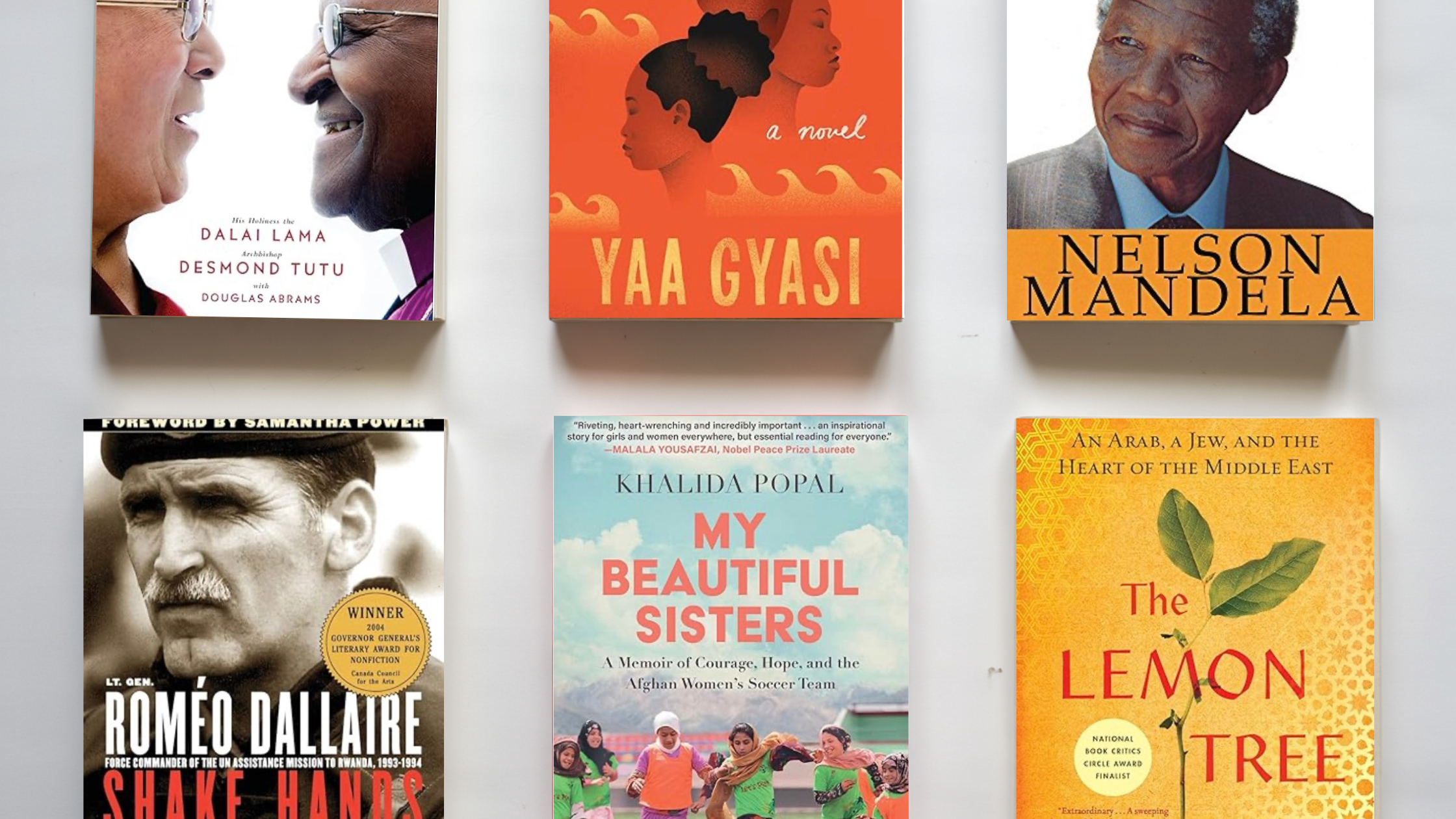
Part of the allure to go on the Fall 2010 voyage was the opportunity to live alongside Archbishop Desmond Tutu and his wife, Leah.
Needless to say, the entire 110-day journey was filled with “pinch me” moments as the Archbishop went about his business, casually fist-bumping students and spreading joy as he sauntered the halls.
I often contemplate what defines me as a person; what words or phrases might come to mind when someone mentions “Chris Toone.”
I’m confident that Semester at Sea is one of them. It not only opened my eyes and shattered my views of the world, but challenged me on a personal level in ways that I never could have imagined.
For that, I am eternally grateful.
Thanks for reading and as always, stay safe & happy travels!
Pin this post!


Lessons from a Non-Profit: What to know before your next volunteer trip abroad
Voluntourism is a booming part of international travel, but it doesn't come without its pitfalls. It’s more important than ever that we educate ourselves as donors and volunteers in order to evaluate how effectively our time and money is being used abroad. Here are 9 lessons you should know before your next volunteer trip that I’ve learned after nearly a decade of working with a non-profit in Ghana.
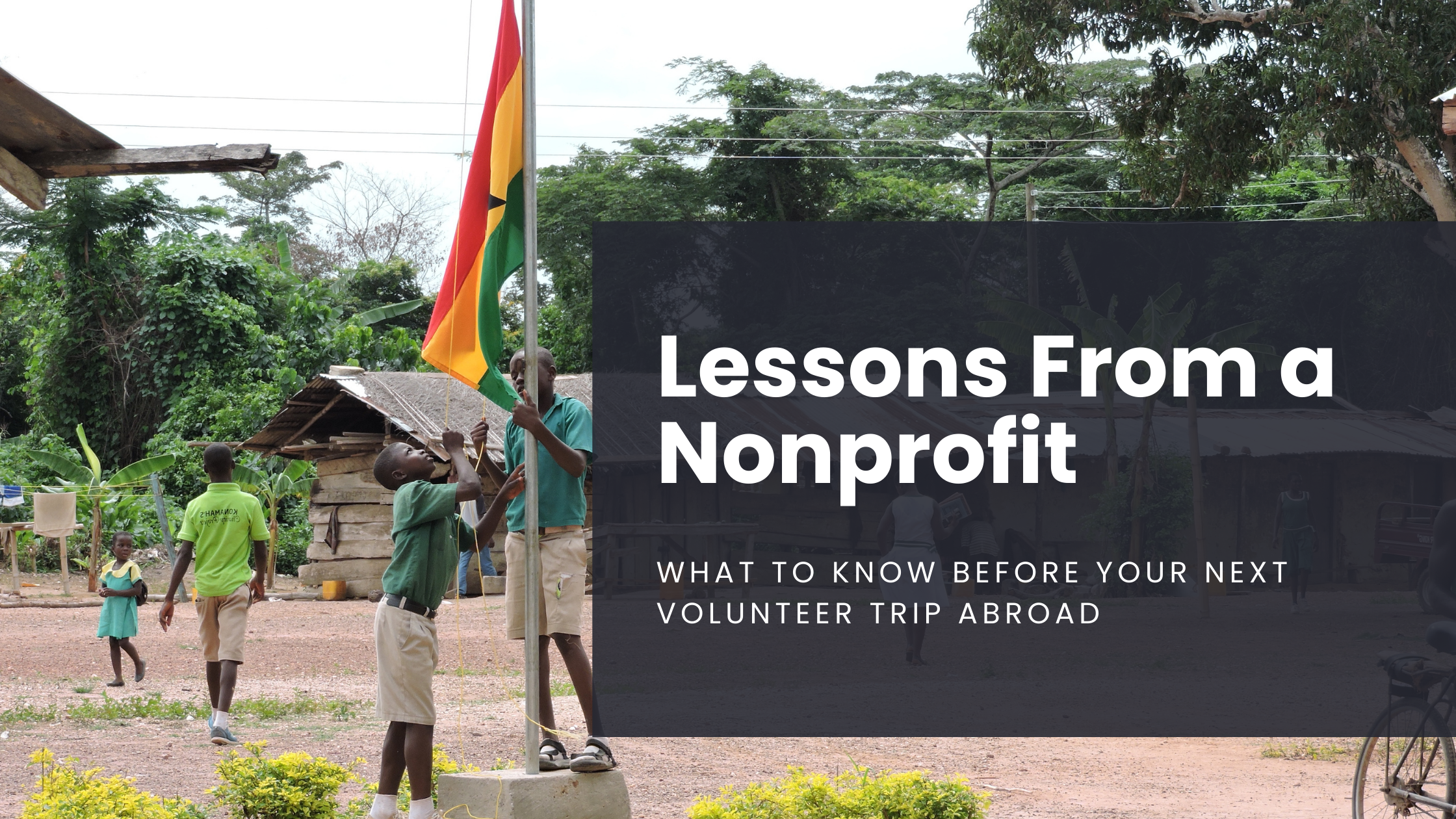
A combination of volunteering and tourism, voluntourism offers young and passionate travelers an opportunity to partner with organizations around the world while giving back along the way. Simply put, it’s a great way to make a difference… or is it?
This new niche of volunteering has taken off in recent years. NPR reported that in 2014 more than 1.6 million tourists were spending upwards of $2 billion to travel the world and visit non-profit organizations, all in hopes of enacting change. These numbers have only continued to grow.
Just as with any other fad - i.e. social media, blogging, etc. - the market becomes saturated, often leading to a myriad of problems that comes at the cost of the consumer or, in this case, the volunteers. A simple search across the internet will uncover an emerging theme: quality programming from non-profit organizations is becoming easier to embellish as they make an effort to “keep up” with the demands of voluntourism. Unfortunately, these operations can often cause more harm than anything else within the communities they serve, even despite good intentions.

Image courtesy of www.giveaya.org
In November of 2018, Reuters published an article about an Australian lawyer, Kate van Doore, who arranged to take over an orphanage in Nepal only to realize that the children she thought she was helping weren’t orphans at all. As it turns out, the kids were removed from their homes, provided a fake identity, and exploited for profit. All for the sake of creating a scenario where scammers could prey on the pockets of foreign volunteers. Can you imagine the thoughts that ran through Ms. van Doore’s head as a child came up to her and asked to go home to his mom?
The sad reality is that this is not an isolated incident. A quick Google search of “fake orphanage” will disclose the top 3 hits - Nepal, Uganda, and Cambodia. Unfortunately, as the rate of volunteers grows, so too will the establishment of these “orphanages.”
In a more recent incident that sent shockwaves around the non-profit world, ABC News reported on a case in which the founder of an organization, Renee Bach, is being sued in the Ugandan Civil Court for allegedly practicing illegal and unlicensed medical care, leading to the deaths of 105 children. The article cites her reasons for starting the non-profit in 2010: A 19-year old Renee decided that it was something she was “supposed to do,” so she picked up and moved to Uganda with no plan. This feeling of enlightenment quickly transformed into clouded judgment, going as far as serving as the primary caretaker for severely malnourished children, hooking up IVs, administering blood transfusions, and more - all without any medical training.
These heartbreaking stories are the unintended consequences of people yearning to “do good” in the world, unaware of the impact their actions have on those around them.
It’s clear that voluntourism is here to stay, so how can we, as travelers, evaluate the ethics of the organizations that compete for our time and money? It’s not easy, but it can be done.
We must first obtain the necessary knowledge that allows us to critically evaluate how these non-profits are accomplishing the “good” they claim. Only then can we begin to enact change.
Here are 9 lessons that I’ve learned through nearly a decade of working in Ghana with Aya. I hope they will help you to better understand, navigate, and critique the practices of any non-profit organization you come into contact with during all of your travels and volunteer experiences!
1. PEOPLE ARE NOT A CHARITY CASE
It’s easy to have our vision clouded by the desire to leave a mark on the world, but we must remember how important autonomy is to all of us as human beings. Would you be happy if someone you’ve never met showed up on your doorstep simply because they felt you needed help and they should be the ones to provide it? No, probably not.
Once you donate a dollar or volunteer your time, you become a stakeholder in the organization. Dig deeper. How are they treating the beneficiaries? Is it a case of westerners going into a community with a preconceived notion that their help is needed, or is it a “back seat” organization that tries to collaborate with locals wherever possible?
The greatest piece of advice I can offer is to flip the script and put yourself in the shoes of the receiver. If this non-profit was serving you, would you feel respected and welcome them into your community or would you shut your door?
2. NO ONE HAS ALL OF THE ANSWERS
If you’ve traveled at all, then I’m sure you realize just how diverse different cultures around the world are. This is a beautiful thing, but be aware that it creates unique hurdles that any solution to even the simplest of problems must overcome. Who do you think is better equipped to handle a multi-layered obstacle within the community - a local that has been living there for 30 years or a teenager from America that’s volunteering abroad for the first time? A non-profit must know their limitations, both as an organization and as individual employees.
Make sure any group that you donate or volunteer with isn’t biting off more than they can chew. How does their history equip them to handle their current projects? How do they approach their programs, more specifically, do they develop key partnerships with experts in a certain field or do they try to do it all on their own? These are important questions to ask. For example, no one within Aya is an expert in global health, but we, along with community members, recognize that improvements must be made to keep students happy and healthy. As a result we work towards partnering with other local organizations such as Days for Girls Ghana.
If you ever find yourself in a volunteer situation that you feel is beyond your skillset, don’t be afraid to speak up. By staying silent you may unintentionally harm the people you are trying to help!
3. INVEST IN COMMUNITY STAKEHOLDERS
We’ve already covered the importance of non-profits treating any human beings as an equal, but it’s just as vital for organizations to INVEST in these same people. The most successful programs are the ones with a sound framework of community members.
When people feel involved and empowered, great things happen. So, does the organization you plan on volunteering with have an infrastructure on the ground with whom they are working and communicating with regularly? Will you have the opportunity to work alongside local staff that are bettering their community? It’s important to learn the operations you’ll be a part of before booking your ticket.

Image courtesy of www.giveaya.org
4. SUSTAINABILITY IS THE ULTIMATE GOAL
This is easier said than done and its complex nature is affected by most of the talking points made in this post. With that being said, it’s an important aspect of any evaluative process for every organization. Sure, a non-profit can bring in volunteers, make a quick buck with trip fees, and keep the cycle going. But what sets successful organizations apart is what they do AFTER volunteers work on programs and leave. How are they kept afloat? Who is overseeing them? Are they setup for sustained success - both internally as an organization and within the communities they serve?
Take the Uniformed Hope campaign I ran in 2011 with Aya, for example. Early on, we had identified accessible school uniforms as a major barrier to students attending classes. In Ghana, uniforms exude a sense of pride. If a family can’t afford one, it’s not uncommon for the student to skip school. Our team developed a simple solution: donors give $15 and we provide a school uniform for a child. Within a month we had raised enough money to purchase uniforms for every student at the village school, increasing attendance! We felt so much pride in the work we had done, but what we failed to consider was the future of the program. Donors had given one-time gifts, meaning we were operating on a limited budget that was quickly drained. What would happen when students outgrew their new uniforms and couldn’t afford replacements? As a result of our lack of foresight, enrollment decreased at the beginning of the following academic year. We learned that we had to think big picture - consider all options and all potential effects - to make the program effective. At the end of the day, the community worked together to create a “hand-me-down” program, recycling uniforms through the grade levels regardless of if it had been provided by our efforts.
The question that we always ask ourselves as an organization is how will our decisions either enable or inhibit the growth of those that benefit from our programs if Aya ever ceased to exist? Will our efforts continue transforming lives or will they fail? It’s important to keep this in mind as a donor. Sure, your money can make an immediate improvement almost anywhere, but it’s much more effective to ensure a LASTING impact.
5. LISTEN, EVALUATE, ADAPT, REPEAT
Many times when people learn of my work with Aya they commend my efforts and then get confused as to why I brush it off. The truth is, I’ve done very little on the ground in Ghana. Rather, 95% of my time is spent listening to parents, teachers, and our in-country volunteers, then re-evaluating our programs and adapting as best we can. It’s a constant cycle that never ends.
All too often organizations birth their vision with a fixed mindset, failing to create a platform for any collaboration and adaptation. This inability to morph ultimately prevents sustainable change, causing more harm than good in the long run. Listening is key, so make sure you understand how the organizations you work with incorporate this into their day-to-day work. It should be a major part of how they advance their mission!
6. NEVER LOSE SIGHT OF THE BENEFICIARIES
Organizations are constantly tip-toeing across an invisible tight rope. On one side is the volunteer experience, while on the other is the integrity and sustainability of their work at the ground level. Leaning too far in either direction can lead to problems.
Yes, I get it. When volunteers feel comfortable, connected and have a good time, they often return home feeling empowered and ready to spread the news about an organization’s work. Catering to them certainly has its benefits. After all, the volunteers are the same people paying the extra trip fees that fund the projects and programs on the ground. But at what cost? At what point does it actually take away from the people they meant to help?
It’s important to know if the organization you choose to partner with takes precautions to maintain the integrity of the community in which they work, or if the programs they’ve created have led to a revolving door of volunteers. Sure, playing with kids in an orphanage for a month sounds fulfilling, but what happens when the children become attached, you leave, and they never hear from you again? It’s hard to think about, after all, you never meant to break someone’s heart, but it happens more than we realize.
Sometimes decisions from organizations are unpopular, but it’s important to consider them from both sides of the tightrope. For instance, The Senase Project rarely brings unattached volunteers on trips, let alone operates full-fledged service trips. This isn’t because we want to isolate the community or hinder the donor experience, rather we aim to protect the relationships and trust we’ve been able to curate over the past decade of work. They are essential to how we ensure sustained success.
Find an organization that consistently walks this line with grace and poise while keeping their eye on the ultimate goal: serving the people.

Image courtesy of Aya, www.giveaya.org
7. HOW YOU GIVE MATTERS MORE THAN YOU THINK
As the saying goes, give a man a fish and you feed him for a day; teach a man to fish and you feed him for a lifetime. It often contradicts our natural instincts to say no to someone in immediate need, however, it’s important to understand how the specific way in which we give can lead to different outcomes.
Hypothetically, let’s say that John, a teenager that you met in a remote village during your travels, asks for $20. He says it’s for books for school. You oblige. How can you be sure that it’s used with your intent in mind? Maybe his parents took it for something else. Maybe he doesn’t even attend school and instead pocketed it for later. Oh well. What’s done is done. Once you leave the village, you’ve stayed in touch with John and when the next term rolls around he approaches you again. You struggle to say no. After all, $20 isn’t a lot to ask, so the cycle continues. Other people in the village take note of what John has done and now wait for the next foreigner to visit so that they can replicate the process. What once started as an innocent $20 has now quickly snowballed into something more.
I am in no way advocating for you to NOT donate to those in need. I am simply encouraging you to start to consider HOW you are doing so. Something that may seem insignificant can wreak havoc in the grand scheme of things. Before you write that next check, take a moment to learn how your money is utilized and dispersed on the ground.
8. YOU CAN’T HAVE A SOLUTION IF A PROBLEM DOESN’T EXIST
This lesson goes back to knowing your limitations and treating people as equals rather than a charity case. Unfortunately, it’s not uncommon for individuals to move to Africa and start a non-profit simply because it’s a place that’s portrayed as needing drastic amounts of help. But who are we to say what should be a priority within a community in which we don’t belong? Do we even have the right to determine who needs help and who doesn’t? I’m sure as hell not comfortable standing in front of a village of people that live on $1/day and forcing my own thoughts, ideas, and priorities upon them.
If an organization is truly going to help, they must first listen, collaborate, engage, and learn. It is during this process that they will uncover how best to utilize their skills. With The Senase Project, I have witnessed that over time, these relationships become mutual as community members begin to value what we have to say just as we do with them. This is when constructive solutions to complex problems are formulated and, in turn, become more sustainable.
Don’t jump the gun simply because an organization’s mission sounds good on paper. It’s much more pertinent to learn how they turn that vision into a reality; do your homework and make sure to keep your ears open along the way.

Image courtesy of Aya, www.giveaya.org
9. YOUNG & PASSIONATE IS NOT A QUALIFICATION
It might sound blunt, but it’s important to take a step back and remember that although helping others feels good on the inside, it can actually cause more harm than good if not done the right way. Before you go on your next volunteer trip, take a moment to reflect on your strengths and weaknesses. Consider what skills and passions you hold that people might benefit from. Use that information to find an organization that fits you, not the other way around.
At the end of the day, it’s important to realize that the communities in which non-profits work aren’t a place to “try something new” or boost your self-esteem; they are real people with real problems. Instead of trying to play the role of “Mr. Fix It”, go into each experience with a learning mindset. You might be surprised as to what the people can teach you!
The non-profit sector is expansive, but the more informed we are as investors, the higher the standards we can demand. This will ensure that the respect, sanctity, and autonomy of every community around the world remain acknowledged and protected.
It’s easy to see that all of these lessons are intertwined with one another. Collectively, they help to combat any negative and unintended consequences that may arise from trying to help others. I hope that they may help guide you in leaving your mark on the world in the most effective and sustainable way possible.
Thanks for reading!
What have been some of your experiences with non-profits? Have you ever volunteered abroad? Comment below and share your story!
Until next time, stay safe & happy travels!
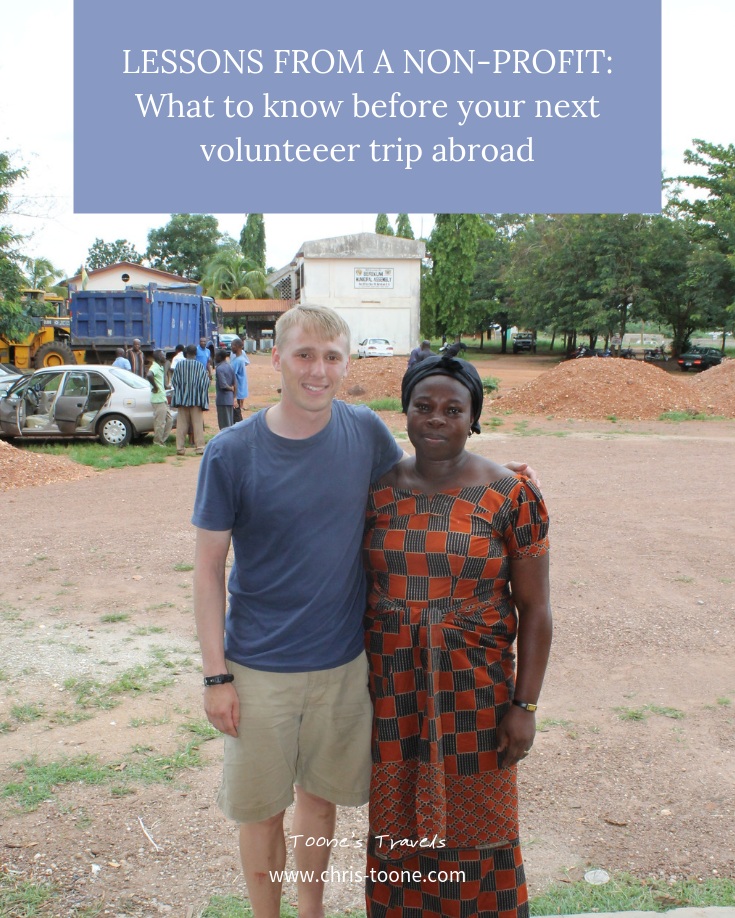
After three years living in Ghana, these are ten of the most unforgettable travel experiences across Africa that changed how I see the world…