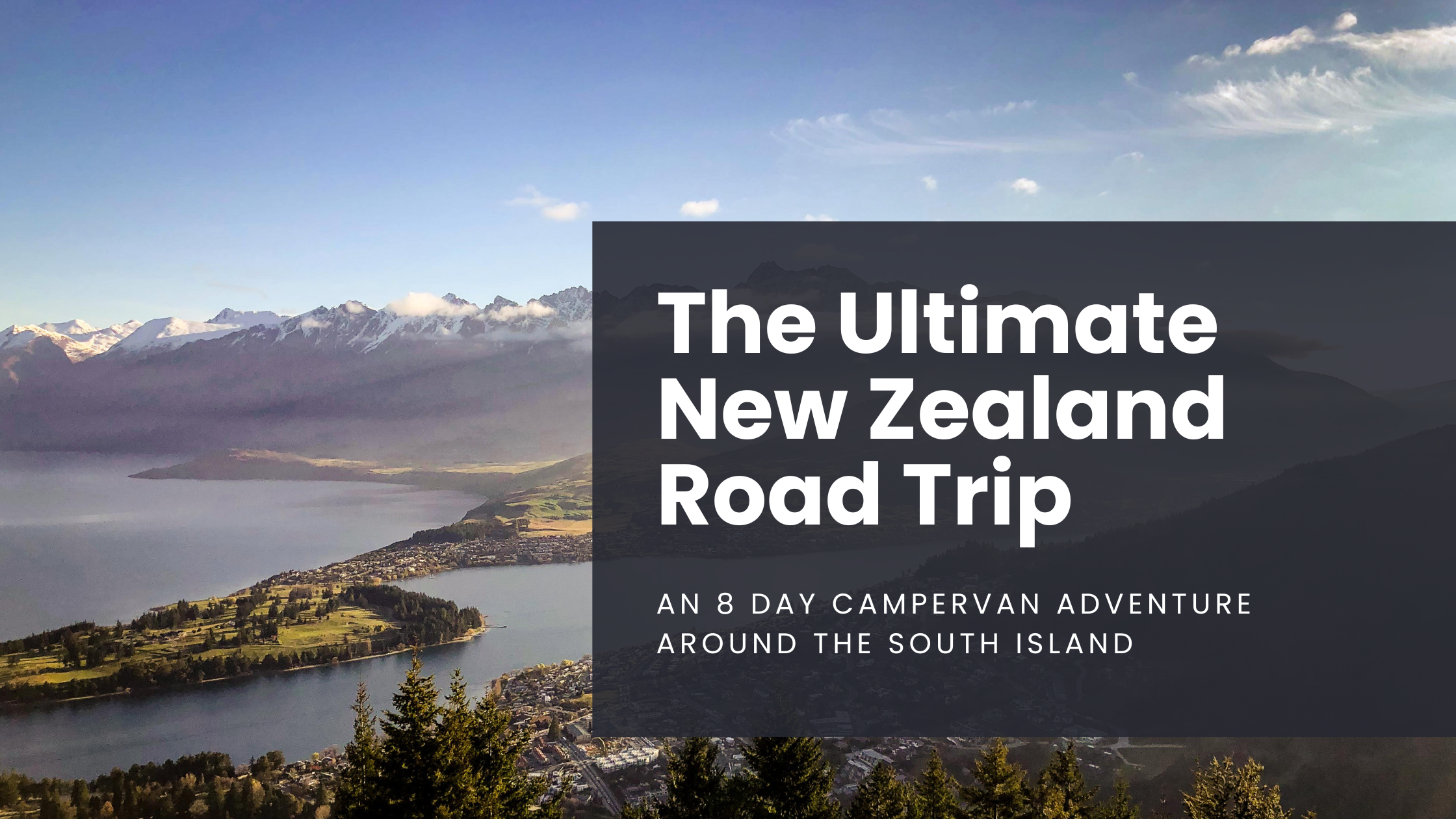
The Ultimate New Zealand Road Trip: An 8 day campervan adventure around the south island
Planning a trip to New Zealand? Be sure to check out this guide about traveling around the south island and discover some of the most beautiful landscapes on the planet. From choosing your route to where to stay and what to do, this post has everything you need to say “let’s go” and book that next adventure!
Please note: All info below is up to date as of May 2023
If I could handpick one destination for you to experience, it’d be New Zealand. An outdoor adventurer’s paradise, the two islands combine for a population of under 5 million inhabitants and come complete with sprawling scenery that begs to be explored. With nearly 33% of the country protected under the national parks system, it’s not hard to stumble upon pure and untouched nature!
It was just over a year ago that Heather and I crammed our backpacks full of winter jackets, caught a flight from LAX, and traveled south for our first campervan experience - driving around New Zealand’s south island.
With only eight days to spare, we knew it’d be long hours on the road and a lot of activities to cram into a short period, but we were committed to making it happen.
Whatever you choose to do and wherever you go in New Zealand, you won't regret booking a plane ticket!
One quick note about campervans in New Zealand: It’s vital to know the classification of the vehicle you’re renting and how that relates to your camping options. Many free sites around the country are for self-contained vehicles only, meaning that the van must be equipped with a toilet and grey water tank. After crunching some numbers, we calculated that springing for the slightly more expensive Jucy Chaser would save us money on accommodations because of it’s “self-contained” status.
BEGIN IN QUEENSTOWN
One of my favorite parts about visiting New Zealand is simply arriving. The flight path into Queenstown yields mind-blowing landscapes. It’s a pretty special feeling as you step onto the tarmac, look up and see The Remarkables in all their glory.
Pro Tip: Snag a window seat on the left side of the plane for the best views.
From here, we picked up our campervan and drove straight to Lake Pukaki for our first overnight.
Total Drive Time: 2hr 45min
Overnight Stay: Lake Pukaki Overnight Campervan Parking. Onsite toilets are available, but there are no powered sites. Non-self contained vehicles are allowed.

Road trip map of New Zealand
DAY 1: LAKE PUKAKI AND MT. COOK NATIONAL PARK
Why you should go: Lake Pukaki is the sole access point to Mt. Cook National Park, home to New Zealand’s tallest mountain (3,765m). It’s also the country’s deadliest peak, accounting for nearly 80 reported casualities since the early part of the 20th century.
With tons of hiking to choose from, you can be sure that there’s something for all ages and fitness levels. Looking for a view of Mt. Cook? Try the Hooker Valley Track. Although it’s one of the most popular hikes, the 10.5km round trip path takes adventurers over swinging bridges and through the valley before reaching Hooker Lake, all at only 100m of elevation gain - talk about bang for your buck! Whichever hike you choose, I guarantee you will encounter some of the most breathtaking scenery in all the world. For a comprehensive list of hikes within Mt. Cook National Park, click here.
Lake Pukaki is also an optimal basecamp for exploring nearby Lake Tekapo or hopping on a scenic flight to soak up the spectacular aerial views. My personal recommendation would be Air Safaris; great service and a variety of options to fit any budget!
Must Do: Hooker Valley Trek and Air Safari Tour
Total Drive Time: 4 hrs. (Tekapo to Amberley Beach). Make sure to enjoy the views as you drive over Burke’s Pass along Highway 8!
Overnight Stay: Amberley Beach Reserve. Any vehicle is welcome to camp here, with both powered and non-powered sites available. The campground also offers toilets and bucket shower stalls and costs between $5-25 NZD per night, depending on your chosen site and vehicle.
Planning to stay longer in Lake Tekapo? Here’s a list of things to do and see:
Hike to the Mt. John Observatory for sweeping views over Lake Tekapo
Test your hand at astrophotography (Tekapo is a designated International Dark Sky Reserve)
Take flight high above Mt. Cook with Air Safaris as your guide to truly grasp the magnificence of the area
Relax in the Tekapo Hot Springs

Hooker Valley Trek at Mt. Cook National Park
DAY 2: KAIKOURA
Why you should go: The beauty of New Zealand is that you don’t need to be either a water person or a mountain person; you can be both! The sleepy seaside town of Kaikoura can attest. Located at the base of the aptly named Kaikoura mountain range, it is widely known for its resident sperm whale population, making it THE perfect place to hop on a boat and experience the wildlife from the water. Not a fan of the open sea? No problem. Stroll along the Kaikoura Peninsula Walkway to the rock platforms and prepare to “ooh” and “ahh” when you stumble upon a colony of fur seals!
Must Do: Whale watching in the South Pacific Ocean. We used Whale Watch Kaikoura and had an incredible time. Make sure to book in advance as spots fill up fast, even in the winter months!
Total Drive Time: 6 hrs. (2 hrs. from Amberley to Kaikoura and 4 hrs. from Kaikoura to Motueka)
Overnight Stay: Motueka Beach Reserve. This is a free camping area that only allows self-contained vehicles. It comes complete with toilets, showers, designated fire and cooking areas, and is located adjacent to the Motueka Salt Baths, just in case you feel the urge to take a quick dip in the Tasman Bay.

Kaikoura, New Zealand
DAY 3: ABEL TASMAN NATIONAL PARK
Why you should go: What do you get when you add rainforests to waterfalls and and sprinkle golden sand beaches on top? Paradise. Spread along the south island's northern coast, this national park is most well known for the Abel Tasman Coast Track as it winds its way 60km along the pristine water. This particular hike takes a bit of advanced planning, but it is still possible to experience the region by trekking to nearby to Wainui Falls. This 3.4km out and back trail maneuvers it's way through the lush rainforest and over suspension bridges before arriving at the stunning waterfall. Be sure to take a quick dip in the frigid waters and make sure to have a towel at the ready!
Must Do: Wainui Falls was an incredible hike, but our favorite part of the day was simply driving and exploring the area, especially Highway 60 up and over Takaka Hill.
Total Drive Time: 4.5 hrs. ( 1.5 hrs. from Motueka to Abel Tasman National Park and 3 hrs. from Abel Tasman to Murchison)
Overnight Stay: Riverside Holiday Park (Murchison). From 3 bedroom cabins to non-powered tent sites, this accommodation has something for everyone. The facility comes complete with a community kitchen, flushing toilets, and warm showers… this holiday park certainly spoiled us! We opted to rent a powered site for just $35 NZD ($22 USD) in order to hook up the heater in our van to keep us warm during a rainy night.
Want to learn more about this island nation? Check out these essential posts:
Day 4: PUNAKAIKI AND HOKITIKA
Why you should go: Stunning coastline and glow worms galore! The western part of the south island is like nothing I had ever seen before. Lush rainforests stretch from high above in the Southern Alps to the Tasman Sea below.
Driving aimlessly along Highway 6 and spontaneously stopping as you go is worth it in its own right, however this part of the island is where you can find two popular destinations: Punakaiki and Hokitika.
Punakaiki is home to the curious limestone formations known as Pancake Rocks, the perfect place to take a short 1.1km walk around these geological oddities and stretch your legs.
Pro Tip: Try to time your visit around high tide. This is when the surge pools and blowholes will be most active, leading to a truly spectacular show of forece from the ocean.
Feeling adventurous? Bring a headlamp and take a quick detour to the Punakaiki Cavern, located just north of the Pancake Rocks along Highway 6. Don’t forget to look up to spot the glow worms and stalacites as you descend into the darkness!
If you have trouble spotting the glow worms in Punakaiki, don’t worry, so did we! Keep driving south to Hokitika and you’ll find the Hokitika Glow Worm Dell. Located directly off of Highway 6, this leafy canyon is a protected home to these intriguing creatures.
Make sure to go at night as they illuminate the path. It’s free and only a 2 minute walk from the roadside, making it the perfect alternative if you don't have time or budget for an organized tour.
Did you know that the light emitted from these worms isn’t just mesmerizing to the human eye? It’s used to attract their food, luring insects and trapping them in their sticky threads!
Must Do: Hokitika Glow Worm Dell
Total Drive Time: 3 hrs, with PLENTY of roadside stops along the way
Overnight Stay: Hokitika Holiday Park. Powered sites start at $20 NZD per person and access to the community kitchen, lounge area, showers, playground, and free wifi!

Views from Highway 6
DAY 5: FOX JOSEF AND FRANZ GLACIERS
Why you should go: Where else can you hike through the rainforest en route to a glacier? The answer is nowhere!
Franz Josef and Fox Glaciers are the only two that exist in the world. Both offer a unique experience, trekking through the lush forest and up ice-carved valleys to their terminal faces.
The Franz Josef Walk is a 5.4km path up to the 7,000 year old sheet of ice, while the Fox Glacier Valley Walk is a 6km trail that follows the south bank of the Fox River through the ancient podocarp rainforest. A professional guide is needed to access the glacier if you're looking to get more up close and personal.
Check out Franz Josef Glacier Tours and choose your adventure: ice climbing, heli-hiking, and more!
Must Do: The Franz Josef Glacier Walk
Total Drive Time: 4 hrs. to Haast, with stops at both the Franz Josef and Fox Glaciers
Overnight Stay: Haast River Holiday Park. This powered site is slightly more expensive at $48 NZD per night, but provided access to the kitchen, showers, and wifi. Onsite motel rooms are also available.

Franz Josef Glacier from above
DAY 6: WANAKA (TRANSIT TO MILFORD SONUD)
Why you should go: Located on the southern shore of Lake Wanaka, this town is the perfect stopover en route to the Milford Sound. Snap a picture of That Wanaka Tree or simply enjoy a flat white as you peruse the stores along the waterfront.
Have a bit more time to spare? Take a jaunt up Roy’s Peak, a steep 16km trek that ends in sweeping views over the surrounding landscape.
Must Do: Stroll along Lake Wanaka
Total Drive Time: 5.5 hrs. from Haast to Cascade Creek Campground (brief stops in Wanaka and Te’Anu)
Overnight Stay: Cascade Creek Campground. This is the closest campground to the Milford Sound without making reservations in advance and costs just $15 NZD per person. Toilets are available, however powered sites are not. It’s the perfect place to spend the night if you have an early morning cruise of the sound scheduled for the following day!
Pro Tip: Fill up your gas tank in Te’Anu… it’s the last stop you’ll find before reaching the Milford Sound.
DAY 7: FIORDLAND NATIONAL PARK AND MILFORD SOUND
Why you should go: With cascading waterfalls that plummet over the fjords and into the serene waters below, this cherished corner of the world is filled with unrivaled beauty.
The best way to experience the sound is from the water, so be sure to hop on a nature discovery cruise. There are plenty of tour operators to choose from so it’s possible to shop around for the right fit for your wallet. Pro Tip: If you rent a vehicle from Jucy, you’ll receive a $30 discount when you book through Jucy Cruise!
Once your mind has been properly blown, spend some time exploring the rest of the 1.2 million hectares of land that makeup Fiordland National Park. For a full list of hikes available, click here.
Must Do: Cruise the Milford Sound
Total Drive Time: 5 hrs (1 hr from Cascade Creek Campground to Milford Sound and 4 hrs from the Milford Sound to Weirs Beach Campground)
Overnight Stay: Weirs Beach Campground. This is a free site that welcomes any type of vehicle! Non-powered sites only, but bathrooms are available.

Milford Sound, New Zealand
DAY 8: THE CATLINS COAST
Why you should go: Peace, serenity, and wildlife. Oh, and inching closer to Antarctica!
Comprised of the southeastern part of the island, The Catlins aren’t frequently visited by most, but are well worth the effort to get there.
Take a short, albeit windy, walk out to Slope Point and you’ll find yourself standing closer to Antarctica than to the equator.
Beyond creeping closer to the ice continent, The Catlins is one of the best spots to find an abundance of yellow-eyed penguins, sea lions, and starry nights.
Visiting in the winter months? Hunt down the southern lights! This forecast will help make sure that you don’t miss out.
Must Do: Slope Point
Total Drive Time: 3.25 hrs. back to Queenstown to complete the trip!
Overnight Stay: Turner Heights Townhouses (Queenstown). Between the aerial views of Queenstown and the easy walk to Lake Wakatipu, this was the perfect accommodation for our final night!

Slope Point, New Zealand
Have you given yourself more than just one night in Queenstown? Here’s a short list of things to see and do:
Play footygolf with The Remarkables as your backdrop at the Frankton Golf Centre
Wake up early and climb to the top of Queenstown Hill for sunrise
Enjoy breakfast along the water at Vudu Cafe
Take the plunge at the world’s first bungy jump (AJ Hackett Bungy)
Trek up the Tiki Trail for picture perfect views above Queenstown with The Remarkables as a backdrop
Meander along the shores of Lake Wakatipu in the evening light
Although we managed to condense a lot into a short amount of time in New Zealand, we certainly didn’t come close to scratching the surface of all that this nature lover’s paradise has to offer. At the end of the day, it’s important to realize that this itinerary is in no way perfect. It’s merely a starting point for you to pull out a map and begin planning an adventure of your own. After all, I find that some of the best memories are made before the trip has even begun!
Have you been to New Zealand before? What was your favorite part? I want to hear from you in the comments below!
Thanks for stopping by and as always, stay safe & happy travels.
Sharing is caring… pin this post for later!


30 Facts About New Zealand: Interesting, weird, and downright quirky
Planning a trip to New Zealand? Check out this list of 30 interesting, weird, and just straight up quirky facts about the island nation. From penguins, to wizards, and even the elvish language, New Zealand has more to offer than you might think - and it already had a lot going for it! Time to book those tickets you’ve been dreaming about.
I’ve said it before, I’ll say it again: New Zealand should be at the top of every person’s bucket list. From sprawling landscapes and abundant marine life to bungee jumps and sky diving, there's something for everyone. To help inspire your next great adventure, I’ve compiled a list of 30 of the most interesting, quirky, and weird about New Zealand.
Buckle up… here we go!
1. New Zealand is home of the world’s first commercial bungee jump
Searching for an adventure? Make sure to stop by Queenstown — commonly known as the adrenaline capital of the world! Just outside the city sits AJ Hackett Bungy, named after the man who established the attraction in 1988 after being inspired by the natives of nearby Vanuatu who would take the plunge using tree vines. Are you brave enough to take a leap of faith off the Kawarau Bridge and plummet 43 meters towards the river below?
2. Plenty of space and not a lot of people
Although New Zealand is similar in size to the United Kingdom, only 4 million people call this island nation home. That’s slightly less than the estimated 66 million people inhabiting the UK…
3. New Zealand made women’s rights history in 1893
The nation became the first modern country in the world to give women the right to vote! Well done, New Zealanders!
4. Conquering Everest
Sir Edmund Hillary, the first person ever to scale Mount Everest, was from New Zealand.
Planning a trip to New Zealand? Don’t miss these essential posts:
5. A step ahead of the rest of the world
Well, physically speaking. New Zealand is (debatably) the first country on Earth to welcome the sun each morning. In 2011 Samoa motioned to move its position on the International Dateline to align themselves better with the workweek in Australia and New Zealand. Technically speaking, they’re the first country to welcome the new day, but due to the curvature of the planet many people are adamant that the East Cape on New Zealand’s north island is the first place to actually see the sunrise. Good enough for me!
Rise and shine, folks!

Sunrise from Round Hill Ski Fields
6. Into golf? Add New Zealand to your travel list!
Although New Zealand’s national sport is rugby, the country boasts more golf courses per capita than another place in the world.
7. No snakes
No more needs to be said, here. There are literally no snakes in New Zealand, but be sure to be on the lookout for the Giant Weta bug. This insect weighs more than a sparrow! Don’t worry, it won’t harm you.
8. The best of the mountains AND the sea
In New Zealand, you don’t have to be either a “mountain person” or a “beach person” — you can be both! You’ll never be more than 128km away from the coast, no matter where you might end up.

Kaikoura, New Zealand
9. Home of the Kakapo
This is the only flightless parrot in the world!
10. “Long white cloud”
The Maori word for New Zealand is Aotearoa, meaning long white cloud. If you look on a map, it checks out… the country is pretty long — nearly 1,000 miles to be exact.
11. Receive your weather reports in Elvish
New Zealand is known around the world as the filming location of Lord of the Rings movies and the people have truly embraced it. In 2012, the country even broadcasted a weather report in Elvish! View it here.
12. The fraudulent fruit
New Zealanders are often referred to as “Kiwis,” named after the national bird… NOT the fruit. As it turns out, kiwi fruit originates from China and was first known as “Chinese Gooseberries” before later being renamed after New Zealand’s national bird. I guess if you squint, turn off the lights, and close one eye, then the fruit (sort of) looks like the body of the bird?
13. Wellington’s claim to fame
Sitting at 41.28 degrees south and 174.7 degrees east, Wellington is the southernmost capital city in the entire world.
14. Bats are king
No, bats don’t rule over the country… there’s actually a very efficient Government that does that. However, bats are the only land mammals native to New Zealand. Every other species was introduced to the ecosystem.
15. Just how far south can you go?
New Zealand ranks 3rd in proximity to Antarctica, behind Chile and Argentina. Take a quick trip to Slope Point on the southern island and you’ll find yourself standing closer to the final frontier than to the equator.

Slope Point - South Island, New Zealand
16. Home to the world’s longest name of a place… 85 characters, to be exact
Are you ready for it? Taumatawhakatangihangakoauauotamateaturipukakapikimaungahoronukupokaiwhenuakitanatahu. Roughly translated as “the place where Tamatea, the man with the big knees, who slid, climbed, and swallowed the mountains, known as the land-eater, played his nose flute to his loved ones.”
17. Jedi religion is real
Well, sort of. According to a 2001 census, over 50,000 people listed “Jedi” as their religion. It took a bit of a hit during the following census in 2006 when only 20,000 people claimed it.
18. New Zealand is actually Australia - wait, what?
No, not really. However the Australian Constitution does list New Zealand as a state of Australia, giving Kiwis the option to join the confederation if they so choose.
19. The entire country is a hiker’s paradise
Nearly 33% of New Zealand’s stunning landscape is protected as part of the National Parks system. There are endless wonders to explore! Freedom camping comes with strict regulations though, so make sure you know before you go.
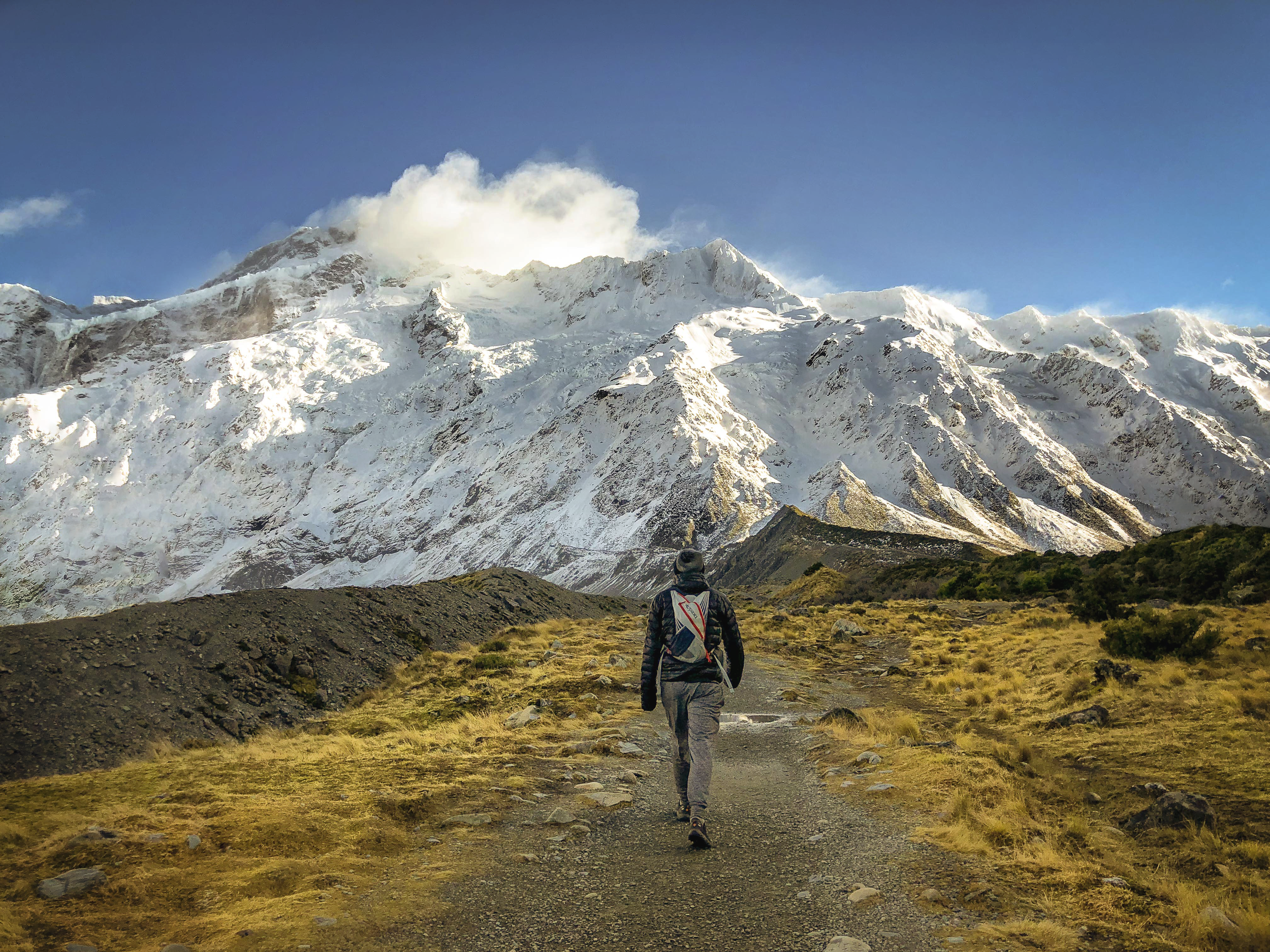
Hiking the Hooker Valley Trail in Aoraki National Park
20. Kiwis are kind and caring
The people, not the birds. New Zealand is tied with Denmark as the least corrupt country in the world.
21. Three official languages
It’s not uncommon for countries to boast more than one official language, but the unique thing about New Zealand is that they list English, Maori, and New Zealand Sign Language. Pretty cool, right?
22. New Zealand isn’t just a place for Jedis, it’s home to Wizards, too!
In 1990 the New Zealand Government actually appointed a “National Wizard” whose duties included casting out evil spirits. I’m not kidding.
23. Enjoy the holidays without toxic consumerism
The New Zealand Government has banned all television commercials during Good Friday, Easter Sunday, ANZAC Day (national day of remembrance in New Zealand and Australia), and Christmas Day.
24. The country breeds equality
New Zealand is the only country in the world to have all of the Government’s highest positions occupied by women at the same time. This occurred in 2006 when the Queen, Governor General, Prime Minister, Speaker of the House of Representatives, and Chief of Justice were all female.
25. New Zealand not only welcomes all walks of life, but all waddles of penguins, too
The island nation boasts more species of penguins than anywhere else in the world! Talk about being inclusive.
26. Ah, New Zealand, home to massive amounts of… sheep?
Although the number fluctuates, the generally accepted ratio of sheep to people is 9:1.
27. E lhowā Atua, but also please defend our dirt
New Zealand is one of the few countries in the world that sings two national anthems: E lhowā Atua in the Maori language, followed by God Defend New Zealand (English).
28. New Zealand - the land of the… Scottish
New Zealand is home to more Scottish pipe bands than… you guessed it… Scotland! Don’t forget to pack your kilt.

Mt. Cook National Park - South Island, New Zealand
29. Peace reigns supreme
In addition to being listed as the least corrupt country in the world, New Zealand topped the Global Peace Index in 2009.
30. Ever wonder where Pizza Hut acquires such massive amounts of cheese?
No, it’s not Wisconsin. It’s not even Italy. The restaurant chain purchases their mozzarella cheese from Taranaki, New Zealand! So does that mean Pizza Hut counts as “farm to table” dining there? Hmm…
Where else are you going to be able to meet Jedis that get their weather reports in Elvish? New Zealand is truly a wonder of the world and is home to some of the most generous people I’ve ever had the pleasure of meeting.
Sure, it takes a while to get there and can often be daunting, but I promise you it’s worth it. It’s time to book that trip you’ve been dreaming about!
Thanks for following along & safe travels.
This post is featured by Twinkl in their New Zealand Resources blog.
Enjoy what you read? Be sure to pin and share with others!

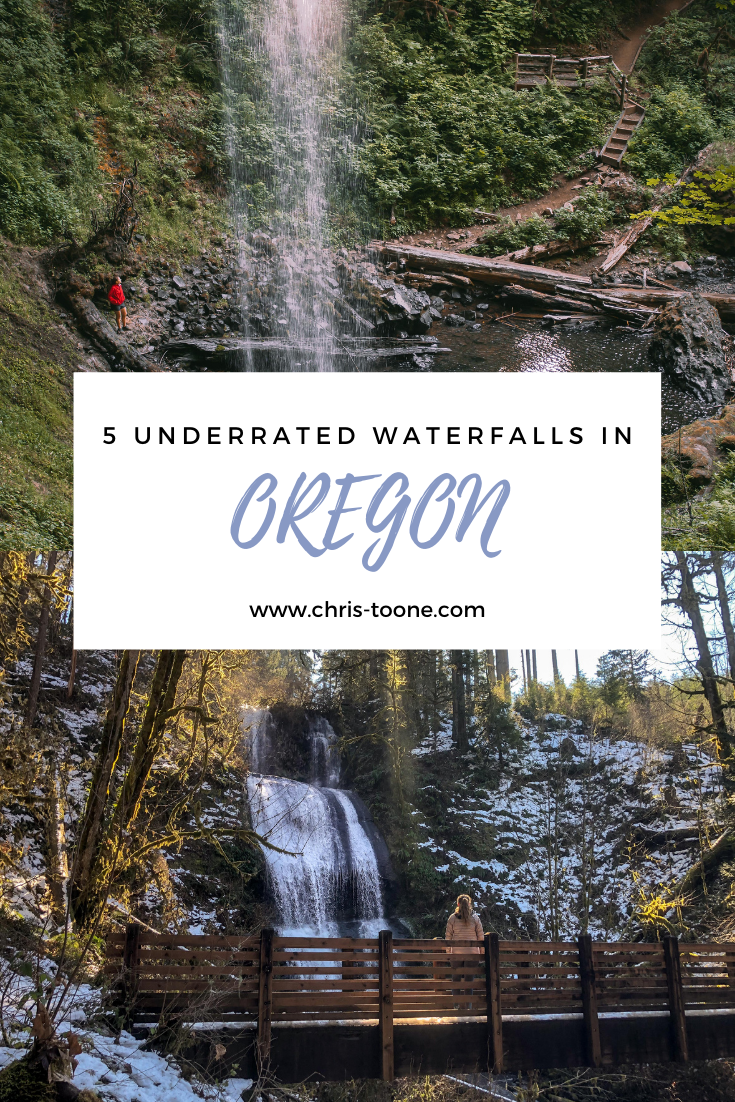
5 of the most underrated waterfalls in Oregon
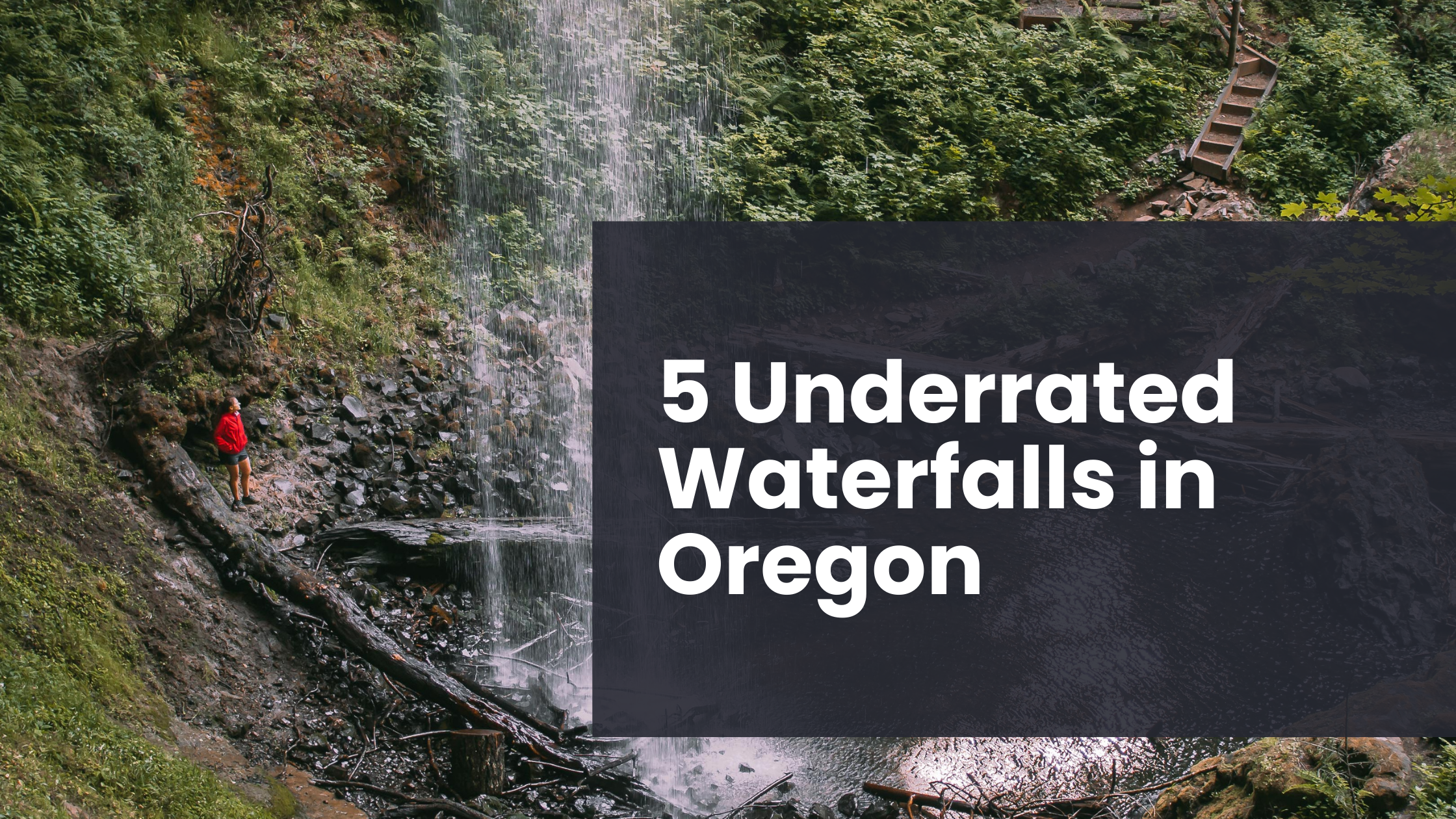
Although Multnomah may be the most popular waterfall in Oregon, the state is home to at least 237 others! Here’s a list of 5 of the most underrated waterfalls, deep within the verdant forests of this mystical place. It’s time to break out the hiking shoes for these incredible adventures!
Please note: All information below is updated as of May 2023
Growing up just outside of Buffalo, New York, I had the luxury of being able to visit Niagara Falls whenever I wanted. Needless to say, with one of the seven natural wonders of the world in my backyard as a child, my standard for waterfalls may be a bit unfair - or so I thought!
Although Multnomah Falls may be the most well known and photographed waterfall in all of Oregon, the beaver state is home to over 230 others. It’s hard to find a hike in Central Oregon that doesn’t lead to a magical view of these natural wonders.
With a plethora of hidden gems all around, here are my top 5 most underrated waterfalls found in Oregon, USA. It’s time to break out the hiking shoes!
1. SHELLBURG FALLS
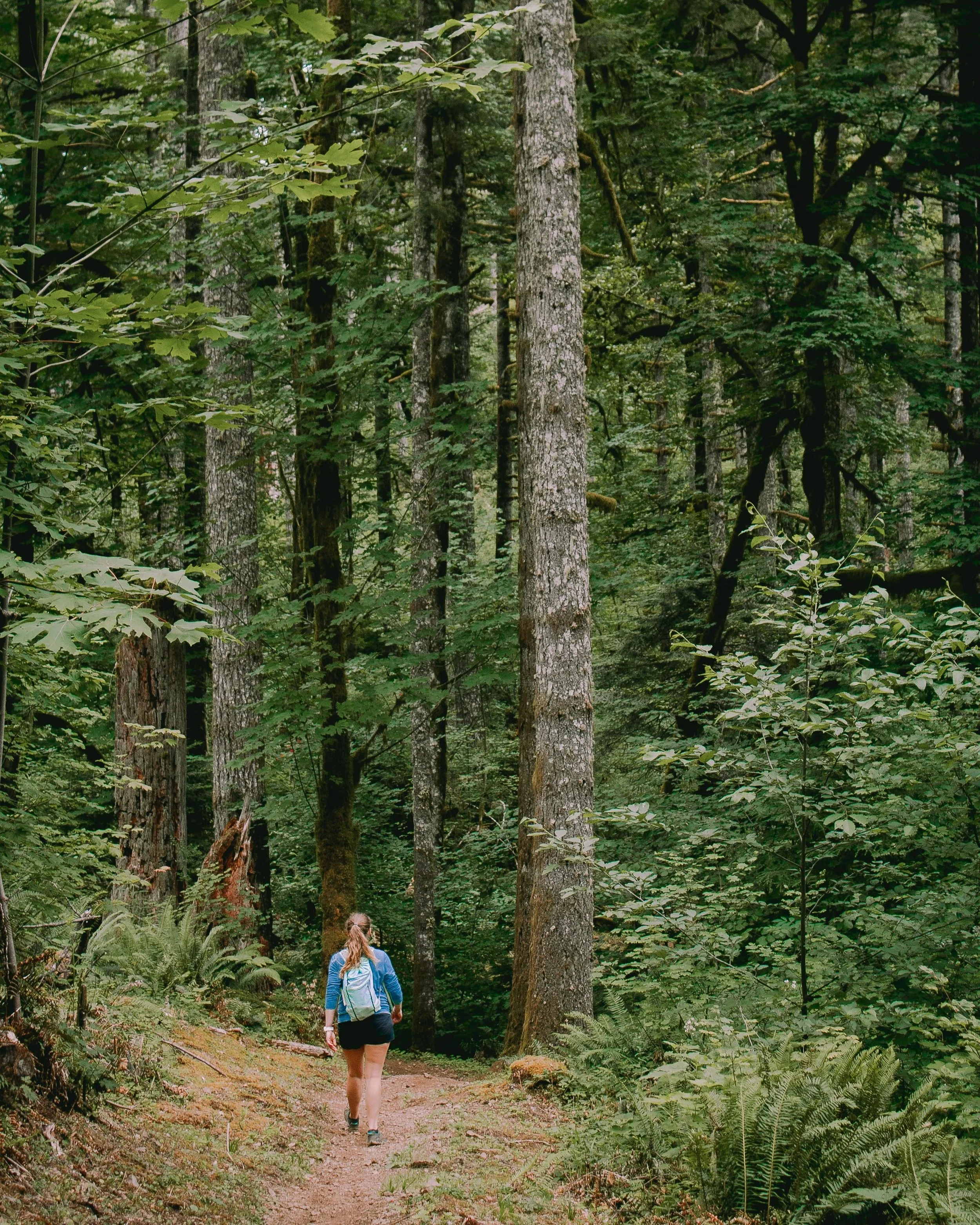
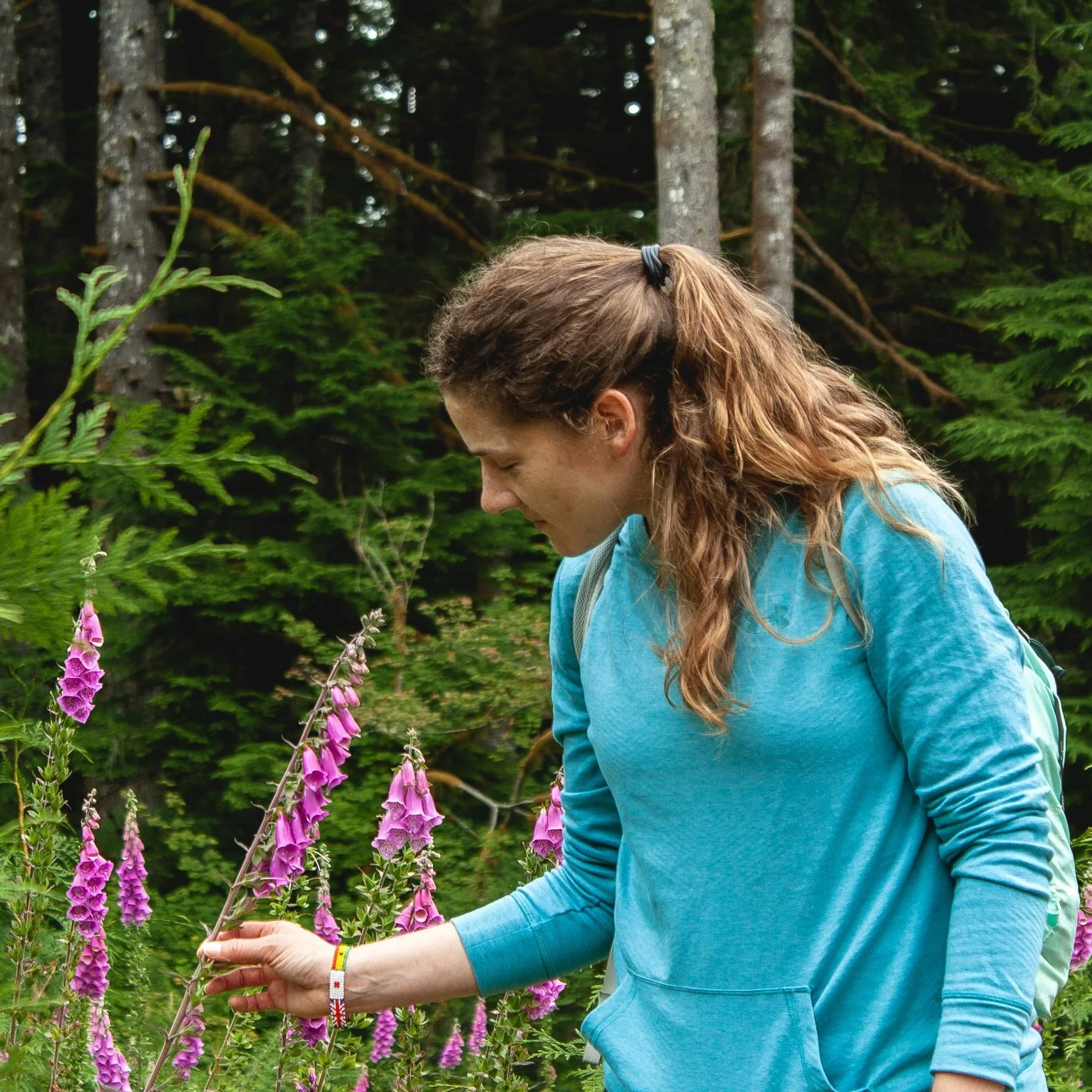
Located in the Santiam Foothills near Mehama, Oregon, Shellburg Falls is a 100ft tall cascading waterfall that flows over a stunning basalt ledge.
The hike starts by following a gravel road before entering the old-growth forest. Note: this road is private property and crosses through an open cattle range. Once you’ve reached a small bridge that crosses above Shellburg Creek, there will be stairs on the left that mark the beginning of the trail to the waterfall.
The path leads directly to Shellburg Falls and even takes hikers beneath the ledge and behind the flowing water, offering a unique perspective. Continue trekking through the forest and wildflowers before rejoining the gravel road at the other end of the loop. Pro Tip: Go early. This hike is easily accessible and good for all ages, making it heavily trafficked.
Hiking Distance: 6.0mi loop trail
Elevation Gain: 1,036 feet
Rating: Easy to moderate
Fee: None
Bathrooms: Vault toilets are located at the Shellburg campground, approximately 0.6mi past the waterfall


2. OPAL CREEK WILDERNESS (SAWMILL FALLS)
This trail is currently listed as CLOSED.
The Opal Creek Wilderness trail is a 6.9mi loop near Lyons, Oregon. Surrounded by stunning cedar trees, the hike flanks the Little North Santiam River as it winds its way through an abandoned mining operation from over a century ago.
The real gem of this trail is the numerous cut-offs to various waterfalls and swimming holes along the way, the most beautiful of which is Sawmill Falls. Make sure to bring a swimsuit and take a dip in the beautiful blue water!
Hiking Distance: 4mi. out and back to Sawmill Falls, 6.9mi. loop through Jawbone Flats
Elevation Gain: 652 feet
Rating: Easy
Fee: $5.00
Bathrooms: Vault toilets located at trailhead parking lot and in Jawbone Flats

Sawmill Falls
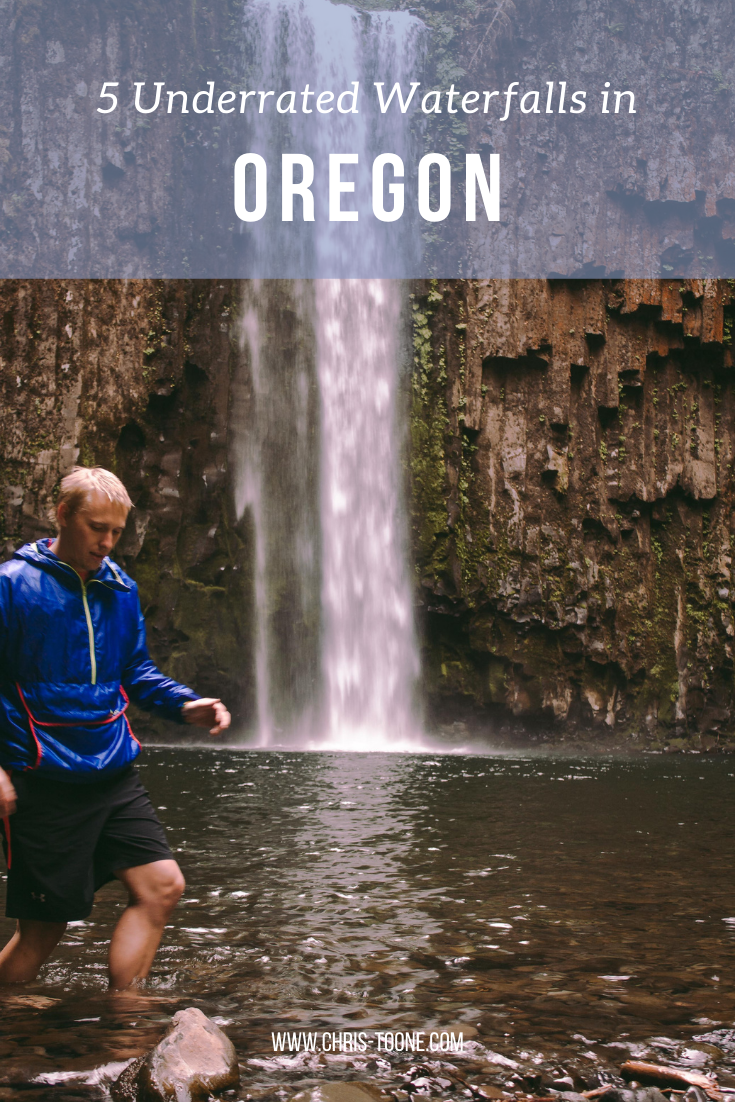
3. ABIQUA FALLS
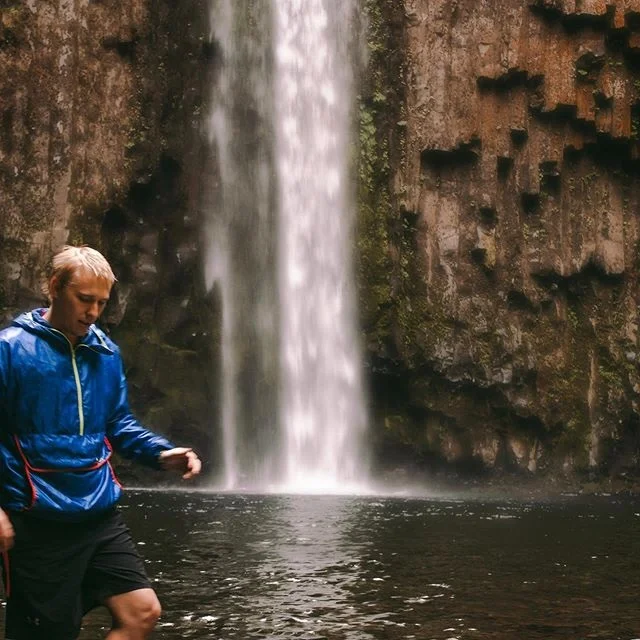
Abiqua Falls is an out and back 5.3mi trail located near Scotts Mills, Oregon that features a short hike through the forest and along a crystal clear river before reaching the 92ft. waterfall.
The trailhead can be found by following a single lane dirt road, with parking available in turnouts along the way. Continue following the road by foot as it descends deeper into the forest until reaching the trailhead. From here it’s a short 0.8mi. hike to the waterfall, but keep in mind the elevation gain becomes difficult on the way back out.
Keep telling yourself that it’s worth it because it is! If you’re daring like me, be sure to take a quick dip in the freezing, yet refreshing, pool below the falls. Note: The hike is on private property and can get steep at times. Exercise caution and be respectful.
Hiking Distance: 5.3mi. out and back (dependent on parking location), 0.8mi. to the waterfall from the trailhead
Elevation Gain: 1,397 feet
Rating: Hard (mostly due to the elevation gain on the way out)
Fee: None
Bathrooms: Not available



4. McDOWELL CREEK FALLS TRAIL (ROYAL TERRACE FALLS)
In search of a hidden wonder in Oregon? Look no further than McDowell Creek County Park, located 16mi. east of Lebanon. Here you’ll find McDowell Creek Falls Trail, a 1.8mi loop that leads to two beautiful waterfalls: Royal Terrace Falls and Majestic Falls.
Cascading a total of 119 feet between the two levels, Royal Terrace Falls was named from its unique terraced appearance, often found in royal palaces around the world. The trail itself winds its ways through the lush forest, taking hikers along bridges, stairs, and platforms, all providing the perfect views of the falls.
A great day trip for all ages!
Hiking Distance: 1.8mi. loop trail
Elevation Gain: 288 feet
Rating: Easy
Fee: None
Bathrooms: Not available


5. KOOSAH AND SAHALIE FALLS
Do you recognize any of the pictures below? Dig deep into the 90’s Disney movie vault… Sahalie Falls was featured in Homeward Bound! Still not ringing a bell? It’s ok - it’s still worth a visit!
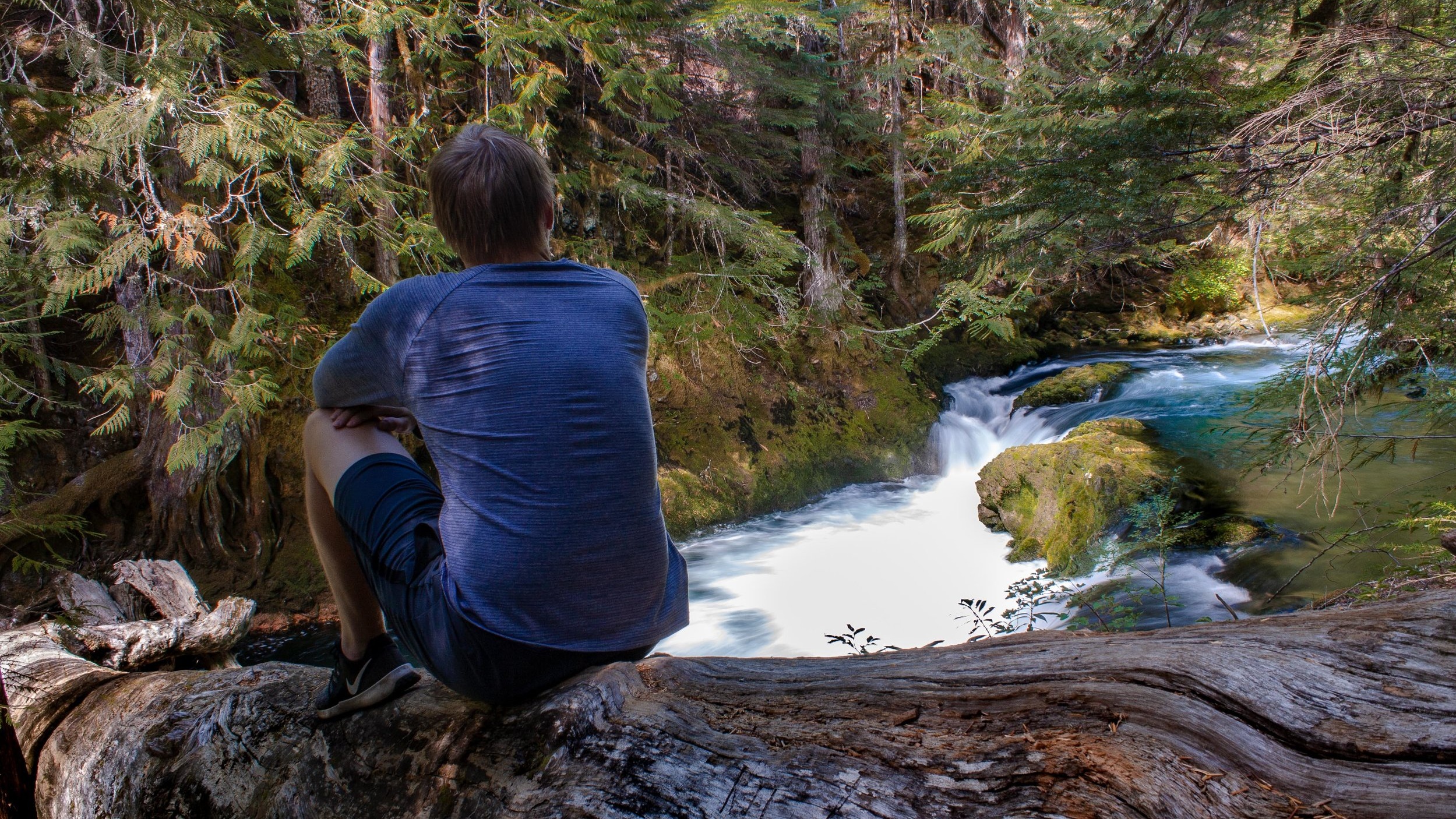
The Waterfall Trail is a 2.6mi loop that runs adjacent to the McKenzie River as it winds past Koosah (70ft) and Sahalie (100ft) falls.
Along the way, accessory paths veer off and provide viewpoints of the area that many hikers fail to experience, so make sure to wander a bit! The main trail is marked, making it easy to stay on course. Pro Tip: Park at and start the hike from Koosah Falls instead of Sahalie. This lot is typically less congested.
Hiking Distance: 2.6mi. loop trail
Elevation Gain: 357 feet
Rating: Easy
Fee: None
Bathrooms: Vault toilets are available at Sahalie Falls parking lot


Ready to get out and explore yet? Wherever you are the world, make sure to leave time for a new adventure and, if you ever find yourself in Oregon, be sure to check out one of these hikes!
Thanks for reading and as always, stay safe & happy travels.
Enjoy what you read? Pin this post and share with others!




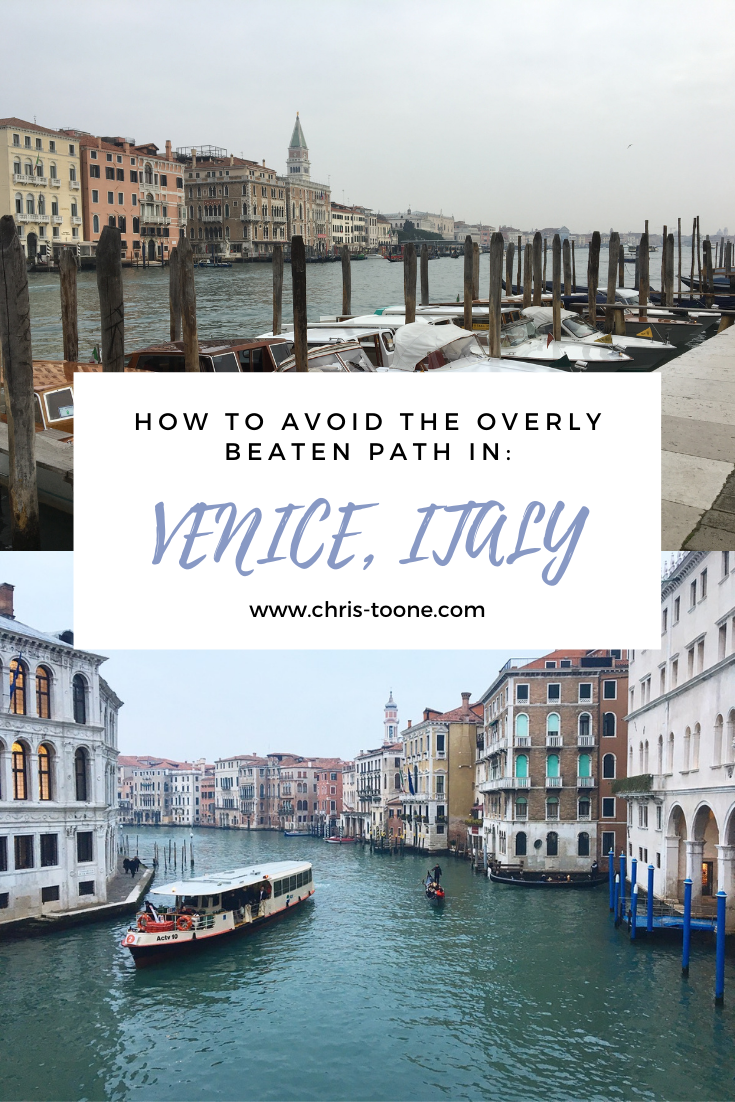
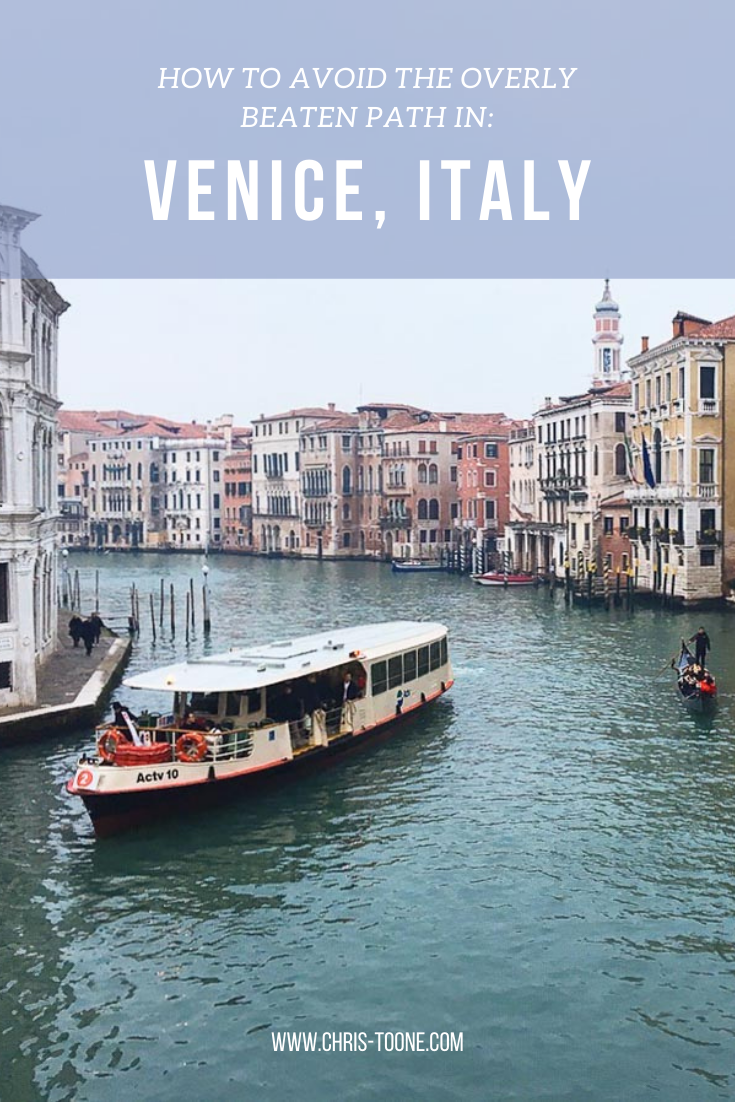
Wandering in Venice, Italy: How to avoid the (overly) beaten path
Stepping foot into Venice is like entering an alternate universe. A world where the mundane is replaced by endless wonders; where even the simplest of things, whether a door or a narrow street, are transformed into a romanticized version of their previous selves. With so much splendor to offer, it’s no wonder why more than 36 million tourists are flocking to the Venetian canals on an annual basis. We must do our part as mindful travelers to reduce our footprint and protect the integrity of the people. Here’s how to ethically plan your next trip!
Please note: All info below is accurate as of May 2023
Stepping foot into Venice is like entering an alternate universe. It's a world where the mundane turns into endless wonders, where even the simplest things, whether a door or a narrow street, are transformed into a romanticized version of their previous selves. With so much splendor, it's not hard to imagine why more than 36 million tourists flock to the Venetian canals annually. In fact, between April and October, nearly 32,000 cruise ship passengers disembark in the beautiful city per day.
There has been much debate over tourism in Venice in recent years and the local government is consistently exploring ways to minimize the burden that foreigners leave behind. Day-trippers will need to pay between 3 and 10 euros once the newest tax system is activated, and air travelers will need to pay a surcharge of 2.50 euros to depart the Venice Marco Polo Airport . In 2018, the city went as far as experimenting with turnstiles during a holiday weekend, restricting tourist access to more local parts of the city in an attempt to give residents a reprieve from the endless stream of international visitors.
Despite these efforts, the cruise ships keep docking and the tourists keep coming. Local Venetians continue to flee to mainland Italy at an alarming rate, often disgruntled at the feeling of living in an “open-air museum.”
These problems won’t be resolved anytime soon. While the local government continues their efforts, here are some helpful tips and tricks to get the full Venice experience without contributing to the demise of the place we all covet so much!
In this post we’ll discuss:

WHEN TO GO
Tourist season in Venice lasts from April to October. During this time, 13-story cruise ships cast looming shadows over St. Mark’s Square, a steady stream of selfie-taking foreigners disembarking from these modern marvels on a daily basis.
This is when overcrowding is at its worst. Sure, the weather is beautiful more days than not, but do you really want to be bumping into droves of sweaty human beings as you try to maneuver across the narrow bridges, elbowing people out of the way as you fight for even a glimpse of the Bridge of Sighs?
Instead, consider planning a visit during the shoulder season; either March or November. These months tend to be less crowded due to the cooler temperatures, with highs hovering around mid to upper 50s. It's a small price to pay to truly experience the magic of Venice without thousands of others around.
Pack a light jacket, bask in the sunshine as you wander along the water, and, if all else fails at keeping you cozy, don’t forget how cheap the wine is there! There are plenty of ways to enjoy your time in Venice without the 70 degree temperatures and high humidity of July.
My first visit was in March and the second one in February. Each time included sunny weather, lower prices, fewer crowds and, most importantly, no cruise ships. It wasn’t hard to find an empty piazza to enjoy a mid-morning Aperol spritz!
WHERE TO STAY
Venice’s historic city center, or centro storico, is divided into six main districts:
San Marco - 5 star hotels and tourists galore
Cannaregio - known as an old 16th century Jewish Ghetto
Castello - stretches eastward from the tourist center
Dorsoduro - the university district
San Polo - Rialto Markets and surrounding area
Santa Croce - close to the bus terminals
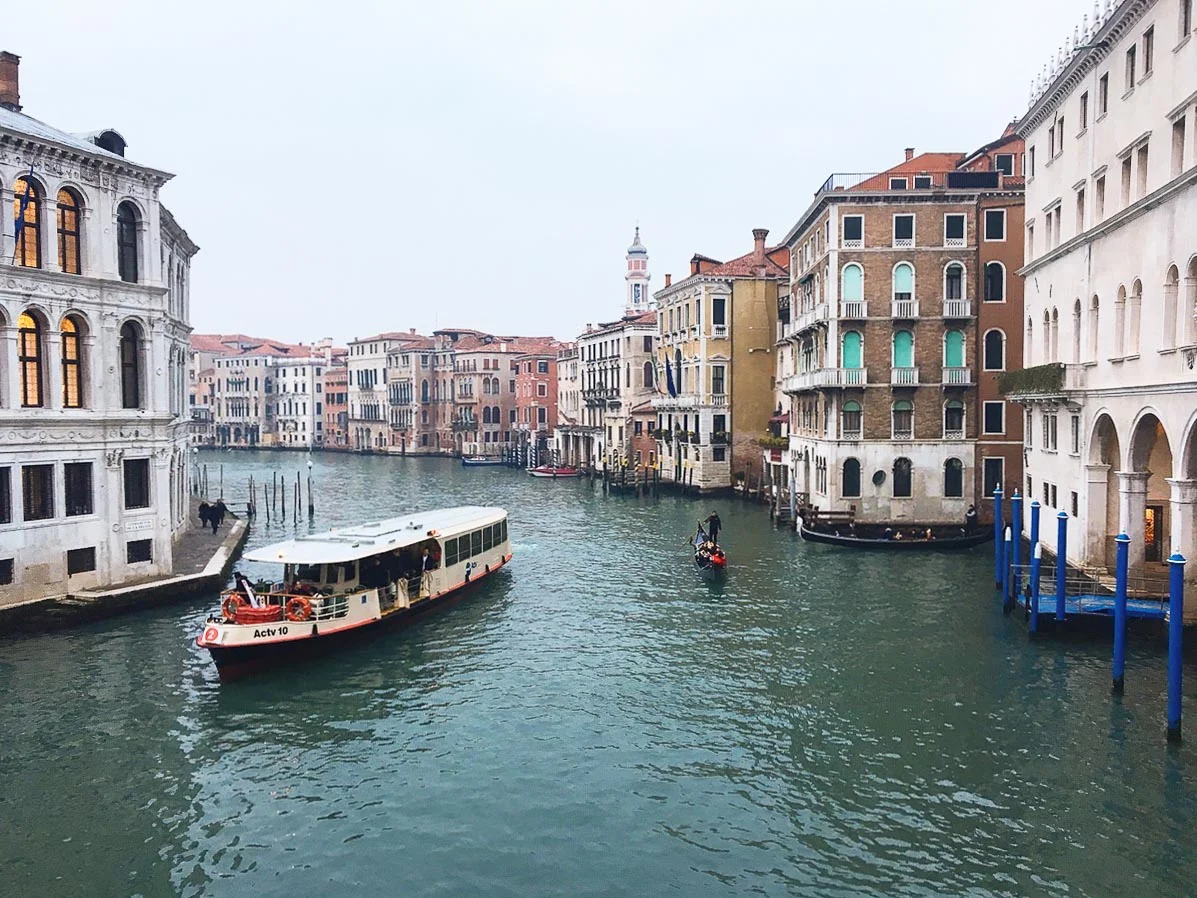
If looking to avoid crowds, I’d recommend searching for accommodation in Cannaregio. Not only does this neighborhood provide everything you need - easy access to the Vaporetto (water taxi), quiet streets and alleys to wander, shopping along the Strada Nova, and more - staying here also helps to disperse the effects of tourism beyond the saturated San Marco district, leaving a little more space for the locals in that area to breathe. Consider it a way to respectfully reduce your travel footprint.
Cannaregio is located on the northern end of the city, adjacent to Venice’s Santa Lucia train station and Piazzale Roma bus terminal. Both are just a short 10-15 minute walk away. Once in the neighborhood, you’ll find it simple to navigate your way to San Marco (this is where many of the “must-see” sights are located) via land or boat. Several of our days were spent lazily wandering the surrounding streets of the old Jewish Ghetto, admiring the architectural wonder that is Venice as a whole.
EXPLORING OFF THE BEATEN PATH
The fact of the matter is that Venice is experiencing an age of over-tourism, but going against the flow and looking beyond the “top 10 sights to see” is just one way in which we can combat the negative effects.
Think of it like this: If 1,000 people are running up and down an ancient staircase each day, those steps will likely require more routine maintenance whereas if this number were distributed across several other lesser-known, but equally magnificent staircases, the overall cost of maintenance would decrease, removing the financial burden from those that care for it.
Am I saying to avoid places like St. Mark’s Square altogether? No, not! I’m simply advocating that going beyond the crowds will lead to a better experience for you as a traveler as well as the local people. It doesn’t have to be one or the other.
Here are some helpful hints to uncover the hidden gems of Venice — it’s easier to get off the beaten path than you might think!
“Venice never quite seems real, rather an ornate film set suspended on the water.”
1. Avoid the lines of St. Mark’s Campanile and head to San Giorgio Maggiore instead
San Giorgio Maggiore is a small island located across the water from St. Mark’s Square and is easily accessible via Vaporetto or private water taxi. Wandering the grounds of the church is worth the trip in its own right, but the real thrill is riding the elevator to the top of the bell tower and taking in the sweeping views of Venice below. A truly unique way to see the city in all its glory.
Here’s everything you need to know to visit:
Opening Hours:
May - September: 8:30am - 6:00pm; Sundays: 2:00pm - 6:00pm
April - October: 9:00am - 7:00pm; Sundays: 2:00pm - 7:00pm
Getting There:
The island is accessed via Line 2 on the Vaporetto. Available throughout Venice, he most convenient place to catch the boat is from the San Marco-San Zaccaria stop which is located just east of St. Mark’s Square. A 3 minute ride later and you will be on the steps of the Church of San Giorgio.
Tickets:
A ticket to the top will cost 6 euros.

Looking towards San Marco from the San Giorgio bell tower
2. Attend a Venezia F.C. match at Stadio Pier Luigi Penzo
On the easternmost shore of Venice lies the Stadio Pier Luigi Penzo. Opened in 1913, it is the second oldest continually used soccer stadium in all of Italy and home to Venezia F.C. The club has a shaky history marred by multiple bankruptcies, but New York lawyer Joe Tacopina came to the rescue, purchasing the organization in 2015. The team now competes in the Italian Second Division (Serie B).
Italians are passionate about their soccer, many supporters even making the commute from nearby Mestre on the mainland to support their beloved Leoni Alati (Winged Lions). Widely unknown to the rest of the tourist trail, this makes for a culturally intimate and unique experience.
Where else will you be able to attend a professional soccer match where the players, fans, and staff all arrive via boat?
Getting There:
Walking from Cannaregio will take around 50 minutes, or you can take the Vaporetto to the Sant’Elena Stop. Lines 1, 4.1, 5.1, 6, and N all service this station.
Tickets:
Tickets can be purchased upon arrival to the stadium or in advance at Better.Marte souvenir store in Venice (Calle dei Albanesi 42/61). Be sure to bring your ID.
Prices typically range from 10 euros for a spot in the supporters section, also known as “Curva Sud”, to 30 euros for a midfield seat in the main stand. If you’re looking for the passionate experience that gets you in on the action, definitely look no further than Curva Sud.
Interested in learning more about Venezia F.C? Check out this post:

Venezia FC match at Stadio Pierluigi Penzo
3. Explore Venice from the water via Vaporetto
Made up of 150 canals, Venice begs to be explored from the water, but be mindful that overcrowding has created a negative effect here, too. As I mentioned above, it’s estimated that cruise ships inject nearly 32,000 tourists per day into the city during the high season. Even if only 50% of these visitors opted to explore the area via private taxi or gondola, that’s still a boatload (pun intended) of vessels traversing the waterways!
Considering that the Grand Canal sees 60% of Venice’s traffic yet is only 2.5 miles long and 350 feet across at its widest point, you can picture the congestion that ensues. The solution? Ride like a local.
A 24-hour ticket for the ACTV Vaporetto (water taxi) costs only 25 euros and gives the flexibility to hop on and off all around the city, including stops at the islands of Murano, Burano, and Torcello! It’s the perfect way to experience life as a Venetian while exploring at your own pace and reducing your travel footprint!
4. Visit St. Mark’s Square at Dawn
Heather and I casually strolled over to St. Mark’s Square during our first afternoon in Venice, gleefully following the winding paths as we went. Upon arrival, we were greeted by a mob of tourists playing with pigeons and taking selfies with St. Mark’s Basilica in the background. It was enough for us to keep on walking, straight through the square and to a different part of the city.
Luckily our good friend, Giorgio, had informed us about the San Giorgio Bell Tower, but we still wanted to experience St. Mark’s Square. After all, so many people must be drawn here for a reason.
The solution? Visit at dawn.
Our alarm clocks pierced the silence of the apartment at 5 a.m. as we aimlessly rolled out of bed. Forcing our eyes open, we waltzed down the stairs and out onto the empty streets of Cannaregio. By the time we reached St. Mark’s Square, we were fully awake and greeted by a beautiful sunrise. The best part? Aside from a local street sweeper, other savvy travelers, and a few locals passing through, we had the place to ourselves! No pushing, no shoving, no selfie sticks - just the two of us and the beautiful plaza illuminated by the sun’s first light.

San Marco at sunrise
6. Meander Through the Rialto Fish Market
Situated along the banks of the Grand Canal, the Mercato di Rialto is a 10-century old fish and vegetable market offering the chance to explore all that the surrounding waters have to offer. It’s the perfect place to grab a basket of fresh fruit for breakfast and sit along the canal, watching the fishmongers prepare and sell their catch of the day.
We made our way here after our exploring St. Mark’s Square at dawn. It was the perfect way to cap off a morning of watching Venice come alive!
Hours:
Fish Market: 7:30am - 1:00pm Tuesday through Saturday
Fruit & Vegetable Market: 7:30am - 1:00pm Monday through Saturday
Getting There:
From Cannaregio, walk across the Rialto bridge and continue to follow the Grand Canal (to your right). You won’t miss it.
Vaporetto Line 1 to Rialto Mercato
7. Witness the Making of Gondolas
Venice has approximately 400 gondolas in service, but how are they made? Look no further than the gondola repair shop located at the Squero di San Trovaso. In the oldest and most famous yard, visitors can catch a glimpse of what it takes to build these hand-crafted, romanticized vessels.
Technically speaking, the workshop isn’t open to the public but there’s no harm in respectfully looking on from a distance. If luck is on your side, a few gondolas will be out in the open as artisans tirelessly work to create their masterpieces.
Getting There:
The Squero di San Trovaso can be easily reached from the Zattere waterfront promenade, but I’d suggest simply heading towards the Dorsoduro district and stumbling upon it at your own pace. You never known what other hidden gems you might find!
8. Tour the Teatro la Fenice
Did you know that Venice is home to one of the most famous landmarks in all of Italian theatre? I didn’t either!
Originally opened in 1792, the opera house once held the likes of Napolean in its midst and continues to elegantly stand within the heart of Venice despite a history filled with devastating fires and destruction. Most recently, it was re-commissioned in 2003 following the 1996 arson.
Admittedly, I have not visited here yet, but it’s on the list for the next time I find myself wandering the canals of Venice.
Tours:
Self guided audio tours are available within normal operational hours and last approximately 45 minutes. Languages include English, French, Italian, Spanish, Portuguese, Russian, and German. Please note that you must bring a valid ID to obtain an audio device.
Tickets:
The book and gift shop in the lobby can be accessed without purchasing a ticket.
Full price tickets are 12.65 euros, however a discount applies to students up to the age of 26 and visitors over 65 (9.20 euros). Children up to 6 years old are free.
Address:
Campo San Fantin, 1965, 30124 Venice VE
Hours:
La Fenice is typically open daily from 9:30am until 6:00pm according to the official website.
9. Heighten your Senses in Burano
Heather and I decided to hop on the Vaporetto and head to the islands of Murano and Burano one afternoon, the latter being our favorite of the two.
As we stepped off the boat, we were immediately taken aback by the brightly colored homes that lined the canals of this sleepy fishing village. Legend says the vibrant hues served as a way for fishermen to navigate their way home through the dense fog of the lagoon.
Beyond the colorful homes, Burano is also known for its lacemaking tradition that dates back as far as 1500.
Before leaving town, be sure to take a stroll past the leaning bell tower and soak up all the tranquility you can before heading back to the hustle and bustle of Venice.
For a unique view of the Venice skyline, head to the southwest corner of the island and walk along the Fondamenta di Cao Moleca.
Getting There:
The only Vaporetto that services Burano is line 12. The ride lasts around 45 minutes, which gives you plenty of time to enjoy the cruise across the lagoon. Don’t miss catching a glimpse of Islo di San Michele, Venice’s cemetery island, as you pass by.
The most direct route departs Venice from Fonte Nova “A”.

Burano, Venice
10. Get “Lost” as You Wander Through the Streets
It’s often said that there is no such thing as a “wrong turn” in Venice, and I completely agree! It’s an explorer’s dream, enabling curious folk to wander without a plan. After all, Venice is a collection of islands, so you can’t get too lost!
My three favorite districts to discover on foot were Cannaregio, Dorsoduro, and Castello, each offering their own unique atmosphere. We spent countless hours happily walking with no destination in mind, excited to see what might lay around the corner ahead.
Bonus: Take in the Sights From a Distance
Similar to seeking out views from above, I’m a big fan of learning about a place by simply observing everyday life as it passes me by. Two of my favorite spots to sit and watch from are:
The Basilica di Santa Maria - Located at the entrance of the Grand Canal and across from St. Mark’s Square, this viewpoint is the perfect place to study the traffic along the waterway.
The Arsenale Vaporetto stop - Glance at a map of Venice and you will immediately notice the reverse s-shape curve of the Grand Canal. Stroll far enough east and eventually the curvature will yield a view looking back towards the heart of the city. This viewpoint was especially breathtaking at sunset.
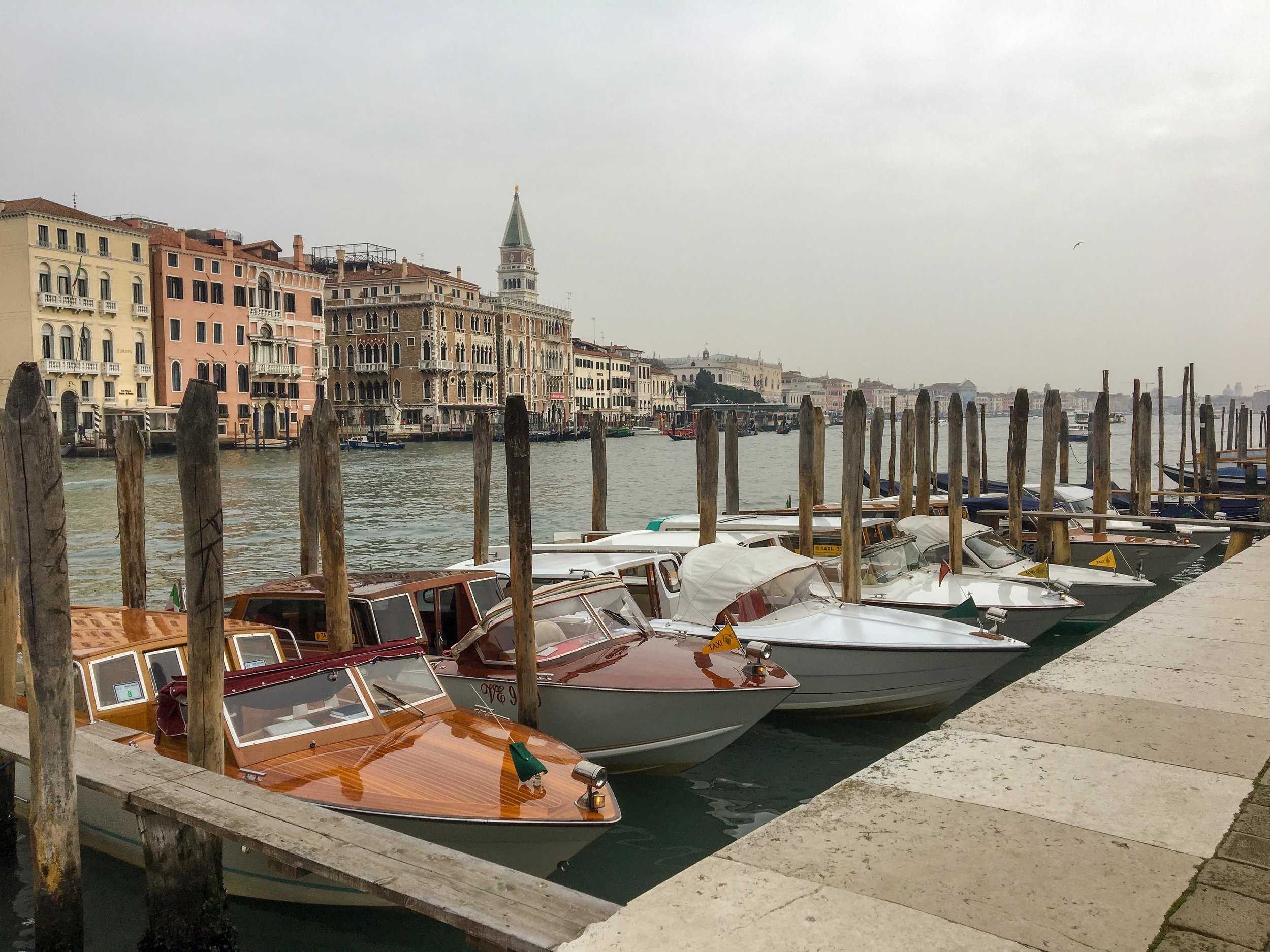
Looking from the steps of the Basilica di Santa Maria
Venice is a truly magical place; a wanderer’s paradise, if you will. It’s up to us, as respectful and mindful travelers to do our part in preserving the culture and integrity of this awe-inspiring place.
As Alexander Herzen once said, “To build a city where it is impossible to build a city is madness, but to build there one of the most elegant and grandest of cities is the madness of genius.”
Have you been to Venice before? Do you have any “off the beaten path” tips of your own? Be sure to comment below.
Thanks for reading and as always, stay safe & happy travels!
Find this post helpful? Pin and share with others!




Top 30 Experiences from a Semester at Sea: Here's what a 110 day trip around the world is like
It has now been nine years since I stepped off of North American land, onto a ship, and straight into the unknown. To be honest, it still feels like yesterday and I think part of me is still processing the experience all these years later. I never imagined that an introvert such as myself would thrive in an environment like that, circumnavigating the globe for 110 days with complete strangers. As it turned out, it was truly the journey of a lifetime...

I’m not the most outgoing person in the world. If you find me in a social setting, I’ll be the person that happily sits there silently until spoken to. With that said, there are a few things that, if you get me going, I won’t be able to shut-up about: soccer, travel, and Semester at Sea.
Consider yourself warned!
This week marks nine years since embarking on my semester abroad.
Wait, what?
That’s right; NINE YEARS since I stepped off North American soil, onto a ship, and straight into the unknown.
To be honest, it still feels like yesterday. I think part of me is still processing the experience all these years later. I never imagined that an introvert such as myself would thrive in an environment full of strangers, all the while circumnavigating the globe.
As it turned out, it was truly the journey of a lifetime.
To celebrate the anniversary of the Fall 2010 Voyage, here are the top 30 experiences from my Semester at Sea!
ITINERARY
Halifax, Nova Scotia
Cádiz, Spain
Casablanca, Morocco
Takoradi, Ghana
Cape Town, South Africa
Port Louis, Mauritius
Chennai, India
Singapore
Ho Chi Minh City, Vietnam
Hong Kong
Shanghai, China
Kobe, Japan
Yokohama, Japan
Honolulu, Hawaii
Hilo, Hawaii
San Diego, California
SPAIN
1. Bull Fighting in Seville
Fresh off of a turbulent seven days at sea and ready to immerse ourselves in a different culture, we found our way over to the Plaza de Toros de la Real Masetranza de Caballería de Sevilla (talk about a mouthful). Little did we know there was a bullfight scheduled for that evening!
Did I stay past the first event? No, I did not. I opted for gelato over watching bulls die a slow death. Was I glad that I went to get the experience? Absolutely.

A bull chasing a matador in Sevilla, Spain
MOROCCO
2. The Train That Broke Down
The ship docked in Casablanca, but a group of us decided that we wanted to make our way to the Djemaa el-Fnaa market in Marrakech to get our first taste of bartering.
Halfway through the 2.5-hour ride, the train stopped. Stranded on the rails with nothing in sight, we passed the time by attempting to communicate with the locals in our compartment through charades, broken French, and awful drawings.
Miriam and Abdul have likely forgotten about the time they shared a seat with the crazy college students from America, but I still vividly remember the laughter that filled that day.
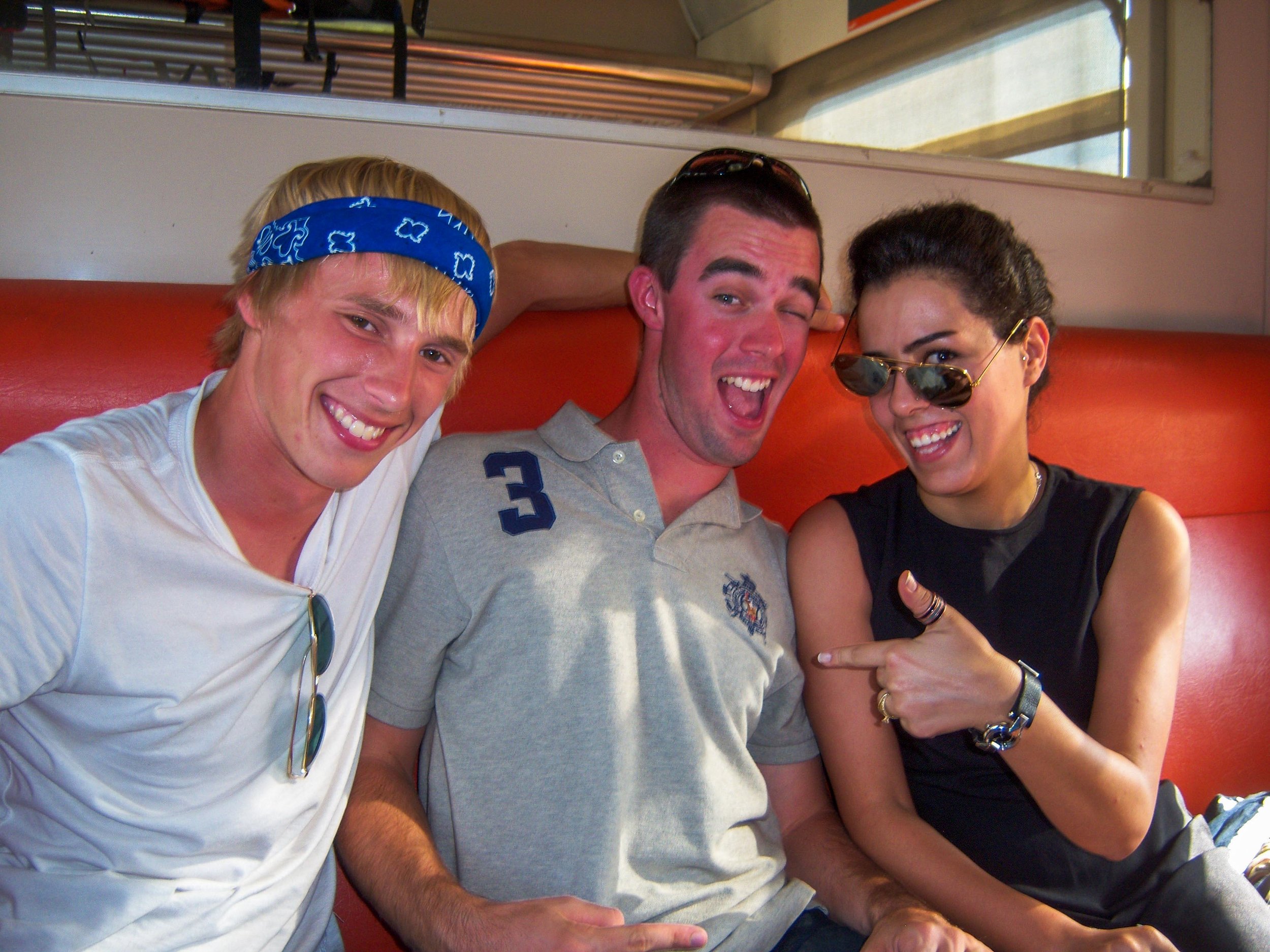
My roommate and I with Miriam on the broken-down train
3. Djemma el-Fnaa market at the end of Ramadaan
On a normal evening the market is buzzing with vendors and snake charmers. Clouds of smoke fill the sky with beautiful aromas from the food carts as music blares from all around.
Our trip coincided with the end of Ramadaan. I’ll always remember meeting a couple from the UK on the hotel shuttle en route to the market, a look of concern on their faces as we told them it was our first time in a place like this.
We stepped out of the van and stood on the sidewalk like a herd of deer staring directly into oncoming headlights. “It’ll be fine,” they said as we watched our new friends disappear into the chaos.
4. Haggling in the markets of Marrakech
This was my first experience of bartering and to put it bluntly, I was terrible. With that being said, learning how to negotiate a price, the acting skills needed to portray disinterest, and the guts to walk away from something I actually wanted - it was all thrilling.
GHANA
5. The Broken Down Van
The moment we stepped off of the ship, a group of us piled into a rickety van and drove 8 hours north to the village of Senase.
As the smooth pavement gave way to potholes beneath our wheels, the homes along the road vanished. All of a sudden the van came to a slow halt, moving only as far as gravity would take it.
The only thing in sight was a narrow path that led to a church. The driver caught a cab back to the closet village and we decided to wander the path while we waited.
The family that lived on the premises didn’t speak any English and we certainly didn’t speak their local dialect, but someone spotted a soccer ball in our periphery and that was enough to break any invisible barriers that lay between us.
6. Drumming & Dance Ceremony
As we prepared to depart Senase, the village had prepared a traditional drumming and dance performance.
The sounds of the beating drums, the vibrant colors, and the dazzling movements were enough to overload my senses. We were informed that it was our turn to dance for the village.
One minute I was sitting in a chair and the next I was making an utter fool of myself in front of hundreds of strangers. To tell you the truth, I loved every second of it!

Traditional drumming and dance in Senase, Ghana
7. Getting Soaked in the Back of a Truck
We whipped down the dirt roads of Ghana as I tried to take it all in with my eyes half-shut, shielding myself from the pounding rain while dodging overgrown tree branches along the way.
It was a rush of pure joy and remains one of my favorite parts about returning to Ghana.
SOUTH AFRICA
8. Climbing Table Mountain
I have an affinity for birds-eye views, so the second that we docked in Cape Town and saw Table Mountain rising high above the city skyline, I knew I needed to climb it.
We ended up hiking farther than required, but once we reached the summit no one cared. The sweeping views across the cape were worth it.
9. Visiting Robben Island
A humbling, sober, and powerful experience, to say the least.
10. Lion’s Head Peak at Sunset
Lion’s Head remains one my favorite hikes in the world.
Sure, the views from Table Mountain were spectacular as well, but reaching the peak as the sun dipped below the horizon capped off my South African explorations in the best possible way.

View from the top of Lion’s Head Peak in Cape Town, South Africa
MAURITIUS
11. Stranded in Grand Baie
One taxi driver, a major miscommunication, and hours of driving later, a friend and I found ourselves stranded in Grand Baie with no money left to make it to the ship in Port Louis. There was only one thing to do: take a swim in the Indian Ocean and enjoy the sunset! We made it back, eventually.
INDIA
12. Ganges River at Sunrise
I felt compelled to take a trip here the second I read about the field excursion planned through Semester at Sea. Why? I’m not entirely sure.
As our boat gently glided across the calm waters of the Ganges at sunrise and watched the local people cleanse their bodies along the banks, it all made sense. Serene is the only way to describe it.

Early morning scenes at the Ganges River in Varanasi, India
13. Driving a Rickshaw in Varanasi
My friend and I jokingly asked our driver if we could take a turn. Without missing a beat, he scooted to his right and made room for me in the front seat. It was the ultimate driving test: could I avoid the densely packed streets and roaming cows? Barely.
14. Taj Mahal
Usually I’ll try to avoid the tourist trail, but this was one experience I couldn’t pass up. I found a spot in the lush grass and simply sat and stared for what felt like hours. I’ll never forget that view.

The Taj Mahal in Agra, India
SINGAPORE
15. Playing with Monkeys
During a nature walk through the city’s forest we happened to stumble upon a family of monkeys waiting to steal food from unsuspecting tourists. The term “playing” is used loosely here, but nonetheless it was fun to watch these bandits carry out their business.
VIENTAM
16. Tourist-napped in Saigon
No, we weren’t actually kidnapped although it certainly felt like it at the time.
We knew that we could hire a boat that would take us along the Mekong Delta if we could reach the town of My Tho . What we didn’t know was that the taxi driver we hired from Ho Chi Minh City worked with a tour company and would take us straight to a boat dock, accompanying us the entire day.
We begrudgingly went along with the tour, plotting our “escape” as we went. In the end, we paid the guide to drive himself back to Ho Chi Minh City and continued wandering My Tho in search of our own adventure on the Mekong Delta.
It was worth it!

Cruising the Mekong Delta in My Tho, Vietnam
17. Playing Frogger in Ho Chi Minh City
It’s common to be taken aback by the sheer amount of motorbikes on the road in all of Vietnam, but especially in a city as densely packed as Ho Chi Minh.
The moment we thought we had mastered the art of crossing the road without hesitation, we learned of another version of the game: car vs. car.
As we rode in a cab through a torrential downpour, we couldn’t figure out what the tiny white lights in front of us were. It was only when our driver took a hard left that we realized we had taken an exit ramp onto the highway and had been heading into oncoming traffic.
In all likelihood, it wasn’t as exciting as this story sounds, but with the rain clouding our vision, it sure got the adrenaline pumping!
18. Hy Vong 8 School for the Deaf in Ho Chi Minh City
Semester at Sea did a phenomenal job of organizing service trips in nearly every port that we visited.
This was the first one I was able to squeeze my way into and I enjoyed it so much that I ended up visiting the school twice. We watched the students dance, chaperoned a field trip to the local zoo, and laughed so hard our stomachs hurt as we tried to learn sign language.
CHINA
19. Overnight buses
I stepped onto the overnight bus in Shenzen only to find that my ticket didn’t correspond with a seat, but rather a bottom bunk that came complete with a pillow and comforter.
Amazing.
Later on, when it was time for another overnight trip, I didn’t think twice. Another night spent falling asleep in a comfy bed while watching a movie in Mandarin, creating the plot in my own head? No problem!
Except for this time, my ticket led me to the back of the bus, into the middle row, and onto the top bunk.
I’m not sure if it was the sticky mat that served as my bed or the fear of being flung over the metal railings that were far too small to provide any sort of protection, but I didn’t catch a wink of sleep that night and I loved every second of it.
20. Cruising the Li River in Yangshuo
The Li River was one of the most picturesque landscapes that I have had the privilege of experiencing.
Surrounded by limestone cliffs that rose majestically towards the sky, we gently floated along with the current.
As beautiful as the mountains were, I’ll never forget the group of Asian tourists that passed us by and, in the process, gleefully sprayed our bamboo raft with water guns. Why? Your guess is as good as mine!

Floating along the Li River outside of Yangshuo, China
21. Entering Zizhou Park
The overnight bus had dropped us in Guilin at 5 am, so we decided to go wander Zizhou Park before finding breakfast.
As we reached the gates and realized it was closed, a woman appeared and offered to have her husband take us into the park via his raft. With nowhere else to go, we agreed.
Before we knew it, the three of us were on floating down the Lijiang River under the cover of darkness, accompanied only by a Chinese man puffing a cigarette and a dimly lit lantern that illuminated the way.
The park itself was beautiful, but entering before the sun rose above the horizon was the true adventure.

The man and boat that brought us into the park before dawn
22. Eating Our Way Through the Streets
Dumpling, dumplings, and more dumplings. Maybe this is the reason why I constantly find myself seeking out the best jiaozi (Chinese dumplings) wherever I go!
JAPAN
23. Sleepless in Tokyo
We took the train from Yokohama with one thing in mind: visiting the famous Tsukiji Fish Market and arriving early enough to watch the giant tuna auctions unfold.
In order to save money, we decided to migrate between 24-hour restaurants throughout the night. As the clock turned to 3 am, we headed to the market only to find a sign that read: “Today is a regular holiday.”
In the moment we were flabbergasted, feeling completely exhausted and disheveled, but that night is now one of my favorite memories.
I’ve been to Tokyo on one other occasion and again, the fish market was closed. What are the odds of that?
24. Feeding the Deer in Nara
Deer are considered sacred to the Shinto religion and, as a result, roam freely around the streets of Nara.
As with any other species that has had extensive contact with humans, it’s not uncommon for the deer to approach people in search of food (which is conveniently sold throughout the parks).
The result? Endless amounts of fun.
25. Yokohama F. Marinos Soccer Game
Japan is well-known for it’s rambunctious baseball games, but while most of our fellow sport-fanatic shipmates headed to the Tokyo Dome, we opted to attend a soccer match in Yokohama. The pageantry from the fans did not disappoint!

Fans of Yokohama F. Marinos passionately cheer their team on
LIFE AT SEA
26. Stargazing on the Observation Deck
Periodically throughout the voyage, the Semester at Sea staff onboard the ship would organize an evening of stargazing. As the Captain temporarily shut off the outdoor lighting, the sky was immediately illuminated with millions of stars.
27. Sunsets at Sea
It didn’t matter what the weather was; overcast, stormy, or even as sunny as could be. Each and every sunset was amazing.

Sunset in the middle of the Pacific Ocean
28. Crossing 0° Latitude and 0° Longitude at the Same Time
During our passage from Ghana to South Africa, the Captain veered in order to bisect the prime meridian and equator at the same time.
As the shipboard community gathered on the deck, we knew that as the ship’s horns bellowed across the open ocean, for a split second, we were indeed at the center of the world.
29. Early Morning Port Arrivals
Nothing quite brought the shipboard community together like standing outside on the deck at 5 am, huddling together for warmth as we all stared at the twinkling lights on the horizon.
It quickly became my favorite pastime throughout the voyage, each time eliciting a feeling of excitement and anticipation of what was to come.
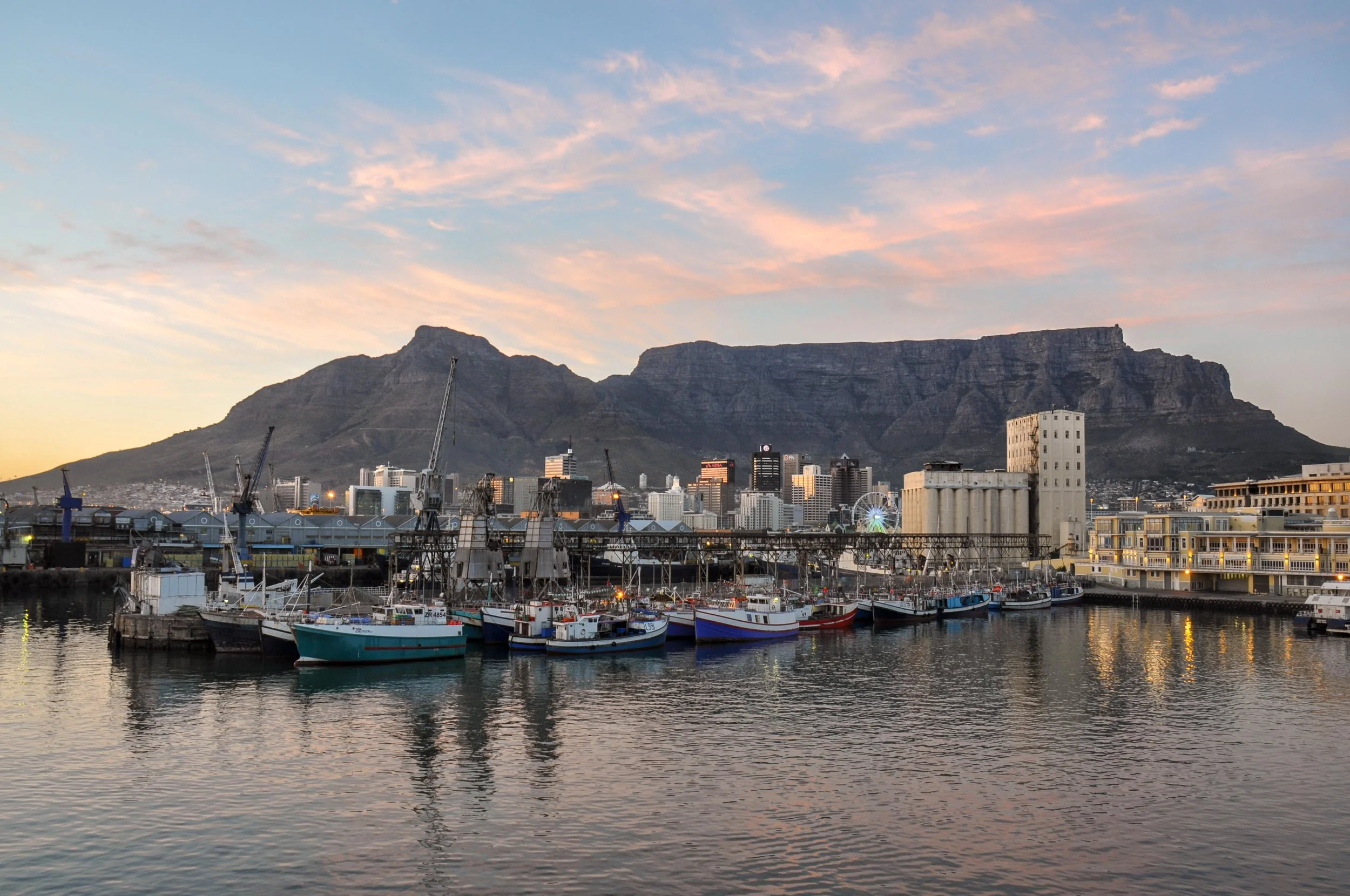
Arriving in Cape Town, South Africa at dawn
30. Work Study
One of the many benefits of Semester at Sea was the vulnerability it took to build a brand new community within the confines of the ship. Between classes, roommates, clubs, and volunteering, there were plenty of opportunities to do so. I was fortunate enough to receive a work-study scholarship and had a blast helping out in the field office!
BONUS
31. Embarkation
The mixed emotions I felt - anticipation, nervousness, disbelief, excitement - as we departed Halifax and the last remaining visible piece of land disappeared below the horizon is what hooked me to travel.
It’s a feeling that I still chase to this day.
32. Diverse Faculty and Staff
Part of the allure to go on the Fall 2010 voyage was the opportunity to live alongside Archbishop Desmond Tutu and his wife, Leah.
Needless to say, the entire 110-day journey was filled with “pinch me” moments as the Archbishop went about his business, casually fist-bumping students and spreading joy as he sauntered the halls.
I often contemplate what defines me as a person; what words or phrases might come to mind when someone mentions “Chris Toone.”
I’m confident that Semester at Sea is one of them. It not only opened my eyes and shattered my views of the world, but challenged me on a personal level in ways that I never could have imagined.
For that, I am eternally grateful.
Thanks for reading and as always, stay safe & happy travels!
Pin this post!


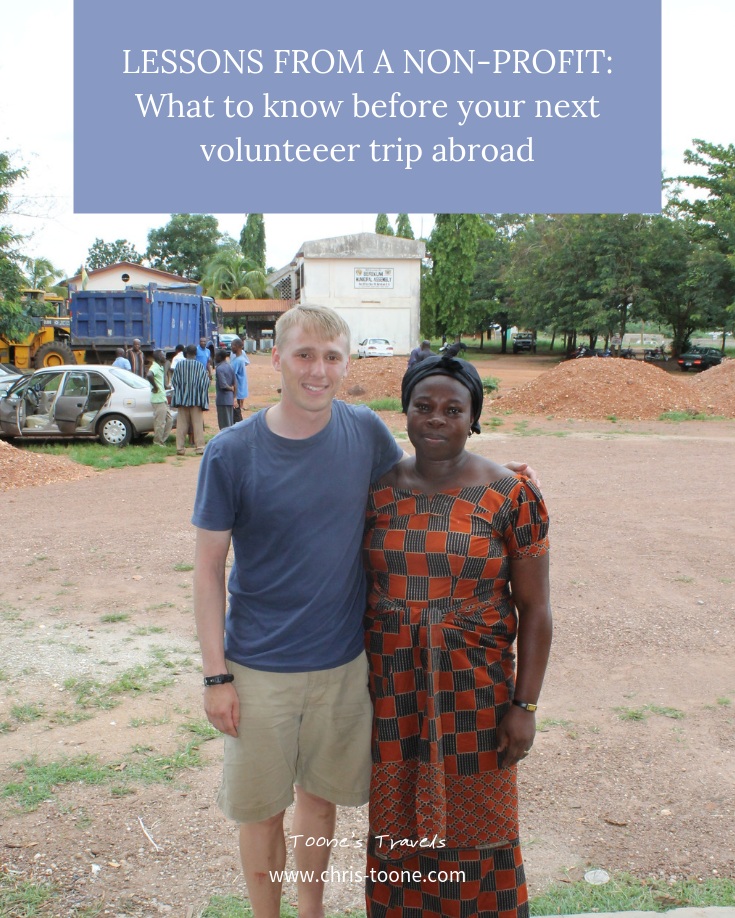
Lessons from a Non-Profit: What to know before your next volunteer trip abroad
Voluntourism is a booming part of international travel, but it doesn't come without its pitfalls. It’s more important than ever that we educate ourselves as donors and volunteers in order to evaluate how effectively our time and money is being used abroad. Here are 9 lessons you should know before your next volunteer trip that I’ve learned after nearly a decade of working with a non-profit in Ghana.
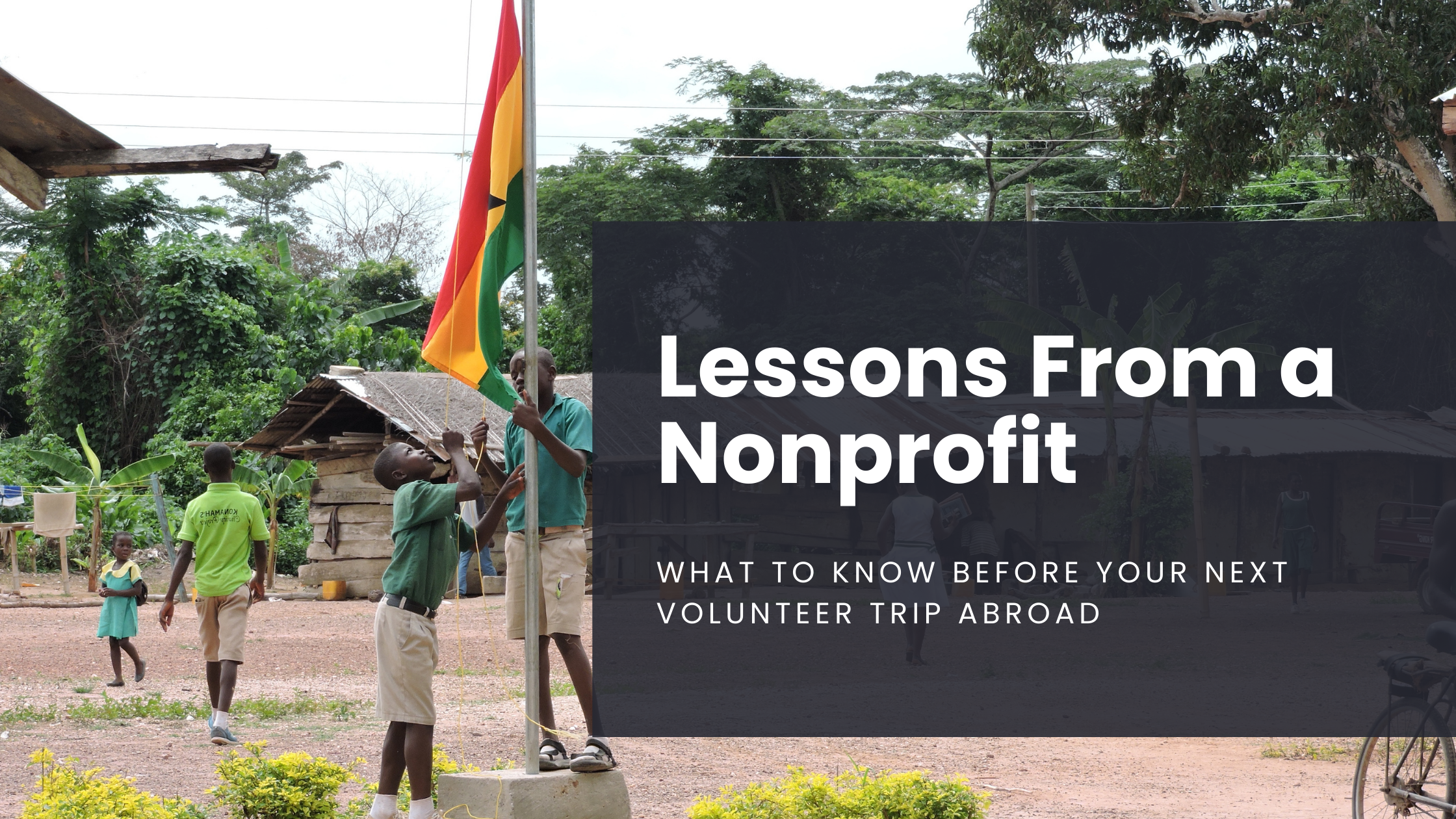
A combination of volunteering and tourism, voluntourism offers young and passionate travelers an opportunity to partner with organizations around the world while giving back along the way. Simply put, it’s a great way to make a difference… or is it?
This new niche of volunteering has taken off in recent years. NPR reported that in 2014 more than 1.6 million tourists were spending upwards of $2 billion to travel the world and visit non-profit organizations, all in hopes of enacting change. These numbers have only continued to grow.
Just as with any other fad - i.e. social media, blogging, etc. - the market becomes saturated, often leading to a myriad of problems that comes at the cost of the consumer or, in this case, the volunteers. A simple search across the internet will uncover an emerging theme: quality programming from non-profit organizations is becoming easier to embellish as they make an effort to “keep up” with the demands of voluntourism. Unfortunately, these operations can often cause more harm than anything else within the communities they serve, even despite good intentions.

Image courtesy of www.giveaya.org
In November of 2018, Reuters published an article about an Australian lawyer, Kate van Doore, who arranged to take over an orphanage in Nepal only to realize that the children she thought she was helping weren’t orphans at all. As it turns out, the kids were removed from their homes, provided a fake identity, and exploited for profit. All for the sake of creating a scenario where scammers could prey on the pockets of foreign volunteers. Can you imagine the thoughts that ran through Ms. van Doore’s head as a child came up to her and asked to go home to his mom?
The sad reality is that this is not an isolated incident. A quick Google search of “fake orphanage” will disclose the top 3 hits - Nepal, Uganda, and Cambodia. Unfortunately, as the rate of volunteers grows, so too will the establishment of these “orphanages.”
In a more recent incident that sent shockwaves around the non-profit world, ABC News reported on a case in which the founder of an organization, Renee Bach, is being sued in the Ugandan Civil Court for allegedly practicing illegal and unlicensed medical care, leading to the deaths of 105 children. The article cites her reasons for starting the non-profit in 2010: A 19-year old Renee decided that it was something she was “supposed to do,” so she picked up and moved to Uganda with no plan. This feeling of enlightenment quickly transformed into clouded judgment, going as far as serving as the primary caretaker for severely malnourished children, hooking up IVs, administering blood transfusions, and more - all without any medical training.
These heartbreaking stories are the unintended consequences of people yearning to “do good” in the world, unaware of the impact their actions have on those around them.
It’s clear that voluntourism is here to stay, so how can we, as travelers, evaluate the ethics of the organizations that compete for our time and money? It’s not easy, but it can be done.
We must first obtain the necessary knowledge that allows us to critically evaluate how these non-profits are accomplishing the “good” they claim. Only then can we begin to enact change.
Here are 9 lessons that I’ve learned through nearly a decade of working in Ghana with Aya. I hope they will help you to better understand, navigate, and critique the practices of any non-profit organization you come into contact with during all of your travels and volunteer experiences!
1. PEOPLE ARE NOT A CHARITY CASE
It’s easy to have our vision clouded by the desire to leave a mark on the world, but we must remember how important autonomy is to all of us as human beings. Would you be happy if someone you’ve never met showed up on your doorstep simply because they felt you needed help and they should be the ones to provide it? No, probably not.
Once you donate a dollar or volunteer your time, you become a stakeholder in the organization. Dig deeper. How are they treating the beneficiaries? Is it a case of westerners going into a community with a preconceived notion that their help is needed, or is it a “back seat” organization that tries to collaborate with locals wherever possible?
The greatest piece of advice I can offer is to flip the script and put yourself in the shoes of the receiver. If this non-profit was serving you, would you feel respected and welcome them into your community or would you shut your door?
2. NO ONE HAS ALL OF THE ANSWERS
If you’ve traveled at all, then I’m sure you realize just how diverse different cultures around the world are. This is a beautiful thing, but be aware that it creates unique hurdles that any solution to even the simplest of problems must overcome. Who do you think is better equipped to handle a multi-layered obstacle within the community - a local that has been living there for 30 years or a teenager from America that’s volunteering abroad for the first time? A non-profit must know their limitations, both as an organization and as individual employees.
Make sure any group that you donate or volunteer with isn’t biting off more than they can chew. How does their history equip them to handle their current projects? How do they approach their programs, more specifically, do they develop key partnerships with experts in a certain field or do they try to do it all on their own? These are important questions to ask. For example, no one within Aya is an expert in global health, but we, along with community members, recognize that improvements must be made to keep students happy and healthy. As a result we work towards partnering with other local organizations such as Days for Girls Ghana.
If you ever find yourself in a volunteer situation that you feel is beyond your skillset, don’t be afraid to speak up. By staying silent you may unintentionally harm the people you are trying to help!
3. INVEST IN COMMUNITY STAKEHOLDERS
We’ve already covered the importance of non-profits treating any human beings as an equal, but it’s just as vital for organizations to INVEST in these same people. The most successful programs are the ones with a sound framework of community members.
When people feel involved and empowered, great things happen. So, does the organization you plan on volunteering with have an infrastructure on the ground with whom they are working and communicating with regularly? Will you have the opportunity to work alongside local staff that are bettering their community? It’s important to learn the operations you’ll be a part of before booking your ticket.

Image courtesy of www.giveaya.org
4. SUSTAINABILITY IS THE ULTIMATE GOAL
This is easier said than done and its complex nature is affected by most of the talking points made in this post. With that being said, it’s an important aspect of any evaluative process for every organization. Sure, a non-profit can bring in volunteers, make a quick buck with trip fees, and keep the cycle going. But what sets successful organizations apart is what they do AFTER volunteers work on programs and leave. How are they kept afloat? Who is overseeing them? Are they setup for sustained success - both internally as an organization and within the communities they serve?
Take the Uniformed Hope campaign I ran in 2011 with Aya, for example. Early on, we had identified accessible school uniforms as a major barrier to students attending classes. In Ghana, uniforms exude a sense of pride. If a family can’t afford one, it’s not uncommon for the student to skip school. Our team developed a simple solution: donors give $15 and we provide a school uniform for a child. Within a month we had raised enough money to purchase uniforms for every student at the village school, increasing attendance! We felt so much pride in the work we had done, but what we failed to consider was the future of the program. Donors had given one-time gifts, meaning we were operating on a limited budget that was quickly drained. What would happen when students outgrew their new uniforms and couldn’t afford replacements? As a result of our lack of foresight, enrollment decreased at the beginning of the following academic year. We learned that we had to think big picture - consider all options and all potential effects - to make the program effective. At the end of the day, the community worked together to create a “hand-me-down” program, recycling uniforms through the grade levels regardless of if it had been provided by our efforts.
The question that we always ask ourselves as an organization is how will our decisions either enable or inhibit the growth of those that benefit from our programs if Aya ever ceased to exist? Will our efforts continue transforming lives or will they fail? It’s important to keep this in mind as a donor. Sure, your money can make an immediate improvement almost anywhere, but it’s much more effective to ensure a LASTING impact.
5. LISTEN, EVALUATE, ADAPT, REPEAT
Many times when people learn of my work with Aya they commend my efforts and then get confused as to why I brush it off. The truth is, I’ve done very little on the ground in Ghana. Rather, 95% of my time is spent listening to parents, teachers, and our in-country volunteers, then re-evaluating our programs and adapting as best we can. It’s a constant cycle that never ends.
All too often organizations birth their vision with a fixed mindset, failing to create a platform for any collaboration and adaptation. This inability to morph ultimately prevents sustainable change, causing more harm than good in the long run. Listening is key, so make sure you understand how the organizations you work with incorporate this into their day-to-day work. It should be a major part of how they advance their mission!
6. NEVER LOSE SIGHT OF THE BENEFICIARIES
Organizations are constantly tip-toeing across an invisible tight rope. On one side is the volunteer experience, while on the other is the integrity and sustainability of their work at the ground level. Leaning too far in either direction can lead to problems.
Yes, I get it. When volunteers feel comfortable, connected and have a good time, they often return home feeling empowered and ready to spread the news about an organization’s work. Catering to them certainly has its benefits. After all, the volunteers are the same people paying the extra trip fees that fund the projects and programs on the ground. But at what cost? At what point does it actually take away from the people they meant to help?
It’s important to know if the organization you choose to partner with takes precautions to maintain the integrity of the community in which they work, or if the programs they’ve created have led to a revolving door of volunteers. Sure, playing with kids in an orphanage for a month sounds fulfilling, but what happens when the children become attached, you leave, and they never hear from you again? It’s hard to think about, after all, you never meant to break someone’s heart, but it happens more than we realize.
Sometimes decisions from organizations are unpopular, but it’s important to consider them from both sides of the tightrope. For instance, The Senase Project rarely brings unattached volunteers on trips, let alone operates full-fledged service trips. This isn’t because we want to isolate the community or hinder the donor experience, rather we aim to protect the relationships and trust we’ve been able to curate over the past decade of work. They are essential to how we ensure sustained success.
Find an organization that consistently walks this line with grace and poise while keeping their eye on the ultimate goal: serving the people.

Image courtesy of Aya, www.giveaya.org
7. HOW YOU GIVE MATTERS MORE THAN YOU THINK
As the saying goes, give a man a fish and you feed him for a day; teach a man to fish and you feed him for a lifetime. It often contradicts our natural instincts to say no to someone in immediate need, however, it’s important to understand how the specific way in which we give can lead to different outcomes.
Hypothetically, let’s say that John, a teenager that you met in a remote village during your travels, asks for $20. He says it’s for books for school. You oblige. How can you be sure that it’s used with your intent in mind? Maybe his parents took it for something else. Maybe he doesn’t even attend school and instead pocketed it for later. Oh well. What’s done is done. Once you leave the village, you’ve stayed in touch with John and when the next term rolls around he approaches you again. You struggle to say no. After all, $20 isn’t a lot to ask, so the cycle continues. Other people in the village take note of what John has done and now wait for the next foreigner to visit so that they can replicate the process. What once started as an innocent $20 has now quickly snowballed into something more.
I am in no way advocating for you to NOT donate to those in need. I am simply encouraging you to start to consider HOW you are doing so. Something that may seem insignificant can wreak havoc in the grand scheme of things. Before you write that next check, take a moment to learn how your money is utilized and dispersed on the ground.
8. YOU CAN’T HAVE A SOLUTION IF A PROBLEM DOESN’T EXIST
This lesson goes back to knowing your limitations and treating people as equals rather than a charity case. Unfortunately, it’s not uncommon for individuals to move to Africa and start a non-profit simply because it’s a place that’s portrayed as needing drastic amounts of help. But who are we to say what should be a priority within a community in which we don’t belong? Do we even have the right to determine who needs help and who doesn’t? I’m sure as hell not comfortable standing in front of a village of people that live on $1/day and forcing my own thoughts, ideas, and priorities upon them.
If an organization is truly going to help, they must first listen, collaborate, engage, and learn. It is during this process that they will uncover how best to utilize their skills. With The Senase Project, I have witnessed that over time, these relationships become mutual as community members begin to value what we have to say just as we do with them. This is when constructive solutions to complex problems are formulated and, in turn, become more sustainable.
Don’t jump the gun simply because an organization’s mission sounds good on paper. It’s much more pertinent to learn how they turn that vision into a reality; do your homework and make sure to keep your ears open along the way.

Image courtesy of Aya, www.giveaya.org
9. YOUNG & PASSIONATE IS NOT A QUALIFICATION
It might sound blunt, but it’s important to take a step back and remember that although helping others feels good on the inside, it can actually cause more harm than good if not done the right way. Before you go on your next volunteer trip, take a moment to reflect on your strengths and weaknesses. Consider what skills and passions you hold that people might benefit from. Use that information to find an organization that fits you, not the other way around.
At the end of the day, it’s important to realize that the communities in which non-profits work aren’t a place to “try something new” or boost your self-esteem; they are real people with real problems. Instead of trying to play the role of “Mr. Fix It”, go into each experience with a learning mindset. You might be surprised as to what the people can teach you!
The non-profit sector is expansive, but the more informed we are as investors, the higher the standards we can demand. This will ensure that the respect, sanctity, and autonomy of every community around the world remain acknowledged and protected.
It’s easy to see that all of these lessons are intertwined with one another. Collectively, they help to combat any negative and unintended consequences that may arise from trying to help others. I hope that they may help guide you in leaving your mark on the world in the most effective and sustainable way possible.
Thanks for reading!
What have been some of your experiences with non-profits? Have you ever volunteered abroad? Comment below and share your story!
Until next time, stay safe & happy travels!