

Touring The DMZ in South Korea: What it's like to stand at the most heavily guarded border in the world
A mere thirty miles outside of Seoul sits one of the most heavily guarded borders in the world. Spanning the entire 160-miles across the peninsula, the demilitarized zone creates a 2.5 mile wide proverbial “no-man’s land” that does more than simply divide the two countries…
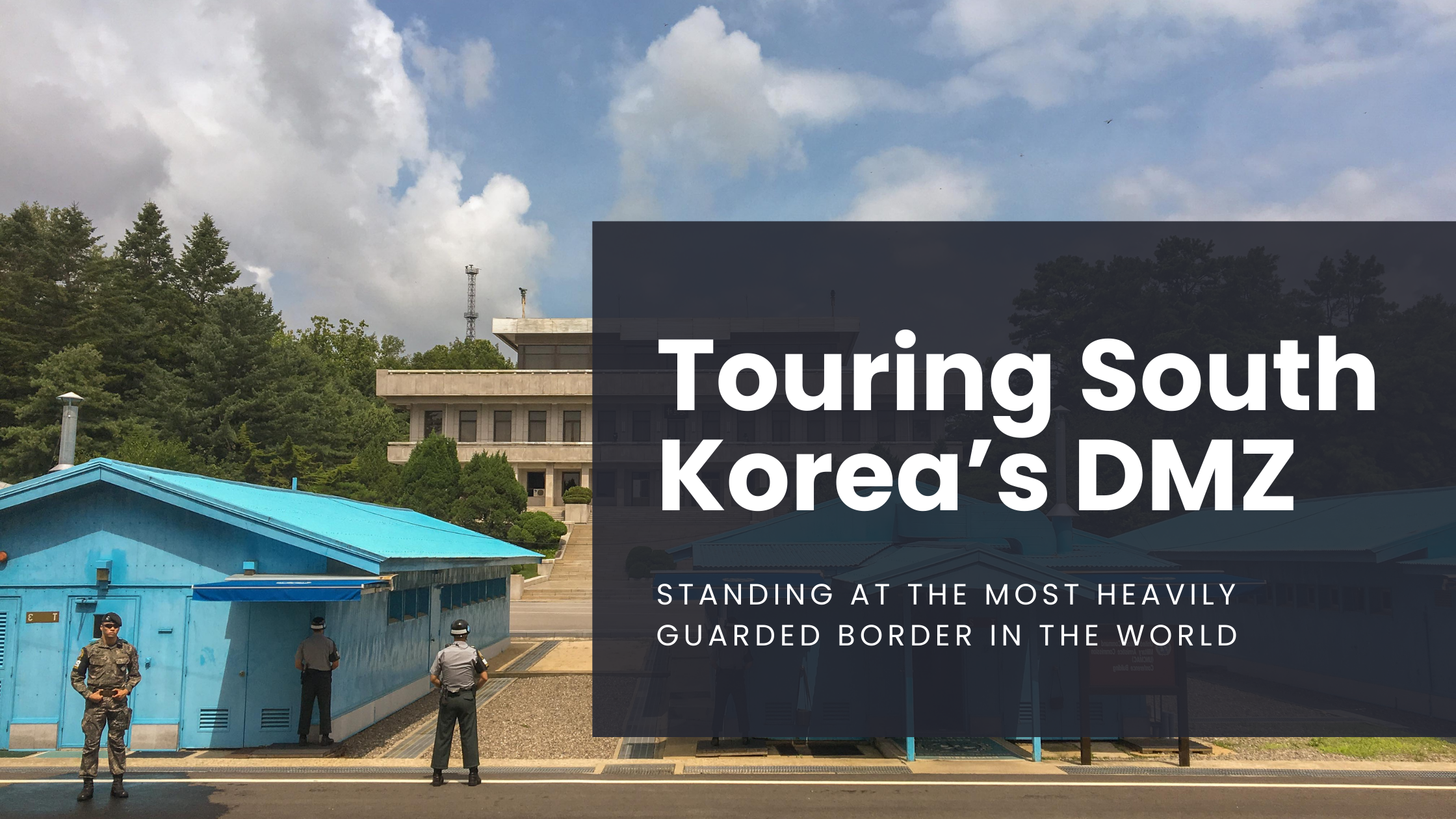
A mere thirty miles outside of Seoul sits one of the most heavily guarded borders in the world. Spanning the entire 160-miles across the Korean peninsula, the demilitarized zone creates a 2.5-mile wide proverbial no man's land.
The following piece documents what it felt like to stand on the border of North and South Korea, also known as the scariest place on Earth,coined by Bill Clinton after his visit in 1993.
Heather and I would normally never hop on a tour. Sitting on a bus and listening to a voice through a speaker is not in our travel DNA at this point in our lives. We’d much rather wander the streets of a new place, immersing ourselves in its surroundings.
In fact, that’s how most of our memorable adventures have started. It’s a rush of raw emotions when we turn a corner and discover something beautiful when we least expect it.
We had booked flights to South Korea with no set plans, knowing little about the country itself other than it was the cheapest ticket to Asia then.
Amidst the hours of reading, there was one tour that kept surfacing: visiting the border with North Korea. At first it was a joke. Both of us had come across it, brought it up to the other with a hint of a chuckle, and brushed it aside. It was a “hah, can you imagine if we went there?” moment more than anything else, but each successive time we laughed, the more real it became.
By the second day of researching, we had convinced ourselves to visit the Demilitarized Zone (DMZ), hoping for an opportunity to step over the line of demarcation and into the territory of their neighbors to the north. We booked the tour, gave each other a “what the hell are we doing” smile, and packed our bags.
Before we knew it, we awoke at dawn in Seoul, anxious to see where the day would take us.
With any new adventure comes adrenaline. There’s excitement for what lies ahead, accompanied by a nagging fear of the unknown. That’s normal. Yet as we stood on the street corner in the crisp morning air, something seemed off. I could feel a slight wrench in my gut, not out of concern but curiosity. We had traveled nearly 6,000 miles around the world and were about to visit an active war zone, one that continues to affect the daily lives of millions of people. It was going to be different than anything I had ever experienced before.
We arrived at the meeting point, handed over our passports for verification, and boarded the bus. The seats were far from full and we quickly realized we were the only Americans present.
After a short wait, a middle-aged South Korean woman climbed the steps and explained that she would be our guide today. It was time to go.
The first stop was the War Memorial of Korea. We didn’t have nearly enough time here to visit every exhibit, so we quickly shuffled our way to the “History of the Korean War” wing. It was here that we relived our days as college students, cramming as much knowledge as possible into our heads. As is the history of the world’s largest conflicts, that of the Korean War is quite complex and convoluted. This isn’t the platform to expand on it, but I would encourage you to look far beyond what the media presents to gain a better understanding.

War Memorial of Korea
Alas, it was time to continue the tour. Our driver turned right out of the parking lot, trading the sanctity of the museum for the chaotic streets of Seoul.
We continued driving along highway 77, flanked by the Han River to our left. I began tracking the bus’s movement on my phone’s GPS. Sure enough, we were heading due north, straight toward North Korea.
As I glanced out the window the skyscrapers of Seoul had been replaced by barbed wire fences. This was the first sign that we had reached the DMZ.
We veered to the right and began heading east, continuing to follow the fence line as we went. Guard towers whizzed by our windows every mile until we reached Imjingak Park.

DMZ border along Han River estuary
Constructed in 1972, this park was built on the southern side of the Bridge of Freedom as a sign of hope for unification. It has since expanded on that role, now serving as a popular tourist destination.
As we left the comforts of the air-conditioned bus and surveyed our new surroundings, we were both immediately taken aback by old photographs of Korean families sitting along the barbed wire fence, hanging messages of hope and peace as they prayed. Messages, to this day, still cover the barrier that separates them from their loved ones in the north.

Flags for peace at Imjingak Park
It all felt delicate. Physically it was there: The reinforced fencing, the beautifully placed banners, and more. It was palpable and sturdy.
The environment, however, was fragile. Yet within it grew a mob of tourists, elbowing and shoving for the perfect selfie of the South Korean flag that, although weathered, hung proudly on the fence and symbolized the strength of the people that placed it there.

Imjingak Park, South Korea
Maybe it was out of respect that we felt we had to quietly shuffle along the walking path, observing and learning as we went. After all, we showed up as tourists to a place that has experienced so much grief and heartbreak. To this day, South Koreans still ride the DMZ train from Seoul to sit in the park, stare north through the fence, and patiently wait for the day it comes crumbling down. They continue to tell themselves that somewhere out there exists an alternate universe, one where they can move freely throughout the peninsula and reunite with their families.
We took a break to eat lunch, trying to process what we had just witnessed. After slurping the final drops of broth we made our way up to the third floor where a viewing platform provided our first look at the expanse of no man’s land.
I’m not sure what I was expecting. War ruins? Abandoned homes? I found none of that. Pure is the only I can describe it.

Looking into “no-man’s land”
It has been reported that around 800,000 landmines are buried throughout this 160-mile long sliver of land. In a way, these weapons serve as protectors, allowing nature to grow without intervention from the human race.
Humbled by our visit, we returned to the bus. It was time to head farther north towards the Joint Security Area.
As we sat back down in our seats, the mood shifted. The chatter in the back of the bus was silenced by our guide explaining that we now must display our “United Nations Command” visitors pass at all times.
From that point on, we would be inside an active war zone. The bus began to slowly swerve as we continued on. Left, right, then back to the left, avoiding barriers as we crossed a bridge that spanned the Imjin River below.
A slight feeling of unease came over me as we passed through the military checkpoint, but it was time to visit the Joint Security Area (JSA), also known as the village of Panmunjom. It was here that we hoped to step foot into North Korea.
Our bus rolled to a stop at the entrance to Camp Bonifas, located just 400m south of the border. A mere quarter of a mile is all that separated us from the border. We filed into an auditorium, joining with other tour groups. As the seats filled, our new guides from the U.S. Army began dispersing visitor declarations. These documents stated that the U.S Army, UN Command, and the Republic of Korea could not guarantee the safety of visitors and may not be held accountable in the event of a “hostile enemy act.” Comforting, to say the least.
We signed on the dotted lines, nervously laughing at one another’s slight hesitation, then climbed the stairs onto a new bus and continued driving north.
Finally, we reached the Freedom House. Located on the South Korean side of the Joint Security Area, the structure was built to house the reunification of Korean families. It has yet to see such a day.
We received final instructions from our leader: At no time should we place our hands in our pockets. If we wish to use our phones for pictures, we must hold them the entire time. No waving, pointing or making any motion towards the North Korean side.
We were to remain in a single file line at all times. The Korean People’s Army would be closely monitoring our movements from their guard towers. Any misstep may be recorded and used as propaganda.
Interested in learning more about South Korea? Check out these posts:
With these warnings in mind, we were led into the foyer, up the stairs, and to the back doors. One by one we silently walked onto the platform outside, getting our first glances at North Korea.
Across from where we stood was the north’s version of the Freedom House, built taller than it’s South Korean counterpart as a sign of strength. Motionless in front of the door was a lone soldier from the Korean People’s Republic Army. To the far right was a guard tower, monitoring our every move. Directly in front of us stood three South Korean soldiers, attentive and facing the border.
Separating the two countries were three long, blue buildings that served as conference rooms. Here is where leaders from both sides come together for negotiations. Horizontally bisecting these buildings was a small block of cement; the official demarcation line between North and South Korea.
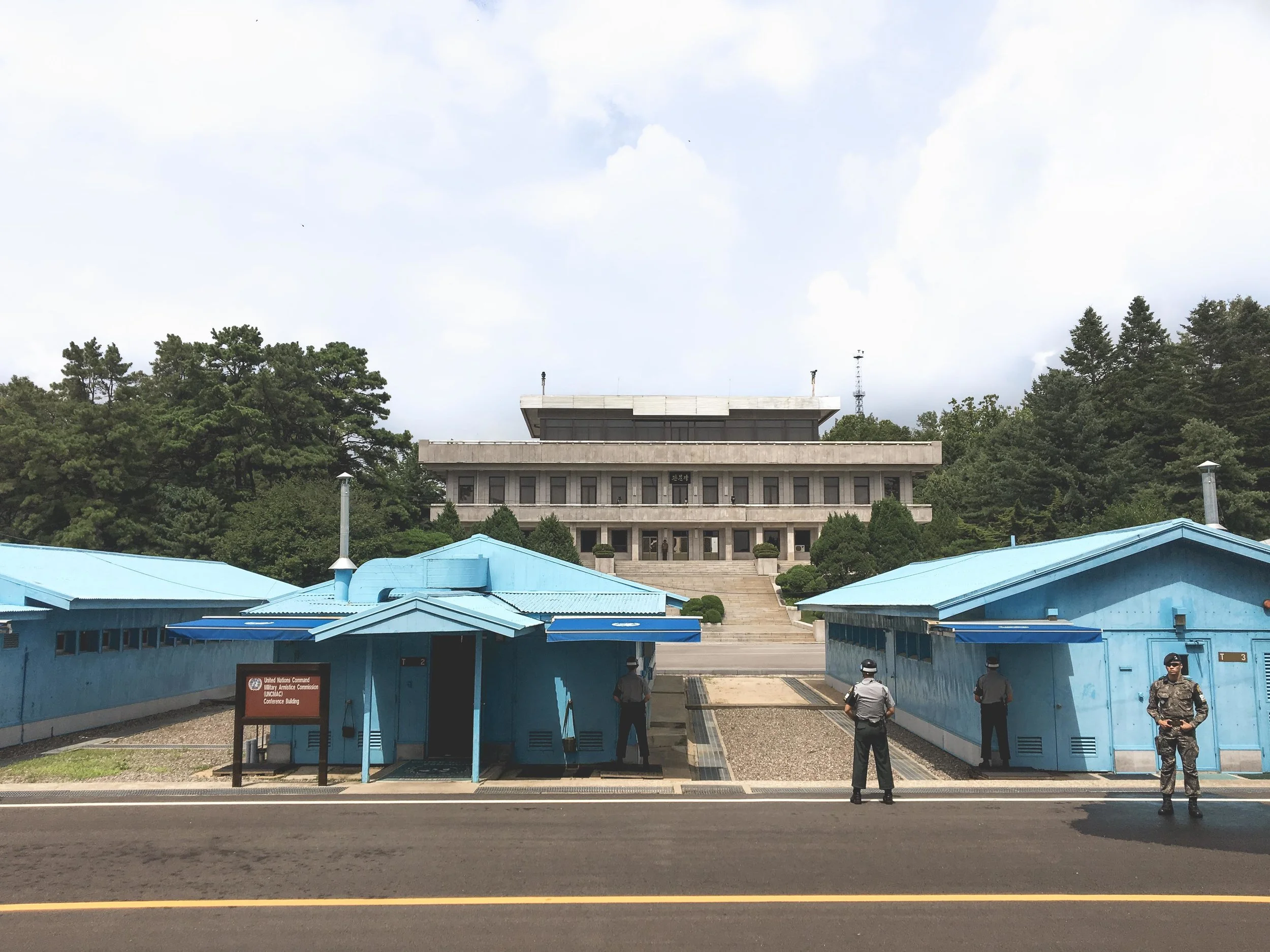
Joint Security Area, South Korea
Part of me couldn’t believe what I was looking at. It wasn’t awe-inspiring or beautiful beyond words by any means. Rather, to visualize where we were on a map of the world simply dumbfounded me. I was being watched by actual North Korean soldiers. I could see one for myself, close enough to yell at across the way.
The person next to me began to move, breaking my thought as we were ushered into the center building; an empty conference room awaited.
Three more South Korean soldiers were standing guard inside, one firmly planted in front of the door directly across from where we entered. That door led outside, straight into North Korea.
I took about ten steps forward, flanking the edge of the large conference table in the middle of the room. As I turned to glance out the window, I realized that I was looking back towards the cement demarcation line. Technically speaking, I had just crossed into North Korea.

Demarcation line between North and South Korea
After twenty minutes we were escorted back out of the southern entrance of the building, returning to the steps of the Freedom House for one final glance at North Korea. It was quite possibly the last one I’ll ever have.
What we didn’t know at the time was that those same buildings would be where Oh Chong Song dashed across the border, making his daring escape from North Korea a mere four months later.
To be honest, I’m still unsure what to make of the whole experience. Yes, we had just stepped foot in an active war zone, but the reality is that it’s as safe as possible. Up to 3,000 people tour the area each day.
Is it for everyone? Certainly not.
Was it one of the most humbling experiences of my life? Absolutely.
As we rode the bus back to Seoul that afternoon, I couldn’t help but admire the strength, resiliency, and patience of the South Korean people. Although the struggle for peace continues, many feel that it has never been closer.
I truly hope that’s the case.
Thank you for reading and as always, stay safe & happy travels.
Sharing is caring… pin this post for later!


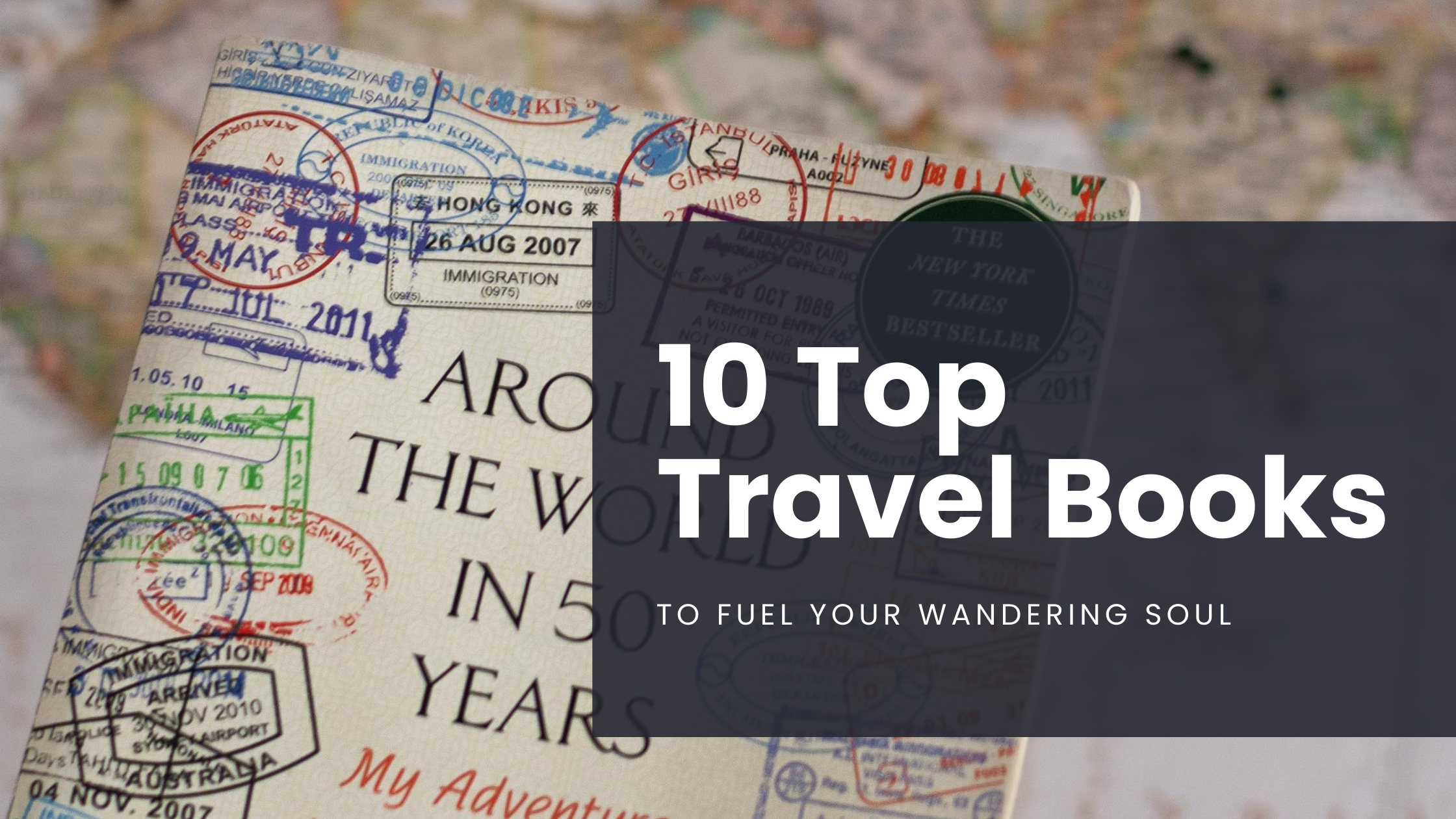
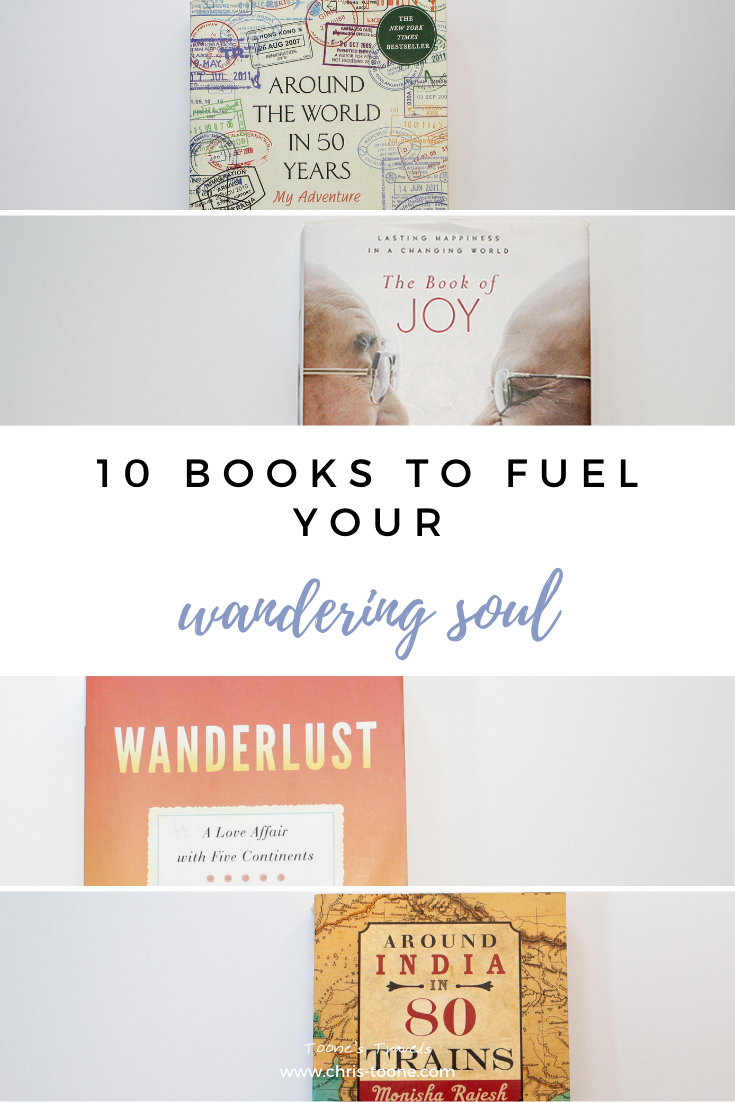
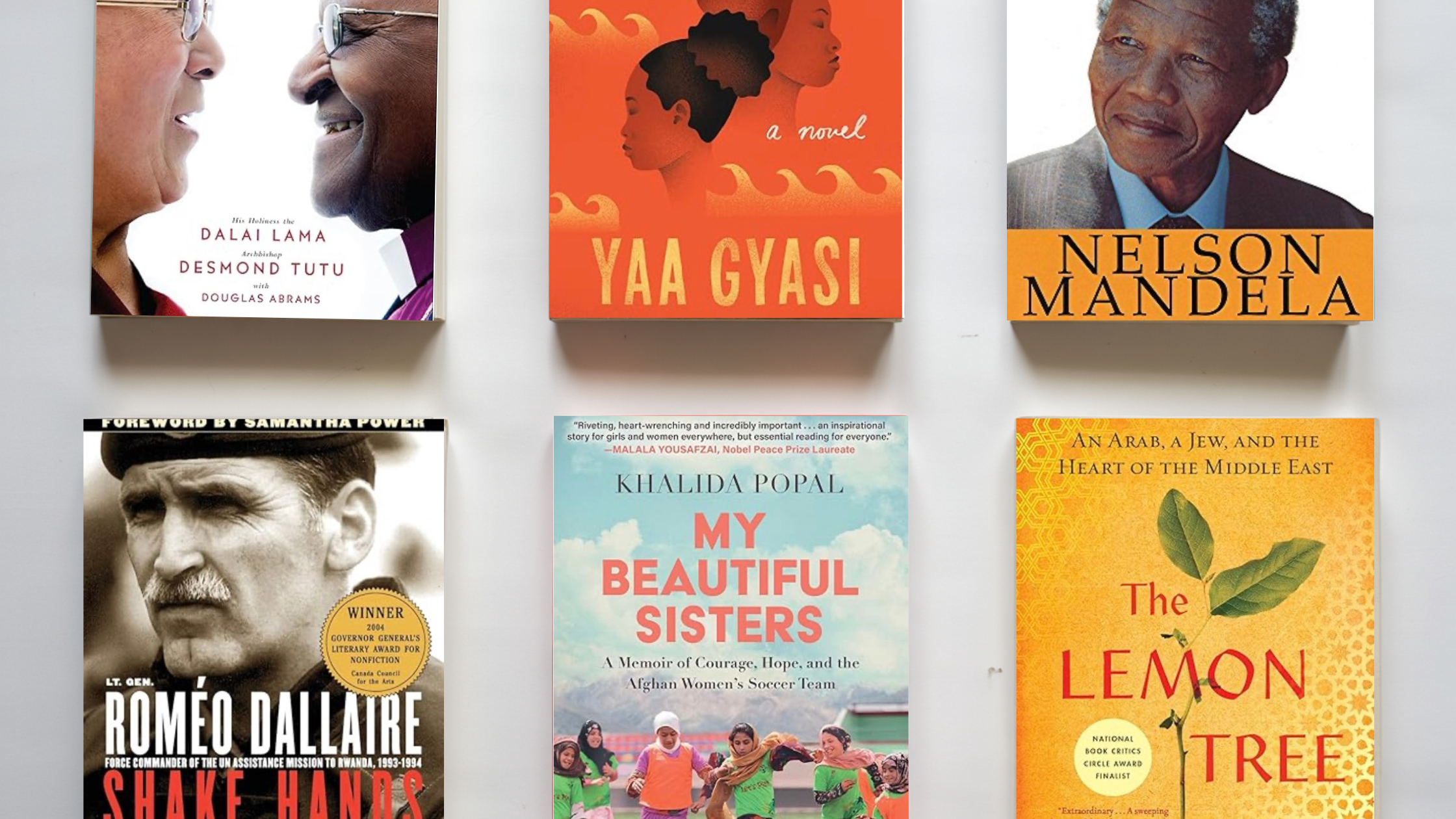
10 books that will fuel your wandering soul
You can often find me wandering aimlessly through the travel section of a bookstore. It’s actually one of my favorite pastimes, searching for inspiration to plan my next great adventure. I never truly know what I’m looking for. Regardless, it’s not uncommon to find me camped out on the floor of the aisle…
*Please note: The post below contains affiliate links. Thank you for supporting Toone’s Travels!
You can often find me aimlessly wandering through the travel section of a bookstore. It’s one of my favorite pastimes, searching for inspiration to plan my next great adventure.
I’m not talking about guide books, although I enjoy eagerly flipping through those pages in anticipation of an upcoming trip. Rather, I’m referring to the stories that light a fire deep within your soul. Flames that you didn’t know were there. The books that provide the little spark you need to jump off the couch and out of your comfort zone.
Here's a list of my favorite reads that do just that. Get ready: it's adventure time!
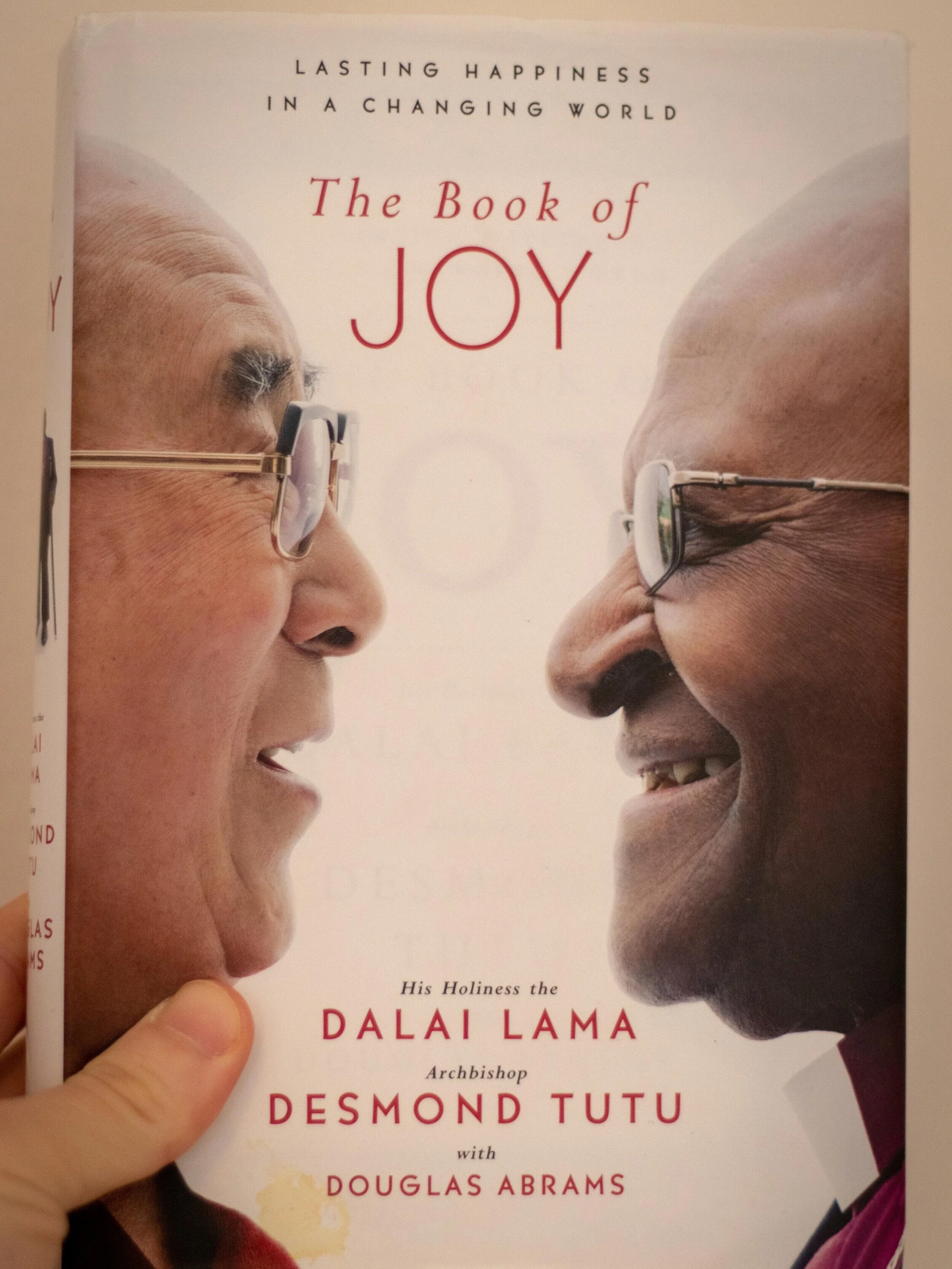
The Book of Joy - Douglas Abrams
Douglas Abrams was granted exclusive access to a series of special meetings between His Holiness the Dalai Lama and Archbishop Desmond Tutu, discussing how to create lasting happiness in this often crazy world. Providing some much-needed insight while acknowledging their different cultures and religions, this book will shed renewed light on life as a human being. I’ve read this book three times, and will continue to search its pages for perspective, humility, and comfort whenever my mind craves it. Each time I flip through the pages, I learn something new about myself. For that reason, it remains at the top of my reading list.
Get it here.
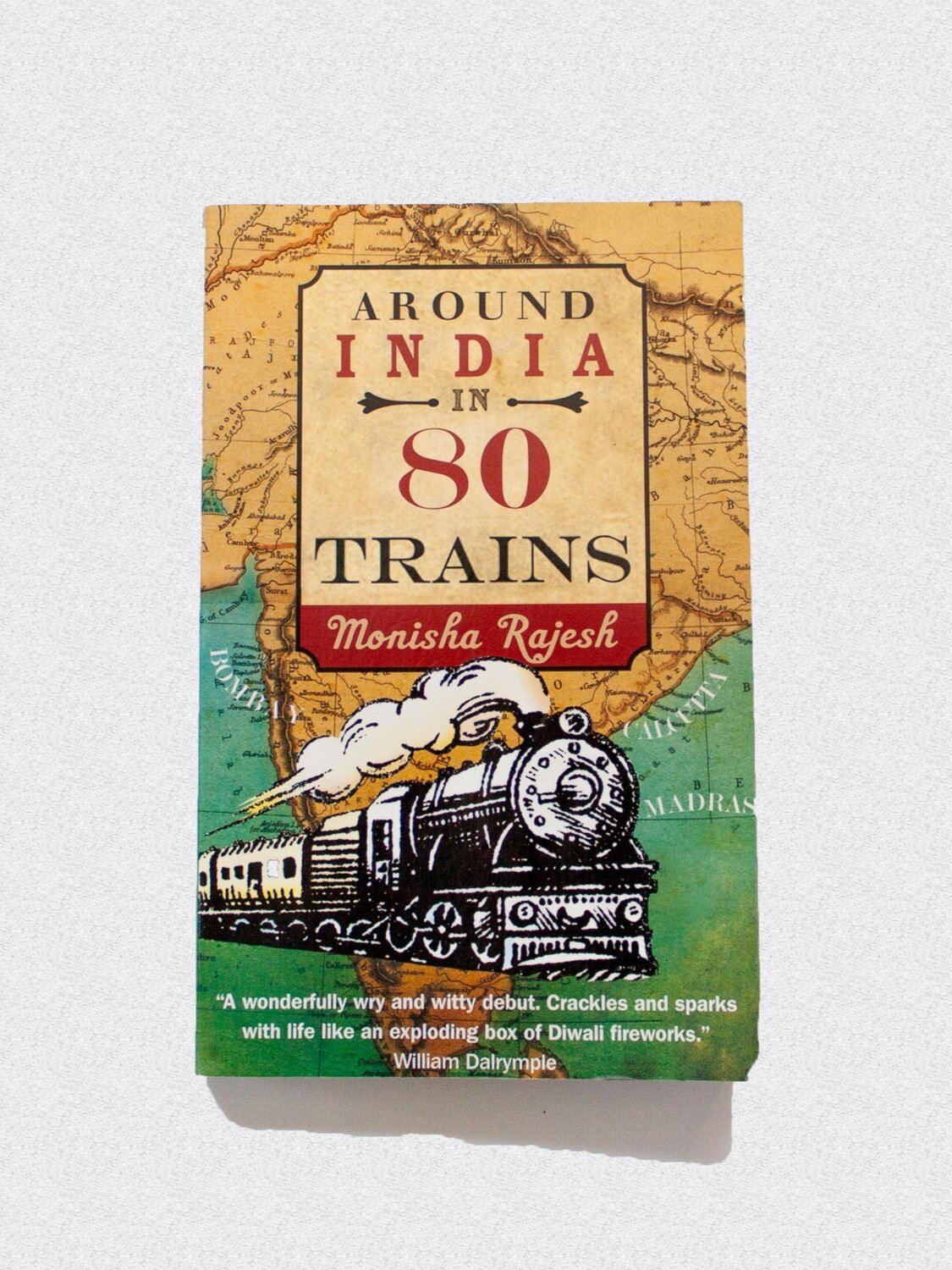
Around India in 80 Trains - Monisha Rajesh
Monisha chronicles her adventures of riding the rails of India in this funny and eye-opening novel.
Yearning for something different, she sets out to explore what she remembers fondly as a child: the Indian trains. Working her way around the country, the author documents the 40,000km of railway travel and shares tidbits from her journey, providing the reader with beautiful images and hilarious stories.
If you don’t know much about India, this is the book for you! There’s no better way to discover the real side of this country than by riding the world-famous trains.
Get it here.
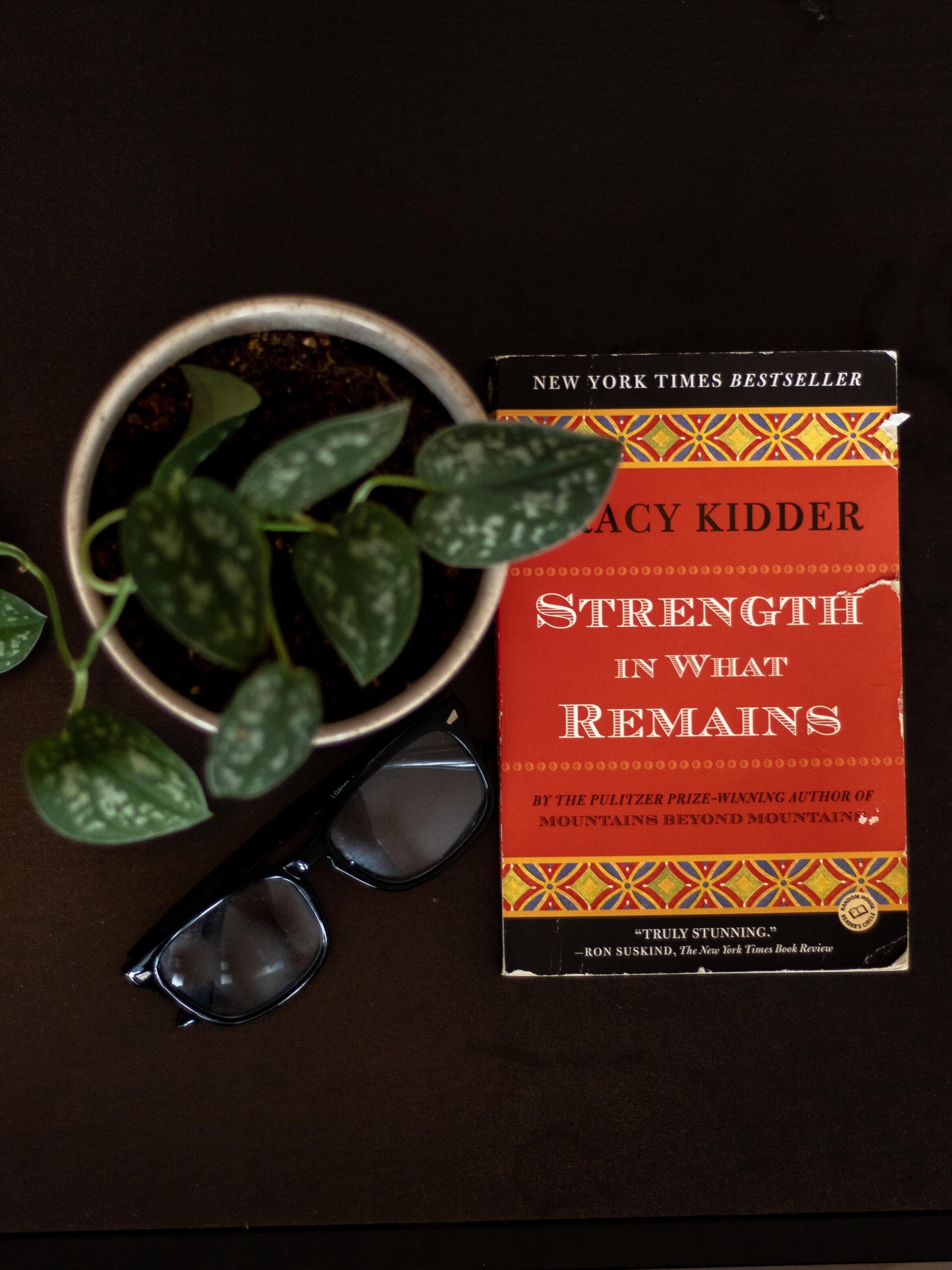
Strength in What Remains - Tracy Kidder
Now and then I stumble upon a book that shakes me to my core and makes me think long and hard about what I take for granted in life. This is one of them. In Strength in What Remains, Tracy Kidder documents the tale of Deo, a young man from Burundi that survived the genocide in 1993 and made his way to New York City with little money and no knowledge of the English language. It’s an often overlooked part of the world’s history, yet some reports estimate that upwards of 200,000 lives were lost over just three months during the genocide. The imagery that Tracy uses to depict how Deo was able to hide and eventually flee the fighting in Burundi and Rwanda is heartbreaking, but the underlying story of resilience will inspire you to get out in the world to learn all you can. After all, we must look back on history to create a better future.
Get it here.

Midnight in Siberia - David Greene
David Greene, a former Moscow bureau chief for NPR, takes readers along on his journey across the Trans-Siberian Railway. Going far beyond the typical Russia that we normally see and hear about in the media, David brings life to working-class citizens as he documents his interactions with locals along the 6,000-mile journey.
This book provides a much-needed glimpse into what life is like for Russians outside of the major cities, sharing their hopes and dreams for not only themselves, but Russia as a whole. Don’t be surprised if my next ticket booked is a Trans-Siberian adventure!
Get it here.
Wanderlust - Elisabeth Eaves
Never judge a book by its cover, but this one is precisely as it sounds.
Author Elisabeth Eaves takes readers along on an ever-so-relatable journey as she documents her impulsive travels and insatiable desire to discover the unknown. Through relatable stories, she is able to connect with the wanderer in all of us.
A true tale of self-discovery, this book may be just the thing you’re looking for to inspire your next adventure!
Get it here.

Looking for more inspiring stories? Don’t miss this post:

At Home in the World - Tsh Oxenreider
In this story Tsh Oxenreider brings readers along on her family’s leap of faith. She and her husband sell their house, pack their bags, and take their three young children on a trip around the world. Along the way they find themselves craving stability, but learn to find a sense of belonging through a series of human connections in the ever-changing and fast-paced world. If you’ve ever wondered what it might be like to take your kids around the globe with you, look no further than Tsh’s adventures. At Home in the World is one of my go-tos for some feel-good stories!
Crossing the Heart of Africa - Julian Smith
A modern-day explorer, Julian Smith follows in the footsteps of a 1800s love story in which Ewart Grogan sets out to prove his worth to the love of his life by walking the length of Africa, spanning from Cape Town to Cairo.
Running away from his fear of marriage, Julian attempts to follow Grogan’s original route, seamlessly intertwining both tales of adventure throughout the book.
I was completely captivated by every page in this book as the journey was an adventure in the truest sense of the word. For an epic story of 21st-century exploration, be sure to pick up a copy of this book.
Get it here.


Around the World in 50 Years - Albert Podell
Author Albert Podell is a truly extraordinary man because he didn’t just imagine traveling to every country in the world; he achieved it in addition to holding the record for the longest automobile ride around the globe.
Throughout Around the World in 50 Years, he eloquently and hilariously shares his tales of adventure from his years of traveling. From successfully surviving civil wars to eating African field rats, each word will captivate you and help depict parts of the world that we didn’t even know existed.
Albert is living proof that just because someone claims your dreams are impossible doesn’t mean you shouldn’t go out and chase them anyways.
Get it here.
Peaks on the Horizon - Charlie Carroll
In this tale of chance and adventure, Charlie Carroll gives readers a glimpse into the often secret life of those that inhabit the Tibetan plateau. His obsession began after reading Seven Years in Tibet in grade school, leading him to seek first-hand experience later in life.
Navigating the harsh political policies of China towards the Tibetan people, he is determined to enter the region and learn all he can. When he least suspects it, he meets a new friend, Lobsang, along the Chinese/Tibetan border. Lobsang is originally from Tibet but sought refuge in nearby Nepal.
Now he is trying to find his way back to the love of his life. In Peaks on the Horizon, Charlie Carroll not only takes us through his journey, but Lobsang’s as well. I learned so much about the history of the ongoing conflict by reading this book, unveiling a region previously unknown to me.
A must-read for anyone interested in this remote part of the world.
Get it here.

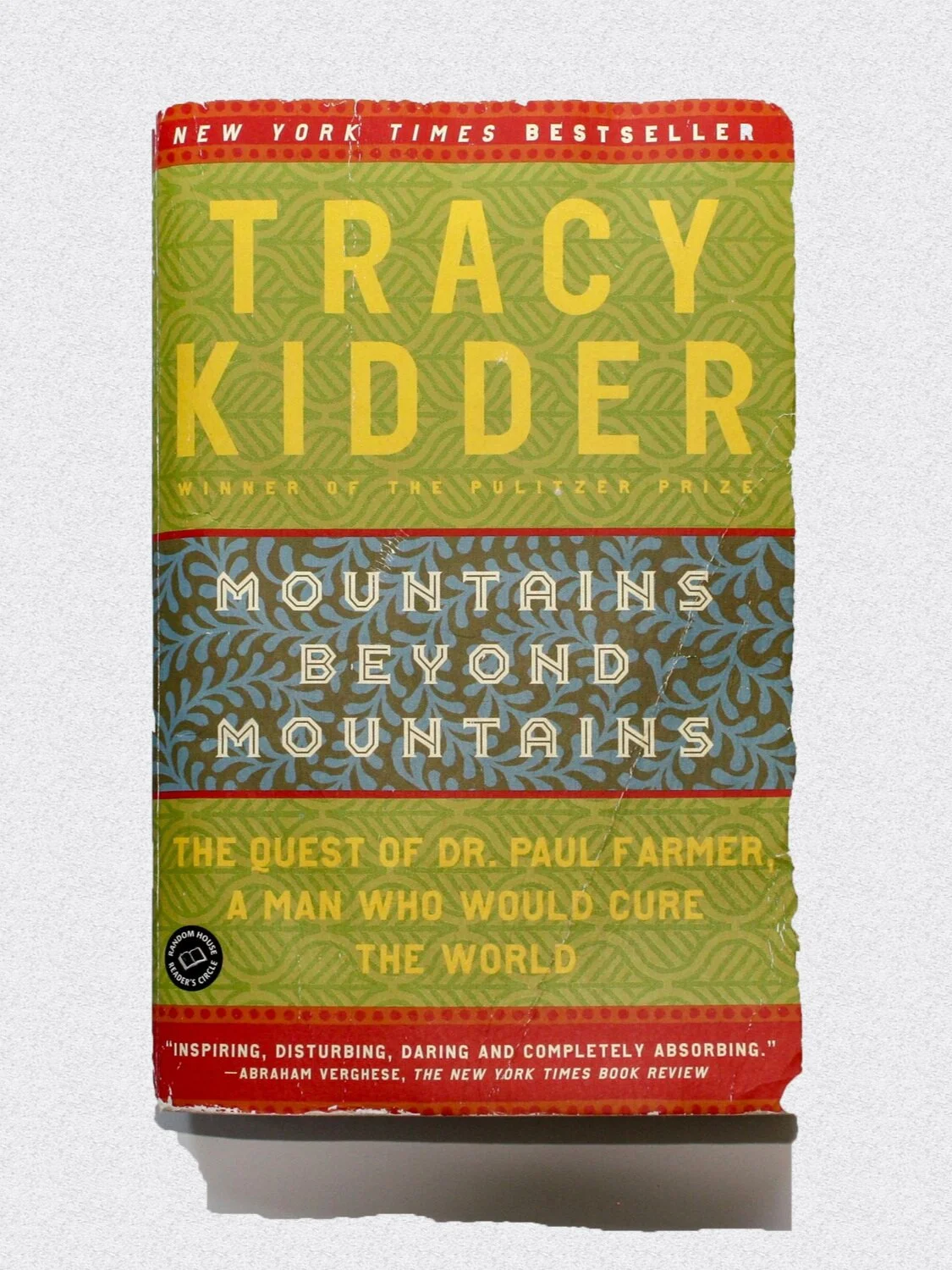
Mountains Beyond Mountains - Tracy Kidder
In another masterpiece authored by Tracy Kidder, Paul Farmer, widely known as the man who will cure the world of tuberculosis, shares his story with readers.
From Paul’s very first trip to Haiti to petitioning world leaders and working in Russian prisons, Tracy takes us along on every step of the journey. The pages of this book are filled with Dr. Farmer’s tenacious and often daring mentality, which ultimately left me with the belief that I can do more to help solve some of the largest problems in society.
This book is proof that one man can change the world.
Get it here.
Thanks for reading! It’s time to grab a drink, kick back and relax, and enjoy the sunshine. Have a recommendation of your own? I’m always looking for new reading material so please leave a comment below!
As always, stay safe & happy travels!
Pin this post and save it for later!

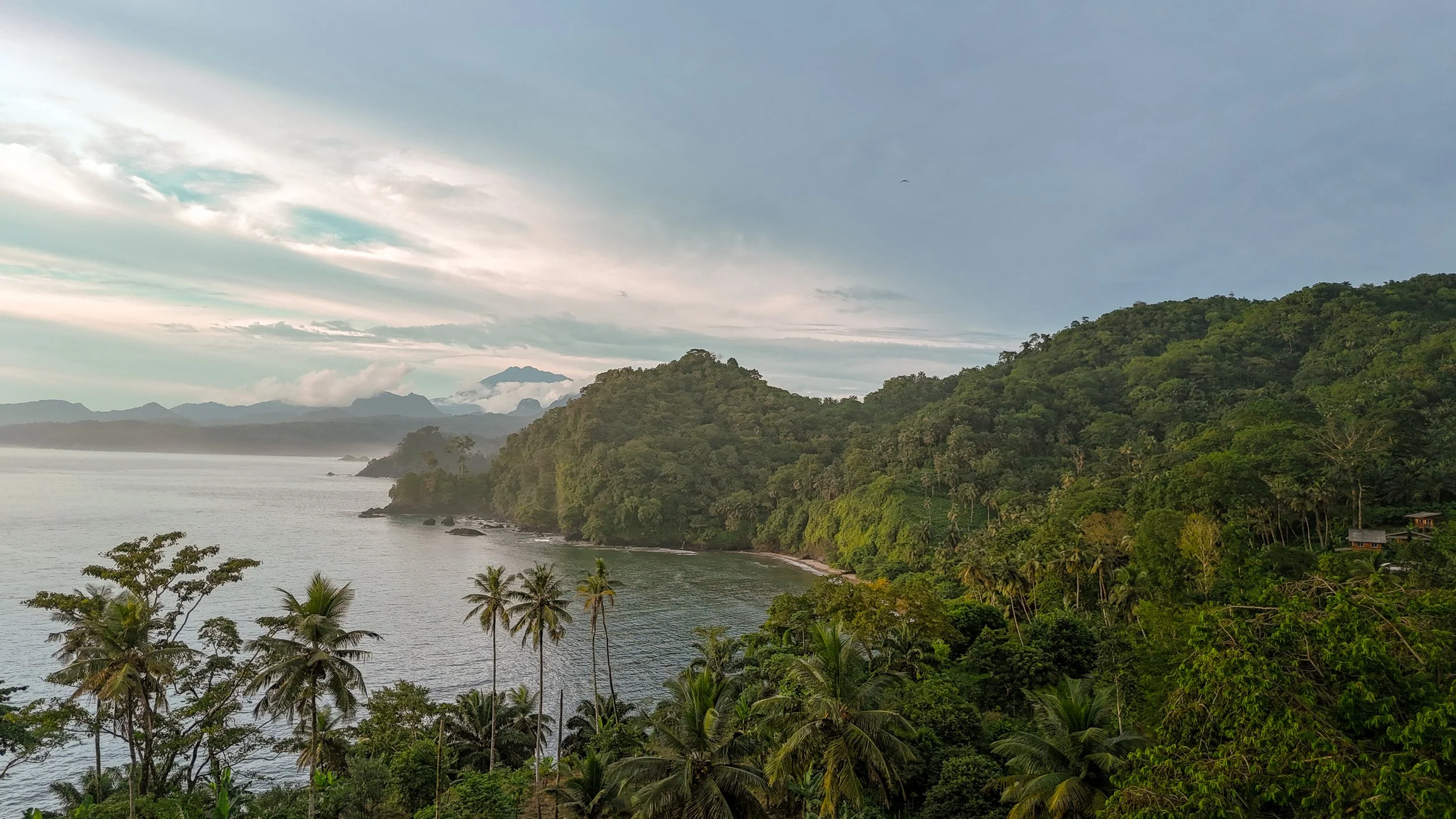

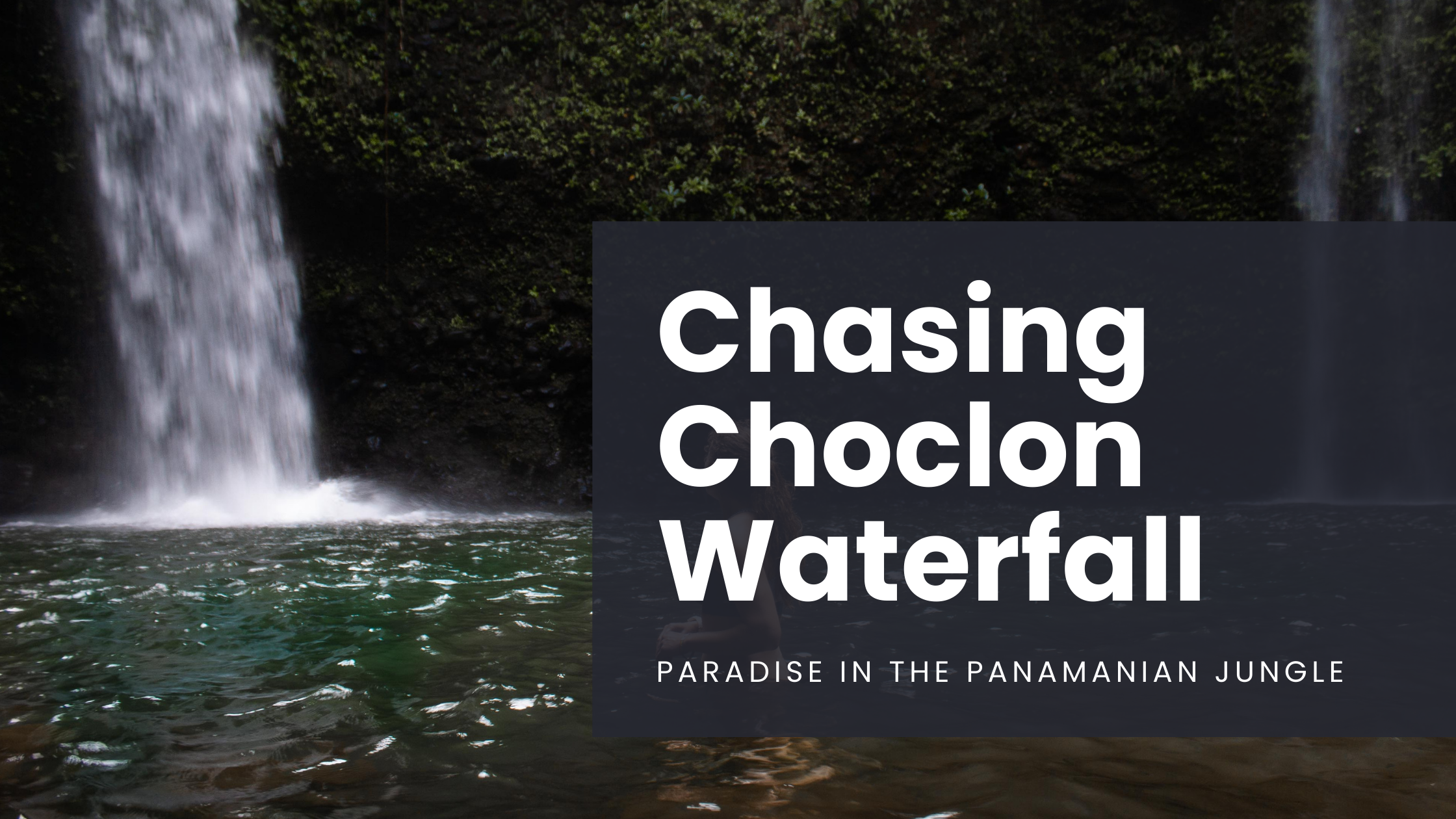
Chasing Choclon Waterfall: Discovering paradise in the Panamanian jungle
As I combed through the research prior to our trip to Panama, I came across a picture of a swimming hole that blew me away. The moment I saw it, I knew we needed to experience it. There was only one problem: nothing I read would tell us where it was located…
Let me clarify one thing right from the beginning: we weren’t actually in the middle of nowhere. That’s simply how it felt, and to be honest, that’s just the way we like it!
As I combed through the research before our trip to Panama, I came across a picture of a swimming hole that blew me away. The moment I saw it, I knew we needed to experience it (click here to see the original post I found).
There was only one problem: nothing I read would tell us the location, let alone how to navigate the hike.
I stumbled deep into the black hole of the internet, searching for any clues that might point us in the right direction. The only objective I accomplished that day was leaving a solid imprint of my butt on the couch cushion. Disappointing, to say the least.
That might be enough to call it quits for some, but it only fueled the fire within. The longer I went without finding what I was looking for, the more determined I became. We were going to find a way to Cascada Choclón. There was no doubt in my mind.
All of the sudden a beam of sunlight shot into the living room. No, it wasn’t actually that dramatic, but shortly after opening the window blinds I came across our first solid lead.
It’s possible that “solid” is a gross overstatement. The website merely provided the GPS coordinates for the trailhead. It wasn’t much to go on, but that was enough to get the ball rolling!
Discover more of Panama. Don’t miss these posts:
I continued scouring every piece of information that I could find. When I took a closer look at satellite imaging, there was a portion where the jungle appeared to part along the river, providing a much-needed hint to where the falls may be.
Now that I had a starting point and a general direction, it seemed like this may pan out. Fast forward to arriving in Panama: it was time for the adventure!
As soon as we turned off the main road in Boquete, we quickly became grateful that we opted for the SUV rental. The pavement disappeared, our cell service wasn’t far behind.
The farther we drove, the slower we went, carefully maneuvering over every bump, boulder, and hole in the road. As the minutes ticked by, so did our confidence even though neither of us would ever vocalize it.
After what felt like hours, we had reached the starting point.
The car came to a halt and a cloud of dust from our tires quickly engulfed our field of vision. Once it cleared, we realized how “off the beaten track” we were. The sounds of the jungle beckoned beyond the open field that lay ahead. One last look at our maps and we were off.
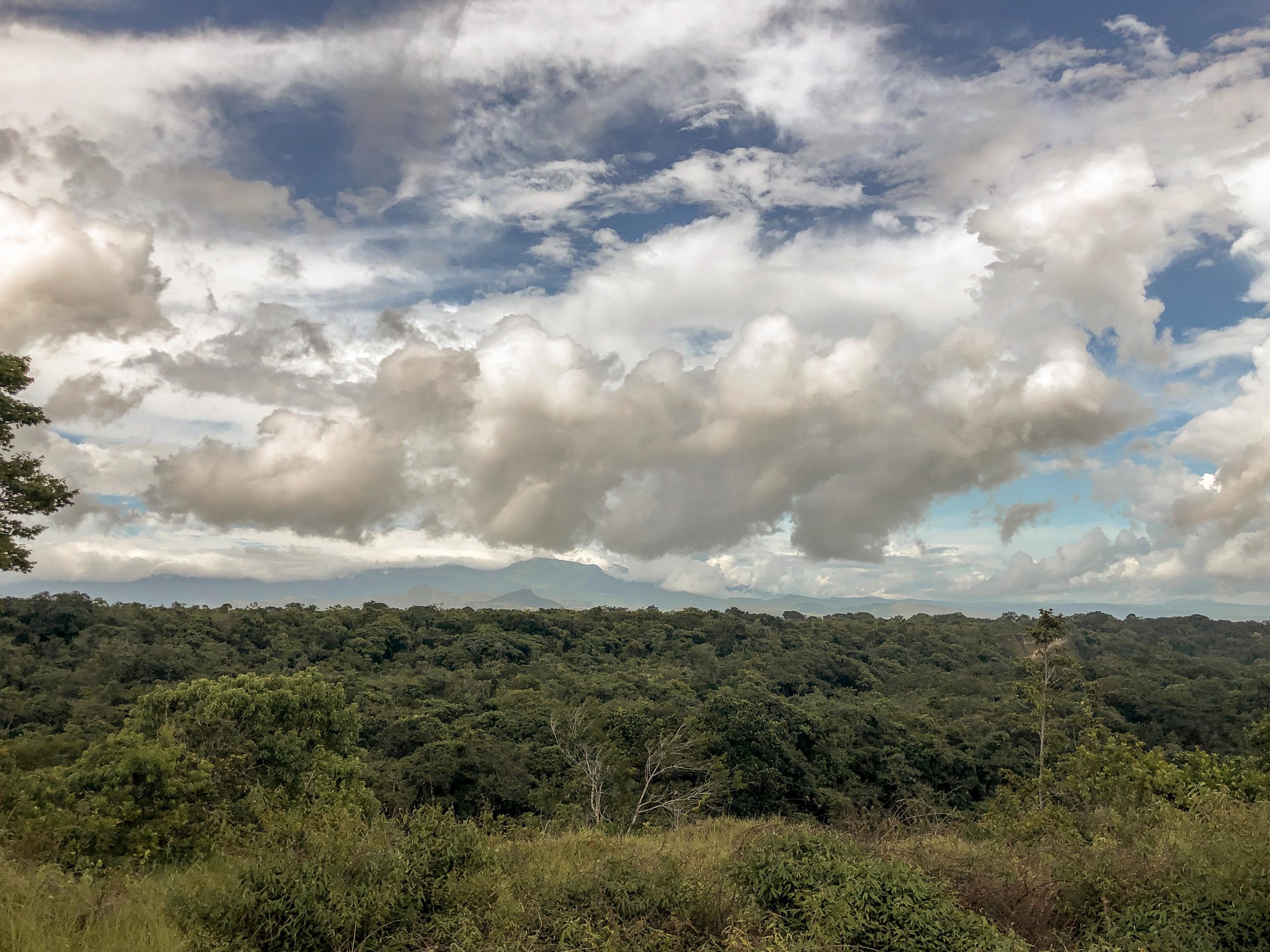
The hike started by traversing through an open meadow as the sun beat down our backs, the humidity making it impossible for any relief. Upon reaching the first junction, we referred to our makeshift maps and descended to the forest floor, following the sounds of the river below.
As we trekked deeper into the brush, the canopy quickly began to rise straight towards the sky, providing a much-needed relief from the heat. Our compass instructed us to go left around a closed gate, but our ears directed us to the right, towards the sound of the rushing water. We stood there confused, unsure of what to do.
At this point the sun forced us to perspire off our umpteen layers of sunscreen and bug spray, leaving us susceptible to the mosquitoes that began swarming around. We were in no position to have a lengthy debate. Lacking confidence in either direction, we climbed back out to the trailhead.
Maybe we had incorrectly interpreted our map. Maybe if we walked another direction we would discover a different, easier way to reach the river.
It seemed like a good idea at the time but, as it turned out, we were wrong. Very wrong.
As we continued down the gravel road the intensity of the sun drained all of our energy. I could feel my body temperature rising, but I was too exhausted to do anything about it. Each step we took was met with an unsuccessful prayer for cloud cover.
Ten minutes and a new sunburn later, we had reached another dead end.
This was the point that every ounce of my being was telling me to pack up and call it a day. Our motivation was waning, the heat was relentless, and we were out of ideas as we slowly retreated back to the car. I remember Heather cracking jokes along the way, trying to make light of the situation and keep my morale in tact.
A second look at the scattered research revealed a small access path farther down the dirt road. Maybe that was what we were looking for, so we decided to keep driving north.
No luck.
I could tell that Heather wasn’t too sure about continuing and, to be honest, even after regrouping in the air-conditioned car, I wasn’t either. As a rainstorm moved through, we took the time to reevaluate what we were doing.
We felt assured and frustrated at the same time. Confident that we were in the general vicinity. Annoyed that no matter how we approached it, we couldn’t find what we were searching for.
The road back to the original trailhead provided some much-needed perspective as we passed run-down homes with missing walls and children playing in the rain. I couldn’t help but think of the number of tourists that travel through Panama each year and yet had no idea that this part of the country existed. Although we concluded that we would give our adventure one more try, I decided that after the experience we had up to that point, I would be content no matter what. After all, it was Dan Eldon that once said, “The journey is the destination.”
Once we descended back into the jungle, reached the gate, and shuffled our way around it, we were back on track and heading in the right direction.
We quickly descended farther into the forest floor, hugging a makeshift PVC pipe railing along a ridge and using the vines as support as we worked our way down into the canyon. The path was completely overgrown with thick brush rising far above our heads. Thrusting the branches aside, we did our best to stick to the trail quickly narrowed with each step.
The ecosystem of any jungle is the most diverse in the world, often-times leading to regular discoveries of new plants and animals. Panama alone is home to over 1,500 kinds of trees and five species of cats, including jaguars, ocelots, and pumas. It feels eerie yet humbling to be amongst it; a place where the silence is deafening and only broken by an occasional howler monkey crying out in the distance or a bird rummaging amongst the fallen leaves for food.
We silently trekked along the forest floor, remaining vigilant of our surroundings.
The moment we began to feel comfortable, a loud crash echoed through the forest and left us frozen in our tracks. We exchanged nervous glances, trying to control our breathing and telepathically communicate what to do next.
Tip-toeing forward as quietly as possible, we did our best to avoid the branches that covered our path. Needless to say it was a humbling reminder that regardless of how isolated we felt, we weren’t alone.
Finally, the thick brush parted and the bank of the river appeared, reinvigorating the idea that we could find these waterfalls.

We searched up and down the river for a way to cross, but it quickly became clear that it wouldn’t be as simple as jumping between rocks. We would have to carefully select the path of least resistance.
Although our faces may have expressed doubt, we were so close that we could feel it. There was no turning back.
The path continued to disappear before our eyes, winding its way through the overgrown brush before depositing us back onto the rocks and leaving us with newly acquired scrapes up and down our legs.
We continued moving northwest, systematically evaluating every step we took as our feet slipped off the rocks. The energy in the forest changed from nervousness to excitement as we inched closer. We were nearly there.
Just beyond the final bend of the river, the waterfalls were waiting to greet us. It was even more majestic than I had seen in the pictures.
We were left speechless as we peered towards an amphitheater of hanging vines and cascading waterfalls.
The beautiful blue waters of the pool were irresistible. We couldn’t help but jump in and soak up the moment. A rush of emotions engulfed us, leaving nothing but a sense of relief, gratefulness, peace. We had uncovered paradise in the Panamanian jungle. More importantly, we never gave up.

The forest floor quickly grew dark as the sun began to drop below the horizon, signaling that it was time to pack up and move out.
Back on the trail we went, accompanied by the beautiful silence, this time with no unexpected noises.
We made it to the car unscathed, feeling sunburnt and dehydrated yet eternally grateful for all that had happened that day. After all, we had found our own slice of Panama that, at that moment, felt truly untouched.
As I reflect on the adventure we had, I can’t help but think of one of my favorite quotes from the late Anthony Bourdain: “The journey is part of the experience - an expression of the seriousness of one’s intent. One doesn’t take the A train to Mecca.”
What have been some of your greatest journeys? Feel free to share in the comments below.
Thanks for reading and as always, stay safe & happy travels.
Enjoy what you read? Pin this post!



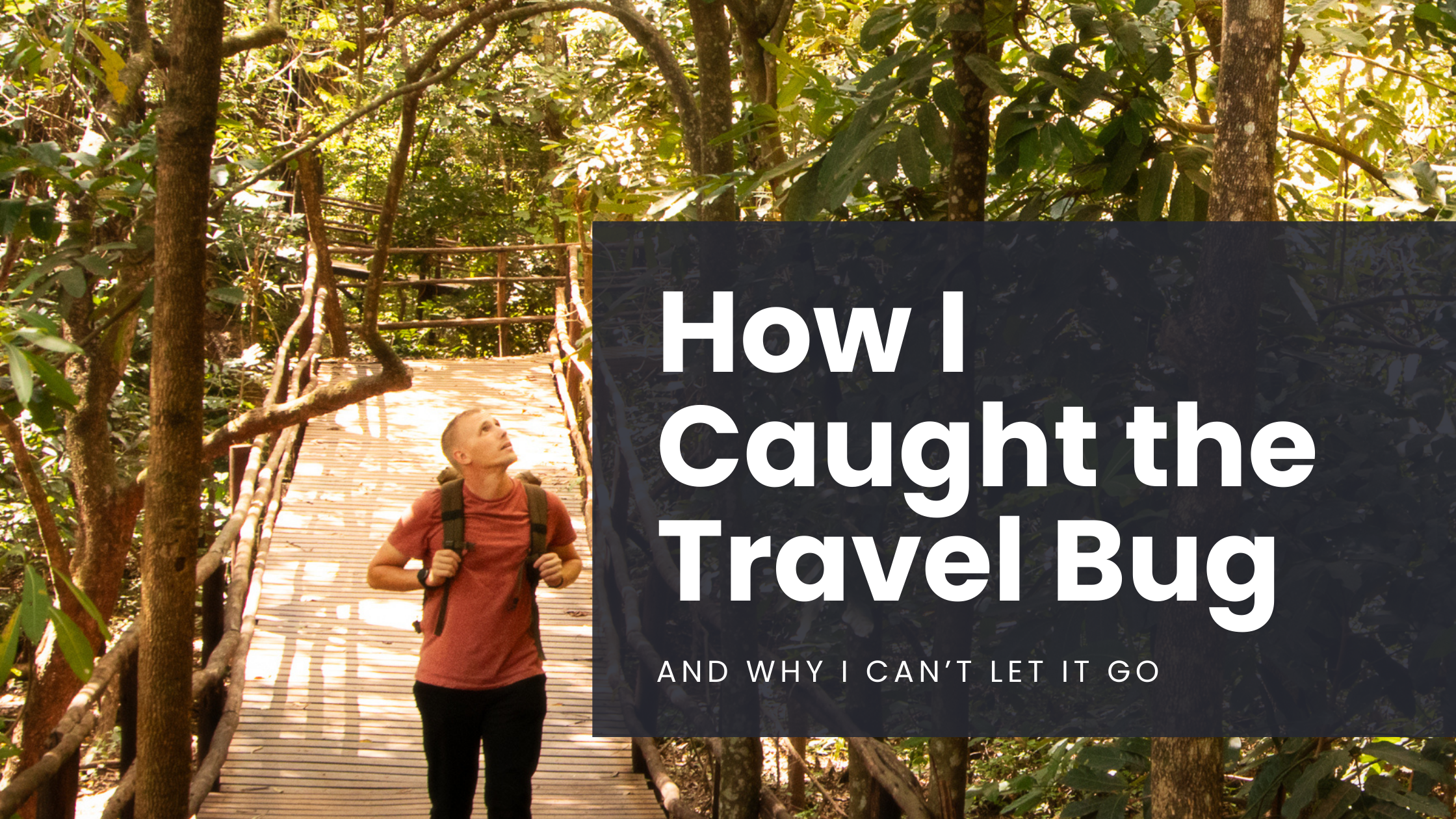
How I Caught The Travel Bug: and 3 reasons why I can't let it go
I vividly remember standing there on the shores of Hopfen, Germany. It was the summer between my junior and senior years of high school and I was captivated by my first taste of international exploration. I didn’t know it at the time - I don’t think I quite knew how to process it all - but that was my first experience with the travel bug…
I vividly remember standing there on the shores of Hopfen, Germany. It was the summer before my senior year of high school and I was captivated by my first taste of international exploration. Although I was there to play soccer, what I remember most are the cows grazing the fields behind our apartments, the majestic Alps rising high above the blue water of the lake, and the quaint town with its endless schnitzel. I didn’t know it at the time - I don’t think I quite knew how to process it all - but that was my first experience with the travel bug.

I should have guessed that something had shifted. Things that were once important to me stopped taking up space in my brain. Whenever my mind would drift, it would take me straight back to that scene, standing there on the shores of the lake. Suddenly the excitement, awe, and desire to see more would keep me at the edge of my seat, working my way through Google Earth, scanning it all to find the next great adventure.
Fast forward to 2009, I was a freshman at Ithaca College. At that point in my life, I had shifted back to a more rigid mindset. Work hard, get good grades, and be successful. I had no intention of studying abroad, but then everything changed.
As I walked down a narrow corridor towards the sub shop on campus, I passed a poster for Semester at Sea. I was 5ft. from where I was going and this small 8x11 piece of paper stopped me in my tracks. I took it off of the bulletin board, sat down on a nearby staircase, and started to read and re-read every single detail. I was completely and utterly entranced as the world passed me by.
The idea of an opportunity like this had utterly captivated me. Once again, everything else I had on my plate was brushed to the side so I could focus on the important thing: doing anything possible to make a semester abroad happen. I spent the entire summer working two jobs, saving as much as possible to go out and see the world.

Have you ever had an experience that's so comfortable that it’s odd? That’s what Semester at Sea was.
I’ve never been good at social situations. It gives me anxiety to even think about it; I overanalyze, overthink, and can never come up with something to contribute unless I’m addressed directly. Even then I fumble over the words.
Why did 19-year old me think it was a good idea to put myself in the middle of the unknown, surrounded by people I’ve never met? Still, to this day, I don’t know have an answer to that question. With that being said, I’m incredibly glad that I forced myself into it.
Suddenly it was the day of embarkation and as we watched Halifax silently disappear on the horizon of the Atlantic Ocean, I still had no idea what I was doing. The next 110 days were a whirlwind, but I walked away with some of the closest friends I’ll ever have, all because one thing brought us together: travel.
That’s a bond of the purest form and one that can never be broken. We’ve all gone our separate ways and haven’t traveled together since, but whenever we catch up we always reminisce about the stories that we created together, all without missing a beat.

After returning to Ithaca for the rest of my sophomore year, I started to understand that the travel bug wasn’t just a phenomenon that people mentioned in passing. It was real. This time it wasn’t going to loosen its grip and to be fair, I didn’t want to let it.
I’m not sure what the tipping point was, exactly. Maybe it was the sleeper bus in China that dropped us on the side of the highway at 2 am, or climbing Lionshead Peak in South Africa as the sun set over the ocean. It could have been the time in Ghana when our van broke down on a dirt road right in front of the only house in sight and we ended up playing with the family for what felt like hours, far longer than was needed to fix our transportation. Whatever it was, I’m grateful that it happened.
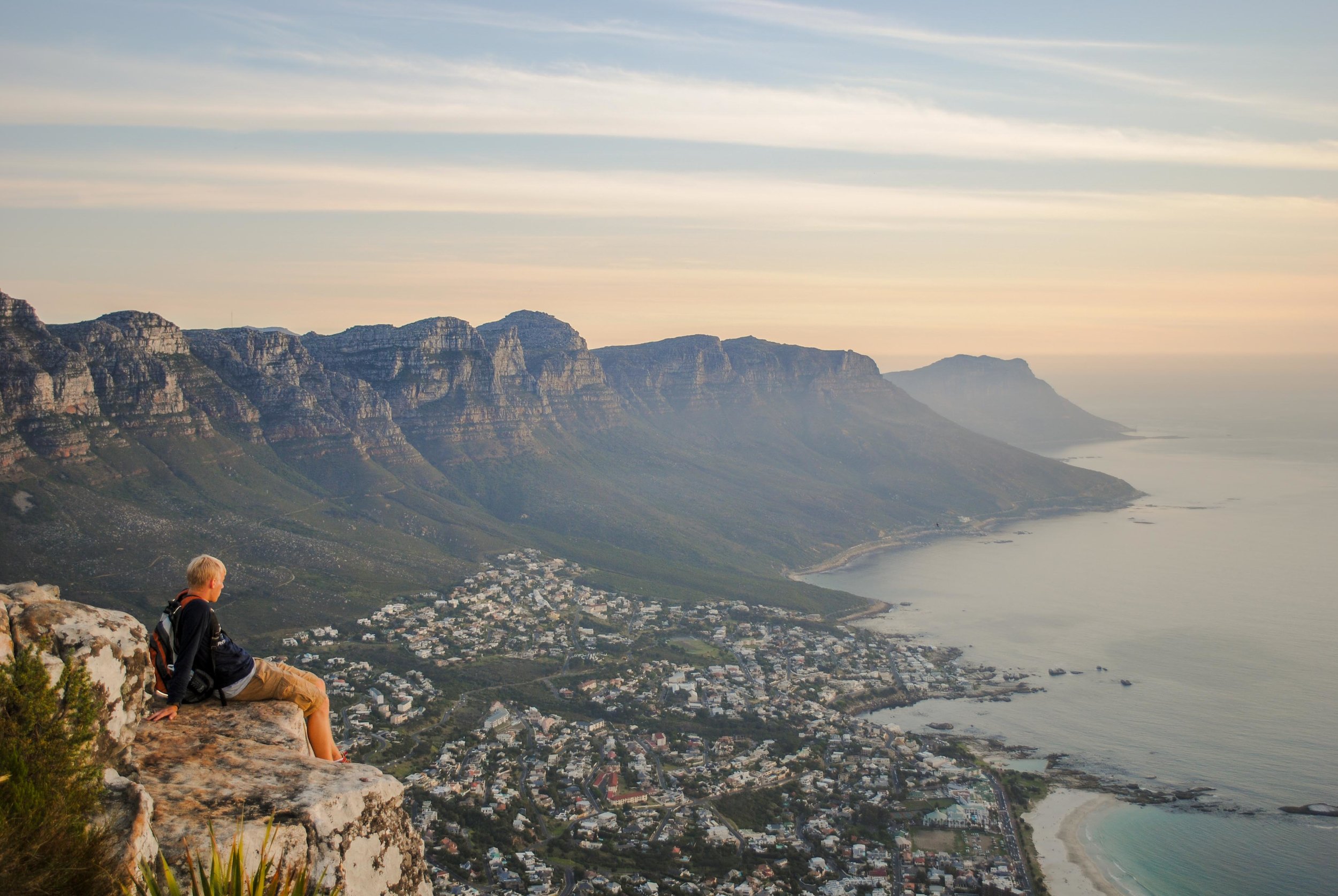
From that point on I’ve always known that deep down traveling was more than simply buying a plane ticket and snapping some pictures; I had fallen in love with it. The aerial views from a window seat, the taxi rides in the wrong direction, the regular doses of PeptoBismol; all of it.

Don’t get me wrong, I go through the rollercoaster of thinking along the lines of what some might term logical: Get a job, find a stable career, live comfortably, and be happy.
If you’re reading this and think that I need to control my desire to perpetually wander the world, you wouldn’t be the first person to tell me that and I’d be willing to bet that you won’t be the last.
To my credit, I’ve tried. The last four years have taken me around the globe to some amazing places for work, but what many don’t realize is that traveling for work and truly traveling are two very different things. It was too comfortable. I couldn’t do it anymore.
So here I sit, writing this blog and hoping that it puts me out of my comfort zone all the while maybe, just maybe, inspiring you to do the same. After all, what better way to expand your borders than by living beyond their walls?
At the end of the day, it’s simple: I can’t stop traveling, I won’t stop exploring, and here’s why:
THE CHALLENGE
Dropping myself into a country where I don’t know anyone, a place where I don’t speak a lick of the language or have the slightest idea of how to navigate the city. That’s my greatest joy.
I’m not going to lie to you: it’s difficult. Even scary at times. There are days that I don’t want to leave whatever apartment I’m temporarily calling home, because those 4 walls are the only protection I have from the unknown.
When I overcome the fear, the concept of comfort expands beyond those same walls and suddenly I’ve overcome the challenges I once faced; I’ve learned a different way of life.
THE DRAMA
There’s a reason why so many of us are addicted to reality television: the drama. But what if there was a way to experience it first hand instead of sitting on the couch?
I’m not talking about the “he said – she said” BS.
I’m talking about running through the airport as the gate to your next flight is closing and you hear your name paged throughout the terminal. Your heart starts to beat faster as you feel the endorphins releasing, your forehead starts to perspire and then you realize that it’s out of your hands. What’s the universe going to throw at you next? How are you going to deal with it?
If this sounds stressful to you, that’s because it is! It’s in those situations that you grow. You learn to cope with wherever you are, whoever you are with, and whatever is happening. A valuable skill to have in life, indeed.
When I think about drama, I can’t help but remember the time that I was sitting on a train in Morocco when it suddenly broke down. Not knowing any of the local dialect, my friends and I struggled to communicate with the woman that shared our compartment. As the train delay dragged on, the closer all of us became, eventually laughing the rest of the way to Marrakesh. A dramatic situation successfully turned into a lifelong memory!

THE PURE JOY
Yes, traveling makes you happy. That’s a well-documented fact. I’m not necessarily referring to the personal joy it brings (although it does bring plenty), but rather the joy you get to witness in every place you go.
When someone you’ve only just met on the street invites you into their home, encourages you to sit in their chair while they make themselves comfortable on the ground, and fills your stomach with a seemingly endless supply of food (all the while never asking for as much as a cent in return), it touches you. Witnessing the magnitude of joy and generosity they exude is contagious and you walk away a better person because of it.
So, let me sum it all up for you. My name is Chris and I have the best problem in the world: I love to travel.

What are some of your most memorable travel experiences? Let me know in the comments below and thanks for following along!
As always, stay safe & happy travels.
Sharing is caring… pin this post!





Hiking Cerro Ancon: Chasing views in Panama City, Panama
The very first thing I did the morning after arriving in Panama City was catch an Uber and climb this hill. I think there’s a lot of value in learning about a new place by looking at it from a different perspective. It’s like watching a city pump blood through its veins and Cerro Ancon is the best vantage point you’ll find in this sprawling metropolis.
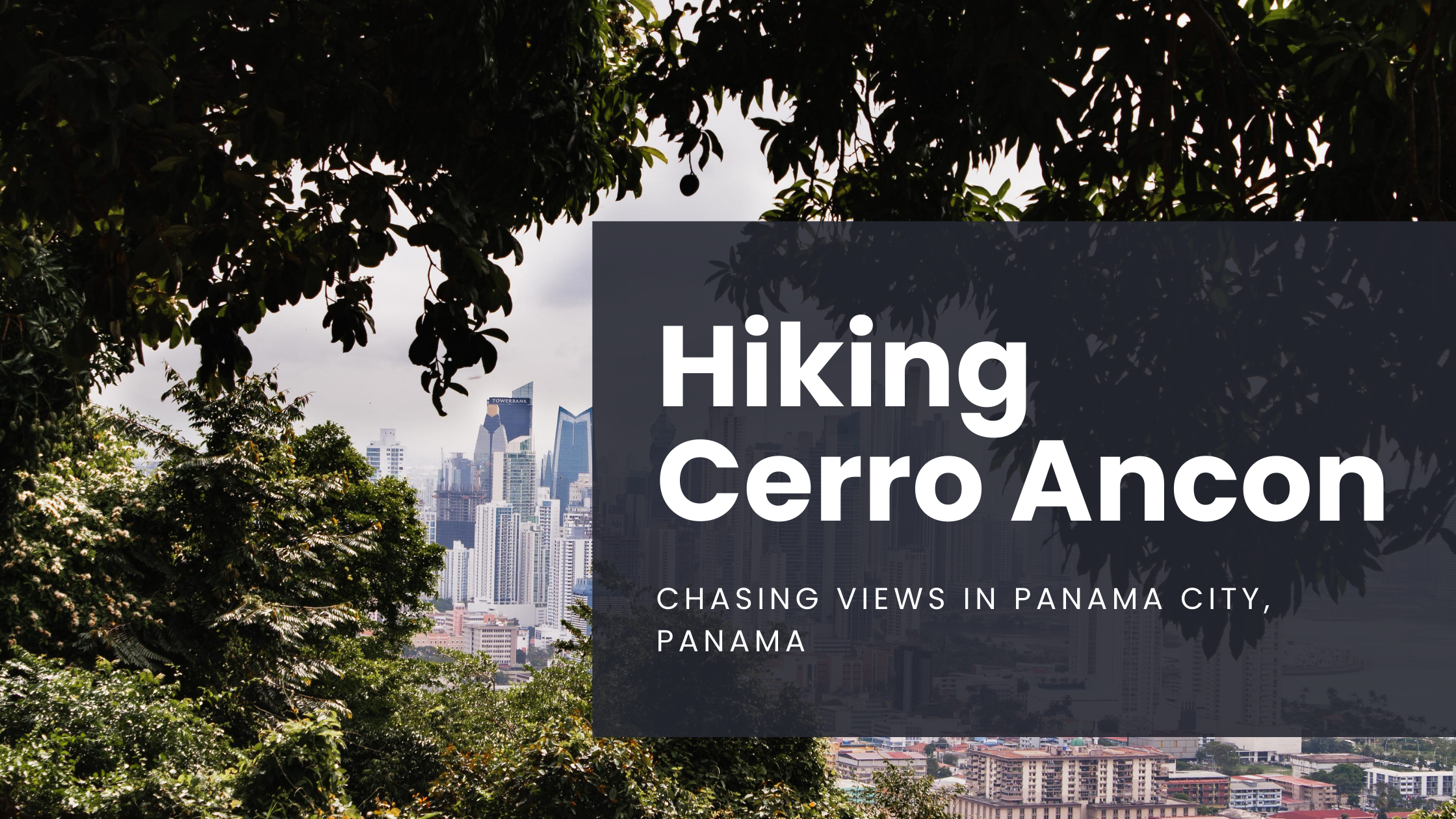
There’s a lot of value in learning about a new place by looking at it from a different perspective, so the very first thing I did the morning after arriving in Panama City was catch an Uber and climb to the top of Cerro Ancon.
Standing atop this popular hill was the perfect place to get a better understanding of all that goes into making Panama City what it is today. It felt as though I was watching a city pump blood through its veins. What ran through the streets below is what gives this place life. What defines it. What keeps it functioning at such a high level.
Here’s what you can expect to find as you start the climb.
HOW TO GET TO CERRO ANCON
Cerro Ancon is about a 10-minute drive from Casco Viejo. It’s easy to hail a taxi or hop in an Uber ($2.50, depending on the starting point).
Mi Pueblito is a recognizable drop-off point for the trailhead. A small conglomerate of replica buildings from the Colonial era, it offers visitors the chance to explore exhibits throughout Panama’s history.
From there it’s a short walk up the road to the set of stairs on the right that will lead to the starting point.
Looking for more great Panama ideas? Check out these essential posts:
HIKING CERRO ANCON
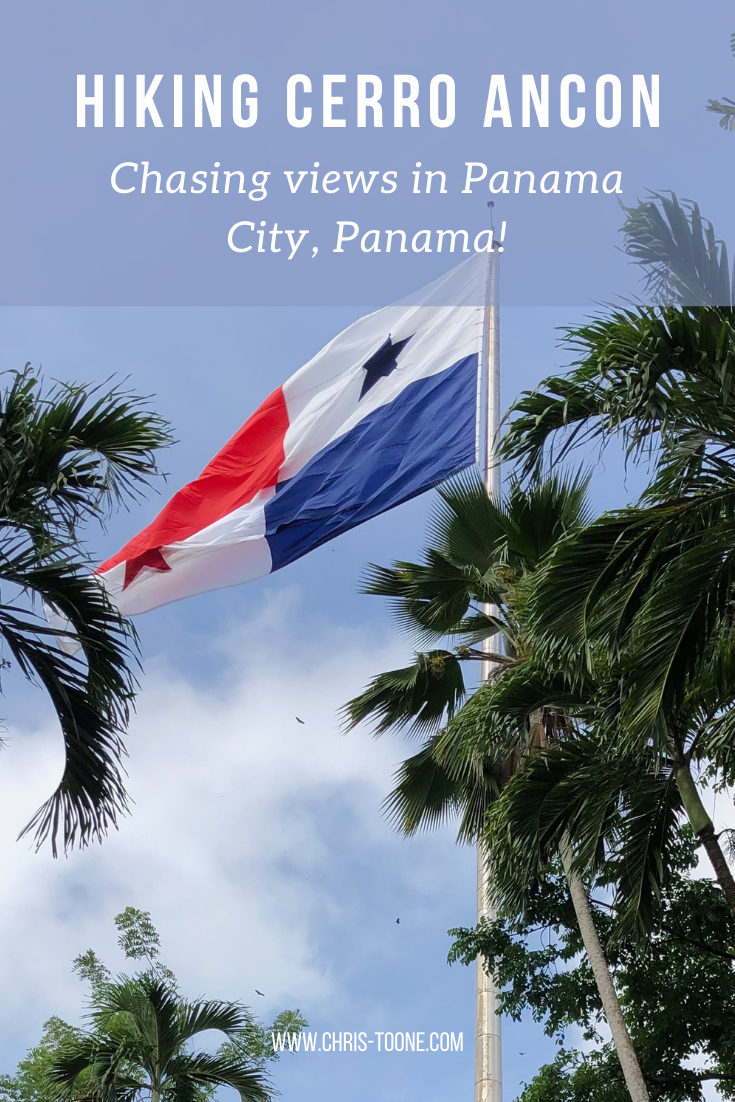
The hike itself is also known as Ancon Hill and is a 654-foot high climb that overlooks all of Panama City. It was once used as an administration location for the Panama Canal and was even under U.S. control at one point, but was returned to Panamanian authorities in 1977.
Fun fact: Once the land was handed over, one of the first things the Panamanians did was fly the large flag so that it cast its glory over the entire city!
The hike takes around 30 minutes and is free for anyone to enjoy. Although there is a relatively steep incline, it’s gradual which makes this walk suitable for everyone. The hardest part was braving the humidity!
Don't be alarmed if you have to walk around a fence and past a guard hut... that's normal! You don’t need to stop and talk to anyone that may be in the hut, you can simply keep going. The gate was open when I was there, but I’ve read other accounts where it has been closed. It’s legal to walk through it and carry on your way.

Starting point for hiking Cerro Ancon
From there, start the trek into the lush vegetation, a stark difference from the slabs of concrete and high-rise buildings downtown. Cerro Ancon itself is a 106 acre jungle that is surrounded by a city of 1.2 million people. As you continue winding up the paved path, hanging vines cascade down from the trees and with views of the hustle and bustle of the city below every so often.
This goes without saying, but don’t forget to bring water, even if it’s early in the morning. The humidity and incline are no joke!

En route to the top of Cerro Ancon
CERRO ANCON VIEWPOINTS: WHAT TO EXPECT AT THE TOP
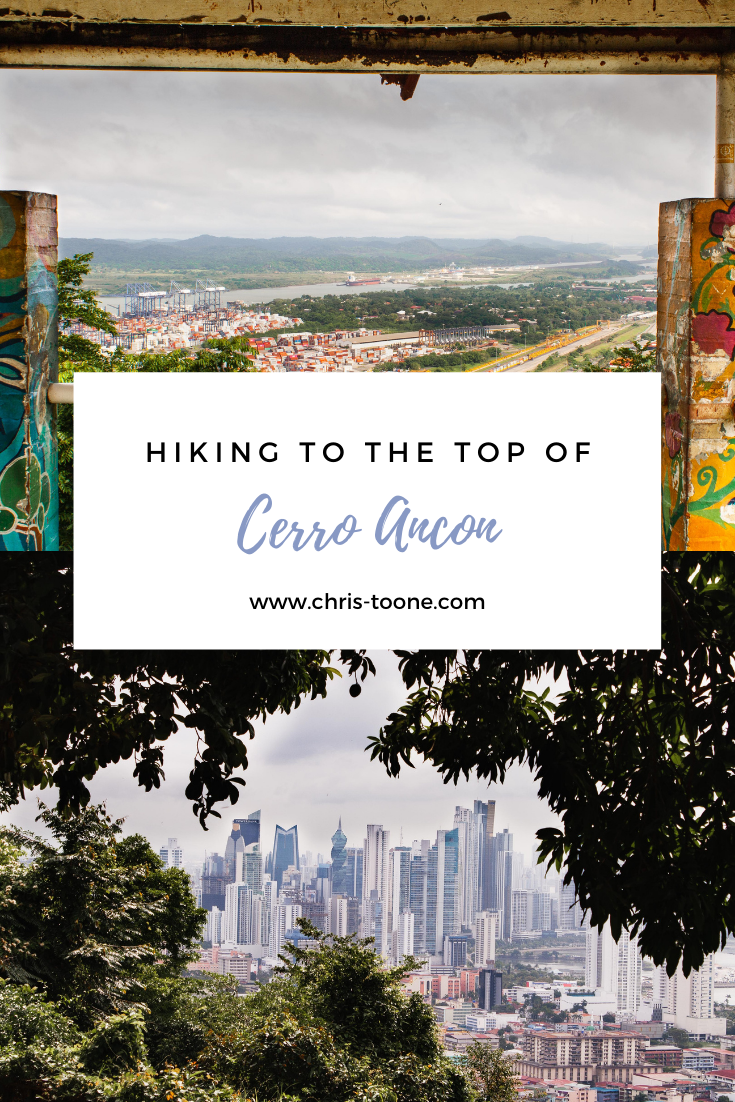
Upon reaching the the top, visitors will encounter a set of stairs on the left side of the road that leads to the first two view points. There are two viewpoints worth checking out here. The first looks down above Casco Viejo (the path to the left) while the second shares the expanse of the Panama Canal, Miraflores Locks, and the Bridge of the Americas (to the right).

The Bridge of the Americas as seen from the top of Cerro Ancon

Looking out across the Panama Canal and Miraflores Locks from the top of Cerro Ancon
Once finished soaking up the scenery, keep heading towards the large flag of Panama. The hike is complete once you reach the locked gate. Have a seat on the park benches and enjoy the breathtaking views of Panama City and the Pacific Ocean.
In the shopping mood? More times than not there will be someone selling souvenirs. You’ve got to admire their dedication if they’re willing to walk all of their goods up there!
Pro Tip: Bathrooms conveniently located at the first two viewpoints.

Downtown Panama City as seen from the top of Cerro Ancon
Cerro Ancon was the perfect way to start the trip and is fun for all ages! Although visiting the Miraflores Locks was very educational, being able to watch the whole canal’s operation from above was something special. I’d encourage you to check it out for yourself!
Have you hiked Cerro Ancon before? Did I leave something out? Let me know in the comments below!
Stay safe & happy travels!
Pin this post for later!

Top 5 things to do in Boquete, Panama: A must-do guide to the cloud forest valley!
From ominous cloud forests to the world’s best coffee bean, the Panamanian town of Boquete has something to offer for everyone. Here are 5 of the top things to do in Boquete, Panama!
*Please note: all information below, including prices, is reflective of the time of writing (2019). Feel free to reach out with questions and I’ll happily help however I can.
I won't typically play the favorites game… “What’s your favorite country?” “What was the best food you ate?” “Which part of your trip did you enjoy the most?” Nah, that’s not for me. Each place, each food, each person I talk with has a unique allure that adds to the experience.
With that being said, let me go ahead and step down from my soap box: I loved Boquete, Panama. The valley, the cloud forests, the coffee, the people, the weather… it truly had it all.
It could have been that I was over the humidity in Panama City, or maybe I was grateful to have made it alive after driving through flash thunderstorms on the PanAm Highway. Either way, I loved every second of the 3 days we spent here!
Disclaimer: Boquete is a well known location within the ex-pat community and is considered to be a top place to retire. Although not a problem, Boquete isn’t a place to visit under the notion of being “off the beaten path.”
WHERE TO STAY
From hostel to bed and breakfast or even farm-stays, Boquete offers a wide variety of accommodation options. Personally, I’d recommend the Villa Cascada Boquete. It’s simple, has everything you need, and most importantly is in the perfect location to base out of during your stay. Alyssa was a phenomenal host and we would stay there again in a heartbeat. Our favorite part was feeding the koi fish every morning on the patio!

Villa Cascada Boquete
TOP 5 THINGS TO DO:
1. GO FOR A HIKE
Hiking is a big reason why people visit the Chiriqui Provence in Panama. Although we were limited on time, we still managed to squeeze in three solid trails, each with their own unique experience.
The Pipeline Trail costs $5/pp and signing in and out at the trail head with whom we affectionately call the “keeper of the book” is mandatory. This helps to ensure everyone's safety.
The path cuts straight through the jungle, culminates at a cascading waterfall and is easy to navigate for any age. It’s also a well known trail for spotting Quetzales, the famous elusive bird in Panama.
La Piedra de Lino was a different story. Climbing 434 meters in just under a mile, this is far more strenuous, albeit rewarding, hike that offers expansive views of the valley below. Pro Tip: Go in the evening and enjoy the sunset from the peak.
Our third and final hike was one that we researched ourselves. After we found the GPS coordinates and satellite images, we decided to give it a go and ended up at Cascada Choclon.
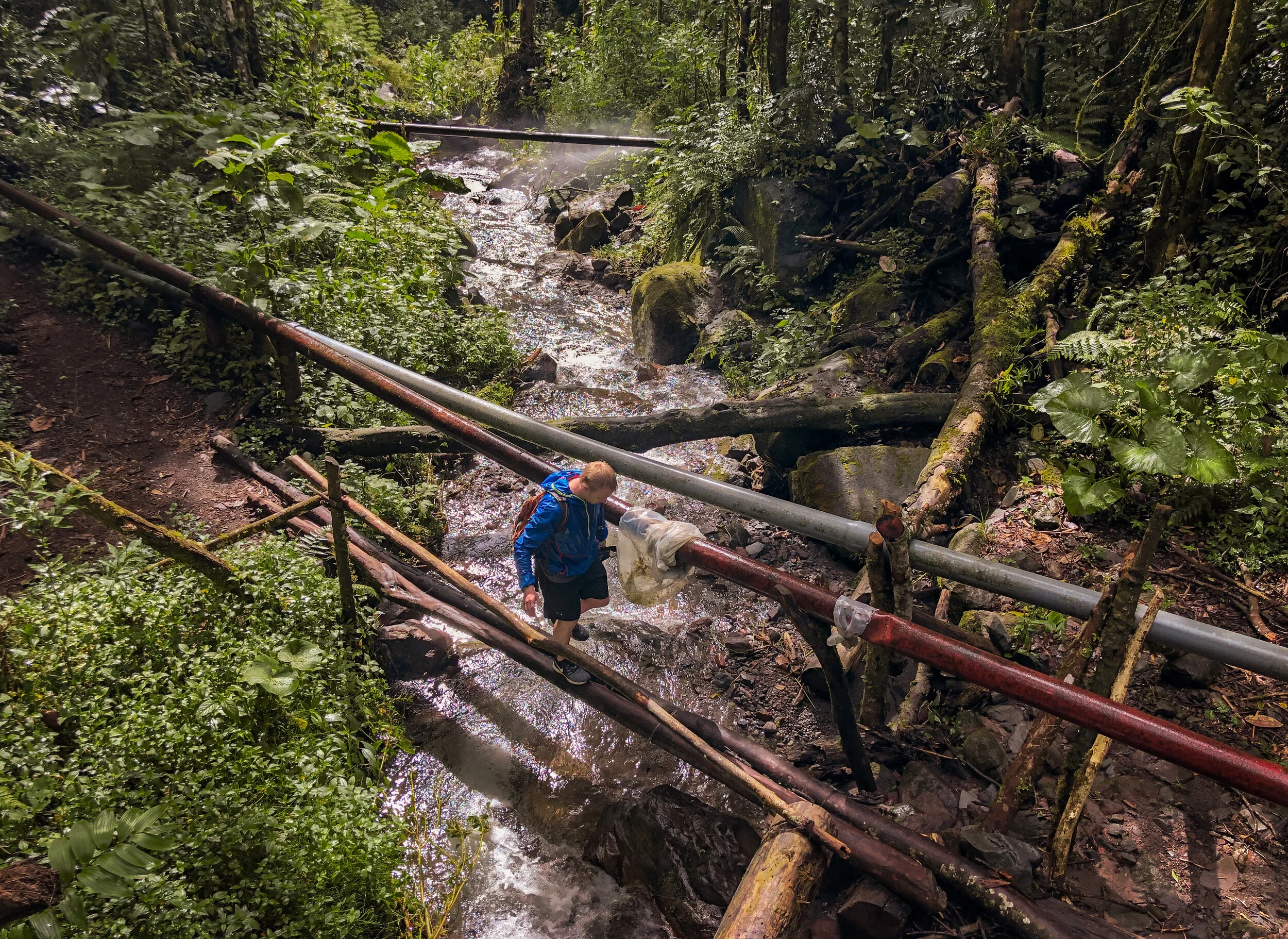
Pipeline Trail
2. BECOME A COFFEE CONNOISSEUR
I’ve spent a good amount of time sipping on cappuccinos and downing espressos in Europe, so I felt as though I understood how a “good coffee” should taste. Boy was I wrong.
Boquete is home to Geisha coffee, widely known as the best coffee bean in the world. With a wild-flower aroma, the beans themselves can go for $600/lb. and a just a cup of it in Dubai can cost you a whopping $64! Mind. Blown.
Is it actually that amazing? Head over to La Viuda del Cafe and sip on a cup of this delectable brew for only $4. While there, pick up a jar of their coffee infused chocolate. You won’t be disappointed, I promise.
Take your bean knowledge one step further and sign up for a coffee plantation tour. There are plenty around the area, all varying in length, price, and time of day. If you’re on a time crunch then sign up for Cafe Ruiz’s Espresso Tour which costs $9 per person and runs 45 minutes. It’s the most bang-for-your-buck option we could find.

Geisha Coffee at La Viuda del Cafe
3. EAT AT OLGA’S
Don’t be surprised when you sit down to eat an old women wraps her arms around you and kisses you on the forehead. That’s Olga. She’s the best and you will feel right at home in her café. We actually adjusted our plans so that we could eat here on back-to-back mornings because we enjoyed the ambiance and food so much. I’d highly recommend the huevos rancheros! Pro Tip: The only menu available is hanging outside the entrance, so read carefully and choose wisely before grabbing a table.
If you’re not into Olga’s, Sabrasón is a budget friendly and authentic Panamanian cafeteria-style eatery. Two full plates for dinner cost about $8 and left our stomaches filled to the brim.
La Alemana is farther out of town, but the German-style café is worth the effort. Who wouldn’t want to enjoy a delicious apfelstreudel while gazing off into the distant jungle?
Regardless of your taste-buds or budget, there are plenty of places to chow down in Boquete. But seriously… go to Olga’s.

Huevos Rancheros at Olga’s
4. VISIT THE TUESDAY MARKET
If you’re looking to avoid the ex-pat scene, then this is where you might become a little annoyed. Yes, it’s filled with older American gentlemen selling foreign currency or watercolor paintings and you might hear the occasional “Hey Frank, how are the grandkids?” but it’s still worthwhile.
It’s a classic farmer’s market feel, just relocated to the middle of Panama. With a good selection of items to browse, we ended up doing all of our shopping here and it was much cheaper than back in Panama City. The market is open from 9am - 12pm every Tuesday. Pro Tip: Head to Olga’s for an early breakfast and then meander over to the market! It’s a perfect way to work off the meal.
5. GELATO FROM GELATERIA LA GHIOTTA
Ask around and any local will tell you that Gelateria La Ghiotta is the place in Boquete for gelato. Conveniently located on the main strip, it was too convenient to not stop and try a new flavor each time we passed by. A small cup with two scoops costs $1.50… talk about a steal!
Looking to upgrade your adventure gear?
Here’s what came in handy while hiking in Panama!
BONUS: FARO PANAMA
You won’t miss Faro Panama if you’re driving into Boquete from David along Highway 41, mostly because it’s a giant red and white lighthouse situated in the middle of the Panamanian flatlands. Yes, you read that right; a lighthouse.
It’s the equivalent of a family fun center, offering visitors access to restaurants, dessert bars, playgrounds and, most importantly, spectacular 360-degree views of Volcan Baru and the surrounding area.
The facility had been fully operational for only 5 days during our visit, so I’d expect the popularity to continue to grow. It’s a prime spot to capture the perfect panoramic photograph!

Volcan Baru as seen from the top of Faro Panama
Although the drive from Panama City was a long 7 hours, it was a great as we passed through small towns, battled thunderstorms, and found roadside empanadas along the way. However you plan on getting to Boquete, just make sure you go!
As always, it’s my goal to provide you with everything you need to have an adventure of your own. If you’re looking for more information, don’t hesitate to reach out in the comments below!
Stay Safe & Happy Travels.
Enjoy what you read? Pin this post for later!


After three years living in Ghana, these are ten of the most unforgettable travel experiences across Africa that changed how I see the world…