

7 Apps That Will Change The Way You Travel
From offline maps to easy translations and guided walks, check out these 7 apps that I guarantee will elevate your travel game!
Please note: This post was updated as of December 2023
It’s not as if smartphones invented travel, however, they have drastically changed the way in which we go about wandering the world. From booking itineraries to audio guides and even foreign communication, it’s entirely possible that everything you need - and even what you don’t need - can be done from the palm of your hand.
Although I’m not in any way, shape, or form suggesting that travelers should rely solely on their mobile device, there are a few apps floating around that help to enhance the travel experience, rather than control it. Here’s some 5-star advice from your favorite 3-star travel blogger!
Skip to app:
* Note to readers: This is NOT a sponsored post. All opinions are my own.
1. ALLTRAILS
In short, AllTrails utilizes a database of over 100,000 hikes to provide users with everything needed in order to get out and hit the trails.
I constantly find myself on the app while at home, scrolling through hikes like it’s Instagram (but much more productive, of course), however, it has also proved invaluable while traveling abroad and I am a huge fan of what it has to offer.
Most recently, AllTrails became my best friend while exploring Panama. I’m all for “getting lost” in the jungle, but I certainly felt a lot more comfortable being able to track my little blue dot along with the interactive trail maps.
Sign up is free so if you plan to explore the great outdoors during your travels, this is a must-have resource!
Keep in mind that the database is built from user interaction, so although a rarity, information can sometimes be slightly inaccurate or minimal.
Be sure to pay it forward and review your own adventures so others can have a great experience as well!
Apple users get it here.
Android users get it here.


AllTrails features including a trail overview, explore map, and interactive tracking
2. DUOLINGO
Although Duolingo touts itself as “the world’s best way to learn a language,” some people swear by it while others despise it, as is the case with most things I suppose.
When beginning a new language, you’ll find that the lessons are built for long term language comprehension through a guided curriculum, however, I’ve found it to have short term value as well.
The app includes 35 languages for English speakers, including the likes of Klingon and High Valyrian if you’re really looking to impress a date. Track me down on a transatlantic flight and you can surely bet I’ll be studying up on whatever language I’ll be greeted with when the wheels touch down.
At the very least, the lessons have significantly helped me to identify useful words, recognize key conversational phrases, and more.
Learn the basics with Duolingo and then put the rest of the puzzle together during your travels!
Apple users get it here.
Android users get it here.
3. GOOGLE TRANSLATE
Do you get frustrated when you can’t read a menu? What about when you’re not sure if a building is a restaurant or a day spa?
It’s ok. We’ve all been there. That’s where Google Translate comes in handy!
The app has gone through some significant transformations in the past few years and now allows users to translate in a few different ways: text, instant camera (just point your camera and read), photos (the app will scan a photo and translate accordingly), or even conversations on the fly.
No more trying to type out what it says on the bathroom door when you’ve really got to go; just point your camera and get down to business!
Don’t get me wrong, playing charades and trying to communicate in a foreign culture is one of my favorite things I get to do while traveling, but sometimes you just need help and that’s where Google Translate quickly becomes a saving grace whether you’re lost or trying to console a fellow hangry traveler.
Apple users get it here.
Android users get it here.
4. MAPS.ME
Shortly after booking a rental car in South Korea, I realized that I had no idea how to get from point A to point B. “Ah, no problem,” I thought, “that’s what Google Maps is for.” As it turns out, Google Maps doesn’t work in South Korea, so what’s a guy supposed to do?
Maps.me turned out to be an incredible alternative, providing comprehensive offline maps and driving directions as well as hiking trails, bike paths, and even metro maps.
The app also includes an offline search feature, making it easy to find transportation hubs, ATMs, hotels, or anything else you may need!
As useful as that all is, the most important feature may very well be the inclusion of speed camera locations. After all, nothing ruins a vacation quite like a speeding ticket!
In recent years the Maps.me has expanded its services, now offering hotel searches via integration with booking.com and even the ability to purchase tours with local guides.
This is definitely the way to go when you need maps for traveling! Just be aware that you need to download each individual country onto your phone, so if you’re heading to Germany and planning a road trip to Austria, be sure to download both ahead of time before you find yourself lost in the hills, although I hear they’re alive with the sound of music!
Apple users get it here
Android users get it here


Screenshots from Maps.me
5. LONLEY PLANET GUIDES
Lonely Planet isn’t exactly an “off the beaten path,” however, the Guides app offers some great functions that are worth exploring.
The collection of over 8,000 cities around the world includes offline maps as well as curated advice from local experts. It also integrates seamlessly with Lonely Planet’s TripApp which is a way for users to share photos and stories from their adventures.
One of the most useful features is the ability to get individualized advice on what to explore based on your budget. Simply plug in your restrictions and voilà! The app will take care of the rest.
The one downside is that unlimited access comes at a cost: $4.99 for one month, $21.99 for 6 months, or $39.99 for 1 year.
Is it worth the price? Only you can decide, but it’s certainly something to consider.
As of February 2022 Guides by Lonely Planet is no longer updated. The app can still be used, but development has ceased.
6. PACKPOINT
Are you the type of person that leaves packing to the last second? Welcome to the club.
My normal strategy is to shove a random collection of clothes into a duffle bag the night before a flight and hope for the best, all the while telling myself it “adds to the adventure.”
PackPoint is changing the game, mainly because it takes all of the thinking out of the packing process.
The app works to create a custom list based on a multitude of factors including gender, destination, travel dates, duration, and even type of travel (beach, adventure, etc). It goes as far as to check the forecast ahead of time to accurately determine what needs to fill your suitcase.
From there, users can modify number of items and finalize the list on their own… it’s as simple as that!
Basic access is free, while premium costs $2.99. Take the stress out of packing and give it a whirl… or don’t. I completely understand the thrill of playing “what’s in my bag” when arriving in a new country!
Apple users get it here
Android users get it here
7. TRIPLINGO
TripLingo is built by travelers, for travelers.
While Duolingo aims to help users become fluent in foreign languages, this app works to make picking up the local dialect as easy as 1-2-3.
There are hundreds of destinations to choose from and once you’ve selected a target country, you’ll be able to download the associated audio files. Phrase categories include conversation basics, slang, dining, and more.
The app also offers direct translations in a few different ways: voice and text or, if you find yourself in a jam, pay a small fee to call a live translator (something that would be very helpful in the event of an emergency).
Other features include cultural etiquette guides (travel tips, dining, body language, etc.) as well as important safety information, including embassy contact info and medical terminology amongst other things.
If there was ever an app that borders on being the Swiss army knife of travel, it’s TripLingo!


User interface of TripLingo
BONUS: YELP
Yes, I get it. Everyone knows what Yelp is. So then why is it so often overlooked while traveling abroad?
I’ll spare you the synopsis, but let this serve as a reminder to use it the next time you find yourself traversing the globe. From hidden gems to the top local restaurants, it’s a gold mine of information for indecisive people such as myself!
Apple users get it here
Android users get it here
Do you have a different app that you swear by while traveling? I’d love to hear about it in the comments below!
As always, thanks for following along. Stay safe & happy travels!
Find this post helpful? Pin it for later!


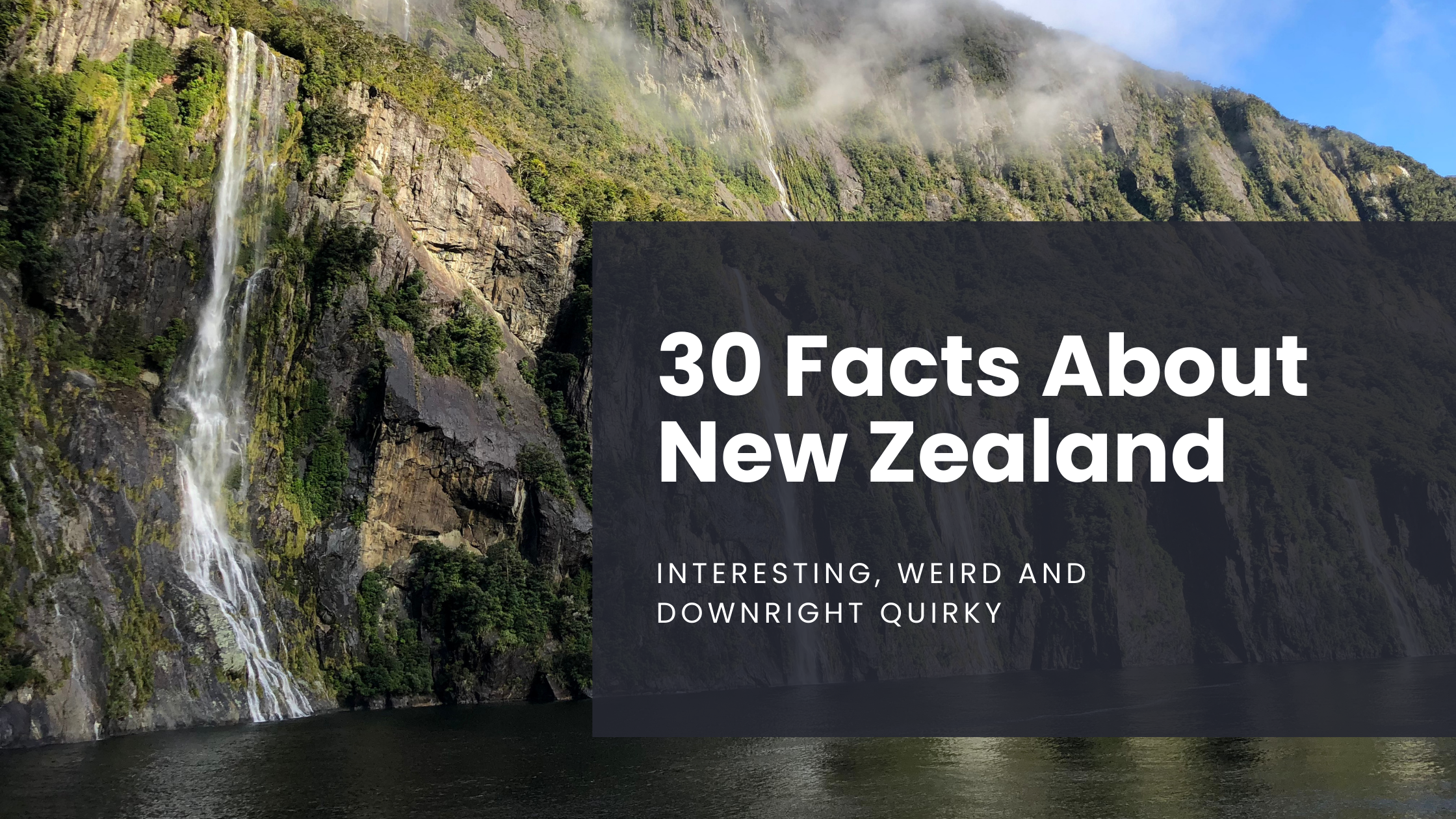
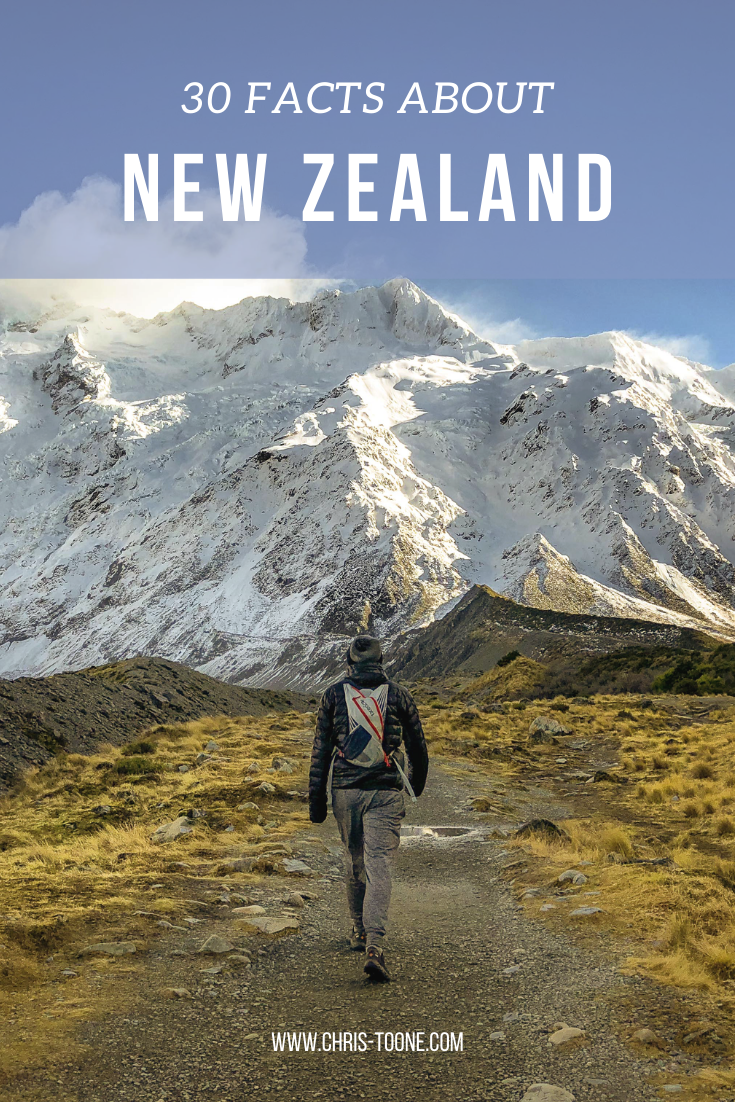
30 Facts About New Zealand: Interesting, weird, and downright quirky
Planning a trip to New Zealand? Check out this list of 30 interesting, weird, and just straight up quirky facts about the island nation. From penguins, to wizards, and even the elvish language, New Zealand has more to offer than you might think - and it already had a lot going for it! Time to book those tickets you’ve been dreaming about.
I’ve said it before, I’ll say it again: New Zealand should be at the top of every person’s bucket list. From sprawling landscapes and abundant marine life to bungee jumps and sky diving, there's something for everyone. To help inspire your next great adventure, I’ve compiled a list of 30 of the most interesting, quirky, and weird about New Zealand.
Buckle up… here we go!
1. New Zealand is home of the world’s first commercial bungee jump
Searching for an adventure? Make sure to stop by Queenstown — commonly known as the adrenaline capital of the world! Just outside the city sits AJ Hackett Bungy, named after the man who established the attraction in 1988 after being inspired by the natives of nearby Vanuatu who would take the plunge using tree vines. Are you brave enough to take a leap of faith off the Kawarau Bridge and plummet 43 meters towards the river below?
2. Plenty of space and not a lot of people
Although New Zealand is similar in size to the United Kingdom, only 4 million people call this island nation home. That’s slightly less than the estimated 66 million people inhabiting the UK…
3. New Zealand made women’s rights history in 1893
The nation became the first modern country in the world to give women the right to vote! Well done, New Zealanders!
4. Conquering Everest
Sir Edmund Hillary, the first person ever to scale Mount Everest, was from New Zealand.
Planning a trip to New Zealand? Don’t miss these essential posts:
5. A step ahead of the rest of the world
Well, physically speaking. New Zealand is (debatably) the first country on Earth to welcome the sun each morning. In 2011 Samoa motioned to move its position on the International Dateline to align themselves better with the workweek in Australia and New Zealand. Technically speaking, they’re the first country to welcome the new day, but due to the curvature of the planet many people are adamant that the East Cape on New Zealand’s north island is the first place to actually see the sunrise. Good enough for me!
Rise and shine, folks!

Sunrise from Round Hill Ski Fields
6. Into golf? Add New Zealand to your travel list!
Although New Zealand’s national sport is rugby, the country boasts more golf courses per capita than another place in the world.
7. No snakes
No more needs to be said, here. There are literally no snakes in New Zealand, but be sure to be on the lookout for the Giant Weta bug. This insect weighs more than a sparrow! Don’t worry, it won’t harm you.
8. The best of the mountains AND the sea
In New Zealand, you don’t have to be either a “mountain person” or a “beach person” — you can be both! You’ll never be more than 128km away from the coast, no matter where you might end up.

Kaikoura, New Zealand
9. Home of the Kakapo
This is the only flightless parrot in the world!
10. “Long white cloud”
The Maori word for New Zealand is Aotearoa, meaning long white cloud. If you look on a map, it checks out… the country is pretty long — nearly 1,000 miles to be exact.
11. Receive your weather reports in Elvish
New Zealand is known around the world as the filming location of Lord of the Rings movies and the people have truly embraced it. In 2012, the country even broadcasted a weather report in Elvish! View it here.
12. The fraudulent fruit
New Zealanders are often referred to as “Kiwis,” named after the national bird… NOT the fruit. As it turns out, kiwi fruit originates from China and was first known as “Chinese Gooseberries” before later being renamed after New Zealand’s national bird. I guess if you squint, turn off the lights, and close one eye, then the fruit (sort of) looks like the body of the bird?
13. Wellington’s claim to fame
Sitting at 41.28 degrees south and 174.7 degrees east, Wellington is the southernmost capital city in the entire world.
14. Bats are king
No, bats don’t rule over the country… there’s actually a very efficient Government that does that. However, bats are the only land mammals native to New Zealand. Every other species was introduced to the ecosystem.
15. Just how far south can you go?
New Zealand ranks 3rd in proximity to Antarctica, behind Chile and Argentina. Take a quick trip to Slope Point on the southern island and you’ll find yourself standing closer to the final frontier than to the equator.

Slope Point - South Island, New Zealand
16. Home to the world’s longest name of a place… 85 characters, to be exact
Are you ready for it? Taumatawhakatangihangakoauauotamateaturipukakapikimaungahoronukupokaiwhenuakitanatahu. Roughly translated as “the place where Tamatea, the man with the big knees, who slid, climbed, and swallowed the mountains, known as the land-eater, played his nose flute to his loved ones.”
17. Jedi religion is real
Well, sort of. According to a 2001 census, over 50,000 people listed “Jedi” as their religion. It took a bit of a hit during the following census in 2006 when only 20,000 people claimed it.
18. New Zealand is actually Australia - wait, what?
No, not really. However the Australian Constitution does list New Zealand as a state of Australia, giving Kiwis the option to join the confederation if they so choose.
19. The entire country is a hiker’s paradise
Nearly 33% of New Zealand’s stunning landscape is protected as part of the National Parks system. There are endless wonders to explore! Freedom camping comes with strict regulations though, so make sure you know before you go.
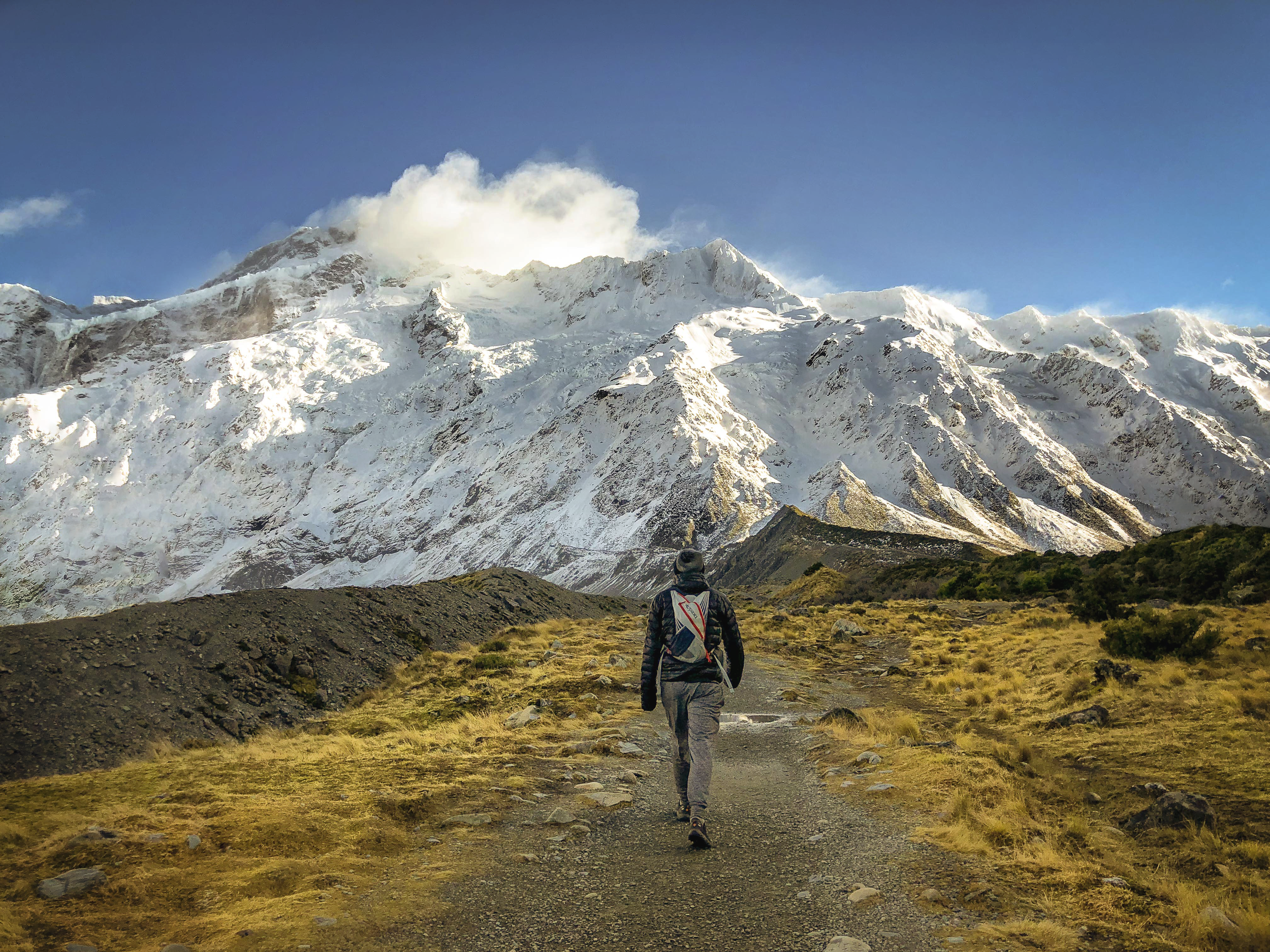
Hiking the Hooker Valley Trail in Aoraki National Park
20. Kiwis are kind and caring
The people, not the birds. New Zealand is tied with Denmark as the least corrupt country in the world.
21. Three official languages
It’s not uncommon for countries to boast more than one official language, but the unique thing about New Zealand is that they list English, Maori, and New Zealand Sign Language. Pretty cool, right?
22. New Zealand isn’t just a place for Jedis, it’s home to Wizards, too!
In 1990 the New Zealand Government actually appointed a “National Wizard” whose duties included casting out evil spirits. I’m not kidding.
23. Enjoy the holidays without toxic consumerism
The New Zealand Government has banned all television commercials during Good Friday, Easter Sunday, ANZAC Day (national day of remembrance in New Zealand and Australia), and Christmas Day.
24. The country breeds equality
New Zealand is the only country in the world to have all of the Government’s highest positions occupied by women at the same time. This occurred in 2006 when the Queen, Governor General, Prime Minister, Speaker of the House of Representatives, and Chief of Justice were all female.
25. New Zealand not only welcomes all walks of life, but all waddles of penguins, too
The island nation boasts more species of penguins than anywhere else in the world! Talk about being inclusive.
26. Ah, New Zealand, home to massive amounts of… sheep?
Although the number fluctuates, the generally accepted ratio of sheep to people is 9:1.
27. E lhowā Atua, but also please defend our dirt
New Zealand is one of the few countries in the world that sings two national anthems: E lhowā Atua in the Maori language, followed by God Defend New Zealand (English).
28. New Zealand - the land of the… Scottish
New Zealand is home to more Scottish pipe bands than… you guessed it… Scotland! Don’t forget to pack your kilt.

Mt. Cook National Park - South Island, New Zealand
29. Peace reigns supreme
In addition to being listed as the least corrupt country in the world, New Zealand topped the Global Peace Index in 2009.
30. Ever wonder where Pizza Hut acquires such massive amounts of cheese?
No, it’s not Wisconsin. It’s not even Italy. The restaurant chain purchases their mozzarella cheese from Taranaki, New Zealand! So does that mean Pizza Hut counts as “farm to table” dining there? Hmm…
Where else are you going to be able to meet Jedis that get their weather reports in Elvish? New Zealand is truly a wonder of the world and is home to some of the most generous people I’ve ever had the pleasure of meeting.
Sure, it takes a while to get there and can often be daunting, but I promise you it’s worth it. It’s time to book that trip you’ve been dreaming about!
Thanks for following along & safe travels.
This post is featured by Twinkl in their New Zealand Resources blog.
Enjoy what you read? Be sure to pin and share with others!



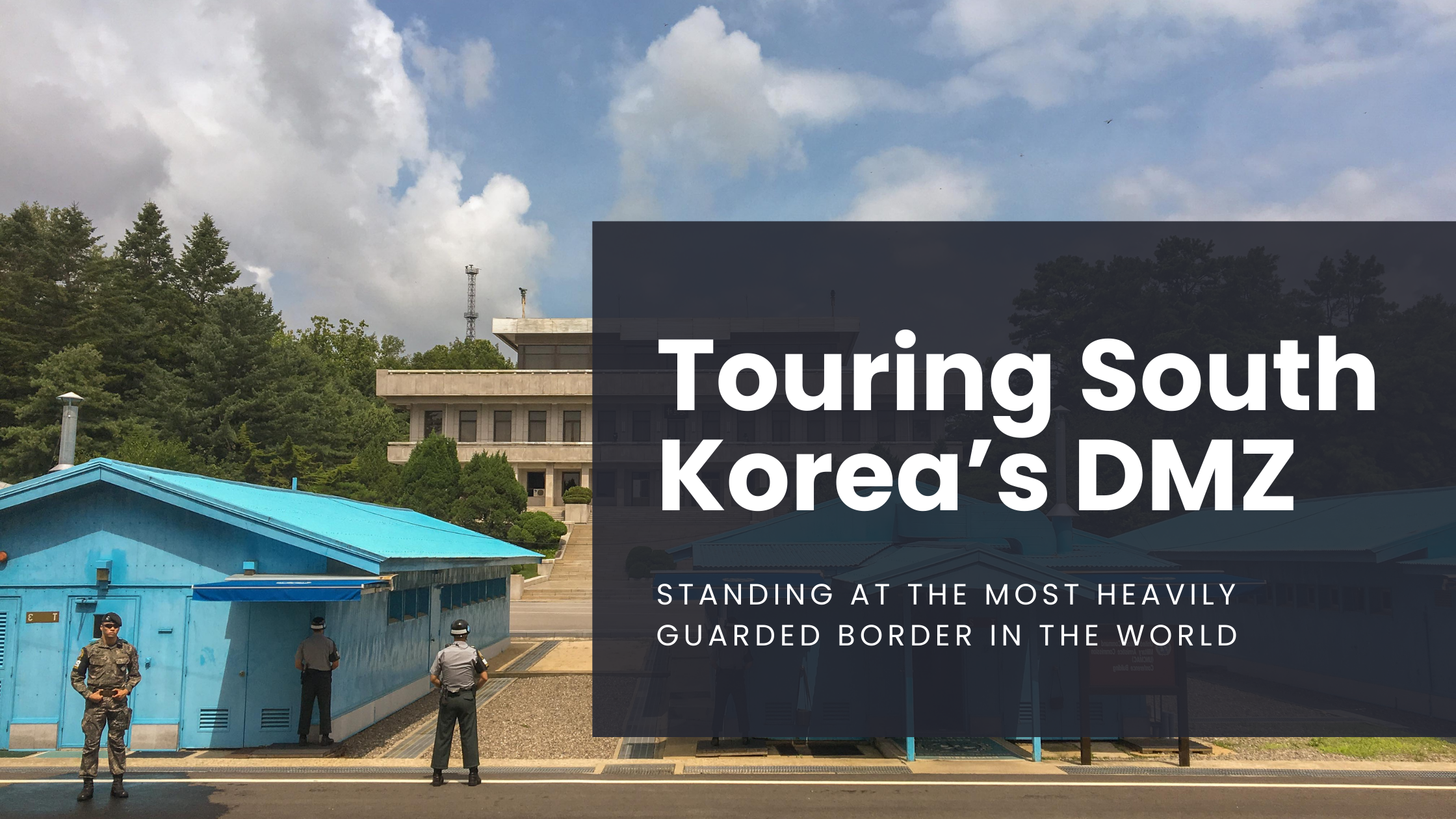
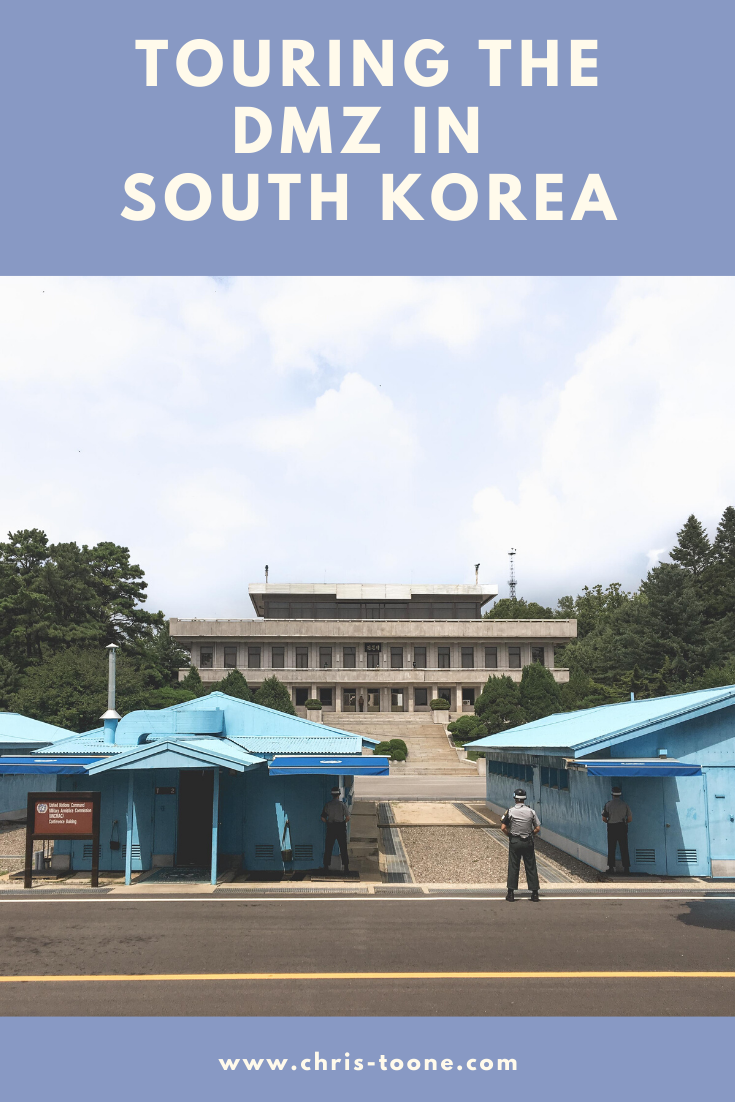
Touring The DMZ in South Korea: What it's like to stand at the most heavily guarded border in the world
A mere thirty miles outside of Seoul sits one of the most heavily guarded borders in the world. Spanning the entire 160-miles across the peninsula, the demilitarized zone creates a 2.5 mile wide proverbial “no-man’s land” that does more than simply divide the two countries…
A mere thirty miles outside of Seoul sits one of the most heavily guarded borders in the world. Spanning the entire 160-miles across the Korean peninsula, the demilitarized zone creates a 2.5-mile wide proverbial no man's land.
The following piece documents what it felt like to stand on the border of North and South Korea, also known as the scariest place on Earth,coined by Bill Clinton after his visit in 1993.
Heather and I would normally never hop on a tour. Sitting on a bus and listening to a voice through a speaker is not in our travel DNA at this point in our lives. We’d much rather wander the streets of a new place, immersing ourselves in its surroundings.
In fact, that’s how most of our memorable adventures have started. It’s a rush of raw emotions when we turn a corner and discover something beautiful when we least expect it.
We had booked flights to South Korea with no set plans, knowing little about the country itself other than it was the cheapest ticket to Asia then.
Amidst the hours of reading, there was one tour that kept surfacing: visiting the border with North Korea. At first it was a joke. Both of us had come across it, brought it up to the other with a hint of a chuckle, and brushed it aside. It was a “hah, can you imagine if we went there?” moment more than anything else, but each successive time we laughed, the more real it became.
By the second day of researching, we had convinced ourselves to visit the Demilitarized Zone (DMZ), hoping for an opportunity to step over the line of demarcation and into the territory of their neighbors to the north. We booked the tour, gave each other a “what the hell are we doing” smile, and packed our bags.
Before we knew it, we awoke at dawn in Seoul, anxious to see where the day would take us.
With any new adventure comes adrenaline. There’s excitement for what lies ahead, accompanied by a nagging fear of the unknown. That’s normal. Yet as we stood on the street corner in the crisp morning air, something seemed off. I could feel a slight wrench in my gut, not out of concern but curiosity. We had traveled nearly 6,000 miles around the world and were about to visit an active war zone, one that continues to affect the daily lives of millions of people. It was going to be different than anything I had ever experienced before.
We arrived at the meeting point, handed over our passports for verification, and boarded the bus. The seats were far from full and we quickly realized we were the only Americans present.
After a short wait, a middle-aged South Korean woman climbed the steps and explained that she would be our guide today. It was time to go.
The first stop was the War Memorial of Korea. We didn’t have nearly enough time here to visit every exhibit, so we quickly shuffled our way to the “History of the Korean War” wing. It was here that we relived our days as college students, cramming as much knowledge as possible into our heads. As is the history of the world’s largest conflicts, that of the Korean War is quite complex and convoluted. This isn’t the platform to expand on it, but I would encourage you to look far beyond what the media presents to gain a better understanding.

War Memorial of Korea
Alas, it was time to continue the tour. Our driver turned right out of the parking lot, trading the sanctity of the museum for the chaotic streets of Seoul.
We continued driving along highway 77, flanked by the Han River to our left. I began tracking the bus’s movement on my phone’s GPS. Sure enough, we were heading due north, straight toward North Korea.
As I glanced out the window the skyscrapers of Seoul had been replaced by barbed wire fences. This was the first sign that we had reached the DMZ.
We veered to the right and began heading east, continuing to follow the fence line as we went. Guard towers whizzed by our windows every mile until we reached Imjingak Park.

DMZ border along Han River estuary
Constructed in 1972, this park was built on the southern side of the Bridge of Freedom as a sign of hope for unification. It has since expanded on that role, now serving as a popular tourist destination.
As we left the comforts of the air-conditioned bus and surveyed our new surroundings, we were both immediately taken aback by old photographs of Korean families sitting along the barbed wire fence, hanging messages of hope and peace as they prayed. Messages, to this day, still cover the barrier that separates them from their loved ones in the north.

Flags for peace at Imjingak Park
It all felt delicate. Physically it was there: The reinforced fencing, the beautifully placed banners, and more. It was palpable and sturdy.
The environment, however, was fragile. Yet within it grew a mob of tourists, elbowing and shoving for the perfect selfie of the South Korean flag that, although weathered, hung proudly on the fence and symbolized the strength of the people that placed it there.

Imjingak Park, South Korea
Maybe it was out of respect that we felt we had to quietly shuffle along the walking path, observing and learning as we went. After all, we showed up as tourists to a place that has experienced so much grief and heartbreak. To this day, South Koreans still ride the DMZ train from Seoul to sit in the park, stare north through the fence, and patiently wait for the day it comes crumbling down. They continue to tell themselves that somewhere out there exists an alternate universe, one where they can move freely throughout the peninsula and reunite with their families.
We took a break to eat lunch, trying to process what we had just witnessed. After slurping the final drops of broth we made our way up to the third floor where a viewing platform provided our first look at the expanse of no man’s land.
I’m not sure what I was expecting. War ruins? Abandoned homes? I found none of that. Pure is the only I can describe it.

Looking into “no-man’s land”
It has been reported that around 800,000 landmines are buried throughout this 160-mile long sliver of land. In a way, these weapons serve as protectors, allowing nature to grow without intervention from the human race.
Humbled by our visit, we returned to the bus. It was time to head farther north towards the Joint Security Area.
As we sat back down in our seats, the mood shifted. The chatter in the back of the bus was silenced by our guide explaining that we now must display our “United Nations Command” visitors pass at all times.
From that point on, we would be inside an active war zone. The bus began to slowly swerve as we continued on. Left, right, then back to the left, avoiding barriers as we crossed a bridge that spanned the Imjin River below.
A slight feeling of unease came over me as we passed through the military checkpoint, but it was time to visit the Joint Security Area (JSA), also known as the village of Panmunjom. It was here that we hoped to step foot into North Korea.
Our bus rolled to a stop at the entrance to Camp Bonifas, located just 400m south of the border. A mere quarter of a mile is all that separated us from the border. We filed into an auditorium, joining with other tour groups. As the seats filled, our new guides from the U.S. Army began dispersing visitor declarations. These documents stated that the U.S Army, UN Command, and the Republic of Korea could not guarantee the safety of visitors and may not be held accountable in the event of a “hostile enemy act.” Comforting, to say the least.
We signed on the dotted lines, nervously laughing at one another’s slight hesitation, then climbed the stairs onto a new bus and continued driving north.
Finally, we reached the Freedom House. Located on the South Korean side of the Joint Security Area, the structure was built to house the reunification of Korean families. It has yet to see such a day.
We received final instructions from our leader: At no time should we place our hands in our pockets. If we wish to use our phones for pictures, we must hold them the entire time. No waving, pointing or making any motion towards the North Korean side.
We were to remain in a single file line at all times. The Korean People’s Army would be closely monitoring our movements from their guard towers. Any misstep may be recorded and used as propaganda.
Interested in learning more about South Korea? Check out these posts:
With these warnings in mind, we were led into the foyer, up the stairs, and to the back doors. One by one we silently walked onto the platform outside, getting our first glances at North Korea.
Across from where we stood was the north’s version of the Freedom House, built taller than it’s South Korean counterpart as a sign of strength. Motionless in front of the door was a lone soldier from the Korean People’s Republic Army. To the far right was a guard tower, monitoring our every move. Directly in front of us stood three South Korean soldiers, attentive and facing the border.
Separating the two countries were three long, blue buildings that served as conference rooms. Here is where leaders from both sides come together for negotiations. Horizontally bisecting these buildings was a small block of cement; the official demarcation line between North and South Korea.
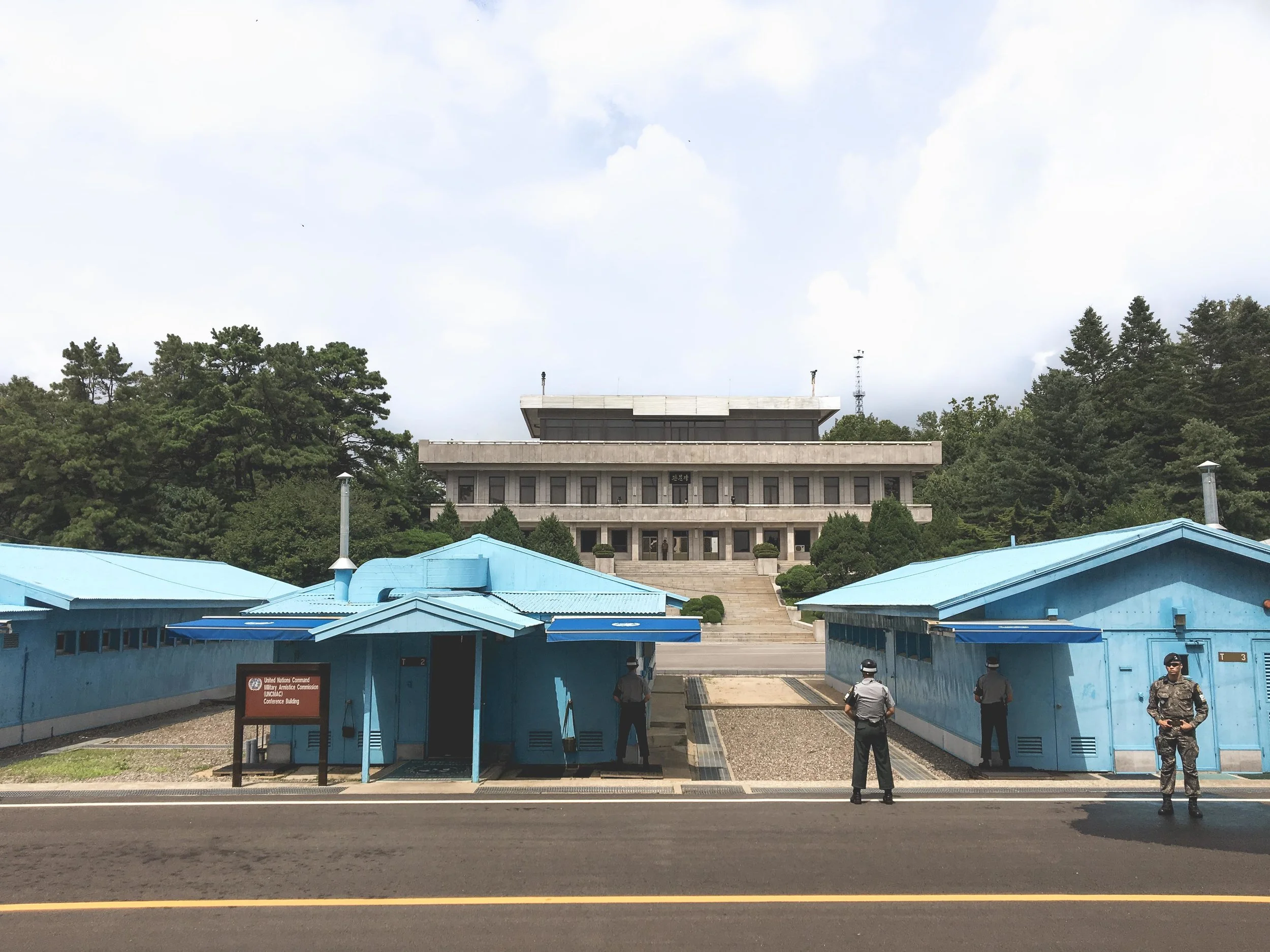
Joint Security Area, South Korea
Part of me couldn’t believe what I was looking at. It wasn’t awe-inspiring or beautiful beyond words by any means. Rather, to visualize where we were on a map of the world simply dumbfounded me. I was being watched by actual North Korean soldiers. I could see one for myself, close enough to yell at across the way.
The person next to me began to move, breaking my thought as we were ushered into the center building; an empty conference room awaited.
Three more South Korean soldiers were standing guard inside, one firmly planted in front of the door directly across from where we entered. That door led outside, straight into North Korea.
I took about ten steps forward, flanking the edge of the large conference table in the middle of the room. As I turned to glance out the window, I realized that I was looking back towards the cement demarcation line. Technically speaking, I had just crossed into North Korea.

Demarcation line between North and South Korea
After twenty minutes we were escorted back out of the southern entrance of the building, returning to the steps of the Freedom House for one final glance at North Korea. It was quite possibly the last one I’ll ever have.
What we didn’t know at the time was that those same buildings would be where Oh Chong Song dashed across the border, making his daring escape from North Korea a mere four months later.
To be honest, I’m still unsure what to make of the whole experience. Yes, we had just stepped foot in an active war zone, but the reality is that it’s as safe as possible. Up to 3,000 people tour the area each day.
Is it for everyone? Certainly not.
Was it one of the most humbling experiences of my life? Absolutely.
As we rode the bus back to Seoul that afternoon, I couldn’t help but admire the strength, resiliency, and patience of the South Korean people. Although the struggle for peace continues, many feel that it has never been closer.
I truly hope that’s the case.
Thank you for reading and as always, stay safe & happy travels.
Sharing is caring… pin this post for later!


How I Caught The Travel Bug: and 3 reasons why I can't let it go
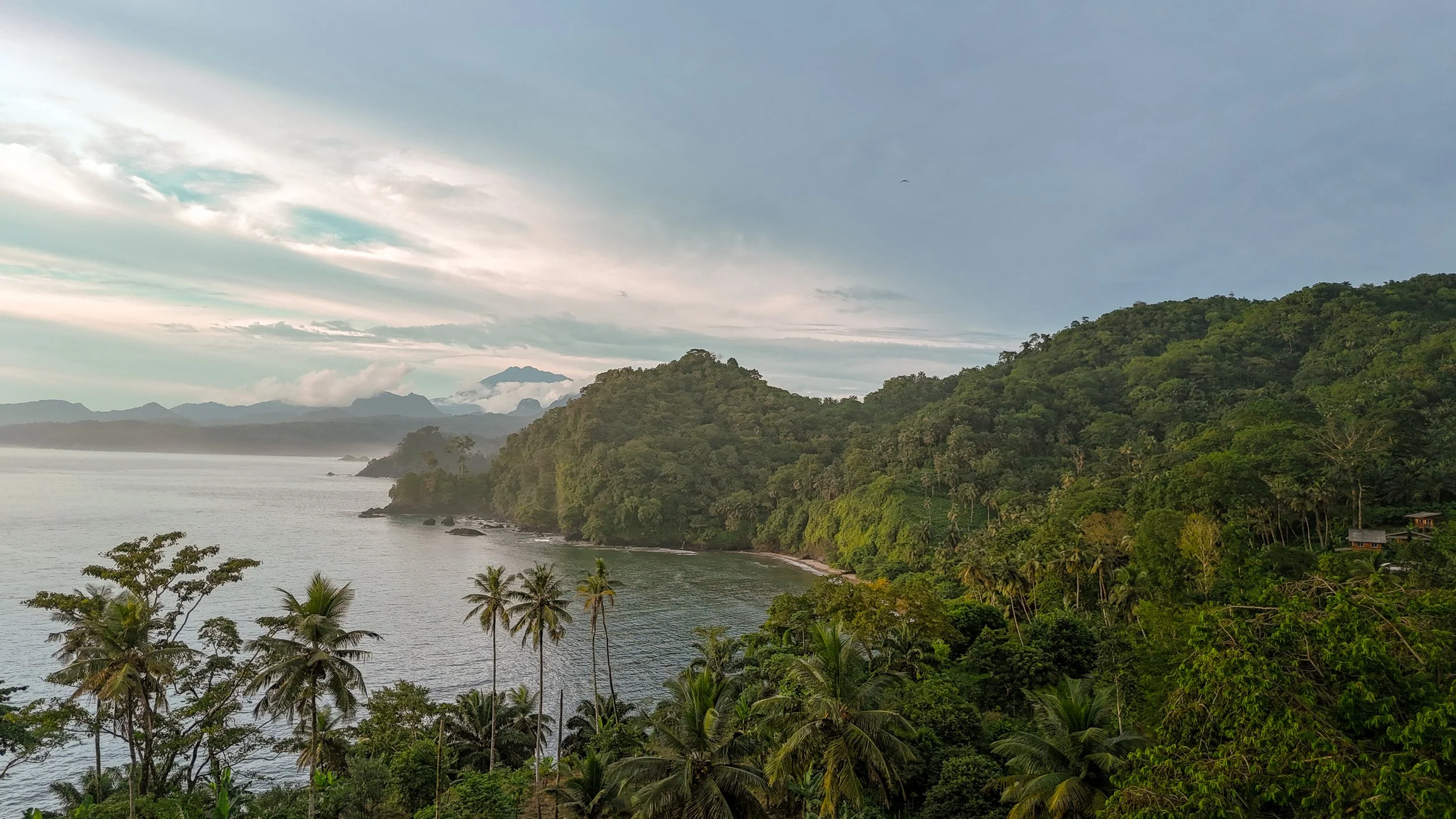
I vividly remember standing there on the shores of Hopfen, Germany. It was the summer between my junior and senior years of high school and I was captivated by my first taste of international exploration. I didn’t know it at the time - I don’t think I quite knew how to process it all - but that was my first experience with the travel bug…
I vividly remember standing there on the shores of Hopfen, Germany. It was the summer before my senior year of high school and I was captivated by my first taste of international exploration. Although I was there to play soccer, what I remember most are the cows grazing the fields behind our apartments, the majestic Alps rising high above the blue water of the lake, and the quaint town with its endless schnitzel. I didn’t know it at the time - I don’t think I quite knew how to process it all - but that was my first experience with the travel bug.

I should have guessed that something had shifted. Things that were once important to me stopped taking up space in my brain. Whenever my mind would drift, it would take me straight back to that scene, standing there on the shores of the lake. Suddenly the excitement, awe, and desire to see more would keep me at the edge of my seat, working my way through Google Earth, scanning it all to find the next great adventure.
Fast forward to 2009, I was a freshman at Ithaca College. At that point in my life, I had shifted back to a more rigid mindset. Work hard, get good grades, and be successful. I had no intention of studying abroad, but then everything changed.
As I walked down a narrow corridor towards the sub shop on campus, I passed a poster for Semester at Sea. I was 5ft. from where I was going and this small 8x11 piece of paper stopped me in my tracks. I took it off of the bulletin board, sat down on a nearby staircase, and started to read and re-read every single detail. I was completely and utterly entranced as the world passed me by.
The idea of an opportunity like this had utterly captivated me. Once again, everything else I had on my plate was brushed to the side so I could focus on the important thing: doing anything possible to make a semester abroad happen. I spent the entire summer working two jobs, saving as much as possible to go out and see the world.

Have you ever had an experience that's so comfortable that it’s odd? That’s what Semester at Sea was.
I’ve never been good at social situations. It gives me anxiety to even think about it; I overanalyze, overthink, and can never come up with something to contribute unless I’m addressed directly. Even then I fumble over the words.
Why did 19-year old me think it was a good idea to put myself in the middle of the unknown, surrounded by people I’ve never met? Still, to this day, I don’t know have an answer to that question. With that being said, I’m incredibly glad that I forced myself into it.
Suddenly it was the day of embarkation and as we watched Halifax silently disappear on the horizon of the Atlantic Ocean, I still had no idea what I was doing. The next 110 days were a whirlwind, but I walked away with some of the closest friends I’ll ever have, all because one thing brought us together: travel.
That’s a bond of the purest form and one that can never be broken. We’ve all gone our separate ways and haven’t traveled together since, but whenever we catch up we always reminisce about the stories that we created together, all without missing a beat.

After returning to Ithaca for the rest of my sophomore year, I started to understand that the travel bug wasn’t just a phenomenon that people mentioned in passing. It was real. This time it wasn’t going to loosen its grip and to be fair, I didn’t want to let it.
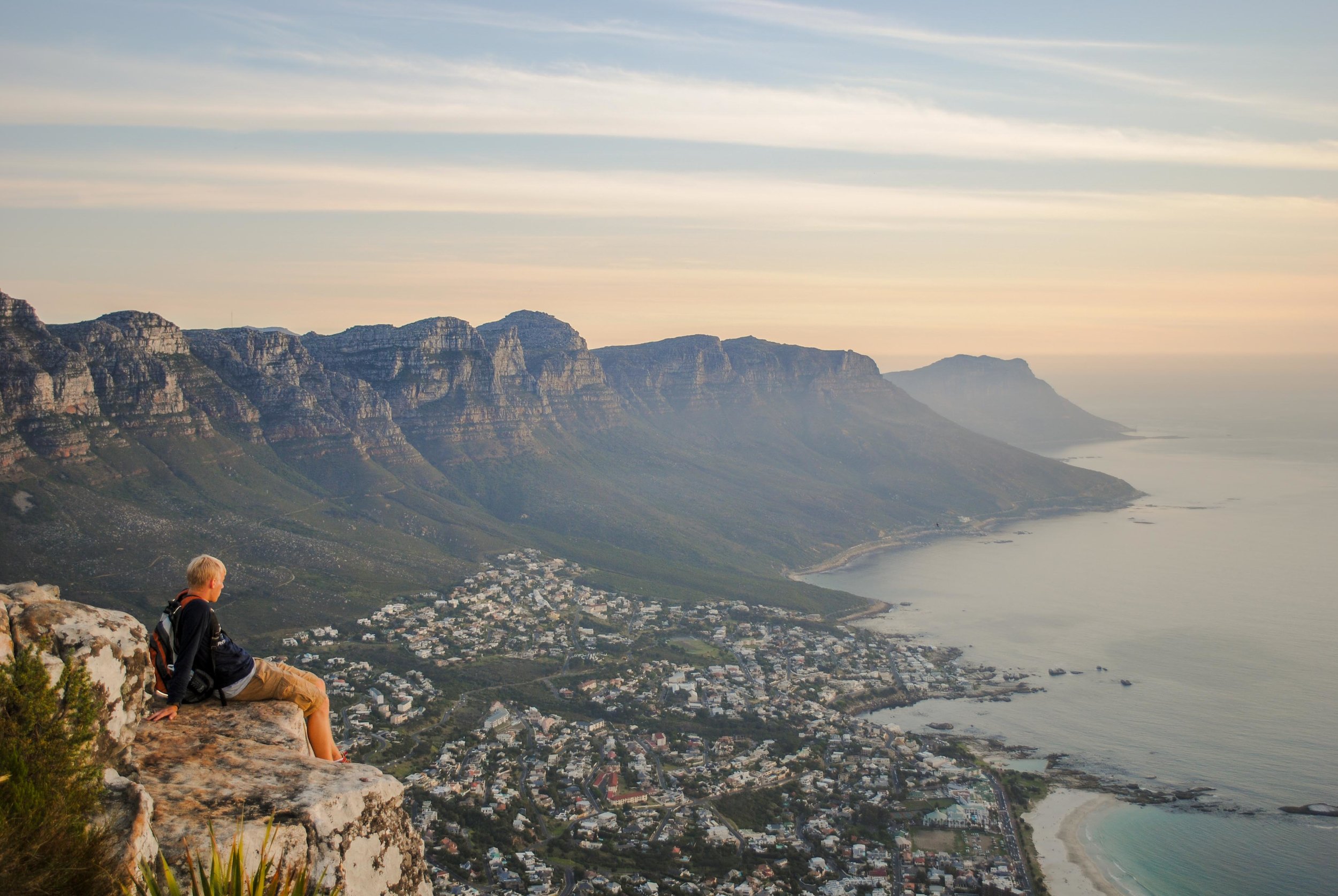
I’m not sure what the tipping point was, exactly. Maybe it was the sleeper bus in China that dropped us on the side of the highway at 2 am, or climbing Lionshead Peak in South Africa as the sun set over the ocean. It could have been the time in Ghana when our van broke down on a dirt road right in front of the only house in sight and we ended up playing with the family for what felt like hours, far longer than was needed to fix our transportation. Whatever it was, I’m grateful that it happened.
From that point on I’ve always known that deep down traveling was more than simply buying a plane ticket and snapping some pictures; I had fallen in love with it. The aerial views from a window seat, the taxi rides in the wrong direction, the regular doses of PeptoBismol; all of it.

Don’t get me wrong, I go through the rollercoaster of thinking along the lines of what some might term logical: Get a job, find a stable career, live comfortably, and be happy.
If you’re reading this and think that I need to control my desire to perpetually wander the world, you wouldn’t be the first person to tell me that and I’d be willing to bet that you won’t be the last.
To my credit, I’ve tried. The last four years have taken me around the globe to some amazing places for work, but what many don’t realize is that traveling for work and truly traveling are two very different things. It was too comfortable. I couldn’t do it anymore.
So here I sit, writing this blog and hoping that it puts me out of my comfort zone all the while maybe, just maybe, inspiring you to do the same. After all, what better way to expand your borders than by living beyond their walls?
At the end of the day, it’s simple: I can’t stop traveling, I won’t stop exploring, and here’s why:
THE CHALLENGE
Dropping myself into a country where I don’t know anyone, a place where I don’t speak a lick of the language or have the slightest idea of how to navigate the city. That’s my greatest joy.
I’m not going to lie to you: it’s difficult. Even scary at times. There are days that I don’t want to leave whatever apartment I’m temporarily calling home, because those 4 walls are the only protection I have from the unknown.
When I overcome the fear, the concept of comfort expands beyond those same walls and suddenly I’ve overcome the challenges I once faced; I’ve learned a different way of life.
THE DRAMA
There’s a reason why so many of us are addicted to reality television: the drama. But what if there was a way to experience it first hand instead of sitting on the couch?
I’m not talking about the “he said – she said” BS.
I’m talking about running through the airport as the gate to your next flight is closing and you hear your name paged throughout the terminal. Your heart starts to beat faster as you feel the endorphins releasing, your forehead starts to perspire and then you realize that it’s out of your hands. What’s the universe going to throw at you next? How are you going to deal with it?
If this sounds stressful to you, that’s because it is! It’s in those situations that you grow. You learn to cope with wherever you are, whoever you are with, and whatever is happening. A valuable skill to have in life, indeed.
When I think about drama, I can’t help but remember the time that I was sitting on a train in Morocco when it suddenly broke down. Not knowing any of the local dialect, my friends and I struggled to communicate with the woman that shared our compartment. As the train delay dragged on, the closer all of us became, eventually laughing the rest of the way to Marrakesh. A dramatic situation successfully turned into a lifelong memory!

THE PURE JOY
Yes, traveling makes you happy. That’s a well-documented fact. I’m not necessarily referring to the personal joy it brings (although it does bring plenty), but rather the joy you get to witness in every place you go.
When someone you’ve only just met on the street invites you into their home, encourages you to sit in their chair while they make themselves comfortable on the ground, and fills your stomach with a seemingly endless supply of food (all the while never asking for as much as a cent in return), it touches you. Witnessing the magnitude of joy and generosity they exude is contagious and you walk away a better person because of it.
So, let me sum it all up for you. My name is Chris and I have the best problem in the world: I love to travel.

What are some of your most memorable travel experiences? Let me know in the comments below and thanks for following along!
As always, stay safe & happy travels.
Sharing is caring… pin this post!






Renting a Car in Panama: Here's what I wish I had known ahead of time
I can already see the eyes rolling around your head. “I know how to use Google, I know how to drive, I’m confident I can rent a car.” Well, that’s probably all true. Who am I to judge your driving? But renting a car in Panama isn’t as cut and dry as in other countries…
*Please note: all information below, including prices, is reflective of the time of writing (2019). Feel free to reach out with questions and I’ll happily help however I can.
I can already see the eyes rolling around your head. “I know how to use Google, I know how to drive, I’m confident I can rent a car.” Who am I to judge your driving? But renting a car in Panama isn’t as cut and dry as in other countries. If you look online like we did, it might freak you out (or in our case, question our entire plan). The reality is it can be done and done well for that matter, but let’s back-up for just one second.
Heather and I have this tendency to book plane tickets mere days in advance and just wing it. Panama was no different. Three days out we found cheap flights and decided to send it down to Central America. We knew that we wanted to make it to Boquete and keep our budget tight. We decided that flying from Panama City to David and Bocos del Toro would hit our bank accounts a little too hard, so we decided to rent a car. We thought we had it all figured out, and then we started to read this thread on Trip Advisor. The more we read, the more doubtful we became. The stress and anxiety began to mount, but like any true adventure, we decided that rolling the dice was the best thing to do.
TRIP ADVISOR SUMMARY
Before you spend hours going down the proverbial rabbit hole on the internet as we did, let me sum up the Trip Advisor thread for you.
Renting a car from Tocumen International Airport is a disaster, especially from Hertz. You’re better off renting from National Car Rentals in the city.
The “Tocumen Banditos” are alive and well and prey on customers like a lion in the wild. They will find fake damage, knowing you have a flight to catch so you won’t put up much of a fight.
Accept the damage and contact Hertz from home, you say? Not a chance. You’ll get no help because Hertz USA has no control over Hertz Panama.
Have insurance coverage from your credit card? Not good enough. You’ll be forced into buying comprehensive.
People have shown up to rental car counters off of the estimate they receive online and are suddenly unable to afford the new price, ultimately walking away in tears (this one gave us the feels).
Crazy, right? If it were all true, it would be. But here’s how our experience went:
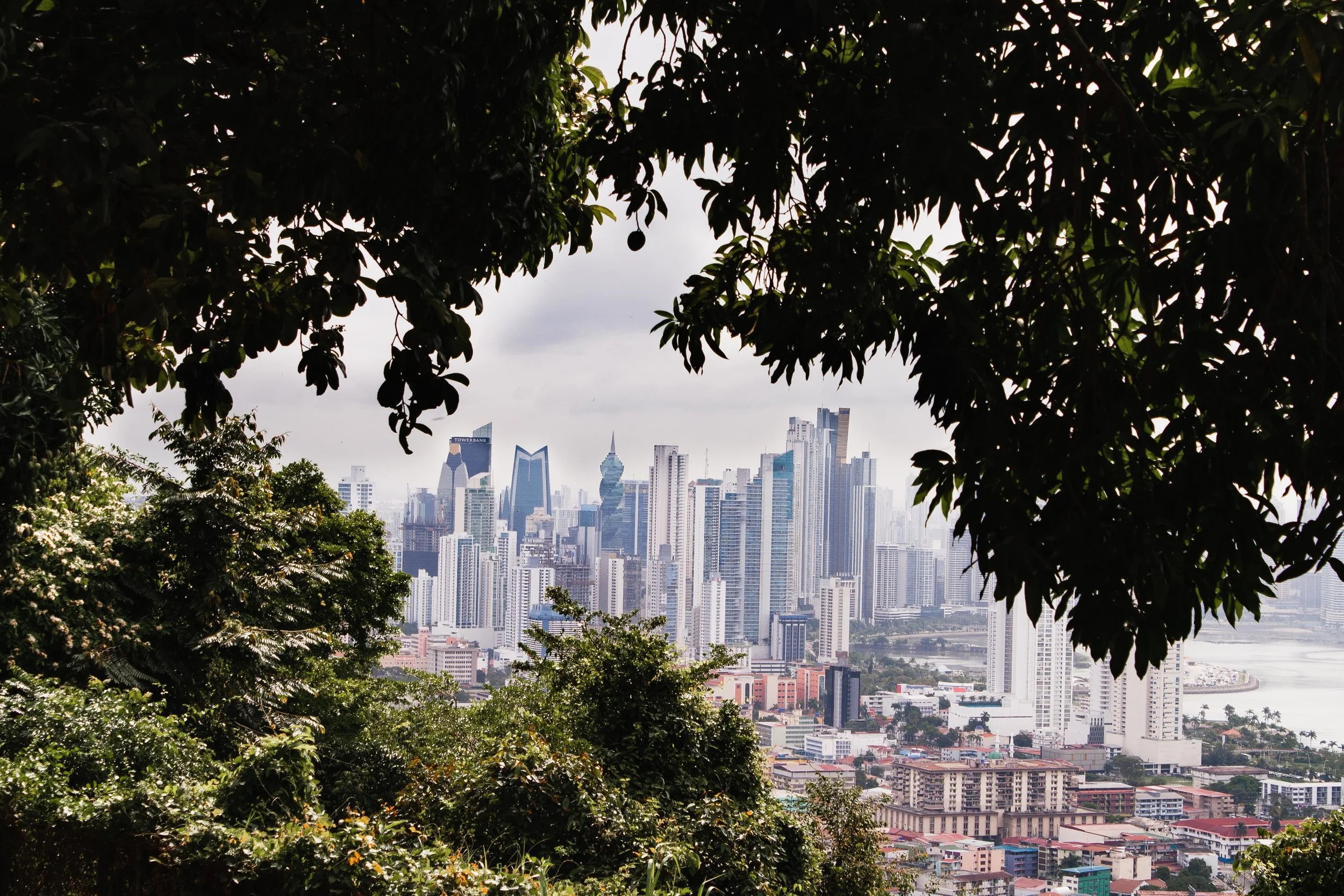
View of Panama City, Panama
BEFORE WE ARRIVED
Generally speaking, we tend to search for any opportunity to save a dime. Many times that strategy includes using credit card miles. Even if you don’t have any to spare, a quick internet search will show car deals starting at “just $5/day.” It might seem too good to be true at an initial glance, and that’s because it is.
Despite our instincts, we opted to use miles and booked with Hertz at Tocumen International Airport. We had no problems with the reservation process, but at the same time, there were no notifications that this was not the actual price.
AT TOCUMEN INTERNATIONAL AIRPORT
As we left the hotel that morning, we had prepared ourselves for battle going as far as calling the credit card company to verify their coverage. We were ready for anything that the rental agent could possibly throw at us. There was only one problem… it was as easy and smooth as possible.
Here are some things to keep in mind:
LIABILITY INSURANCE IS MANDATORY IN PANAMA
It’s a national law that all rental cars must carry a liability policy of $20,000. After doing our research, we expected this to be the case and at around $22/day for 7 days, it was consistent with everything we had read. This is where most people get tripped up. Liability coverage isn’t mandatory in many countries, so it is not included in the rates you find on Kayak, Priceline, etc. It’s completely understandable why people get upset… if you expect to pay $75 total and get charged $200+ when you show up, that’s a significant change (especially if you’re trying to use points to cover the cost). Pro tip: Do your research ahead of time. Ask around and know what to expect.
HERTZ ACCEPTED OUR CREDIT CARD COLLISION COVERAGE
If you read through the thread, you’ll see many stories about companies forcing customers into full policies, telling them that their credit card coverage isn’t valid. I’m not discounting those people, however our experience was much different. We were offered full collision, partial collision, or no collision in addition to the required liability policy. We chose “no collision” and they accepted our credit card coverage, no problem. Pro tip: It’s a good idea to talk to your card company ahead of time and print out a copy of the policy.
BE “THAT GUY”
We’re not normally the self-proclaimed Sherlock Holmes kind of people, searching the car for every little scratch with a flashlight, but in Panama we were. The Hertz agent had a form marked up already with the damage they identified and gave us an opportunity to go over it ourselves (joke was on him). We took full advantage, trying to minimize the risk for false damage claims when we dropped the car back off. By the end of our inspection, the form looked more like a paint-within-the-lines picture. Front, rear, roof… we covered it all and they accepted it, no questions asked. Every. Little. Thing. There were A LOT of things.
DRIVING IN PANAMA
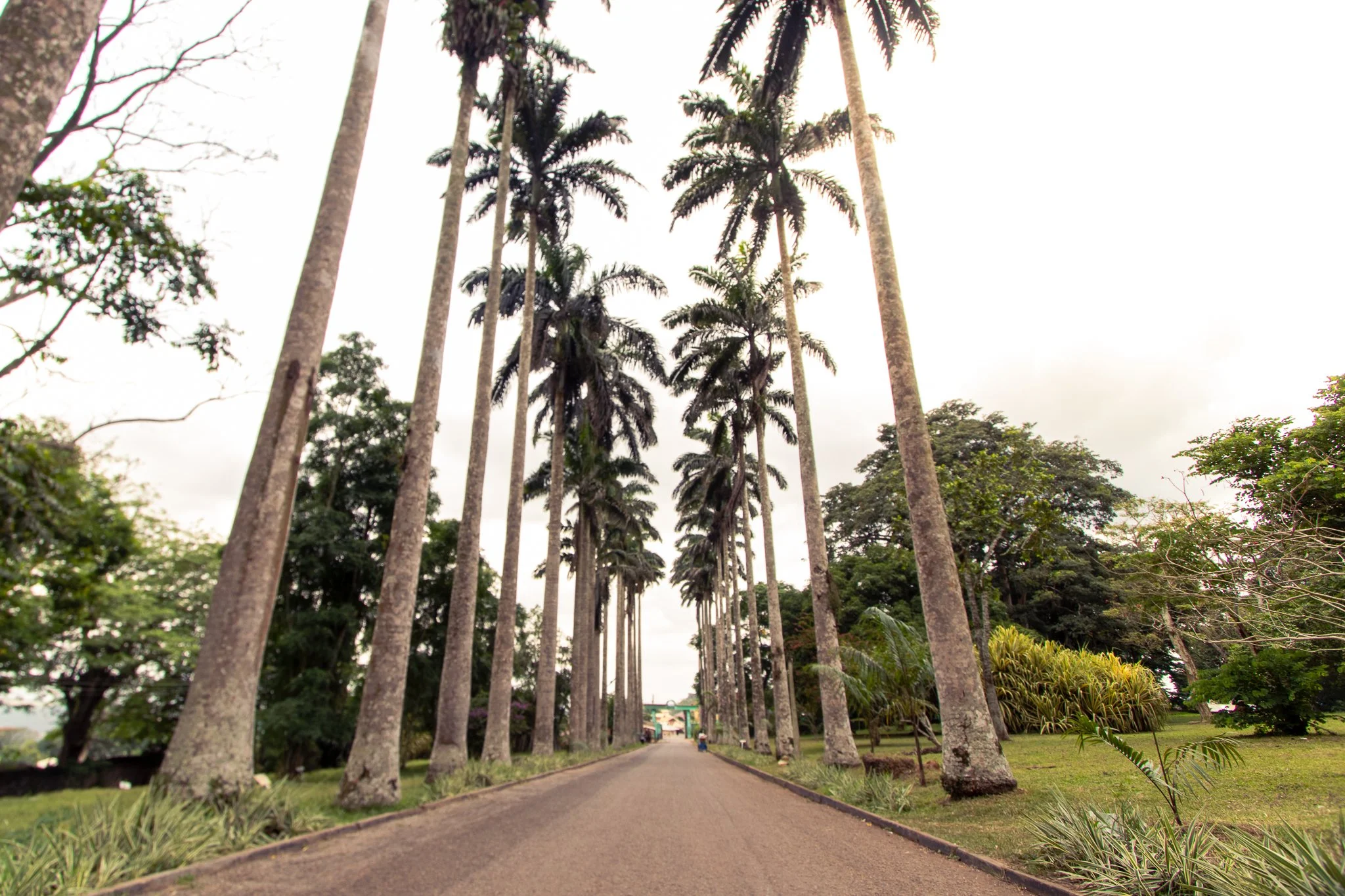
Traveling by car is by far our preferred method of transportation, and Panama was no different. We experienced roads that curved their way through the cloud forest, empanada stands at the top of mountain passes, and so much more. After all, the journey is the adventure! Driving is simple, easy and fun. Panama City is chaotic, but nothing more than you’d expect from an extensive urban area. Traffic can get backed up though, so plan ahead! Pro tip: Download the Waze app. The directions are accurate, easy to follow, and Panamanians are religious about updating police locations so you can be sure to avoid the speed traps. We drove from Panama City, up to Boquete, over to Bocos del Toro, and back down to Tocumen with no problems at all.

Driving from Panama City to Boquete through the mountains
RETURNING THE CAR
Beyond the fear that our credit card insurance would be rejected, this part was our second biggest concern after reading all of the information on Trip Advisor. As we walked back into the arrivals hall to return the keys, we again braced for a battle. In reality, it was the easiest part of it all. We were told that tolls would be billed electronically (all tolls in Panama are electronic, so every car is equipped with the proper technology to handle that), and that a receipt would be emailed. After a couple of weeks of holding our breath, the final bill came with no signs of “fake damage.”
Looking for ideas of things to do in Panama? Be sure to check out these other posts:
PRICE BREAKDOWN
Online booking - $85 for 7 days (credit card points used)
Actual cost - $345 for 7 days with 2 drivers and mandatory liability insurance
Tolls - $11.95 (Tolls are only present on roads surrounding Panama City)
All in all if you do your research, know what to expect, and make an effort to really evaluate the car before you drive it off the lot then you should have no problems! Keep in mind that like any other country, things are constantly changing in Panama and although our experience was smooth and stress free, yours might different!
It’s my goal to provide you all with information to help you get out and see the world. Did this accomplish that? Let me know in the comments below and I hope you enjoy your Panamanian adventure!
Find this post helpful? Pin it for later!


As Anthony Bourdain once stated, “It seems that the more places I see and experience, the bigger I realize the world to be. The more I become aware of, the more I realize how relatively little I know of it, how many places I have to still go, and how much more there is to learn.” So, without further ado, here are 7 books that have shifted my perspective and changed the way I view the world around me this past year…