

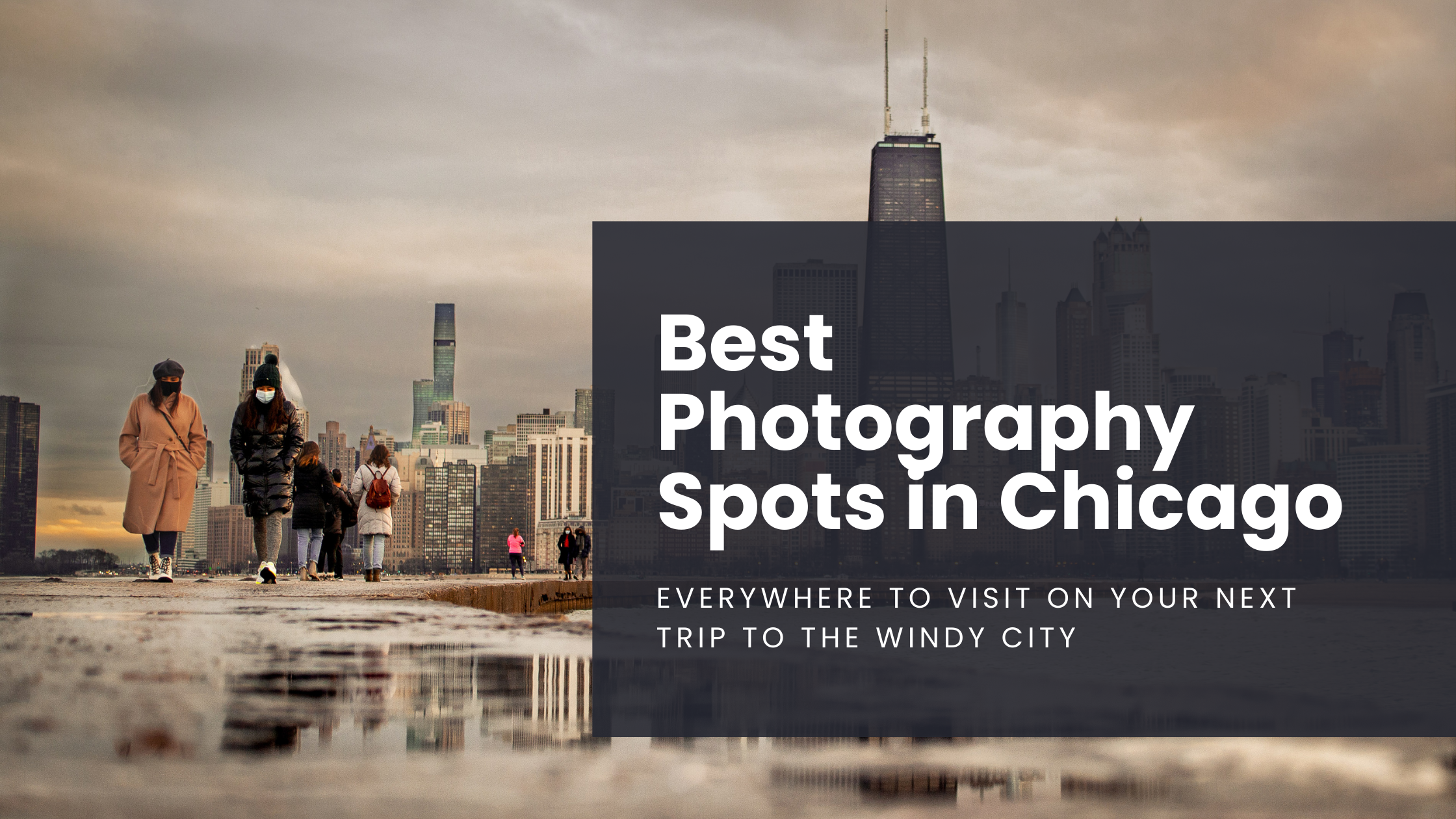
Best Photography Spots in Chicago: Everywhere you need to go on your next trip to the Windy City
Skip the tourist trail and check out this comprehensive list of incredible spots to photography Chicago. From where to find the best city skyline views to which parking garages best capture the 'L' train, this is a must-have guide before your next trip!
As it turns out, moving to Chicago has been the perfect way to expand my photography skills. With the hustle and bustle of city life, the famous ‘L’ train weaving through the towering buildings, and the glistening shores of Lake Michigan to the east, there’s a unique perspective everywhere you look.
Millennium Park and Michigan Ave are by far the most visited sites in this mid-western hub but trust me when I say there’s so much more to discover.
Here’s a list of the best places to photograph Chicago.
NORTHERLY ISLAND
Northerly Island is a peninsula park along the shores of Lake Michigan that comes complete with city skyline views, including the iconic Soldier Field.
Enjoy the fresh air and greenery as you combine your skilled nature shots with that of urban life.
Fun Fact: The 5-acre lagoon is home to many of Illinois’ wildlife, including monarch butterflies and heron.
Getting There: Red, orange, and green line trains to Roosevelt & walk from there

NORTH AVE. BEACH
Located in Lincoln Park, this popular beach offers some of the best skyline scenery in the entire city. Walk the jetty, stick your toes in the sand, and snap some shots as daily life in Chicago moves all around you.
Pro Tip: This is location is adjacent to the Lincoln Park Boardwalk (below), so it’s easy to combine the two shoots.
Fun Fact: North Avenue Beach came into existence from a multi-million project in the 1930s that was partially funded by President Roosevelt’s New Deal. The beach itself is an extension of an old landfill’s narrow path along Lakeshore Drive.
Getting There: Red, brown, or purple express lines to Fullerton & walk towards Lincoln Park

North Ave. Beach in Chicago, IL
ORLEANS ST. BRIDGE
The most popular way to take advantage of this location is to shoot towards the Wells St. Bridge. This is one of my favorite scenes in the city that perfectly encapsulates life in Chicago; boats cruising along the river below, the brown line trains traversing across the river and stunning architecture rising high towards the sky.
A unique feature of Chicago is that the city is constructed in a way that each building seems to command space of its own, demanding attention as an independent masterpiece. This location perfectly captures that.
Pro Tip: Shooting towards the Wells St. Bridge is great, but don’t forget to turn around and check out the trains coming across the Lake St. Bridge as well.
Fun Fact: The two leaves of the Wells St. Bridge were built offsite and then transported via the Chicago River for installation.
Getting There: Blue, orange, pink, green, brown, and purple express lines to Clark/Lake or brown/purple line to Merchandise Mart
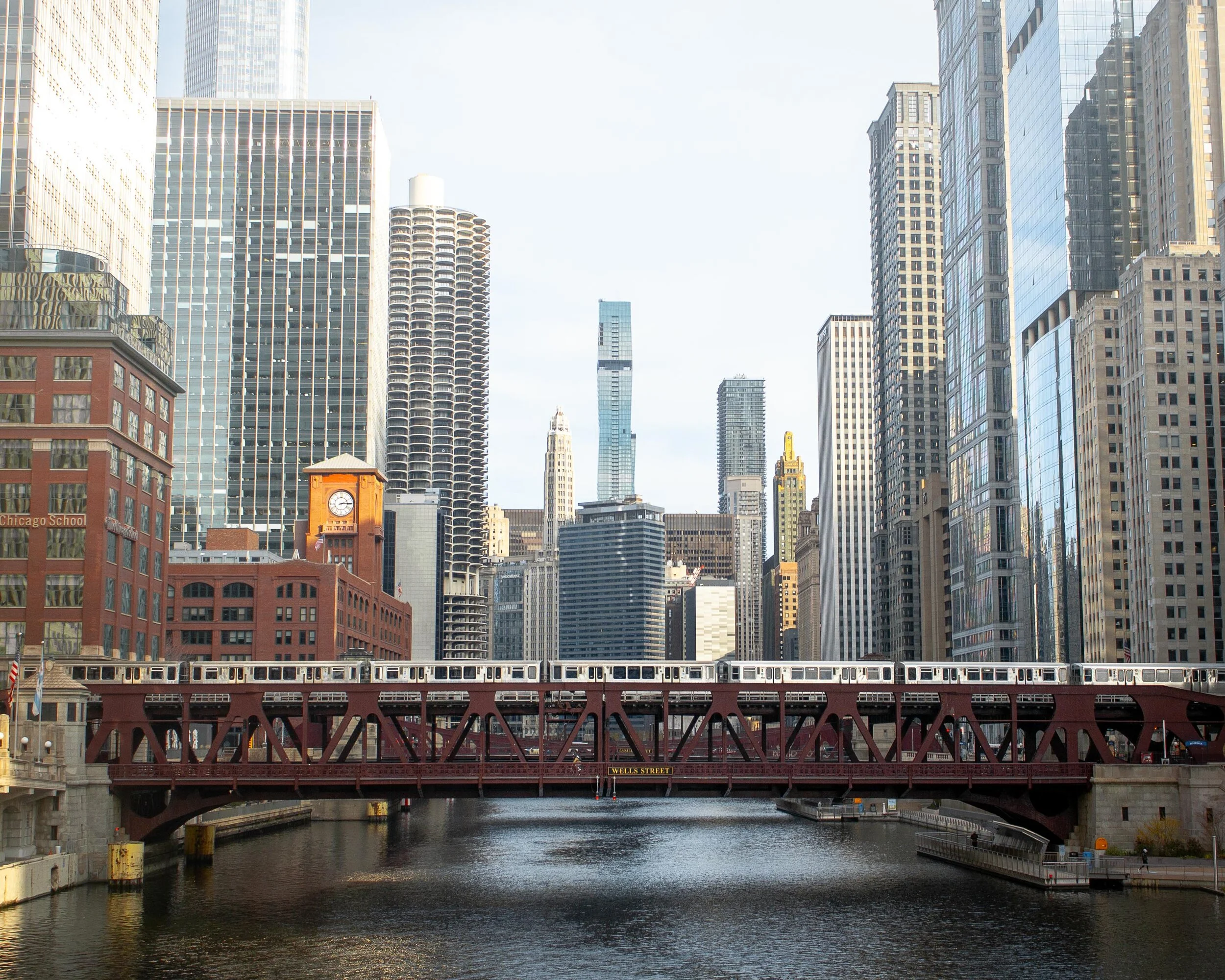
Downtown Chicago, IL
WELLS KINZIE GARAGE
One of my favorite parts of living in the city is finding unique angles to capture the famed ‘L’ train. There’s no better shot than the S-curve in the downtown loop.
Ride the elevator to the top of the Mart Parc Garage at the corner of Wells and Kinzie and watch the trains maneuver through the city’s infrastructure.
Remember: each level of the garage offers a different perspective of the tracks. Be sure to spend some time exploring to find what works best for you!
Fun Fact: In 2014, the “L” train was fourth in the nation for total route length at 102.8 miles.
Getting There: Brown and purple express lines to Merchandise Mart
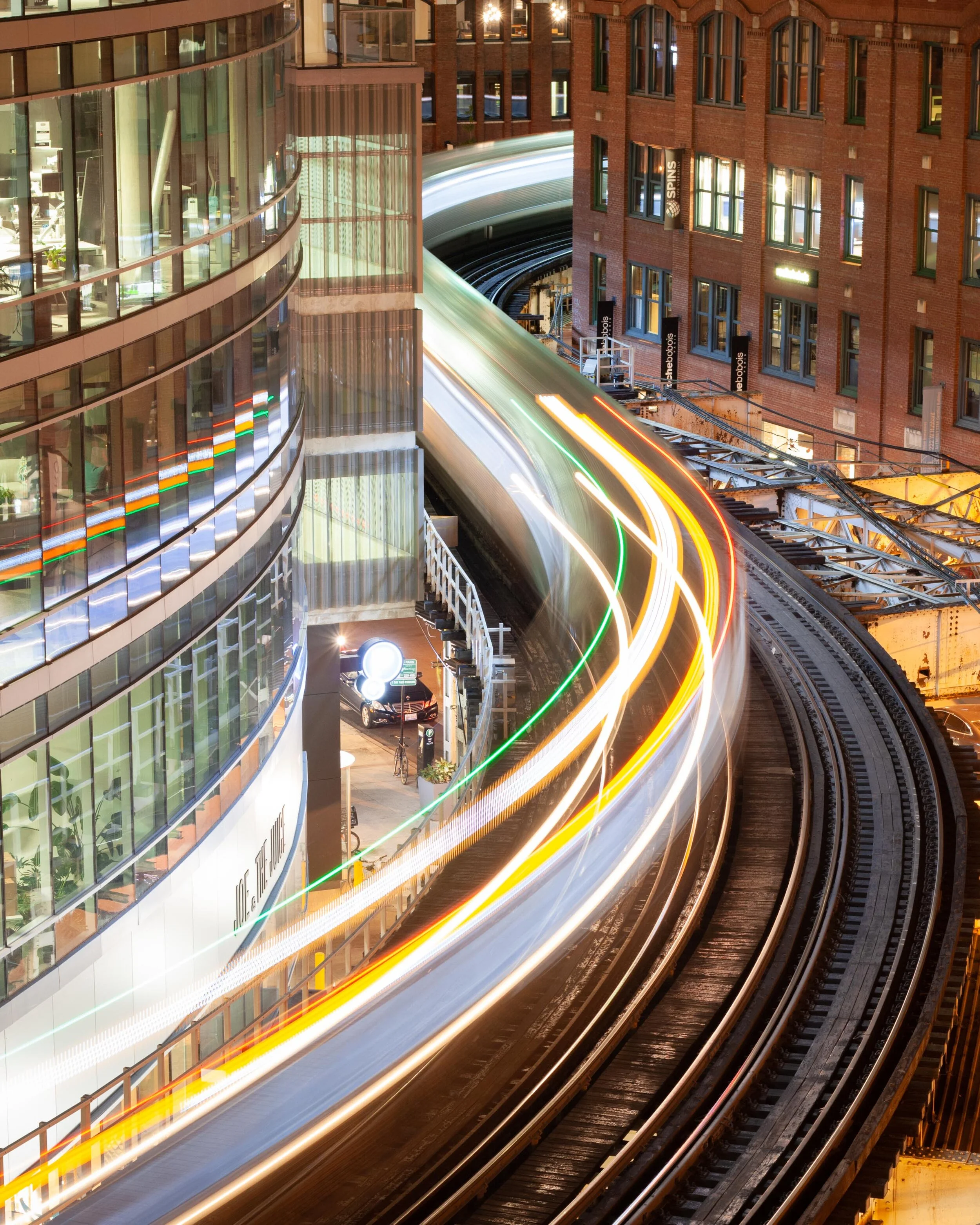
‘L’ Train in Chicago, IL
437 N. ORLEANS
For the lesser-known view of the S-curve, head to the parking garage located at 437 N. Orleans. The top-level shows the trains as they head to/from the Merchandise Mart CTA station.
Located near the Orleans St. Bridge (above), this makes for a great day of chasing trains.
Pro Tip: For the symmetry enthusiasts, take note of the Assumption Catholic Church steeple against the red brick backdrop.
Fun Fact: The oldest sections of the “L” train began operations in 1892, making it the country’s second-oldest rapid transit system behind New York City’s elevated rail system.
Getting There: Brown or purple lines to Merchandise Mart

‘L’ Train as seen from 437 N. Orleans in Chicago
Need more ideas? Check out this list of curated tours!
PING TOM MEMORIAL PARK
This is the first park I visited after moving to Chicago and it remains at the top of my favorites.
Located in the Chinatown district, this is the perfect place to stock up on some warm buns and pastries, walk along the river, and shoot the city skyline. The boardwalk with the ornate rails helps to create some appealing leading lines.
Pro Tip: Ping Tom Memorial Park is commonly known as one of the best places to watch trains. Amtrak frequently crosses the bridge at the southern edge of the pathway while the CTA trains and freighters flank it to the east.
Fun Fact: This 17.4-acre park was originally the site of a Chicago and Western Indiana Railroad yard. The area began its transformation into a green space in 1998.
Getting There: Red line trains to Roosevelt or green line to Cermak-McCormick Place
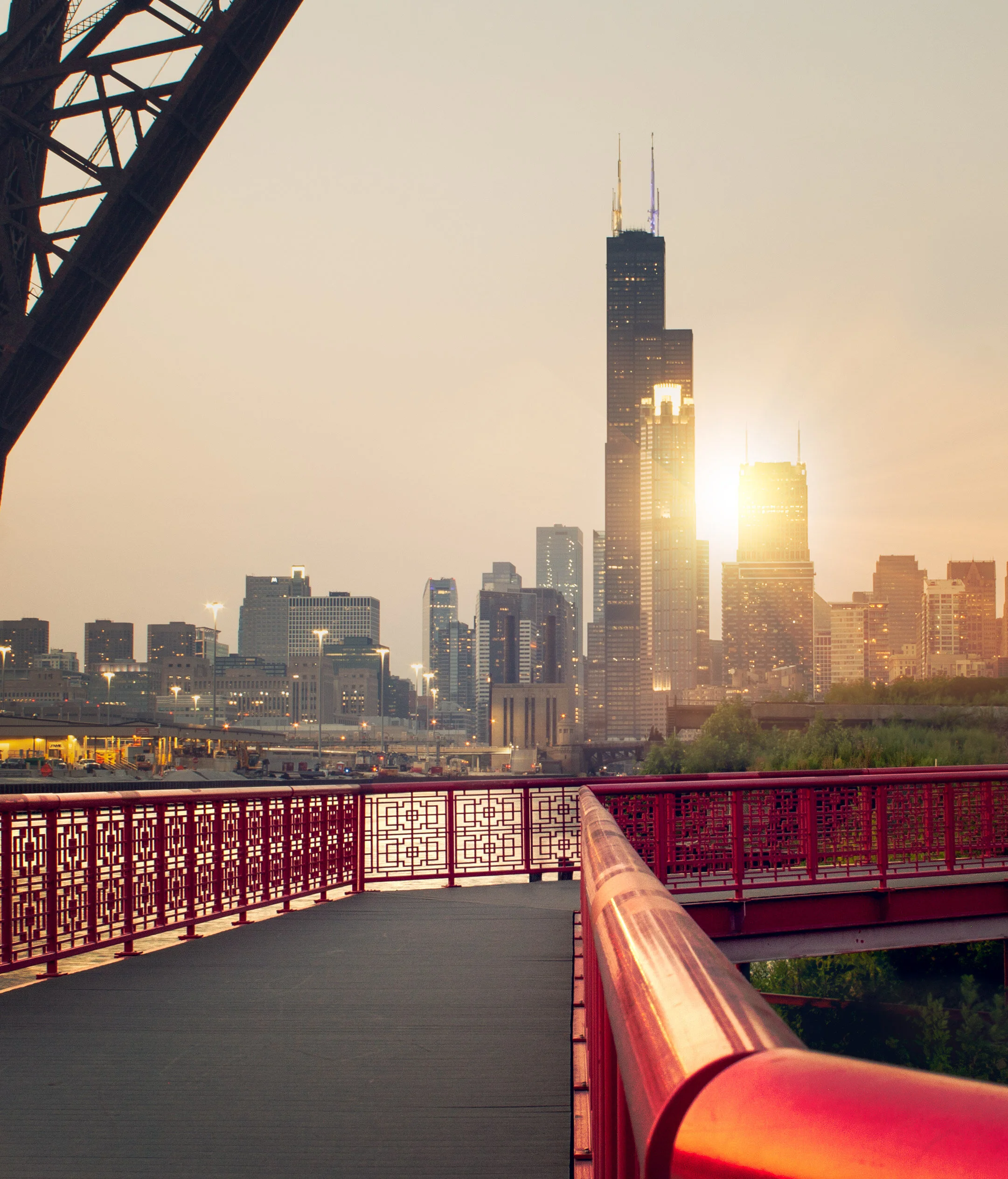
Downtown Chicago as seen from Ping Tom Memorial Park
18th STREET BRIDGE
Another spectacular city skyline view is on the 18th Street Bridge, located just above Ping Tom Memorial Park. Point the camera up the South Branch of the Chicago River and behold the Windy City in all its glory.
This is an especially great spot for nightscape photography.
Fun Fact: With a 1967 construction date, the 18th Street Bridge is one of the youngest in all of Chicago.
Getting There: Red line trains to Roosevelt or green line to Cermak-McCormick Place
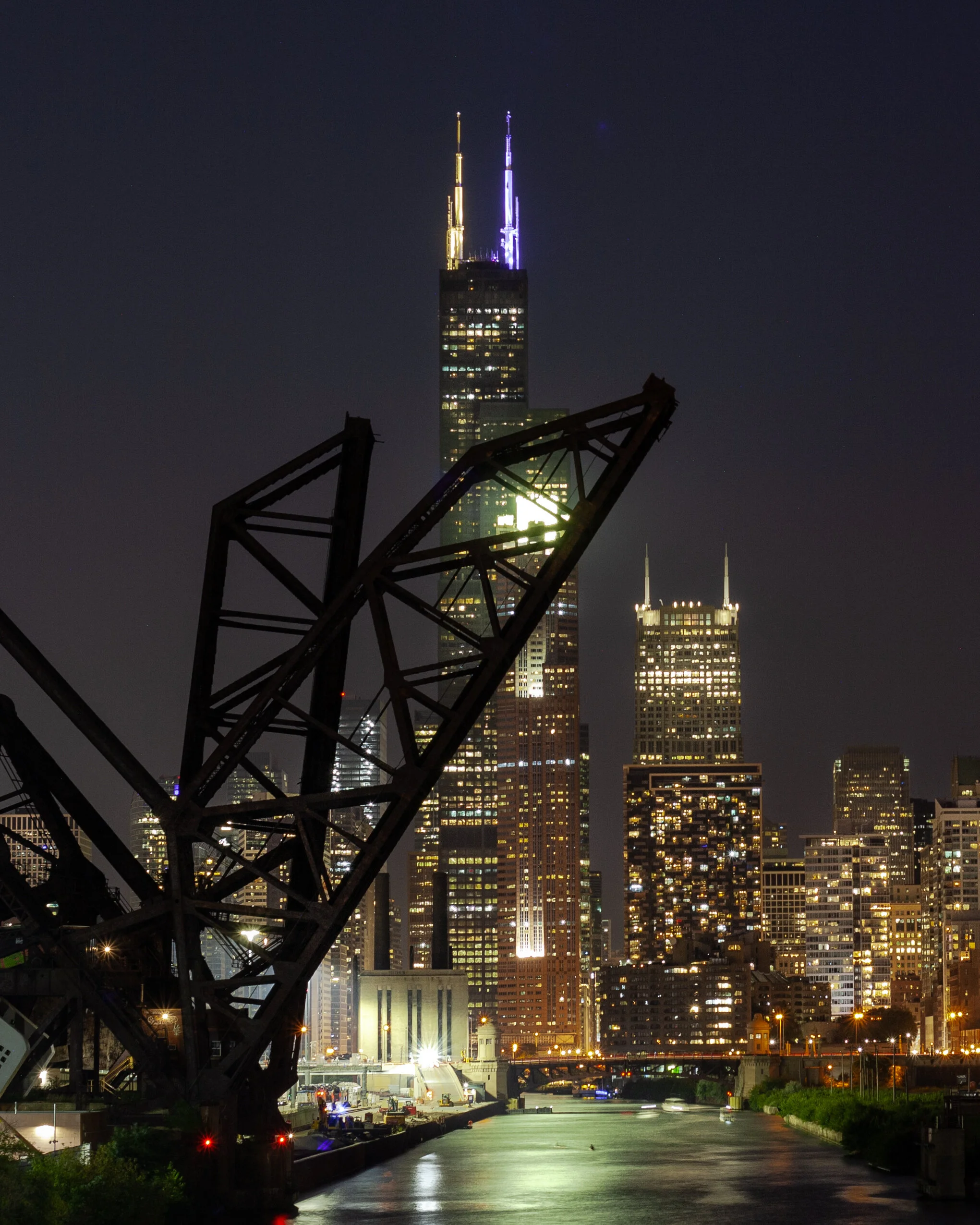
Chicago skyline as captured from the 18th street bridge in Chicago’s Chinatown
LINCOLN PARK BOARDWALK
The nature boardwalk at Lincoln Park makes for the perfect escape from the busy city streets. The pond is surrounded by prairie-style grass and is full of life with birds, frogs, and fish to name a few.
This is a great place to not only photograph the urban nature scene, but the John Hancock Building as well.
Pro Tip: Combine a visit here with North Ave Beach.
Fun Fact: The Nature Boardwalk acts as a living laboratory for the Urban Wildlife Institute in Chicago as they test new techniques to resolve human-wildlife conflict.
Getting There: Red, brown, or purple express line trains to Fullerton

Lincoln Park, Chicago
200 NORTH CLARK
In a massive city full of high rises, this is the place where you can see straight to the horizon and it feels as though the trains below are riding off into the sunset.
The reflective siding on the garage adds to the unique perspective and helps to create some stunning imagery.
Fun Fact: In 2016, the “L” train had 1,492 cars transporting passengers between 145 stations.
Getting There: Blue, green, pink, orange, brown, and purple express lines to Clark/Lake
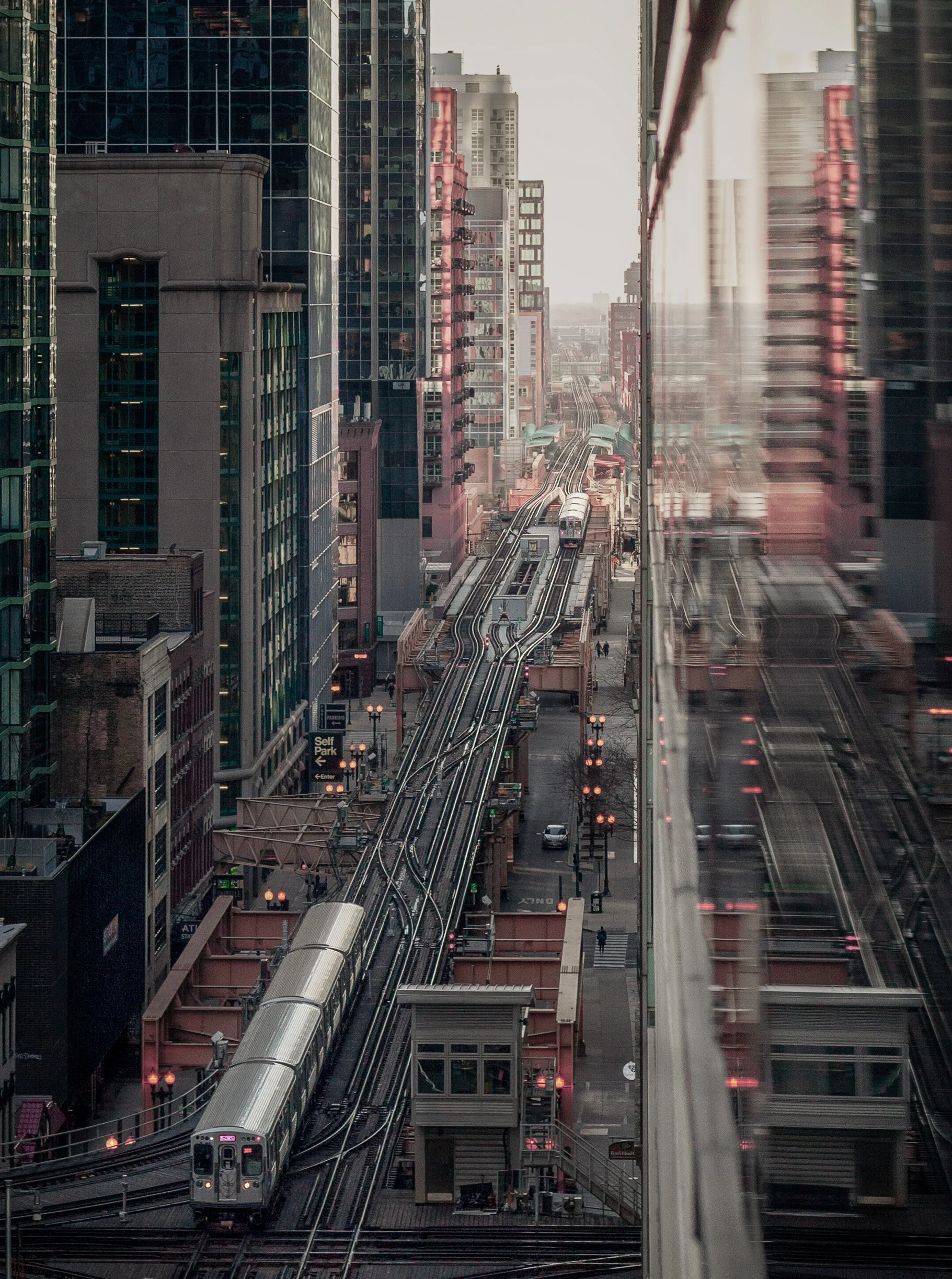
The view from the parking garage at 200 N. Clark St. in downtown Chicago
WABASH ARTS CORRIDOR
Commonly referred to as the “living urban canvas” because new pieces are being added on an annual basis, the Wabash Arts Corridor is a unique collection of colorful murals.
Stretching from as far north as Polk and as far south as Roosevelt, this is the perfect place to wander around with your camera. Be sure to check the website for more information, including a walking map of each masterpiece.
One of the most popular works is the Moose Bubblegum Bubble by artist Jacob Watts.
Pro-Tip: Start on the southern edge at Roosevelt and make your way north back into the city’s downtown loop.
Fun Fact: The Wabash Arts Corridor was founded in 2013 by Columbia College and continues to grow into being one of the largest, unique, and accessible art projects in the country.
Getting There: Red, orange, and green line trains to Roosevelt & walk north
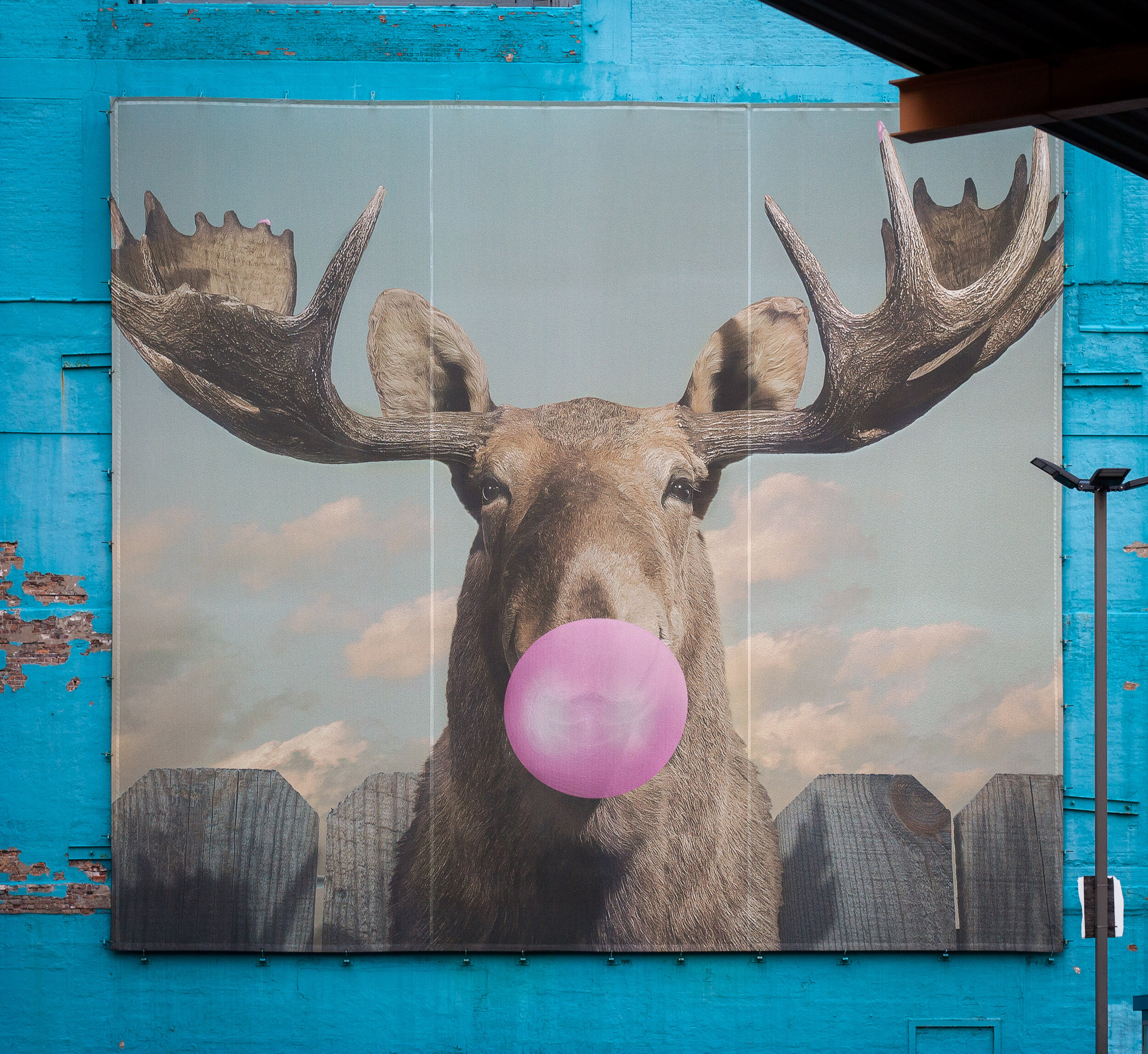
Moose Bubblegum Bubble mural by artist Jacob Watts
CHICAGO THEATER
Ok, you caught me. I can feel you rolling your eyes.
The vintage Chicago Theater sign isn’t exactly “off the beaten path”, but it does make for some pretty great long exposure shots and it’s a quick and easy stop on your tour of the city.
Fun Fact: The Chicago Theater was the first large movie palace in America and quickly became the prototype for all others. Constructed in a French Baroque style, look closely at the theater’s exterior to see if you can find the miniature Arc de Triomphe.
Getting There: Pink, green, brown, orange, and purple line express trains to State/Lake
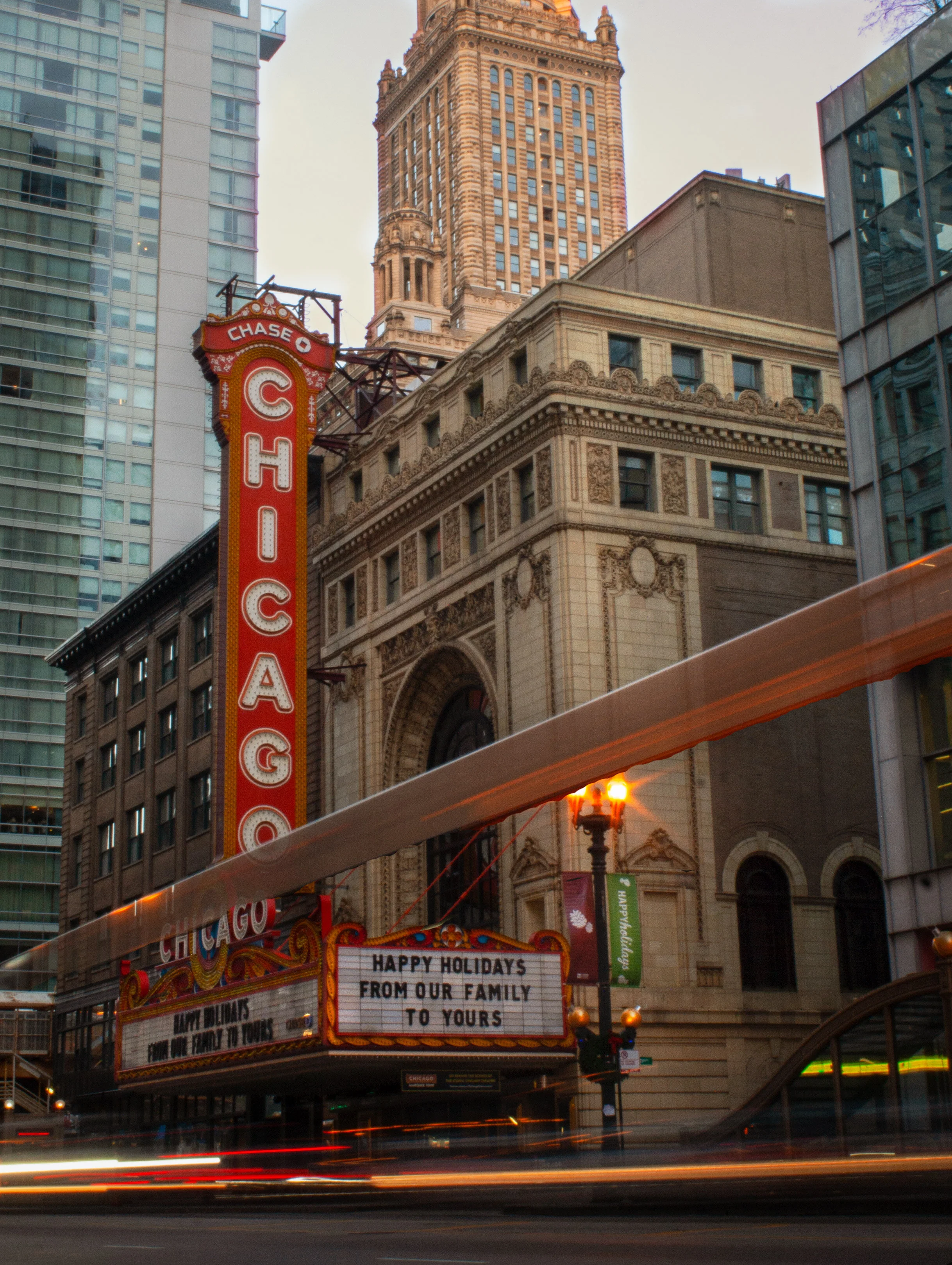
Chicago Theater standing tall in the downtown traffic

The Chicago Theater shines bright in the snow
The truth is you just need to come here yourself and wander around. Each neighborhood, train line, and person has something unique to offer!
Stay safe & happy travels.
Enjoy what you read? Pin this post for later!


The Ultimate Hiking Guide to Mississippi-Palisades State Park
With local travel the name of the game in 2020, it’s time to explore a little closer to home. With bluffs to climb, fall foliage to soak up, and expansive views of the Mississippi River, there’s every reason to visit Mississippi-Palisades State Park! Here’s everything you need to know…
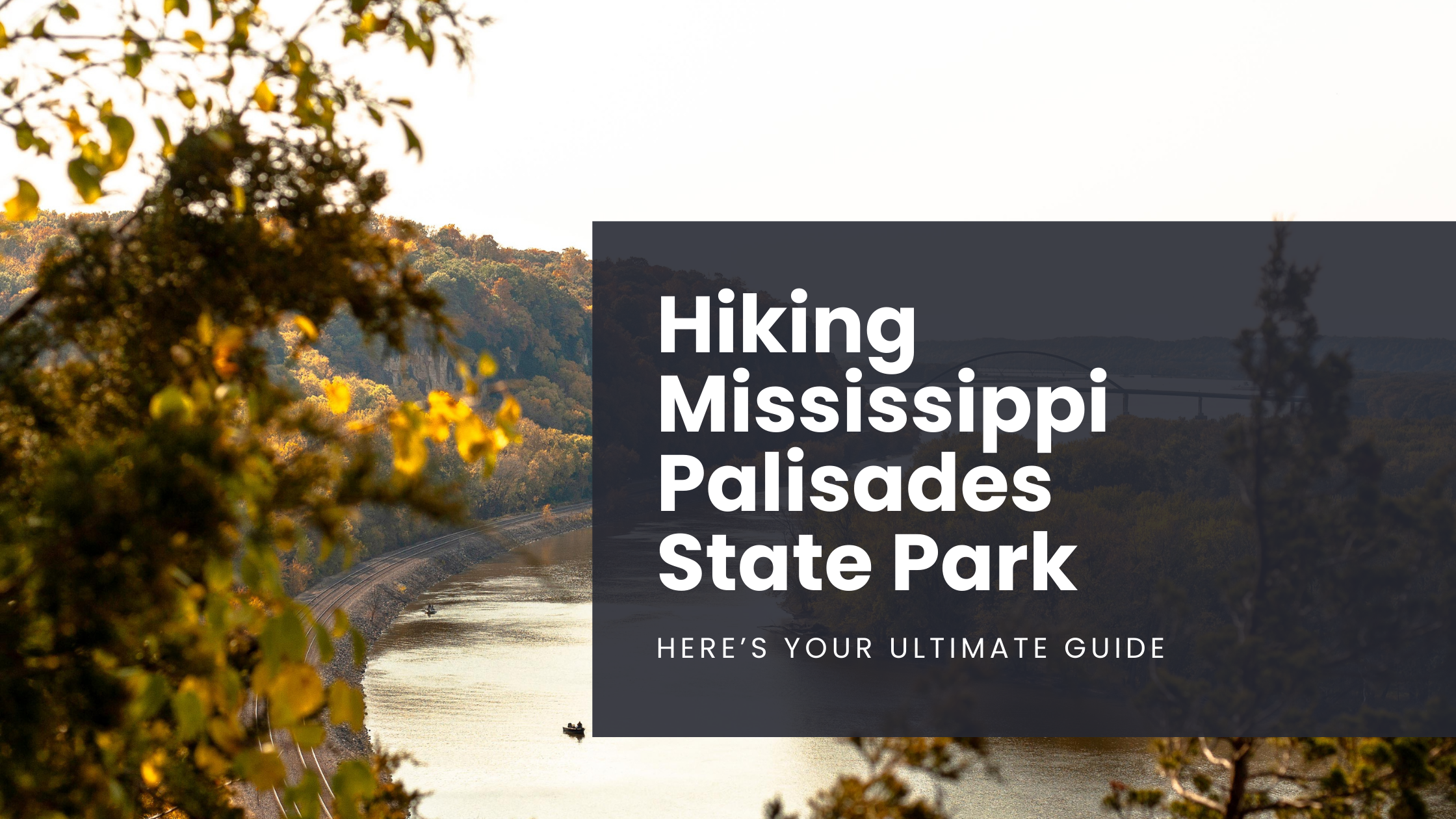
Local travel is the name of the game in 2020 and with autumn in full bloom, it seemed like the perfect time to migrate away from the bustling streets of Chicago and into the woods to soak up all of the colorful glory.
My alarm rang far too early at 5 am, but it was well worth the sleepless night as I rolled into an empty Mississippi-Palisades State Park at the crack of dawn, nestled along the northern section of the great Mississippi River and complete with sweeping views of Iowa across the way.
Picnic areas, grassy fields, and overlooks are in abundance within the 2,500 acre National Natural Landmark, but the goal of the day was to explore the trails and gain some much-needed elevation (I’m still adjusting to living in the midwest — shout out to the Wasatch Mountains back in Utah).
Here’s everything you need to know about hiking in Mississippi-Palisades State Park:
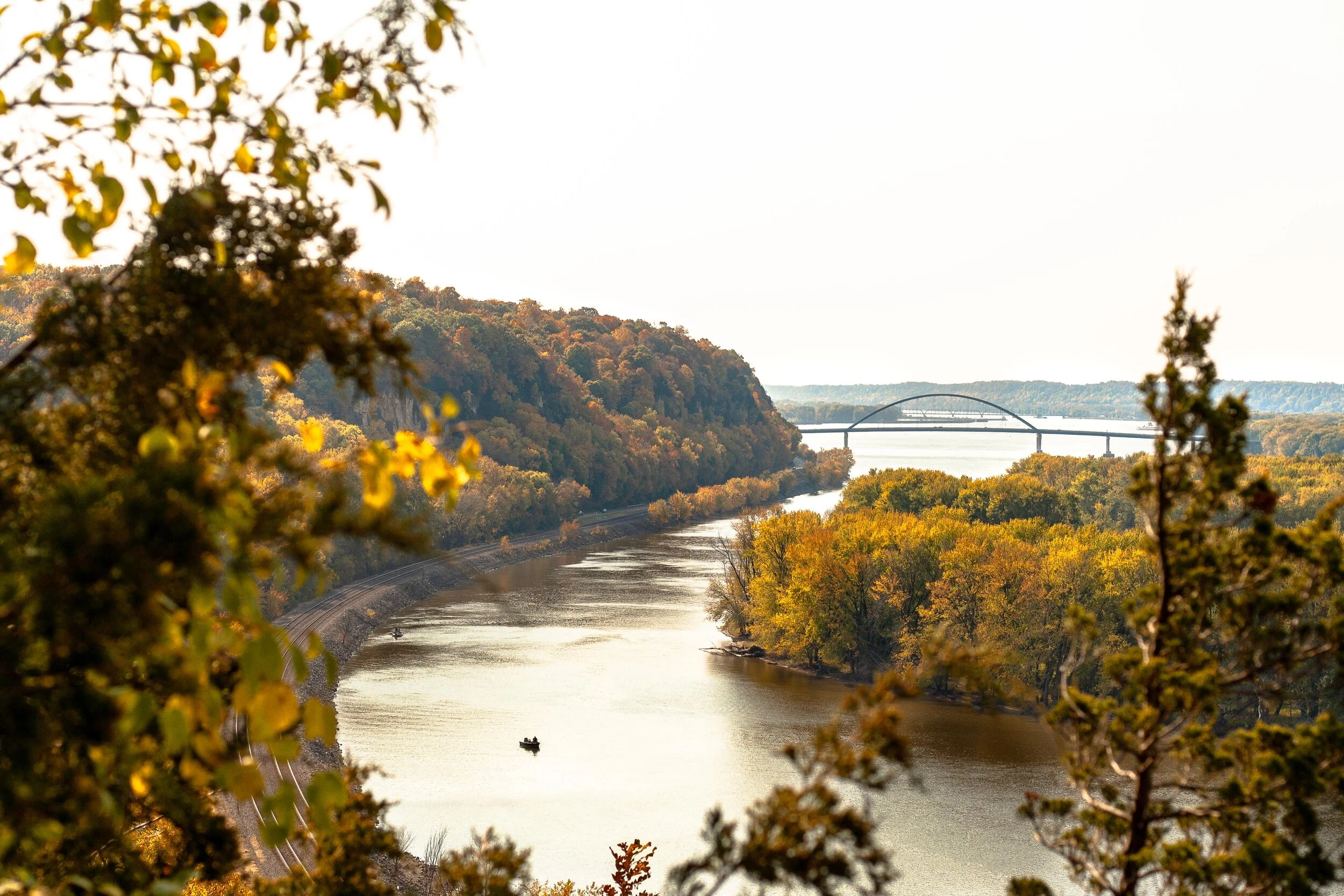
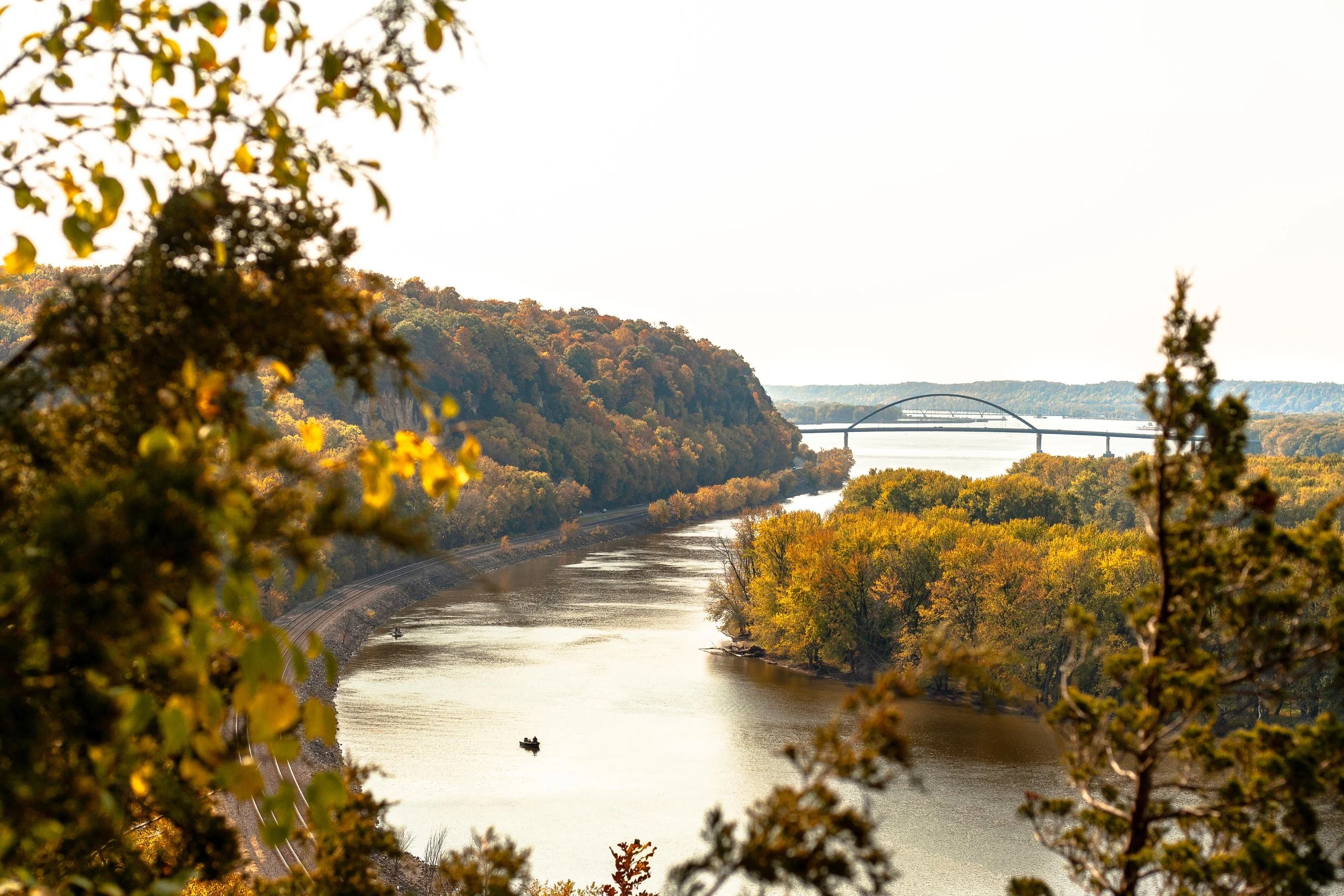
View of the Mississippi River as seen from the Sunset Trail at Mississippi-Palisades State Park
THE BASICS:
Location: Just north of Savanna, Illinois in Carroll County
Established: The park was founded in 1973
Trails: Hiking in the area is divided into the north and south systems, both containing 5 trails of their own for a cumulative 15-miles worth
Note: this post focuses on the southern trail system
Drive Time: 2 hours and 45 minutes from Chicago, depending on the time of day
Cost: FREE!
Facilities: Grills, gazebos, picnic areas, and restrooms can be found throughout the park
Why Mississippi-Palisades: The drive along the Great Northern Road as it pops in and out of small towns is just as stunning as the park itself, but there’s nothing quite like hiking up the bluffs and seeing the sweeping views above the Mississippi River in the peak of autumn
Difficulty: AllTrails rates this 4.6-mile multi-trail loop as ‘difficult’ due to a few sections of steeper terrain, but it’s a great combination of ascent, descent, and level ground. Plenty of families with young children were out and about
Great! Now that we’ve covered the basics, here’s how I spent my time wandering the southern trail system:
SUNSET TRAIL
I’d recommend starting with this trail as early as possible as the Lookout Point is by far the most popular overlook of the Mississippi River within the state park’s southern trail system. It’s here where you’ll soak up the sweeping views of the river and watch trains roll by below for as long as your heart desires.
The steepest part of the trail is departing from the parking lot as you climb the stairs and gain a quick chunk of elevation. Keep in mind that it’s a narrow, single-track dirt path with steep drop-offs to one side, so be on the lookout for other hikers and proceed with caution.
Once you reach the top of the bluff you’ll encounter a road that leads directly to the overlook. Do not head that way. Instead, cross over and continue on the trail. This winding path will take you down into a ravine thick with vegetation, complete with a wooden foot-bridge that’s set beneath a canopy of changing leaves.
As you make your way up and out of the trail’s low-point, you’ll stumble back onto the road and have the opportunity to scope the overlook. Pro tip: If it’s busy, continue south on the trail and you’ll find a separate, unofficial overlook with views downriver.

Sunset Trail in Mississippi-Palisades State Park
Don’t forget to pack these essentials!






SENTINEL TRAIL
Sentinel Trail is an easy 1.2-mile trail that is located directly across the road from the Sunset Trail, next to the picnic shelter and makes for a convenient second loop on the day.
As you cross the bridge and reach the fork, head left. This will take you up another set of wooden stairs and to a t-junction at which point you’ll choose left again. This will take you to an upper parking lot where you will pick up the less-trafficked Pine Trail.
After completing the short Pine Trail loop (see next section), head back up the Sentinel Trail path that led to the parking lot and continue straight past your previous left turn at the t-junction. This will take you back towards the Mississippi River and over to some last-minute views across the water before heading back down to the parking lot via stairs and narrow paths. Be sure to stop and check out some of the caves that have been carved into the side of the bluffs over the years!
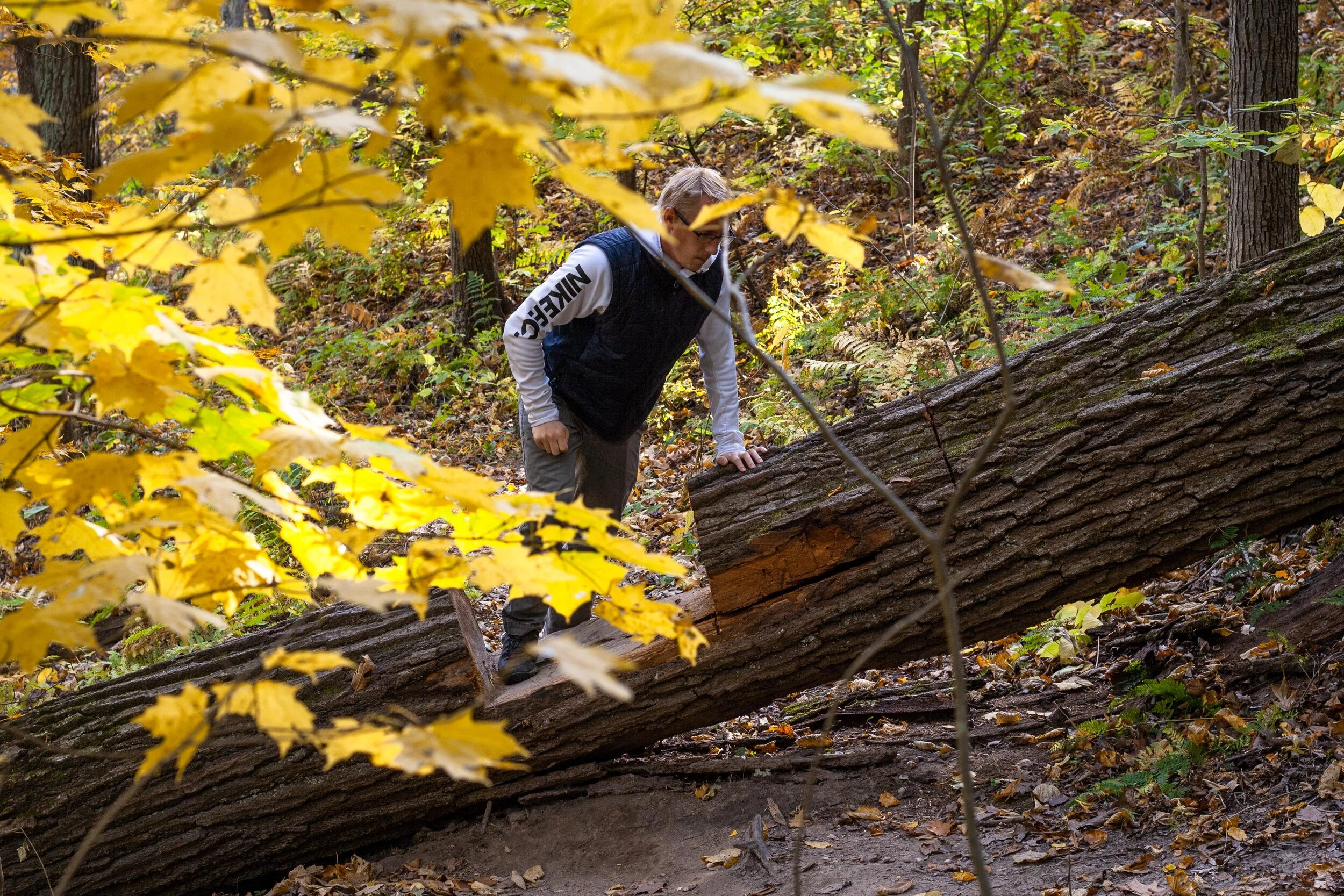
Hiking through the narrow trails of Mississippi-Palisades State Park
PINE TRAIL
Pick up the Pine Trail once you’ve reached the upper parking lot after hiking part of the Sentinel. This was by far the least crowded path within the park, making it easy to avoid other hikers and find some serenity among the fall foliage.
After reaching yet another t-junction, head left. This will lead you out to a road in which you then follow to the right to pick up the trail again at the next parking lot.
As you start the ascent from the road you’ll immediately notice a gray spire affectionately known as The Sentinel. This is a popular rock climbing area so don’t be surprised if you run into some dare-devils as you make your way up to the next overlook before looping back into the woods and up to the Sentinel Trail.
In regards to peacefulness, fall foliage, and a great workout of ascending/descending paths, Pine Trail was the highlight of the day!

Fall foliage in Mississippi-Palisades State Park
There you have it; everything you need to know about hiking through Mississippi-Palisades State Park! The family-friendly area makes for a great day-trip from Chicago and it’s easy to turn it into a weekend getaway by continuing north along Route 84 up to Galena, a quaint town once home to Ulysses S. Grant.
Happy hiking!
Enjoy this post? Pin it for later!


23 Facts About Mauritius: How much do you know about this tiny island nation?
From the Dodo bird inspiring a legendary children's novel to a multicolor landscape of volcanic dirt, how many of these facts do you know about the tiny island nation of Mauritius?
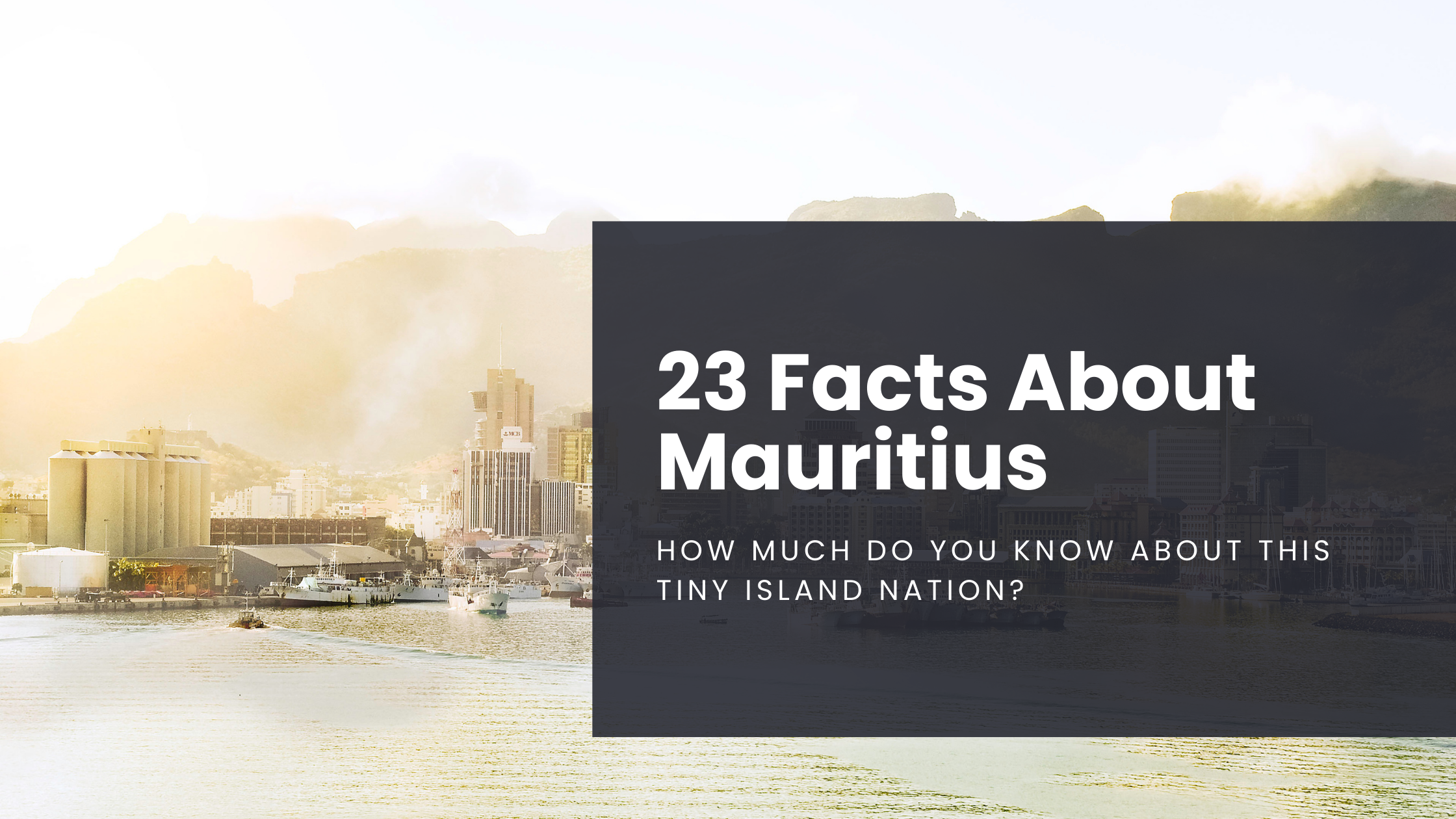
Mauritius is a country that has been on my mind a lot lately. As the world slips into the most politically and racially charged climate of my lifetime, I felt it important to highlight this tiny island nation because visiting here opened my eyes to a vital concept; acceptance.
This mindset is so ingrained in Mauritian way of life that the country is often referred to as a model for religious tolerance.
I’ll be the first to admit that as a 19-year-old traveling to this small slice of paradise off the coast of Madagascar with Semester at Sea, I knew next to nothing about the place.
So, other than what I just told you about their peaceful way of life, what about you? How much do you know about Mauritius?
Here are 23 facts to help paint a picture of what this country is all about; a beautiful picture at that!
1. The entire island of Mauritius is just 2040 square-kilometres
This makes it the world’s 181st largest nation in the world. The country is 45km wide and 65km long (CIA World Fact Book).
2. Mauritius is home to the Seven Colors of Earth
A popular tourist destination in Chamarel, these dunes of dirt contain a mix of colors that can be traced back to several volcanic eruptions, each that cooled at their own rate.

Seven Colors of the Earth | Mauritius
3. Three countries had control of the island prior to independence
The Netherlands ruled the land from 1638-1710 followed by France from 1715-1810. Surprise, surprise, in came the British in 1810 to take over and they remained in control of Mauritius until 1968.
4. More than 1.2 million people call this tiny nation home
This leads to a high population density. So high in fact that Mauritius has the highest of such in all of Africa.
5. Mauritius is the only African nation with Hinduism as the dominant religion
The country is 26.3% Roman Catholic, 17.3% Muslim, and 48.5% Hindu.
6. English and French are the most popular languages
You won’t find an official language for the country, but plenty of local Mauritians speak a form of Creole.
7. Mauritius’ flag is made up of four “bands”
Red represents the bloodshed for abolishing slavery and obtaining independence, blue for the vast Indian Ocean, yellow for the bright and shining future that lay ahead, while green symbolizes the lush green vegetation found throughout the island.
8. Mauritius was one of four countries around the world that were NOT engaged in domestic or international conflicts in 2017
Peace, tolerance and acceptance. It’s a concoction that works.
9. Even Mark Twain was rendered speechless by the island’s beauty
“Mauritius was made first and then heaven, and heaven was copied after Mauritius.”

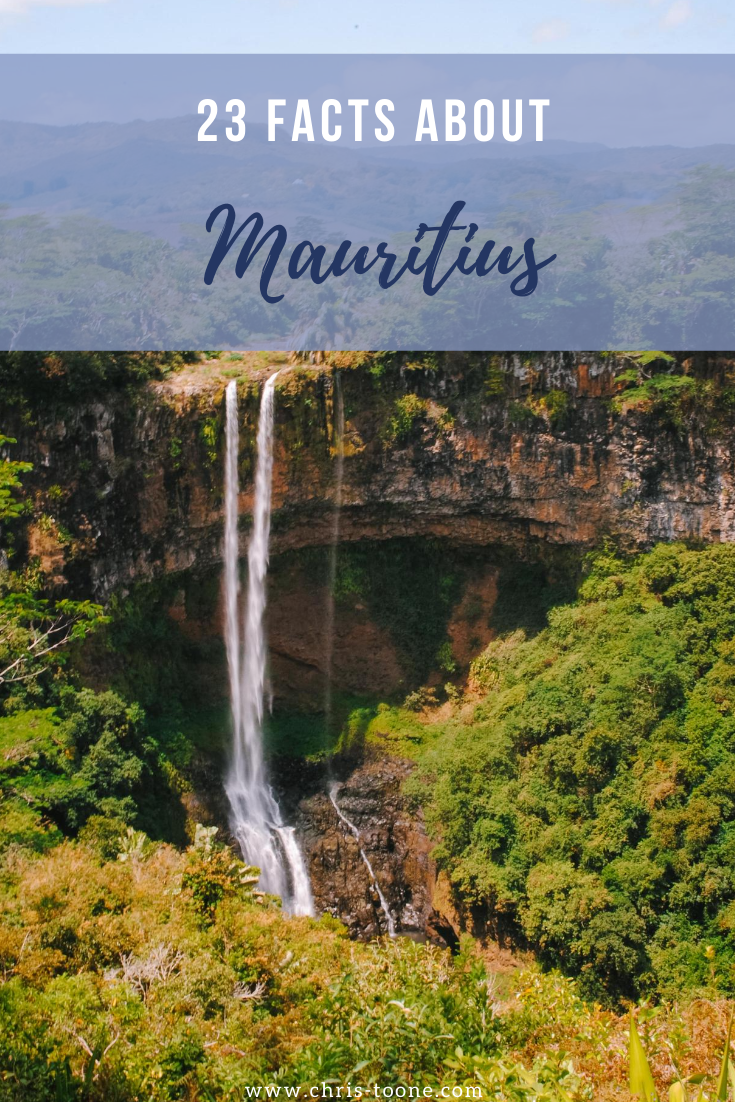
Chamarel Falls, Mauritius
10. The Dodo Bird reigns supreme
Well… not really. The exotic flightless bird is now extinct, but Mauritius was the only known habitat. Due to the island’s lack of predators, the bird eventually lost it’s ability to fly.
11. Mauritius is a proud possessor of the UN Development Programs highest Human Development Index in all of Africa
Between 1990 and 2018, the country’s Human Development Index (HDI) increased from 0.620 to 0.796. The country is currently ranked 66th in the entire world and highest amongst the African continent.
12. More than 1.36 million visitors step foot onto the island each year
This figure significantly outnumbers the local Mauritian population.
13. Mauritius is a volcanic island that first rose 8 million years ago
14. The country does not maintain a standing army
Starting the see the peaceful mindset theme?
15. Port Louis is home to 40% of the population
This capital city was established back in 1736 by the French East Indian Company.

Port Louis, Mauritius
16. It’s widely believed that a stuffed Dodo Bird at the Oxford University Museum of Natural History inspired Lewis Carroll to write Alice in Wonderland
Thank you, Dodo bird.
17. Sugarcane is grown on around 90% of cultivated land in Mauritius
Other major land use includes tea, corn, potatoes, bananas, cattle and goats.
18. Black River Gorges National Park is home to one of the world’s rarest birds
Bird watchers worldwide flock here for a chance to spot the Mauritian Pink Pigeon.

Black River Gorge from above | Mauritius
19. The La Vanille Nature Park boasts an expansive collection of captive-bred giant Aldabra tortoises
The numbers stretch into the thousands and it’s a popular stopping point amongst visitors.

Giant Tortoise | Mauritius
20. Local cuisine is a tasty blend of Creole, Indian, Chinese, and French
Let your imagination (and taste buds) run wild.
21. The Grand Bassin Lake, or Ganga Talao, is Mauritius’ most sacred pilgrimage site for Hindus
A statue of Shiva lives along the lake and Hindus travel here annually to pay their respects.

Grand Bassin Lake, Mauritius
22. Sir Seewoosagur Ramgoolam Botanical Garden is the oldest in the Southern Hemisphere
23. Mauritius has received the World’s Leading Island Destination award not one, not two, but THREE times in the past decade
Between the exotic wildlife, lush mountains, and stunning beaches, it’s actually a mystery as to why they haven’t won it more.
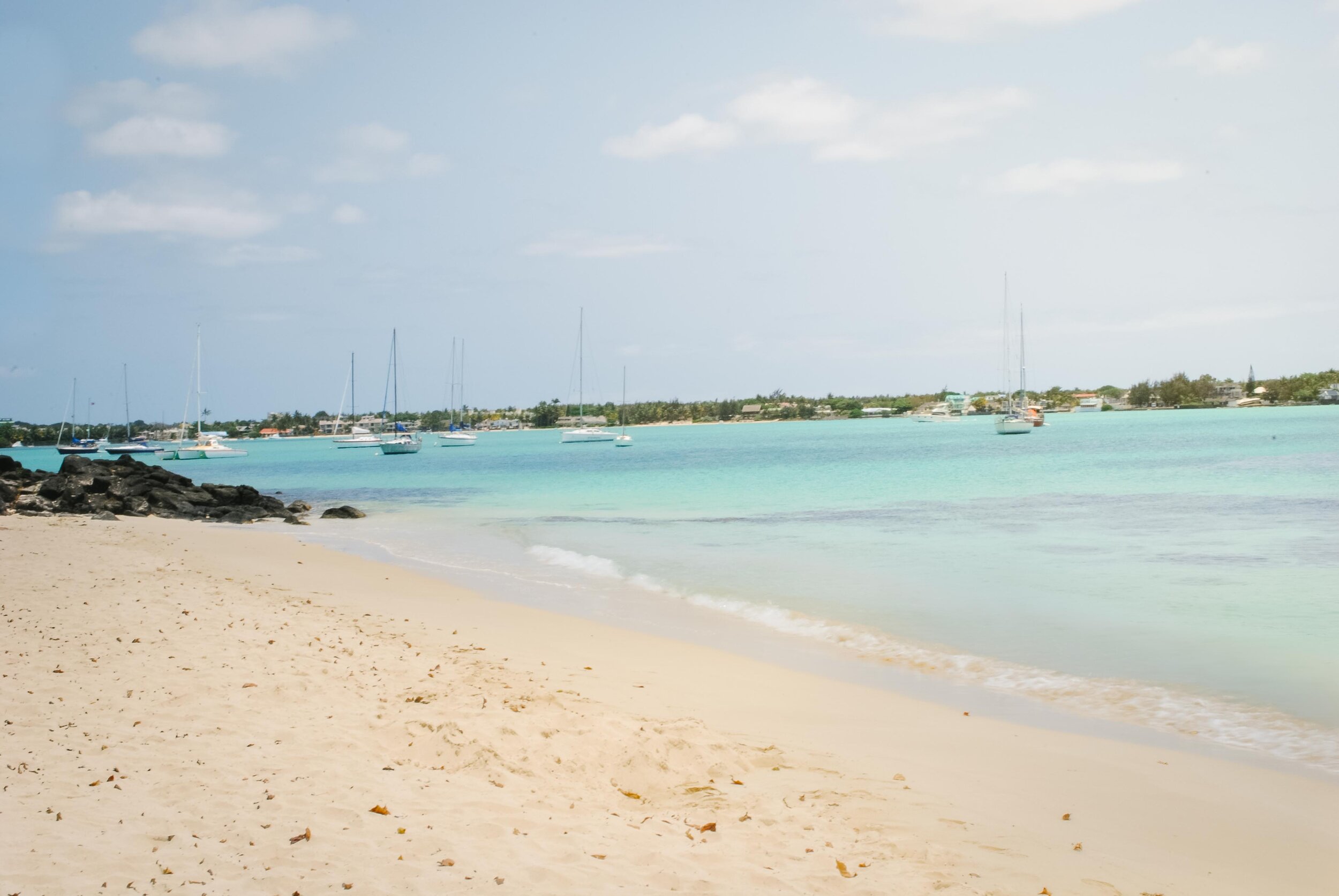
Grand Baie, Mauritius
Ready to plan your trip?
Check out these hand-picked tours!
Enjoy what you read? Pin it for later!




10 Binge Worthy Travel Shows to Keep Your Wanderlust Alive
Quarantined at home but want to keep the travel bug alive? Here are 10 binge worthy shows that will provide that spark you need to keep wondering until we’re able to wander again. Cheers!
If your quarantine is going as well as mine, then congratulations on working your way through the new season of Ozark, a complete re-run of The Office, and all six seasons of Community! Now what?
No, the answer is NOT Tiger King and I’ll be offended if you even so much as think about suggesting it!
In all seriousness, there’s been a lot of creative ways to continue to “travel from home” and all of the streaming services that we’ve been relying on so much make it easier than ever to keep wandering this beautiful planet.
Here’s a list of 10 binge-worthy shows to stimulate your mind and pique your curiosity. Grab the popcorn and let’s dive in; happy travels!
1. THE KINDNESS DIARIES - Netflix

Photo credit: Deseret News
In a world that’s desperate for good news, let’s just cut to the chase: watch The Kindness Diaries on Netflix.
Leon Logothetis ships his vintage Volkswagen Beetle to Alaska and sets out on the journey of a lifetime as he drives from the last frontier all the way down to Ushuaia, Argentina while relying solely on the kindness of strangers.
Throughout his travels, Leon builds connections and, when the timing is right, spreads joy through the gift of opportunity whether it’s seed money for a non-profit, building an addition to a house, and or funding a street musician’s travels for a year.
Sure, there are definitely moments that feel scripted and it’s hard to tell if he actually relied only on the kindness of strangers from start to finish, but that’s not what makes the show so incredible anyways! It’s the adventure, stunning landscapes, and human connection that make it worth the watch.
Get ready to be filled with joy and hope; two things that we can always use more of in life.
2. SOMEBODY FEED PHIL - Netflix

Photo Credit: Eater
Combine a comedian with exotic foods from around the world and what do you get? Somebody Feed Phil!
In all honesty, I too would like a television show that not only allows me to travel the world but also ever-so-bluntly demands to be fed.
Follow Phil Rosenthal, the creator of Everybody Loves Raymond, on his quest for total enlightenment through food.
Ok, that description might be a bit much, but he does seek out some delicious destinations! Chowing down on crawfish in New Orleans, exploring the floating markets of Bangkok, and re-connecting with his heritage in Tel Aviv are just a few of his adventures.
It’s a far cry from the strict street food diet I so often follow during travels of my own, but it’s a great show to learn about the various origins of cultural cuisine and how local food scenes are adapting to the changing times.
Season 3, The Third Course, is released on May 29th and I can’t wait to dive in!
3. SAMANTHA BROWN’S PLACES TO LOVE - PBS Online

Photo Credit: Samantha Brown
Some may call it a blast from the past, but the truth is Samantha Brown never left the hearts of travelers and she’s back with a brand new series: Samantha Brown’s Places to Love.
The epitome of a traveler and a master of inclusion, Samantha bridges the oft-ignored gap between being a tourist and connecting with local culture on a deeper level.
Learn about the chicken & beer fad in South Korea, dip into the famed hot baths in Budapest, or start to plan your next adventure stateside. Whatever your budget, the show brings a variety of destinations, both in the USA and abroad, straight into your home.
All 38 episodes can be streamed for FREE at PBS.org, so bonus points for Samantha Brown!
4. THE AMAZING RACE - Hulu

Photo Credit: The Travel Channel
The Amazing Race is the only reality television show worth watching because it’s less about drama and more about the world.
Of course, the producers do a great job of pitting teams against each as all reality shows do, but it’s much easier to focus on the insane filming locations than the squabbles themselves. It’s doesn’t take much to get hooked as contestants soar high above the Swiss Alps, deliver goods through the hectic streets of India and race to make the next train, leaving nothing but blood, sweat, and a lot of tears behind.
Honestly, it’s the adventure we all dream of having.
The best part? Every single season is streaming on Hulu. That’s right, folks. You can take twenty-nine trips around the world by binging The Amazing Race.
Quarantine seems like the perfect time to begin crafting the next great audition tape and studying up on potential opponents, no?
5. STREET FOOD (ASIA) - Netflix

Photo Credit: Indulgent Eats
The moment I stepped inside of Gwangjang Market in Seoul I could feel the tradition oozing from halls. It wasn’t hectic like other places I’ve been around the world. No one was trying to usher my bum to their stall or waving menus in my face. This was different.
I didn’t know the extent of the untold stories here until Netflix released their Street Food documentary, chronicling the lives of street vendors around the world, including the Gwangjang Market of South Korea.
The nine-part series itself is a masterpiece of familial ties, deep-rooted tradition, and resilience while offering a rare glimpse beyond the packed stalls and smoke-filled air and into the lives of those who make it all happen.
Next time you find yourself engulfing a bowl of steamy pho on the streets of Ho Chi Minh City, pause for a moment to wonder about the story behind it. Chances are you won't be disappointed!
6. ANTHONY BOURDAIN: NO RESERVATIONS - Hulu

Photo Credit: Vietnam Travel
It’s difficult to find the words to adequately express how significantly Anthony Bourdain’s work has impacted my life. His ability to mix wonder with cynicism to create the perspective and humility required to explore and learn about the world is unmatched, especially in the travel television sphere.
He had a good run with CNN’s Parts Unknown and, to be honest, I will gladly ingest any piece of his work, but there’s something special about his original role with No Reservations.
What does this show have that others don’t?
There’s no gaudy facade, rather a travel experience that’s stripped to the bare bones of humanity. It can be difficult to watch at times but to see his reactions and how his experiences affect and ultimately transform him over time is what draws me in.
The rawness of it all makes it relatable and, especially now, we could all use a new lens to understand the world through. No Reservations is the gateway to a fresh perspective.
7. HOUSE HUNTERS INTERNATIONAL - Hulu

Photo Credit: The Toast
Anyone else in the “ex-pat wannabe” club or is it just me?
Either way, House Hunters International is the perfect mindless binge while still satisfying that nagging dream of owning a beach house in the Caribbean. After all, it’s always fun to reminisce about the life that was just one lottery number away from coming true!
It’s inevitable that the lure of living through these lucky travelers will wear off so when the interest levels peak and jealousy and contempt rear their ugly heads (come on Karen, you can paint a wall… just pick house #3 already), there’s only one proper solution: the House Hunters International drinking game.
Let the house tours (and drinks) begin!
8. INTO THE OKAVANGO - Disney+

Photo Credit: Disney+
Into the Okavango is a modern-day exploration film for the ages, spanning four-months, 1,500-miles, and three countries.
The goal? To save the Okavanga Delta, one of Earth’s final wetlands. During my first viewing of the documentary, I was simply in awe of the stunning scenery.
It was certainly enough to get the wanderlust juices flowing and as I closed my eyes that night I couldn’t help but visualize just how much of the world is still untouched.
The second time though, the incredible story of this band of first-time international explorers came to light as they mapped previously unknown landscapes while overcoming a treacherous journey for the greater good and protection of both animals and humans alike.
Truly an inspiring story and a great flick for a family movie night!
9. SALT, FAT, ACID, HEAT - Netflix

Photo Credit: Variety
Sharing the title with her New York Times bestselling book Salt, Fat, Acid, Heat, Samin Nosrat opens the door to the culinary world that often feels closed to travelers that are passing simply passing through.
It’s a must-watch series for culinary artists as Samin travels the world and explores the four basic ingredients to delicious food, but it’s equally enjoyable for those clumsy cooks in the kitchen, such as myself.
My personal favorite is her trip around Japan, exploring the role of salt in two key ingredients of cooking that both have a deep-rooted tradition: miso and soy sauce.
Get ready to learn some new recipes to try during quarantine after binging Salt, Fat, Acid, Heat!
10. BIZARRE FOODS - Hulu

Photo Credit: The Travel
Is it possible to name a show more aptly than this? Probably not, although I suppose The Amazing Race is pretty spot-on, too.
From beef lungs in Panama to tuna eyeballs in Japan and even jellied moose nose in Canada, Andrew Zimmern gives even the most open-minded eaters a run for their money while simultaneously assuring those that are picky that they made the right choice. He’s living proof that the slimy creature you saw squiggling around the market will not kill you and, in all likelihood, will taste delicious.
Whether gearing up for a game of food roulette on my next adventure or simply living vicariously through a man that quite literally gets paid to eat his way around the world, this is a timeless show that’s guaranteed to expose viewers to how vastly different the world can seem through food, yet how interconnected it is through human connection.
Bon appetit!
What’s your go-to travel shows? Are they any great ones that I’ve missed? Let me know in the comments below!
Stay safe, healthy and, above all else, wash your hands! Hope you and your loved ones are safe.
Pin this post!





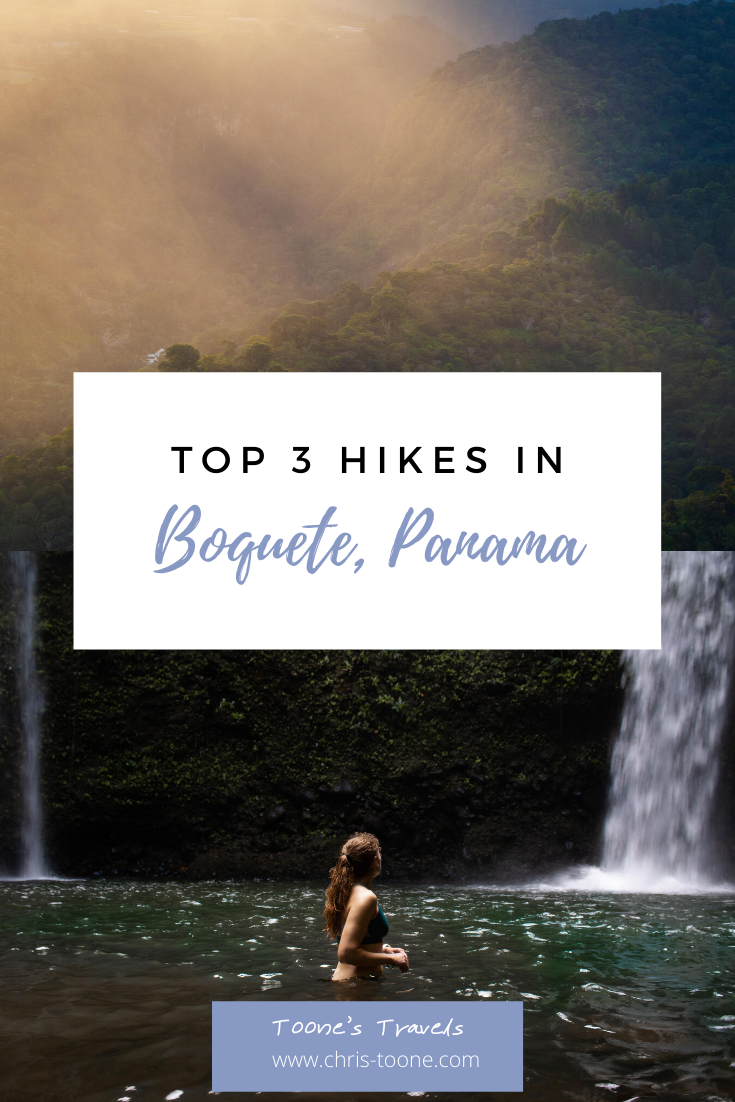
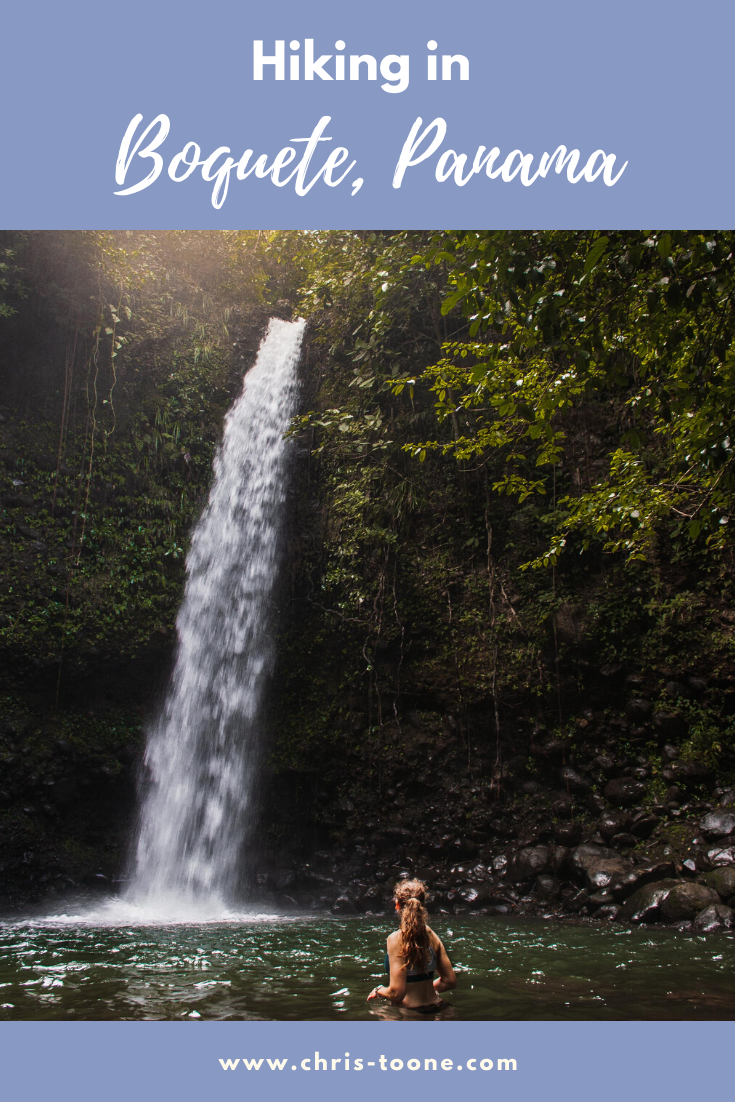
Top 3 hikes in Boquete, Panama
Drive 480km west of Panama City, Panama and the urban metropolis quickly yields way to a seemingly endless supply of rolling mountains and verdant jungle, eventually leading to an oasis named Boquete. Here are the top 3 hikes when visiting Boquete, Panama!
Drive 480km west of Panama City, Panama and the urban metropolis quickly yields way to a seemingly endless supply of rolling mountains and verdant jungle, eventually leading to an oasis named Boquete.
This mountainous town is nestled within a small valley of the Chiriqui Province and is widely known for being the home of the world’s best coffee. Despite this claim to fame, nature lovers from around the world flock here explore the seemingly endless supply of trails and untouched nature.
Although slightly overrun with ex-pats in recent years, Boquete still offers visitors a calming escape, whether sipping a cup of coffee in the foothills or roaming the numerous dirt paths that wind through the jungle.
My time in Boquete was spent hiking by day and enjoying the rolling thunderstorms as the made way for starry skies at night. To be honest, it was my favorite part of my 8-day trip to Panama and I can’t wait to get back!
Here are the top 3 hikes, plus a few others, for your trip to Boquete, Panama!
PIPELINE TRAIL
The Pipeline Trail in Boquete is aptly named because, well, it follows a pipeline along the river before culminating at a cascading waterfall. It’s one of the more popular trails in the area so the earlier you can go, the better.
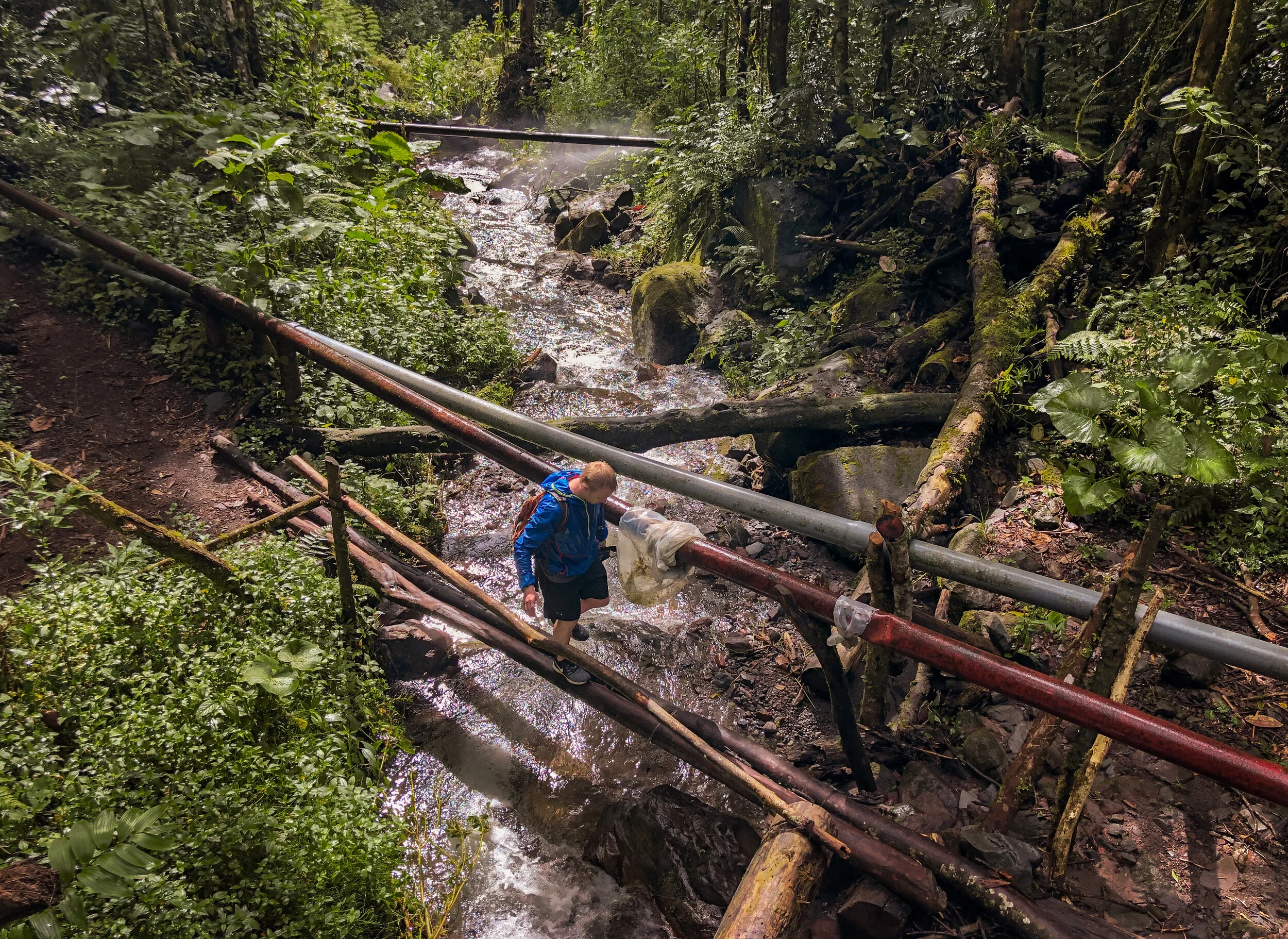
Pipeline Trail | Boquete, Panama
What to Expect
The hike itself is relatively flat the entire way, making it easy to be on the lookout for wildlife. AllTrails has it listed as moderate, although I’d say it was certainly a family-friendly jaunt through the jungle.
There were a few spots that may be more difficult for those with limited mobility.
Local villagers regulate the Pipeline Trail. Don’t be surprised when someone appears and asks you to sign in and for 5 USD per person. It’s completely legitimate. Just don’t forget to mark yourself as “returned” on your way back to town!
After paying, we followed the trail as it quickly entered the dense Panamanian jungle. We were on high alert for snakes, howler monkeys, and more, although we had no such luck.
The Pipeline Trail is also widely known as a prime viewing spot for the elusive Quetzal, Panama’s most popular bird.
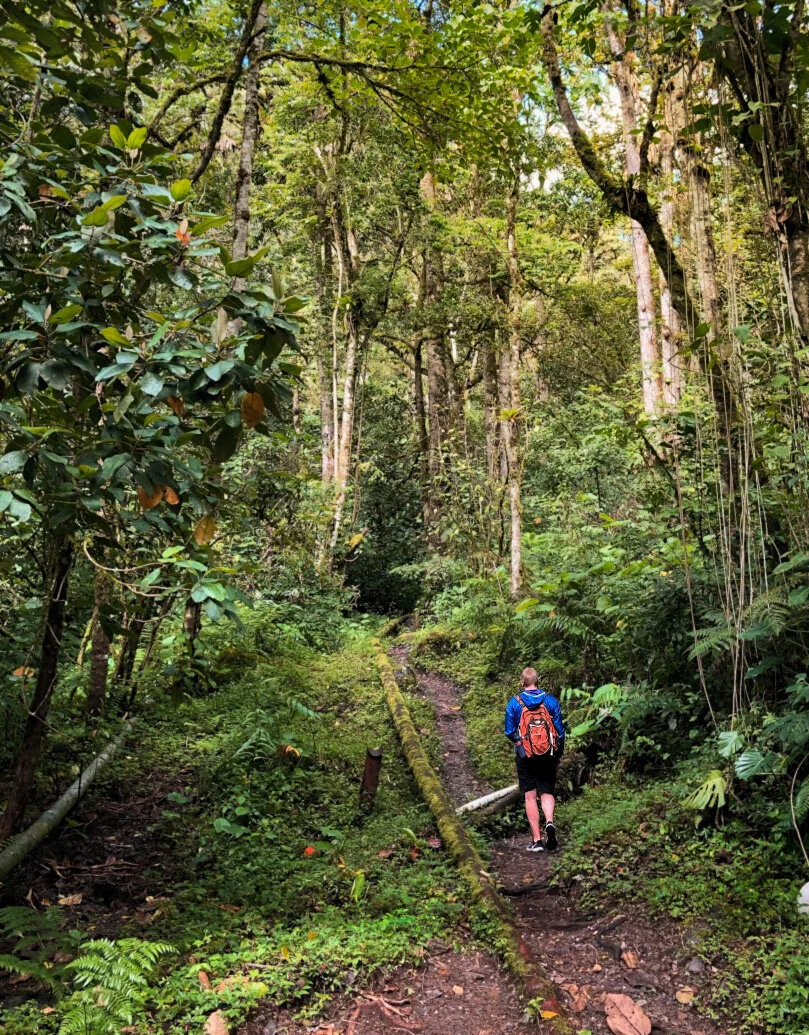
The Pipeline Trail as it enters the dense jungle in Boquete, Panama
Along the trail, we stumbled upon a 1,000-year-old tree. It stood majestically along the left side of the trail, subtly marked and easy to miss if we hadn't been in search of a convenient spot for a water break.
As we continued on and the dense jungle gave way to a towering canyon, the end was near. In the distance, we could begin to see the waterfall as it cascaded down from high above.
The slow-moving water provided a mist and a refreshing hangout spot to cool off from the humidity we had endured throughout the hike.
An hour and several pictures later, it was time to head back the exact same we had arrived, sign-out, and drive back to town.
When I first arrived in Boquete, I was a bit nervous. I have plenty of experience hiking in the desert and mountains, but very little within the jungle. I found the Pipeline Trail to be a great introductory hike to the region and it gave me the spark of confidence I needed to explore elsewhere!

The 1,000+ year old tree located along the Pipeline Trail in Boquete, Panama
The Facts
Elevation Gain: 1,528 feet
Distance: 3.8 miles out and back
Time: Estimated 2-3 hours depending on pace
Cost: 5 USD per person
Wildlife Viewing: Quetzal birds, snakes, howler monkeys
Getting There
From Boquete, head towards Los Naranjos and follow signs to Bajo Mono. Eventually the road will lead to a sign post that says PIPELINE. Park there and walk up the gravel road. You’ll know that you are in the correct place when you spot a hut to the left. That’s where the trail fee will need to be paid.
CHOCLON WATERFALL
Choclon Waterfall is a lesser-known trail located 40 minutes south of Boquete where twin waterfalls fill a secluded swimming hole at the end of a small gorge.
The path through the jungle is not regularly maintained nor is it distinctly marked, but if you know where you’re going it’s a simple hike.

Swimming at Choclon Waterfall in Boquete, Panama
What to Expect
I originally stumbled upon a picture of Choclon Waterfall while planning my trip down to Panama and immediately decided that it should be added to the itinerary. There was only one problem: Nothing I read told me where to find the trailhead.
Long story short, I was eventually able to track down GPS coordinates to the starting point, marked only by a closed gate and a small path through the barbed wire fencing.
We started the hike by sauntering across an open field before quickly descending to the jungle trail that led to a junction. After much deliberation, Heather and I realized that we had to go up and over a small gate rather than continue following the open trail.
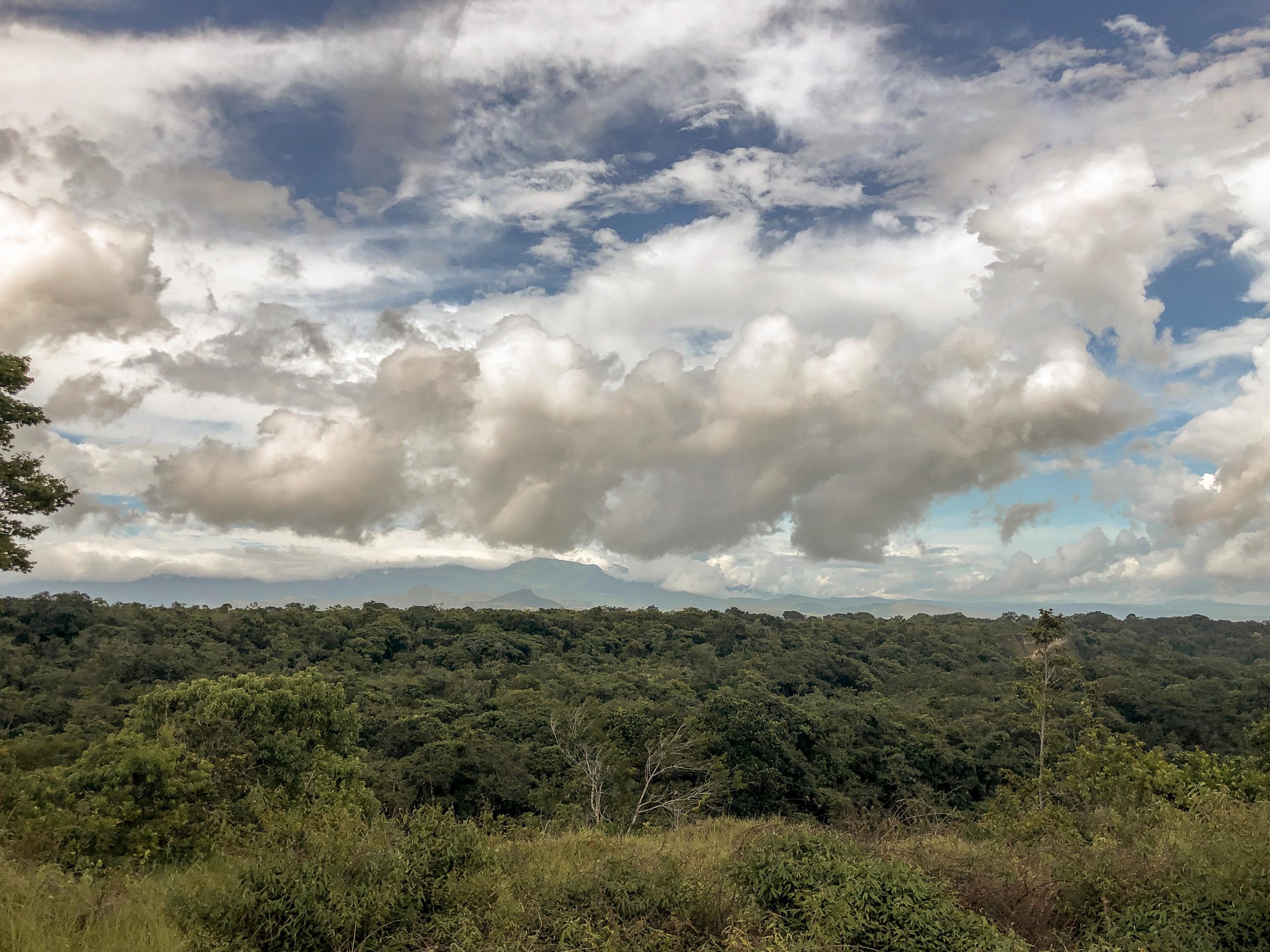
View from the start of the hike before descending into the jungle
After the gate, the path is relatively short and easy to navigate. There were a couple of sections that rain had washed out, so be sure to watch your footing as you hug the wall of the gorge and use the ropes for provided support when available. They’re there for a reason!
A short through the overgrown brush and we had reached the river. Although we waded across the water, take a left instead and head upstream.
We were soon greeted by a magical amphitheater of hanging vines, beautiful waterfalls, and our very own private swimming hole.
We shed our clothes and jumped in as the soft sunlight shone through the canopy above and illuminated the refreshing blue water. It was the perfect ending to a full day of adventure!
To read more about the adventure, visit this post: Chasing Choclon Waterfall

Swimming at Choclon Waterfall in Boquete, Panama
The Facts
Due to the lack of information surrounding Choclon Waterfall, here’s what I can offer:
Elevation Gain: Unknown, but remember that it is a gorge trail, so the ascent will occur on the way back to the trailhead
Distance: Unknown
Time: 30min from trailhead
Cost: Free
Wildlife Viewing: Poison dart frogs, various birds and snakes
Getting There
The easiest way to find the trailhead is by tracking mileage.
From Boquete, travel south via Highway 41. As you pass by Faro Panama (the giant lighthouse), start paying attention to the odometer. Approximately 7.2km later, there will be a sharp right turn. If you reach the town of Nuevo Dolega, then you’ve gone too far by 4km.
Follow the road straight. Eventually you’ll reach a junction where the road swings left. On the lefthand side will be a closed gate with a small opening in the barbed wire fencing. This is the trailhead!
LA PEIDRA DE LINO
A short but steep hike, La Piedra de Lino is the equivalent of an endless stair-stepper machine. If you can grin through the pain, the reward at the top is worth it as the trail offers the best views over the Boquete valley below.
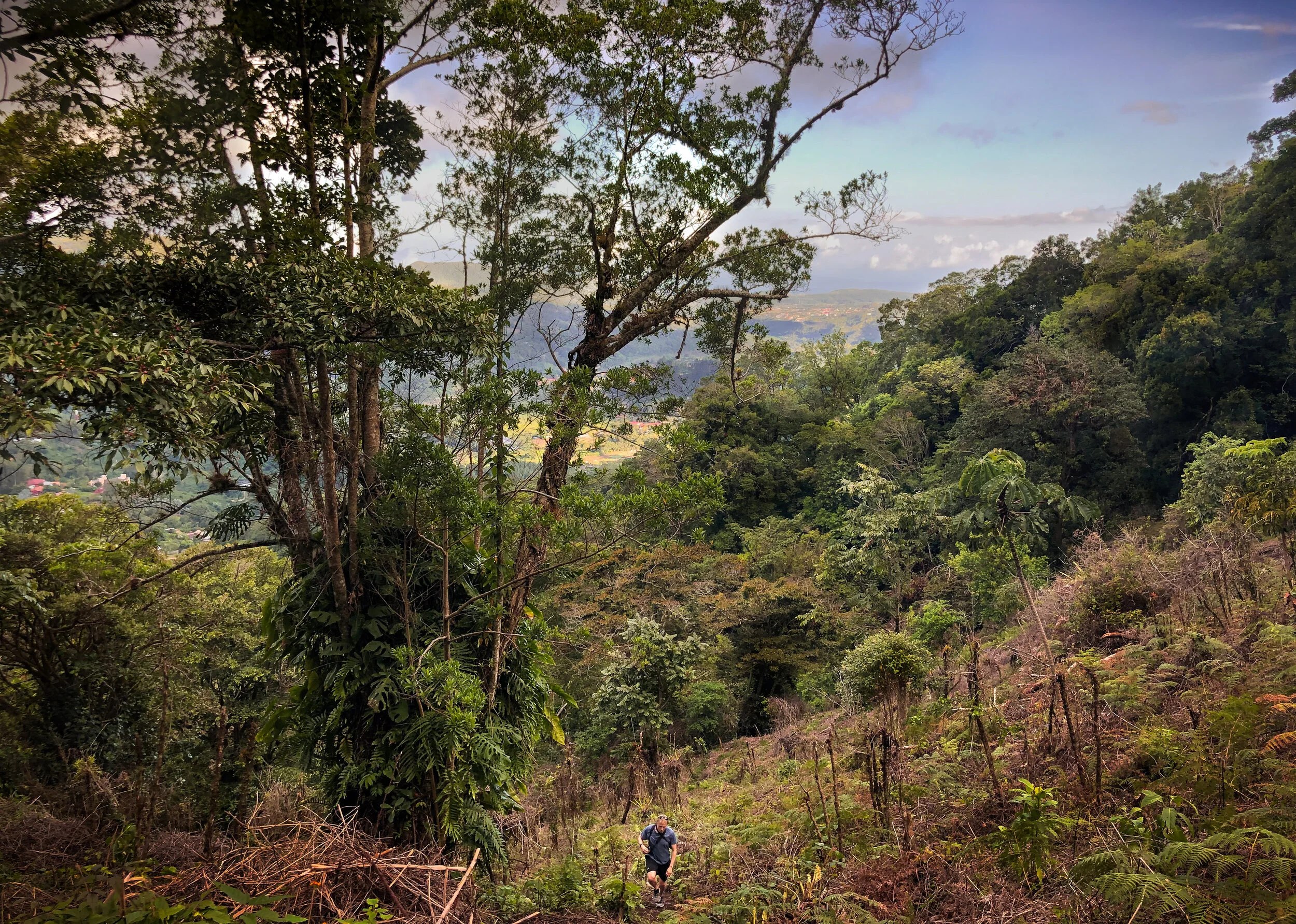
Climbing the steep terrain of the La Piedra de Lino hike in Boquete, Panama
What to Expect
La Piedra de Lino directly translates as “the rock of Lino,” a small community 4km from Boquete. The trailhead is clearly marked, making it one of the easier hikes in the area to find.
The steep path started right away as we made our way up the driveways and we were instantly grateful that we had chosen to give ourselves an afternoon full of rest and relaxation around town before tackling this hike.
Once we entered the jungle we passed by an abandoned house before continuing up, regularly turning around to “enjoy the view” because neither of us wanted to admit how out of shape the terrain made us feel.
Our trip to Panama coincided with the start of the rainy season, which meant that the trail was slippery and washed out in some areas. We hiked in running shoes, but in hindsight would have been much better off bringing a shoe with better tread and a pair of walking poles.
The hike continued to be one recurring theme: up, up, up.
Once at the top we traversed the ridge through a small shaded area, stopping only to graciously allow a snake to cross the path in front of us.

Clouds moving through the jungle at sunset as seen from the top of La Peidra de Lino
All of the pain and suffering immediately subsided when at the clearing we were greeted to the most spectacular view I witnessed during my time in Panama. To the right were soft clouds moving quickly through the mountains while to the left was a picture-perfect view of Boquete.
Needless to say, it was worth the effort and timing it with the sunset was a bonus (just remember to pack a headlamp for the way down)!

Looking over Boquete, Panama from the top of the La Piedra de Lino trail
The Facts
Elevation Gain: 322m
Distance: 2.7km
Time: 40min, but varies greatly based upon fitness level
Cost: Free
Wildlife Viewing: Birds and snakes
How to Get There
Have a GPS available? Simply search for Hostal Casa Pedro and this will lead you straight to the trailhead. If you don’t see a sign that reads “Sendero La Piedra de Lino” then you’re in the wrong place!
If this luxury isn’t available to you, simply head north on Via Boquete and turn right at Avenue Buenos Aires. This road takes you straight to the trail and all you’ll need to do is be on the lookout for the white sign.
If you reach IL Pianista, then you’ve gone too far.
BONUS HIKES
El Pianista
A 3-4 hour out and back trail with 2,000 meters of elevation gain, El Pianista leads you through a moody cloud forest that’s dripping with life before arriving that the summit.
The trail made headlines around the world when two dutch girls in their early 20’s went missing back in 2014. Although officially ruled a hiking accident, many locals believe that Lisanne and Kris were met by foul play in the jungle.
The Lost Waterfalls
One of the more popular hikes in Boquete, The Lost Waterfalls trail winds through the dense jungle, over a suspension bridge, and culminates at 3 stunningly beautiful waterfalls.
Sendero Los Quetzales
Sendero Los Quetzales is a 15.6 mile trail that connects Boquete to Cerro Punta through the jungle. It’s common to hike sections of the path in search of the elusive Quetzal bird.
Volcan Baru
It’s often suggested to begin this 15 mile trail at midnight in order to reach the summit of the tallest mountain in Panama by sunrise. On a clear day, it’s possible to see both the Caribbean Sea and the Pacific Ocean from the top.
Whether you prefer sauntering along in search of diverse wildlife or grinding out elevation gains to the top of a peak, Boquete is truly a mecca for nature lovers and was hands down my favorite stop during our Panamanian adventure. Next time, I plan on spending far longer than 2 days hiking around the town!
Have you ever been to Boquete before? Have a favorite hike abroad? Let me know in the comments below!
Thanks for reading and as always, stay safe & happy travels.
Ready to pack? Don’t forget these items to make your life easier:








Pin this post for later!


Visiting Panama Viejo: Everything you need to know before you go
Panama Viejo was the first European city built along the Pacific Ocean in the Americas and was established in 1519 by Pedro Arias Davila. Its prime location quickly created a trading metropolis, but that led to attacks from pirates that ultimately destroyed the city. Today, Panama Viejo as a UNESCO World Heritage Site. Here's everything you need to know!
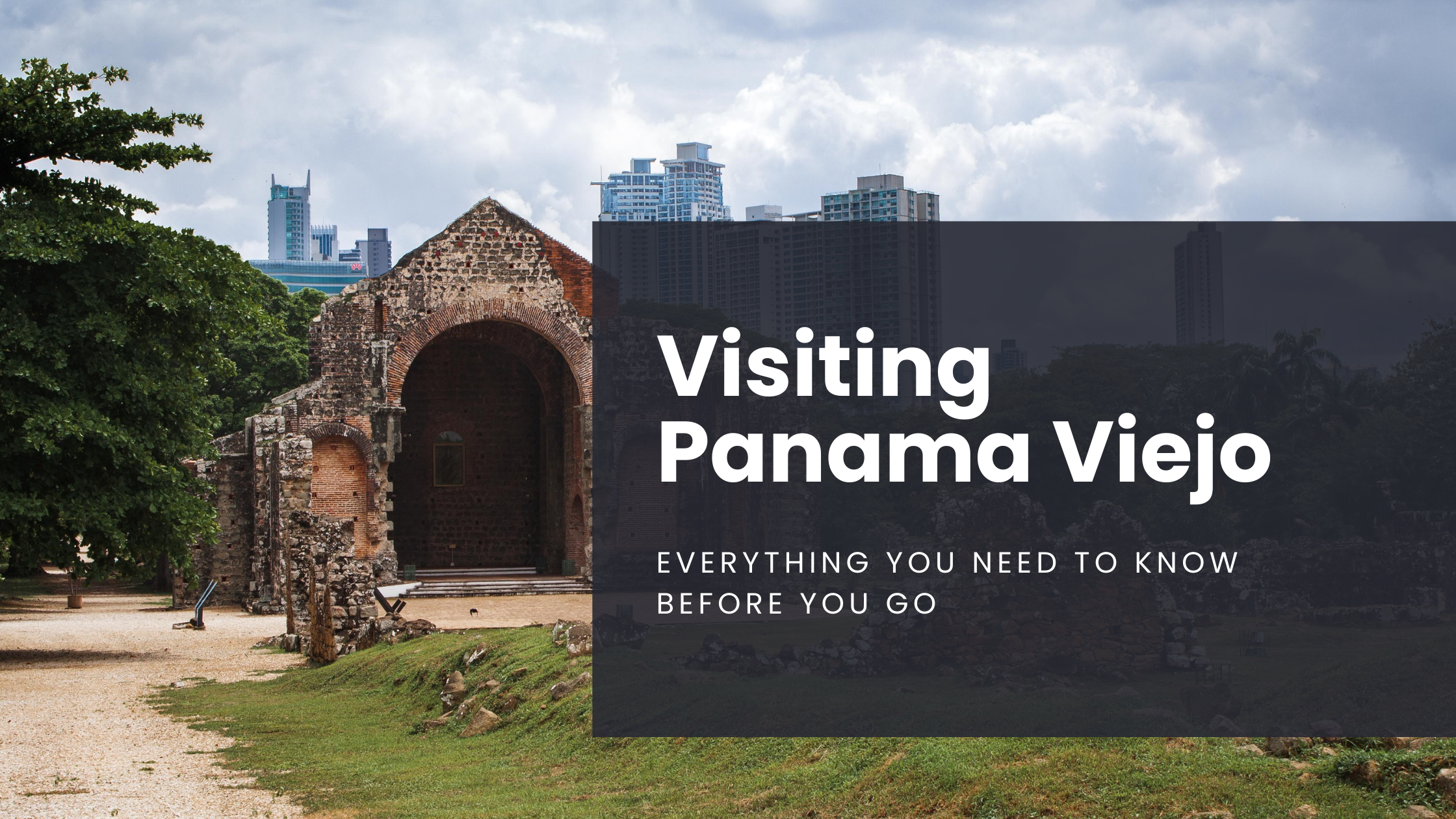
Plan a trip to Panama City, Panama and I’m confident you will quickly discover Casco Viejo, which directly translates as “old town”.
The truth is, although the neighborhood is historical and full of colonial-era architecture, it’s not the original Panama City settlement.
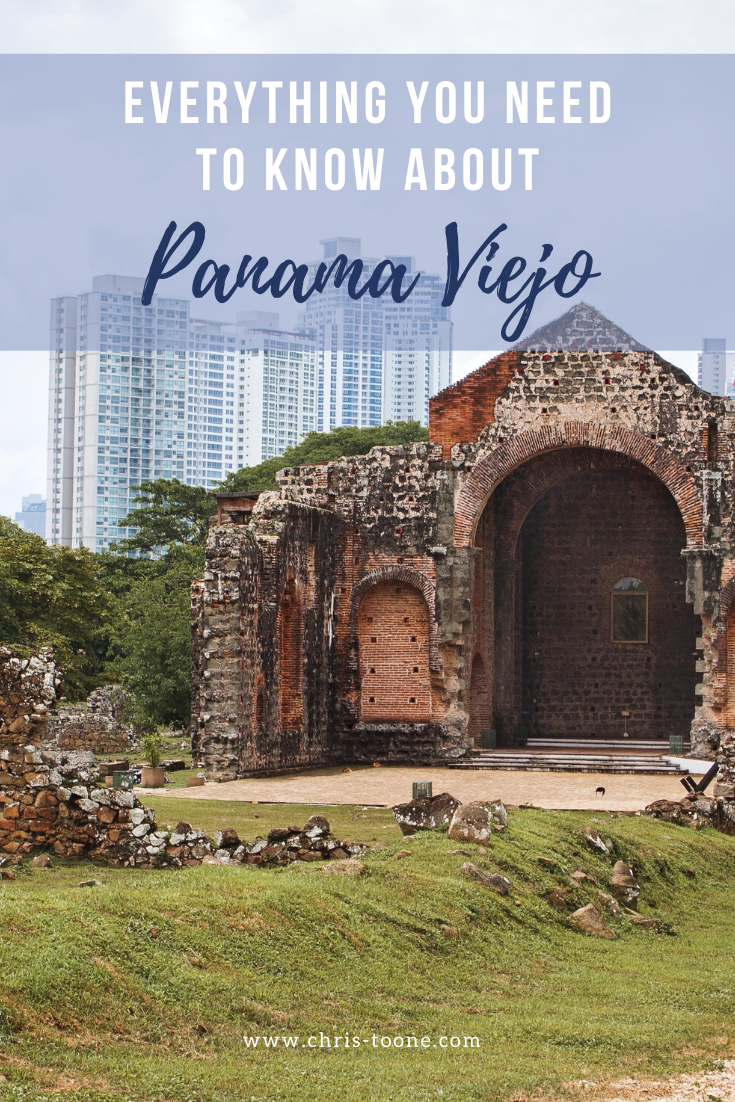
Travel 8km northeast of Casco Viejo and you’ll find Panama Viejo, a sprawling 28 acre space full of crumbling ruins that offers visitors insight into the very first colonial outpost in all of Panama.
Here’s everything you need to know before your visit!
Looking for more Panama ideas? Check out these posts:
THE HISTORY OF PANAMA VIEJO
The first European city built along the Pacific Ocean in the Americas, Panama Viejo, was established in 1519 by Pedro Arias Davila during the Spanish Colonial era.
Situated along a shallow cove, its prime location quickly created a trading metropolis, most notably of gold and silver. Although the settlement was prospering, the ships that transported treasures back to Spain quickly caught the eye of pirates.
In 1671, the attacks came ashore as the famous pirate, Captain Henry Morgan, went for the jugular, ransacking and pillaging Panama Viejo to the point of destruction.
When it was all said and done, thousands of people had perished and the city was left in ruins.
Rather than re-build, the survivors moved and established a new town in what is presently known as Casco Viejo (completed in 1673).
The peninsula in which the new city was settled upon served as a natural geographic defense system while walls, which are still standing to this day, were built as reinforcements.
Fast forward to 1997, Panama Viejo was established as a UNESCO World Heritage Site and is now the most well-funded archaeological site in the entire country.

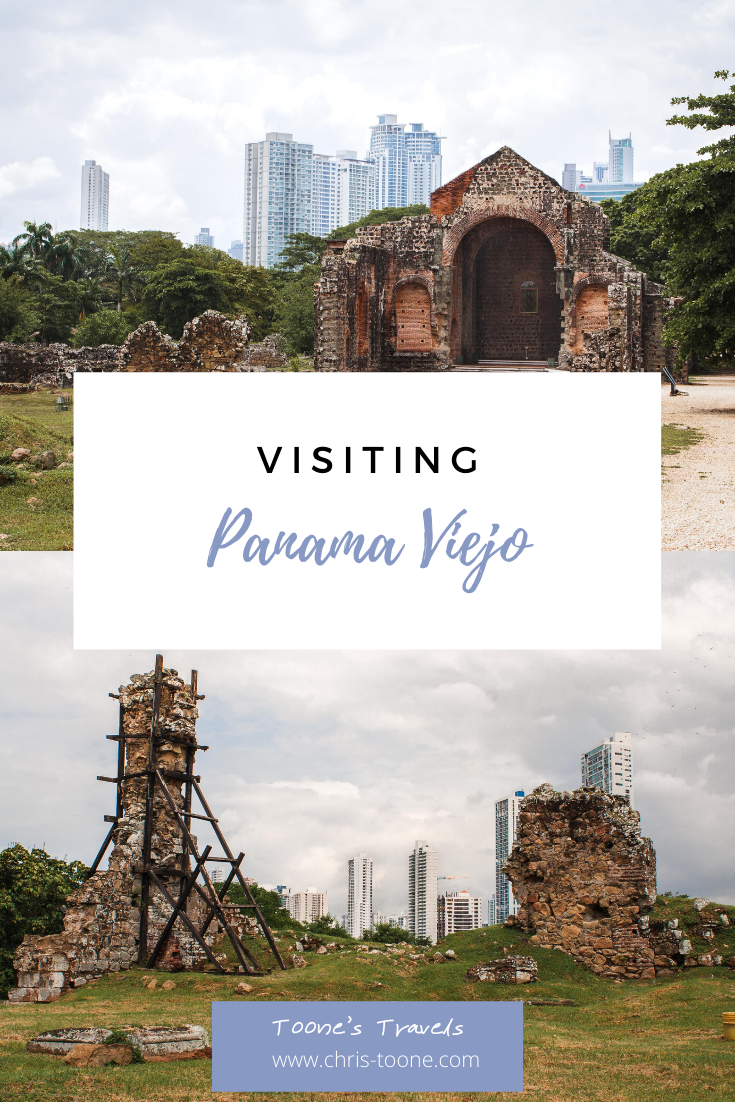
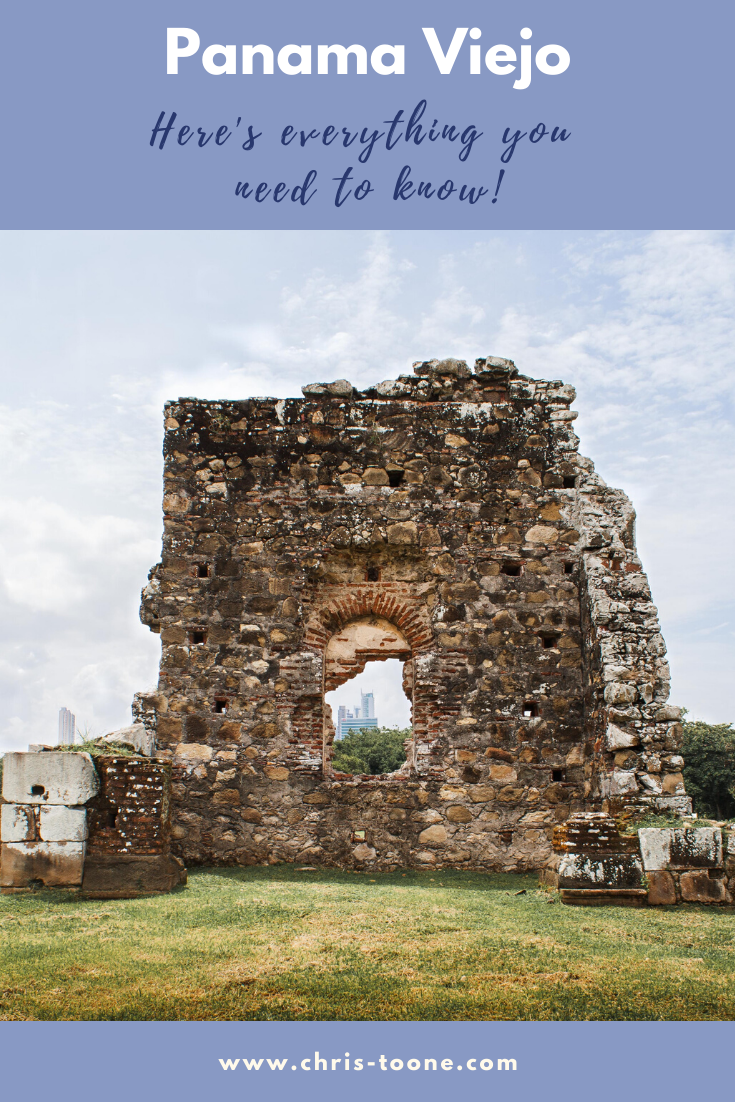
Ruins at the Panama Viejo UNESCO World Heritage Site in Panama City, Panama
GETTING TO PANAMA VIEJO
Panama Viejo is located on the northern end of the city, 8km away from Casco Viejo.
Parking is limited so it’s best to arrive via taxi or Uber, otherwise you can expect to have to park a good distance away and hoof it to the entrance gate.
If arriving by bus, take the following routes:
Panama Viejo-Via Israel-Albrook (departs from Balboa and from Albrook)
Old Panama-Seafood Market (Exits the Seafood Market)
Panama Viejo-Cinta Costera (Departs from Albrook)
Albrook-Via Porras-Cincuentenario (Departs from Albrook and from May 5)
Address: Panama Viejo, Vía Cincuentenario, Panamá, Panama
Phone: +507 226-8915
Hours: 8am - 5pm, closed on Mondays
ENTRANCE FEES
General entrance to the Panama Viejo complex includes access to the walking path through the archaeological park, museum, and viewing platform from the Cathedral tower.
National adults: $10.00
Foreign adults: $15.00
Children: $2.00
Don’t want to plan your trip? Consider one of these top tours:
WHAT TO PACK FOR PANAMA VIEJO
Water Bottle - There is a cafe near the Cathedral tower, but bring your own bottle and save some money.
Daypack - The best way to explore the ruins is to walk amongst them, so it’s important to have a convenient way to carry your camera, water bottle, sunscreen, etc. This Cotopaxi Allpa is my new go-to!
Rain jacket - Rainy season hits Panama between the months of April and December. I was caught huddling under a tree for shelter more than once during my visit. Don’t be like me; go prepared.
Comfortable Shoes - It’s a 15 minute walk from the ticket booth to the heart of the ruins, so make sure to dress accordingly (a free shuttling service is provided for those in need).
Panama SIM Card - This guarantees you can you easily get to/from Panama Viejo by using apps like Uber. Check out the world’s first e-sim store to make things easier.
Power Bank - It’s easy to spend up to two hours wandering around the ruins. Be sure to pack some extra power to be able to easily charge your devices. You don’t want to get caught in the rain with a dead phone battery!
WHAT TO EXPECT AT PANAMA VIEJO
First things first: Visit the museum on the grounds to get a better understanding of all that Panama Viejo represents.
The exhibits trace history from pre-colonial times through the era of Spanish conquistadors as well as original maps of the settlement and history of pirate activity in the area.
At the very least, it serves a great and informative shelter from the rain!
Once you feel your knowledge is sufficient, then it’s to time to wander amongst the ruins.

Ruins of the Iglesia y Convento de San Francisco looking towards a modern Panama City, Panama
There are set pathways throughout the grounds, but it’s completely acceptable to get up close and personal as long as a sense of respect is maintained. Remember: You don’t want to be the tourist that’s caught damaging a World Heritage Site!
The archaeological complex was fascinating in its own right, but what struck me the most was that the ruins were situated next to a major highway with downtown Panama City as a backdrop, skyscrapers and all.
The contrast between old and new was stark and certainly thought-provoking. It really gave a whole new perspective as to the growth that the area has seen over the centuries, so don’t forget to look beyond what first meets your eyes. See the whole picture and take a moment to process the spectrum of history that stands before you.
Iglesia y Convento de la Concepción is one of the most well-preserved buildings in the complex while the tower of the Catedral de Nuestra Señora de la Asunción allows visitors the chance climb the stairs to the top and look out over the expansive ruins.

The Iglesia y Convento de la Concepción standing tall at Panama Viejo
Other buildings of note include the Casa Reales (Royal Houses) where the center of the town’s power resided, Cabildo de la Ciudad (City Hall) and Casa Alarcón (Panama Viejo’s largest known private residence).
Although visitors flock to Panama City to learn about the canal and roam the colonial quarters of Casco Viejo, a visit to Panama Viejo is a must-do in order to grasp the deep history of this fascinating place. It’s worth the 15 USD entrance fee!
Have you been to Panama City before? What were your thoughts? Let me know in the comments below and until next time, stay safe & happy travels!
Sharing is caring… pin this post!
Commonly known as a “living urban canvas” because it’s constantly being added to, Chicago’s Wabash Arts Corridor feels like an open-air museum full of reclaimed public space. It’s collection of street art is one of the most diverse and expansive in the world, making it the perfect way to experience the Windy City’s South Loop neighborhood!