Visiting Panama Viejo: Everything you need to know before you go
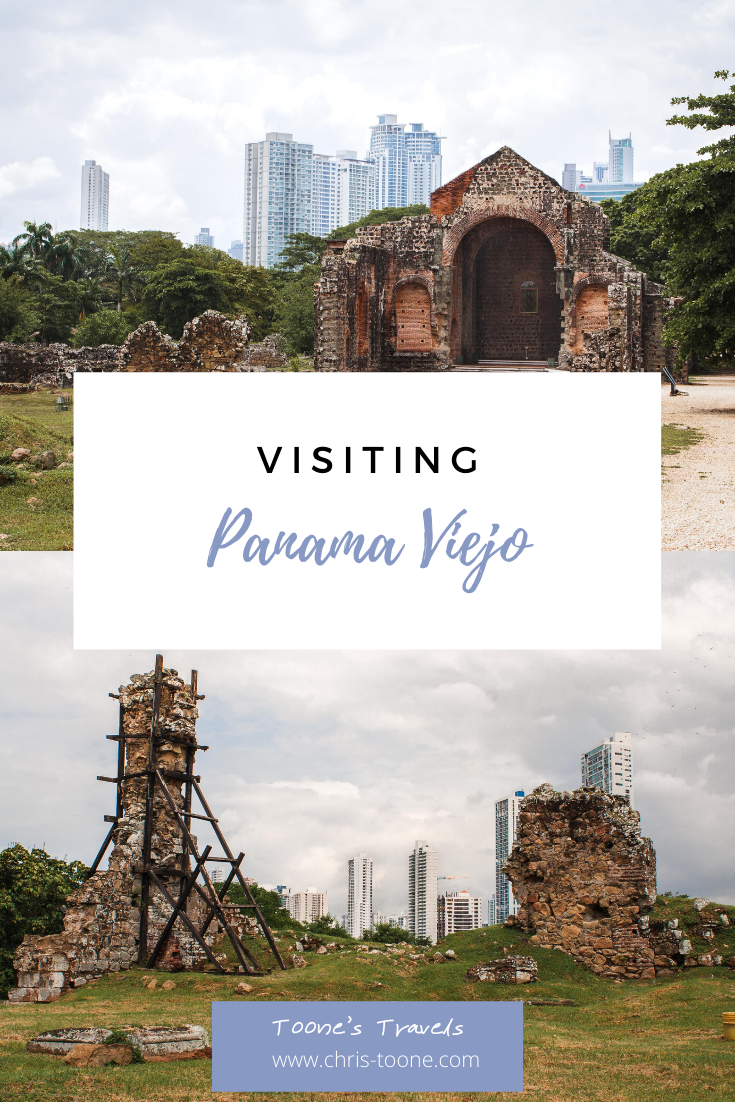
Panama Viejo was the first European city built along the Pacific Ocean in the Americas and was established in 1519 by Pedro Arias Davila. Its prime location quickly created a trading metropolis, but that led to attacks from pirates that ultimately destroyed the city. Today, Panama Viejo as a UNESCO World Heritage Site. Here's everything you need to know!
Plan a trip to Panama City, Panama and I’m confident you will quickly discover Casco Viejo, which directly translates as “old town”.
The truth is, although the neighborhood is historical and full of colonial-era architecture, it’s not the original Panama City settlement.
Travel 8km northeast of Casco Viejo and you’ll find Panama Viejo, a sprawling 28 acre space full of crumbling ruins that offers visitors insight into the very first colonial outpost in all of Panama.
Here’s everything you need to know before your visit!
Looking for more Panama ideas? Check out these posts:
THE HISTORY OF PANAMA VIEJO
The first European city built along the Pacific Ocean in the Americas, Panama Viejo, was established in 1519 by Pedro Arias Davila during the Spanish Colonial era.
Situated along a shallow cove, its prime location quickly created a trading metropolis, most notably of gold and silver. Although the settlement was prospering, the ships that transported treasures back to Spain quickly caught the eye of pirates.
In 1671, the attacks came ashore as the famous pirate, Captain Henry Morgan, went for the jugular, ransacking and pillaging Panama Viejo to the point of destruction.
When it was all said and done, thousands of people had perished and the city was left in ruins.
Rather than re-build, the survivors moved and established a new town in what is presently known as Casco Viejo (completed in 1673).
The peninsula in which the new city was settled upon served as a natural geographic defense system while walls, which are still standing to this day, were built as reinforcements.
Fast forward to 1997, Panama Viejo was established as a UNESCO World Heritage Site and is now the most well-funded archaeological site in the entire country.

Ruins at the Panama Viejo UNESCO World Heritage Site in Panama City, Panama
GETTING TO PANAMA VIEJO
Panama Viejo is located on the northern end of the city, 8km away from Casco Viejo.
Parking is limited so it’s best to arrive via taxi or Uber, otherwise you can expect to have to park a good distance away and hoof it to the entrance gate.
If arriving by bus, take the following routes:
Panama Viejo-Via Israel-Albrook (departs from Balboa and from Albrook)
Old Panama-Seafood Market (Exits the Seafood Market)
Panama Viejo-Cinta Costera (Departs from Albrook)
Albrook-Via Porras-Cincuentenario (Departs from Albrook and from May 5)
Address: Panama Viejo, Vía Cincuentenario, Panamá, Panama
Phone: +507 226-8915
Hours: 8am - 5pm, closed on Mondays
ENTRANCE FEES
General entrance to the Panama Viejo complex includes access to the walking path through the archaeological park, museum, and viewing platform from the Cathedral tower.
National adults: $10.00
Foreign adults: $15.00
Children: $2.00
Don’t want to plan your trip? Consider one of these top tours:
WHAT TO PACK FOR PANAMA VIEJO
Water Bottle - There is a cafe near the Cathedral tower, but bring your own bottle and save some money.
Daypack - The best way to explore the ruins is to walk amongst them, so it’s important to have a convenient way to carry your camera, water bottle, sunscreen, etc. This Cotopaxi Allpa is my new go-to!
Rain jacket - Rainy season hits Panama between the months of April and December. I was caught huddling under a tree for shelter more than once during my visit. Don’t be like me; go prepared.
Comfortable Shoes - It’s a 15 minute walk from the ticket booth to the heart of the ruins, so make sure to dress accordingly (a free shuttling service is provided for those in need).
Panama SIM Card - This guarantees you can you easily get to/from Panama Viejo by using apps like Uber. Check out the world’s first e-sim store to make things easier.
Power Bank - It’s easy to spend up to two hours wandering around the ruins. Be sure to pack some extra power to be able to easily charge your devices. You don’t want to get caught in the rain with a dead phone battery!
WHAT TO EXPECT AT PANAMA VIEJO
First things first: Visit the museum on the grounds to get a better understanding of all that Panama Viejo represents.
The exhibits trace history from pre-colonial times through the era of Spanish conquistadors as well as original maps of the settlement and history of pirate activity in the area.
At the very least, it serves a great and informative shelter from the rain!
Once you feel your knowledge is sufficient, then it’s to time to wander amongst the ruins.

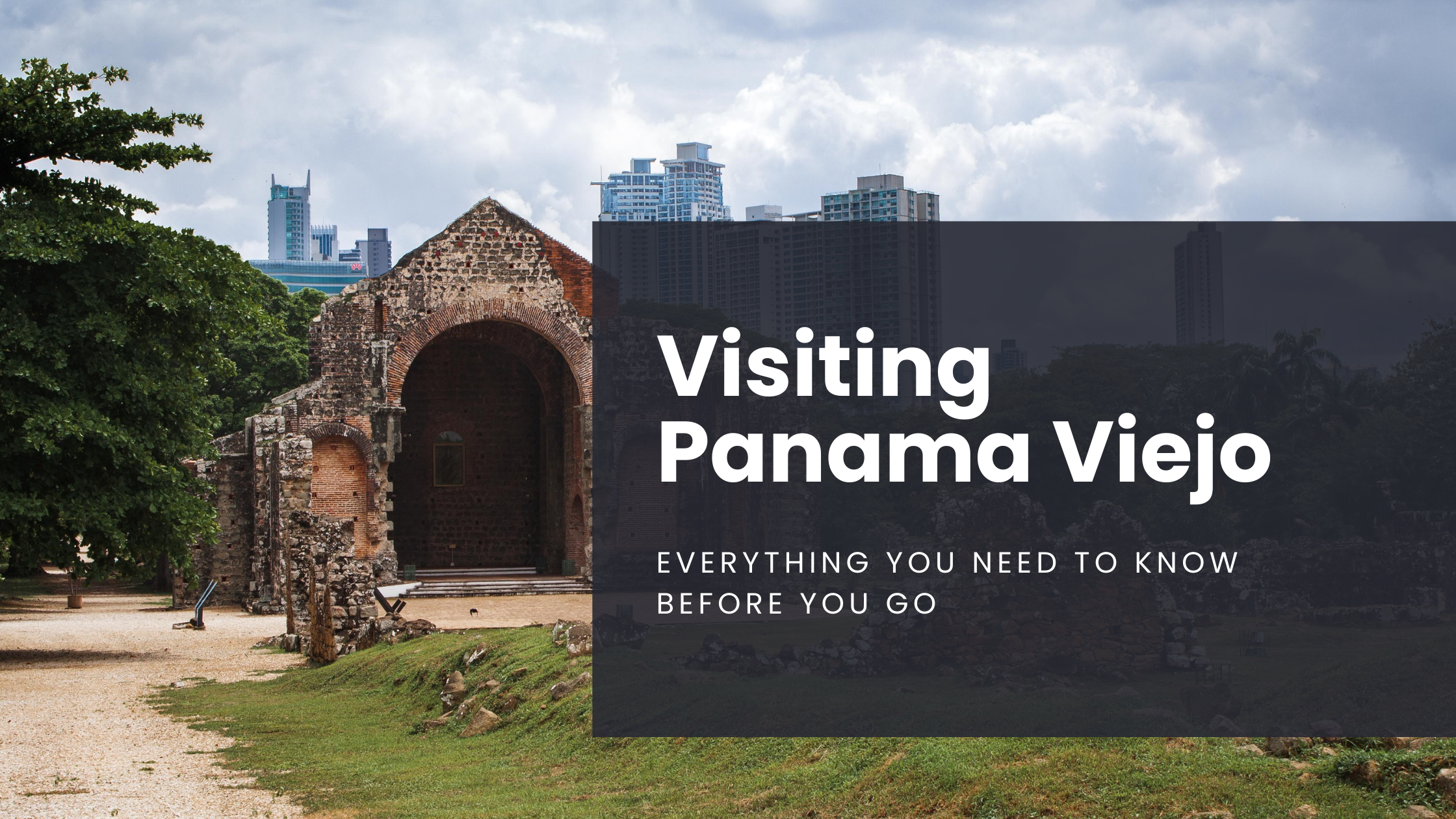
Ruins of the Iglesia y Convento de San Francisco looking towards a modern Panama City, Panama
There are set pathways throughout the grounds, but it’s completely acceptable to get up close and personal as long as a sense of respect is maintained. Remember: You don’t want to be the tourist that’s caught damaging a World Heritage Site!
The archaeological complex was fascinating in its own right, but what struck me the most was that the ruins were situated next to a major highway with downtown Panama City as a backdrop, skyscrapers and all.
The contrast between old and new was stark and certainly thought-provoking. It really gave a whole new perspective as to the growth that the area has seen over the centuries, so don’t forget to look beyond what first meets your eyes. See the whole picture and take a moment to process the spectrum of history that stands before you.
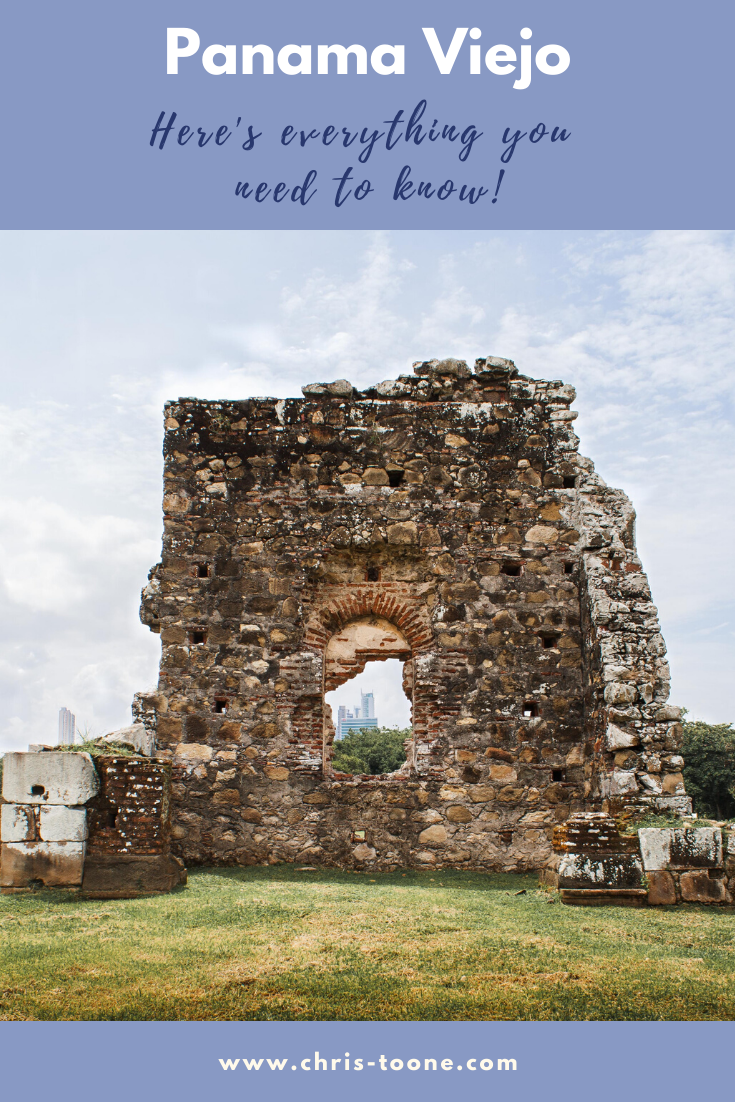
Iglesia y Convento de la Concepción is one of the most well-preserved buildings in the complex while the tower of the Catedral de Nuestra Señora de la Asunción allows visitors the chance climb the stairs to the top and look out over the expansive ruins.

The Iglesia y Convento de la Concepción standing tall at Panama Viejo
Other buildings of note include the Casa Reales (Royal Houses) where the center of the town’s power resided, Cabildo de la Ciudad (City Hall) and Casa Alarcón (Panama Viejo’s largest known private residence).
Although visitors flock to Panama City to learn about the canal and roam the colonial quarters of Casco Viejo, a visit to Panama Viejo is a must-do in order to grasp the deep history of this fascinating place. It’s worth the 15 USD entrance fee!
Have you been to Panama City before? What were your thoughts? Let me know in the comments below and until next time, stay safe & happy travels!
Sharing is caring… pin this post!


5 reasons why you should visit Ghana at least once in your lifetime
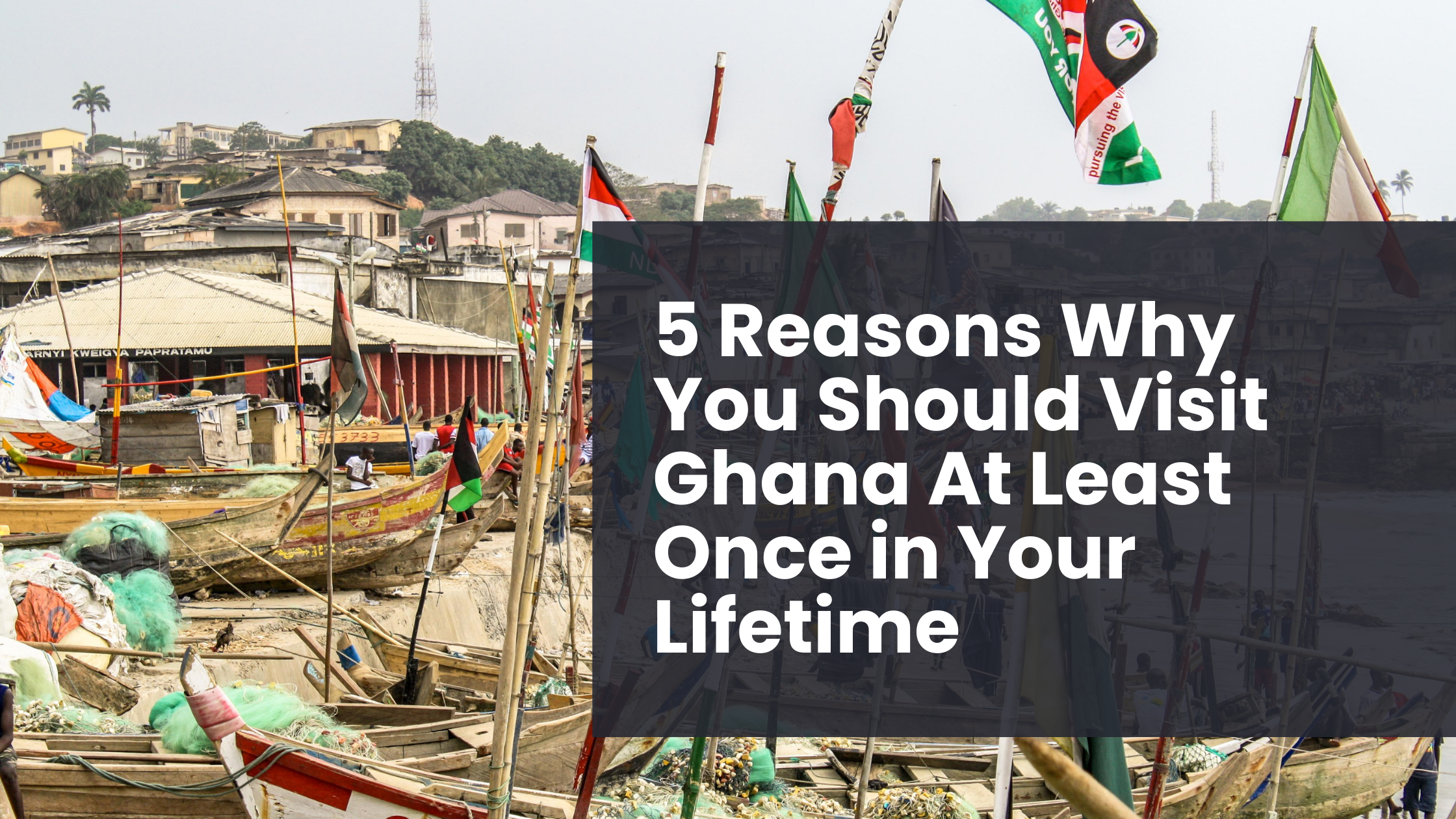
Although widely considered to be "Africa for beginners," Ghana is often overlooked by travelers. Maybe people don't want to walk with elephants or relax on unspoiled beaches. Whatever your reasons may be, here are 5 as to why everyone should visit Ghana at least once in their lifetime.
Please note: This post was updated as of December 2023
Although widely considered to be "Africa for beginners," Ghana is often overlooked by travelers.
I suppose, in a way, it can be quite overwhelming with too much nature to explore, too many foods to choose from, or a local culture too vibrant to step into.
Sounds terrible, right?
Here are 5 reasons that you should make time to visit Ghana at least once in your lifetime!
1. DIVERSE WILDLIFE
A one hour flight north of Accra to Tamale gives access to Mole National Park, the epicenter of Ghana’s wildlife.
Mole was the first National Park established throughout the country and covers 4,577 square kilometers of burnt orange savannah.
Once inside the park, visitors are transported into a world full of wildlife, including antelopes, bushbucks, monkeys, rare birds (most notably the white-backed vulture), and even leopards, although extremely rare.
It’s not uncommon to be wandering the grounds of the Mole Motel, only to stumble upon a family of warthogs grazing in the grass.
Don’t get distracted for too long though, as the pesky baboons aren’t shy about rummaging through your belongings. During my first visit, I zoned out at breakfast only to realize a baboon had jumped onto the table, stolen the toast and butter, and was cheekily consuming it 10 yards away.
What’s so special about Mole National Park, you ask? The elephants.
Yes, I failed to mention that it’s an elephant hot spot and a prime place for viewing these magnificent mammals between December and April.

Due to the lack of predators within the park’s boundaries, safaris can be done on foot when accompanied by an armed guard. This means that visitors can come within mere feet as elephants graze the savannah.
In total, Mole National Park encompasses 90 different species of mammals, 334 of birds, 33 of reptiles, and approximately 120 of butterflies.
It was a surreal experience, to say the least.
Other places of note include the Boabeng Fiema Monkey Sanctuary in Nkoranza and the remote Wechiau Hippo Sanctuary, tucked away in the Upper West Region along the border with Burkina Faso
Looking for a little more luxury? Check out Mole National Park’s Zaina Lodge. This all-inclusive resort comes complete with an infinity pool, fine dining, and games drives.

Walking with elephants at Mole National Park
Ready to experience Ghana’s wildlife? Check out these posts:
2. VIBRANT CULTURE
Thailand might be known as the “land of smiles,” but I’m willing to cast my vote for Ghana to claim the title.
Upon landing in Accra, visitors will notice the positive vibes that are emitted from the locals as they smile and greet everyone that passes by. Don’t be surprised if you make a few friends on the streets and the two of you are suddenly chatting as childhood best friends do. It’s completely normal.
Ghanaians aren’t afraid to express themselves through any means and the perfect place to experience it all at once is Makola Market. Wander through the narrow paths as sellers shout their prices, negotiations become animated, and people move to the beat of the music that fills the air.
It’s no wonder everyone is so happy. In a sea of dust and smog, Ghana’s arts shine bright.
For proof, the stalls full of kente cloth goods at the Center for National Culture.
This vibrant cloth was once sacred amongst the Akan people, reserved for Kings and Queens to wear in times of great importance. Although it’s turned mainstream for the sake of souvenirs in Accra, the royal culture is alive and well in villages throughout the city.
Side note: When visiting a village it’s customary to present the elders with a bottle of schnapps. During one of my visits with Aya, we abided by this custom and he, in turn, presented us with a live goat. I’d like to think that he’s still happily roaming the fields of central Ghana where we set him free.
Whether dancing the night away with locals on the famed Labadi Beach or wandering the halls of the Artists Alliance Gallery in Accra, even the most introverted people can’t resist the vibrant culture in Ghana (I can personally attest).

Traditional drumming & dance performance in Senase, Ghana
3. DELICIOUS FOOD SCENE
Whether in search of traditional fare or cuisine from around the world, Ghana has got you covered.
Dive into a bowl of fufu, a ball of pounded cassava served with stew, or jollof rice, a mixture of tomato paste and rice that packs a punch with a pinch of habanero pepper.
Ghanaians are passionate about their jollof. So much so that a seemingly endless online debate has been taking place for years with Nigerians as to whose jollof rice is the best. For neutrality’s sake, I’m going to keep my mouth shut (but definitely have some while in Ghana, if you catch my drift).
Another personal favorite is the mouth-watering bofrot, the African version of a donut. It’s easy to find a street vendor selling this traditional fried snack on most corners, serving as a quick, easy, and cheap breakfast.
As vast as the traditional foods might be, the global food scene shines bright in the capital city of Accra.
Visit Burger & Relish in the lively neighborhood of Osu for arguably the country’s best burger or enjoy an evening at Santoku for an innovative Japanese experience.
Whatever your food preference may be, you can find it in Ghana.

Traditional Ghanaian fufu
4. DEEP HISTORY
Ghana’s vibrant culture becomes next-level when considering the dark and gut-wrenching past.
Today, 40 castles that formerly housed slaves before loading them onto ships bound for the New World dot the coastline. Of the 11 million to cross the Atlantic, most were taken to South America or the Caribbean but it is thought that around 500,000 Ghanaians disembarked in the United States.
Cape Coast Castle is the most popular of former slave sites to explore and provides visitors the opportunity to experience first-hand the suffocating, dark dungeons that housed 1,000 males and 500 females with minimal food and no sewage available.
The most chilling part of the experience is by far walking through the infamous “Door of No Return,” where slaves once took their final steps in their homeland before a life of labor elsewhere became the reality. That’s if they were fortunate enough to survive the ocean crossing.
It was on March 6th in 1957 when the resiliency of Ghanaian’s paid off and the country became the first sub-Saharan nation to gain independence.
Needless to say, there’s a long and storied history here and it begs to be explored. What better way to do so than to do it first-hand?

Cape Coast Castle looking towards the “Door of No Return”
5. UNSPOILED NATURE
A 4.5-hour drive east of Accra lies Wli Falls, conveniently situated along the border with Togo. Cascading into a pool from 80 meters (262 feet) above, it’s West Africa’s largest waterfall and just a scratch on the surface of all that Ghana has to offer.
Hikers can climb to the top of Mount Afadjato (885 meters/ 2,903 feet) the highest peak in the country, while beachgoers can head south to Ada Foah and stay at the off-the-beaten-path Maranatha Beach Camp for some much-needed relaxation and fun in the sun.

Maranatha Beach Camp in Ada Foah, Ghana
If mountains and beaches don’t do it for you, then how about rainforest hiking?
Kakum National Park is located a short drive north of Cape Coast, Ghana and encompasses 360 square kilometers of the country’s rapidly receding vegetation.
It’s also the home to the famed canopy walk where visitors saunter between the treetops on a precariously placed piece of wood (it’s completely safe, I swear).
Forest elephants and bongo antelopes, both endangered, call this park home while guided hikes from the visitors center help hikers spot birds and butterflies.
Hiking, birdwatching, swimming, sunbathing; Ghana has it all.
Ready to explore more of Ghana’s unspoiled nature? Start Here:
Hopefully, by now you’re a bit better acquainted with all the beauty, both natural and cultural, that this West African nation holds.
If not, here’s the moral of the story: take a trip to Ghana. Explore it, live it, breathe it and enjoy the ride!
Have you ever been to Ghana before? What was your favorite part? Let me know in the comments below!
As always, stay safe & happy travels.
Pin this post!




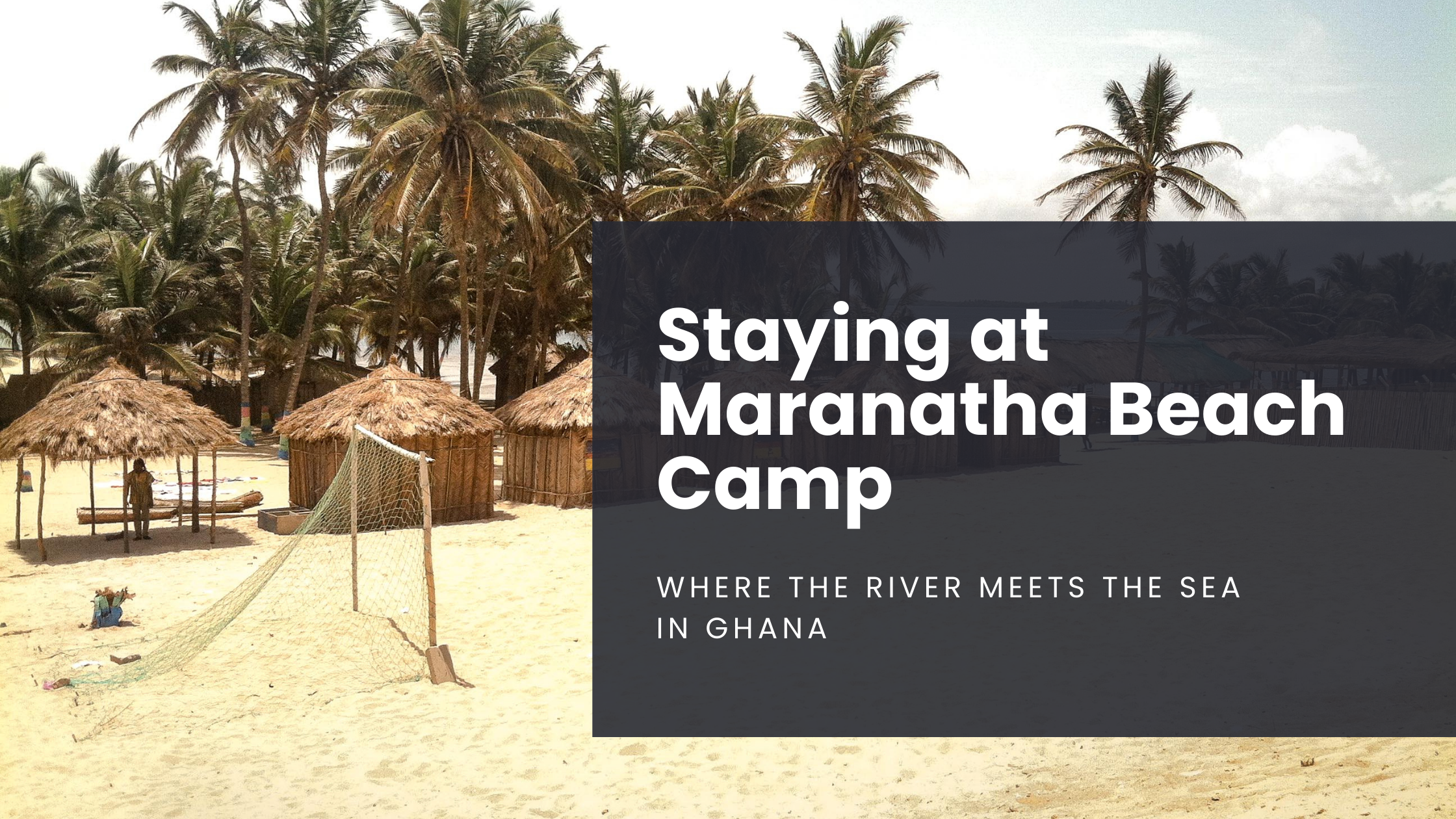
Staying at the Maranatha Beach Camp: Where the river meets the sea
Traveling through Ghana? Don't miss out on staying at the Marantha Beach Camp. Complete with thatched huts and a surplus of coconuts along a blissful stretch of sand, you'll fall asleep to the sound of the crashing waves after a day full of relaxation or adventure - whatever you choose!
Please note: This post is updated as of December 2023
Have you ever found yourself scrolling through Instagram and stumbling upon someone else’s picture-perfect beach vacation, only to look up from your phone and realize it’s time to get back to work?
Me, too.
Luckily for all of the budget travelers in the world, there’s a magical place just outside of Accra, Ghana where the Volta River flows out to the Gulf of Guinea and palm trees provide shade to the tiny thatched huts that dot the coastline.
Welcome to the Maranatha Beach Camp where, quite literally, the river meets the sea.
THE HISTORY
Maranatha Beach Camp was founded by Winfred Dzinado back in 2005 and started as a one-man operation with only a couple of huts on a strip of sand in Ada-Foah, Ghana. Since that time, it has expanded to 30 available bungalows.
His motivation stemmed from a perceived need for the education of children within his community. Families had been neglecting to send their children to school because of the distance or required financial commitment, both common problems throughout the country.
As Winfred continued his business, he began using the profits to fund affordable and convenient education, starting with the construction of one small classroom and thus establishing the Maranatha Community School.
Today, the school now holds classes for children from 4-15 years old and is partially Government supported while the beach camp’s profits continue to pay for building upkeep and a few teacher salaries.
Needless to say, you can feel good about where your money is going!

Maranatha Beach Camp as seen from the water
BOOKING
The beauty of the Maranatha Beach Camp is that you won’t find it on any booking site. Outside of reviews on TripAdvisor, there’s really not a whole lot of information out there, which only adds to the allure of this isolated oasis.
Don’t worry, I can see your confusion. If there’s no information available, then how does one book accommodation?
Send an e-mail request. Once a response is received, you’re good to go! That’s all it takes.
There is no online payment processing and no deposits necessary. Simply show up and pay on site in cash.
GETTING THERE
The first step in reaching the beach camp is to find your way to the small fishing town of Ada-Foah. This can be accomplished by either private taxi from Accra or using the public transportation system, commonly referred to as Tro-Tros (find the van heading to Ada-Foah from the Tudu Station in Accra).
After the 2 hour drive east from the capital, you can either hire a motorbike to Maranatha and walk the rest of the way through the town (the walk is across the sand, so it’s not ideal if you’re dragging large suitcases) or you can arrange to be picked up by boat (additional charge per person).
If opting for the latter, it’s best to arrange it through the beach camp prior to arrival in order to save money. Other people will offer their boat services once you arrive in Ada-Foah, but these will typically be a bit more expensive.

Arriving via fishing boat
THE ACCOMMODATION
It’s important to keep things in perspective when talking about what’s available. Maranatha Beach Camp is off the beaten track, comprised of thatched huts on the beach, and is relatively isolated meaning that electricity and running water are scarce.
Does that mean you should stay away? Absolutely not. It’s just important that you know what to expect before you show up with a mental image of a pristine beachfront cabana.
With that being said, I was pleasantly surprised with the overall quality and cleanliness. It’s clear that Winfred and his staff care deeply about what has been built and it shows in how they maintain and continuously improve their facilities!
Rooms (prices as of 2023):
It’s almost inconceivable how affordable room rates are, making it a great place to visit for any budget traveler. Here’s the gist:
Sand Floor Rooms: 60-100 GHC per night
Turtle Lodge Rooms (enclosed with solid floor): 100-200 GHC per night
VIP room with washroom: 250 GHC per night
Keep in mind that each hut is mere feet away from the water’s edge. There’s no such thing as a “good or bad location” here.
Facilities:
Communal vault toilets and bucket showers are available and cleaned daily. It’s not luxury by any means, but trust me when I say that guests have everything they need.
A small soccer pitch and volleyball court have been drawn out in the sand and there are plenty of games to play and hammocks to lounge in throughout the day.
Food and drinks are available by cash purchases at the restaurant/bar on site. Everything is sourced locally and is very affordable, so you won’t break the bank by eating 3 meals a day.

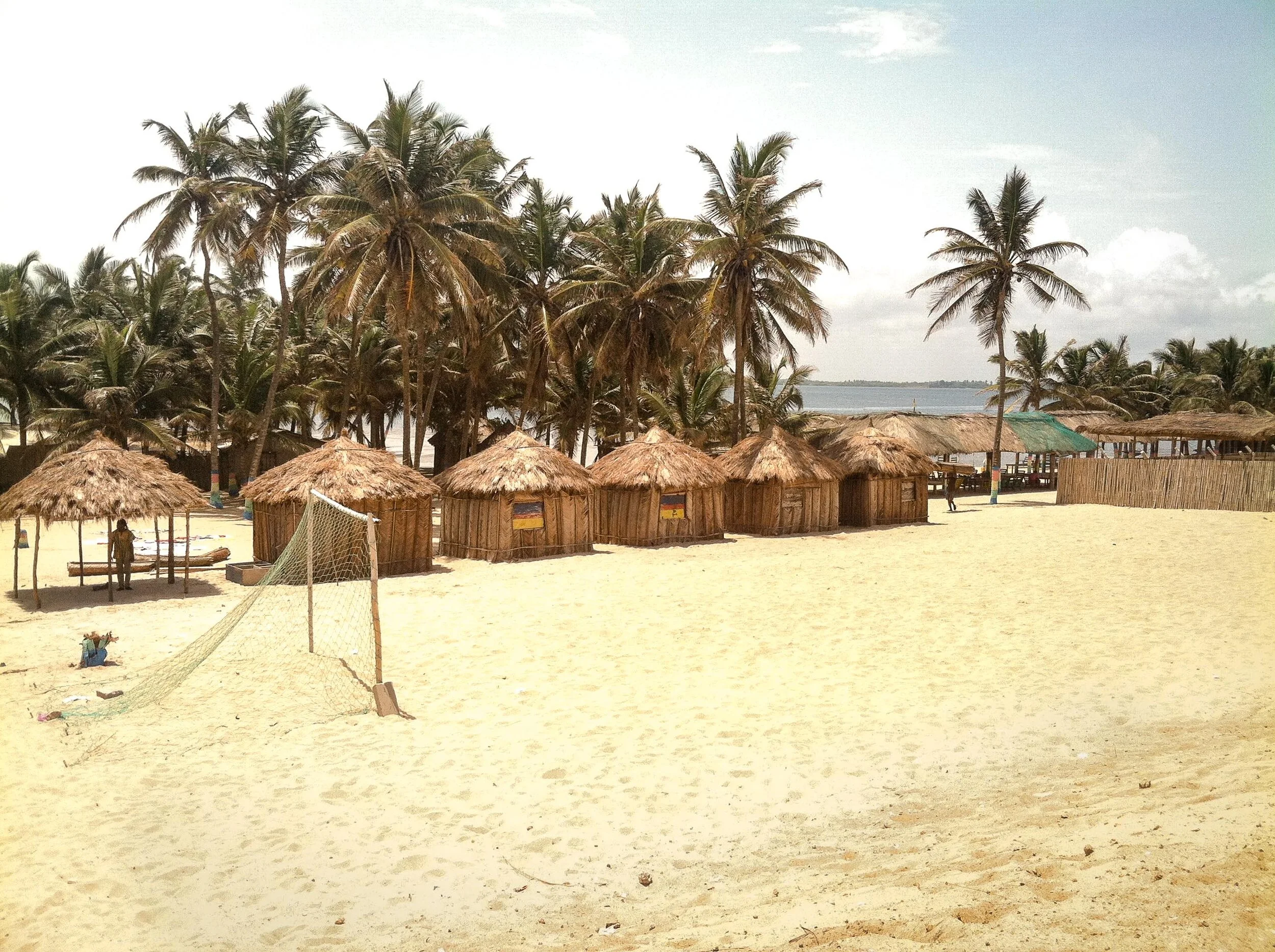
Beach huts dot the beach along the soccer pitch
WHAT TO EXPECT
Maranatha Beach Camp isn’t just a hangout for foreigners, but it’s a local hotspot as well! You’re just as likely to meet fellow travelers from around the world as you are to converse with people from the surrounding communities, especially on the weekends.
Upon arrival, you'll be offered the chance to tour the Maranatha Community School. Take it. It’s a great way to learn about the history of the operation and will shed new light on just what the beach camp means to the community.
The daytime atmosphere is laid back and friendly. Lounge in a hammock as local vendors pass through with fresh coconuts, start a game of volleyball, swim in the Volta River (much calmer than the Gulf of Guinea) or, if visiting on the weekend, dance the night away around the infamous beach bonfire.
It’s also possible to organize a boat tour around the Volta Estuary to places like Rum Island, where locally sourced sugar cane is turned into this satisfying spirit. The Volta River is an important part of Eastern Ghana, and spending some time cruising around is a great way to gain insight as to just how vital of a role it plays in sustaining life.
As the day ends, grab a cold beer while sunset illuminates the sky. One of my favorite things to do in the evenings is simply to sit on the beach and watch the twinkling lights of passing ships as they move across the horizon. My body may relax, but my mind never stops wandering!
Looking for more trips in and around Accra? Check out these can’t miss posts:
IMPORTANT TIPS
Charge electronics ahead of time: With limited electricity, it’s important to make sure larger electronics you plan on using have full juice ahead of time (i.e. a camera). A portable power bank is a great item to pack for smaller gadgets!
Overestimate cash needed: Maranatha Beach Camp is a cash-only establishment. Normally this wouldn’t mean much except there are no ATMs available in the area. It’s important to bring enough money for accommodation, transportation, meal costs, extra boat tours, drinks at the bar, etc.
During one of my visits, I was forced to ask the tro-tro to stop at an ATM on the way back to Accra because I had no more cash in my pockets and wouldn’t have been able to pay for the ride!
Bring supplemental snacks: This is especially important if you are a vegan. Although food is fresh and available at the restaurant, it can be difficult to find something to fit that specific dietary need. Make sure to shop ahead of time as, like ATMs, there are no supermarkets to be found.
Plan on buying goods: Whether a bottle of local sugar cane rum or handmade jewelry from a vendor on the beach, plan on at least having the opportunity to purchase some sort of souvenir and factor that into your cash withdrawal.
WORTH IT?
Absolutely.
The friendly atmosphere is second to none and it’s a great opportunity to engage with the local community.
Most visitors spend 2-3 days here and leave feeling rested and relaxed, but if you’re in search of a longer escape then it may be worthwhile to learn about the community’s organized volunteer programs.
Either way, next time you find yourself in Ghana, make the effort to visit the Maranatha Beach Camp!
It’s certainly not the easiest of places to reach, but the most beautiful ones never are and I won’t soon forget this little slice of paradise.
So, are you ready to claim your very own beach bungalow and unwind for a few nights? I know I am!
Feel free to leave any questions in the comments below and I’ll do my best to answer them.
Until next time, stay safe & happy travels!
Enjoy what you read? Pin this post!


Top 10 things to see and do in Accra, Ghana
From historical monuments to bustling markets, Ghana's capital city of Accra has plenty of diverse experiences to offer. Here 10 of the top things to see and do... enjoy the adventure!

Please note: This post has been updated as of December 2023
Approximately the size of Texas, Ghana encompasses an arid climate up north, rainforests in the south, sunny beaches, diverse religions, rich culture, and more than 250 dialects.
So, how can one possibly get a beat on all that this West African nation has to offer? Start with Accra; the place where it all melds together in joyful harmony.
Here are 10 of the top things to see and do in Accra, Ghana!
1. LOSE YOURSELF IN ALLEYS OF MAKOLA MARKET
Largely considered as the economic heart of Accra, Makola Market can be overwhelming to first-time visitors, and for good reason.
There is no official welcome sign or arrows that guide visitors to the various subsections, rather the city’s streets quickly transition from flowing traffic to full of pedestrians and goods. Rest assured anything you might need can be found: a toothbrush, sunglasses, veggies, smoked fish, soap, second-hand clothing, and even toys and souvenirs.
Personally, my favorite thing to do here is to track down a bofrot vendor, Ghana’s version of a donut, and munch on the delicious snack as I wander through the streets in search of something new.
It’s important to remember that although Ghana is commonly referred to as “Africa for beginners” crime still exists, especially within such a high density of people. Be sure to keep your belongings close to avoid pickpockets and keep in mind that all legitimate business is done out in the open. There’s no need to wander into back alleys or enclosed spaces.
Finally, enjoy it.
It can certainly be a bit overwhelming to first-time visitors, but don’t let that deter you but don’t let that keep you way. Rather, use Makola Market as a sort of “right of passage” to truly experience the local life in Accra. It’s something that everyone should experience at least once, even if just for a moment.
Don’t forget to negotiate your purchases - that’s half the fun!

A small section of the bustling Makola Market in the heart of Accra, Ghana
2. STROLL THROUGH THE KWAME NKRUMAH MEMORIAL PARK
Kwame Nkrumah Memorial Park was dedicated to the first Prime Minister of Ghana in 1992 and is located on the site of the former British polo grounds. This is the exact spot where Dr. Nkrumah once stood to declare Ghana’s independence from British rule before uttering his famous line: “Ghana is free forever”.
A mausoleum is located within the park’s walls and holds the remains of Dr. Nkrumah and his wife, Fathia. To the naked eye, the exterior seems an odd architectural design, but to the people of Ghana, it was built to resemble an upside-down sword, the Akan symbol of peace.
In total, the park covers 5.3-acres and also encompasses a museum which houses photographs, letters, and more from Dr. Nkrumah’s storied life.
It’s easy to spend a couple of hours here, soaking up the palpable history of the long and grueling fight for freedom. A powerful experience, to say the least, and one of the most important sites for first-time visitors to Accra!
3. PAY A VISIT TO BLACK STAR SQUARE
Black Star Square is a massive open-air arena of sorts in the heart of Accra that accommodates 30,000 people. It now hosts all of Ghana’s national parades and holiday gatherings, most notably the Independence Day celebrations held on March 6th each year.
This architectural giant was originally commissioned by Ghana’s first Prime Minister and President, Kwame Nkrumah, to honor the visit of Queen Elizabeth II in 1961.
The expansive area includes Independence Arch on the southern end of the square with the Gulf of Guinea as a backdrop while the Memorial of the Unknown Soldier stands opposite to the north, honoring all of the fallen souls during Ghana’s fight for independence.
By day the square is empty, showing off its sheer size to all who visit. There is no entry to fee walk around and photographs are generally permitted, however keep an eye for guards standing around any of the specific monuments, most frequently Independence Arch. At that point it’s best to exercise your travel photography etiquette and ask before taking a close-up photo.
A visit to Black Star Square certainly won’t take long, but it’s a convenient stop that’s located near several other points of interest, including Black Star Gate and Accra Sports Stadium.
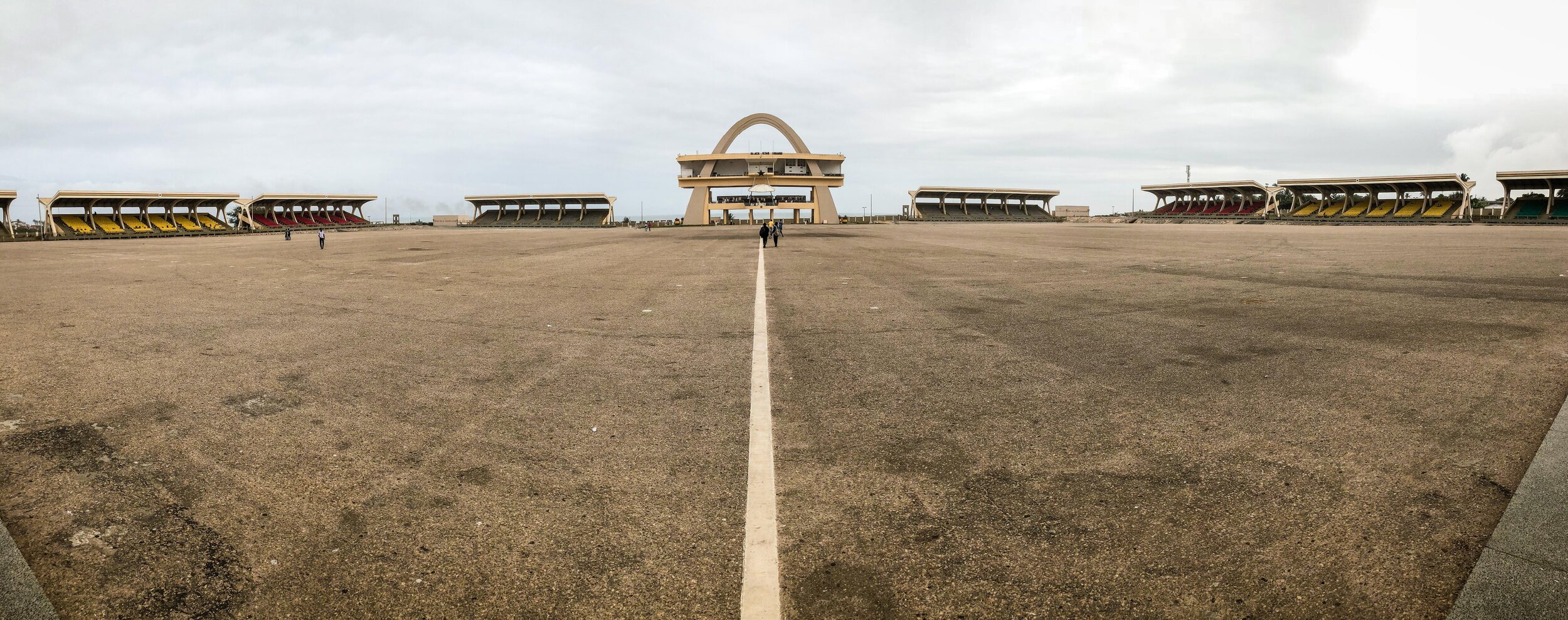
An empty Black Star Square looking towards
4. CLIMB TO THE TOP OF BLACK STAR GATE
Technically part of the Black Star Square complex and sometimes referred to as Independence Arch, this stunning gate stands alone in the middle of a roundabout on the 28th of February Rd. (named out of respect for the 1948 riots) and is impossible to miss.
Lined with beautifully planted gardens, the Black Star Gate represents the struggle for Ghana’s independence. The star at the top, not unlike the one that can be found at the center of the country’s flag, dons the top of the structure on all four sides and symbolizes African emancipation.
The other colors of the flag, red, yellow and green, represent the blood of those who died for independence, mineral wealth, and Ghana’s rich forests and natural resources, respectively.
Be sure to climb to the top of the Black Star Gate and take advantage of the spectacular city views across Accra. This is a great photo op for an aerial perspective over the massive Black Star Square, Accra Sports Stadium, and Osu Castle.
Although it’s free to do, I’d recommend tipping the guide that escorts you up.
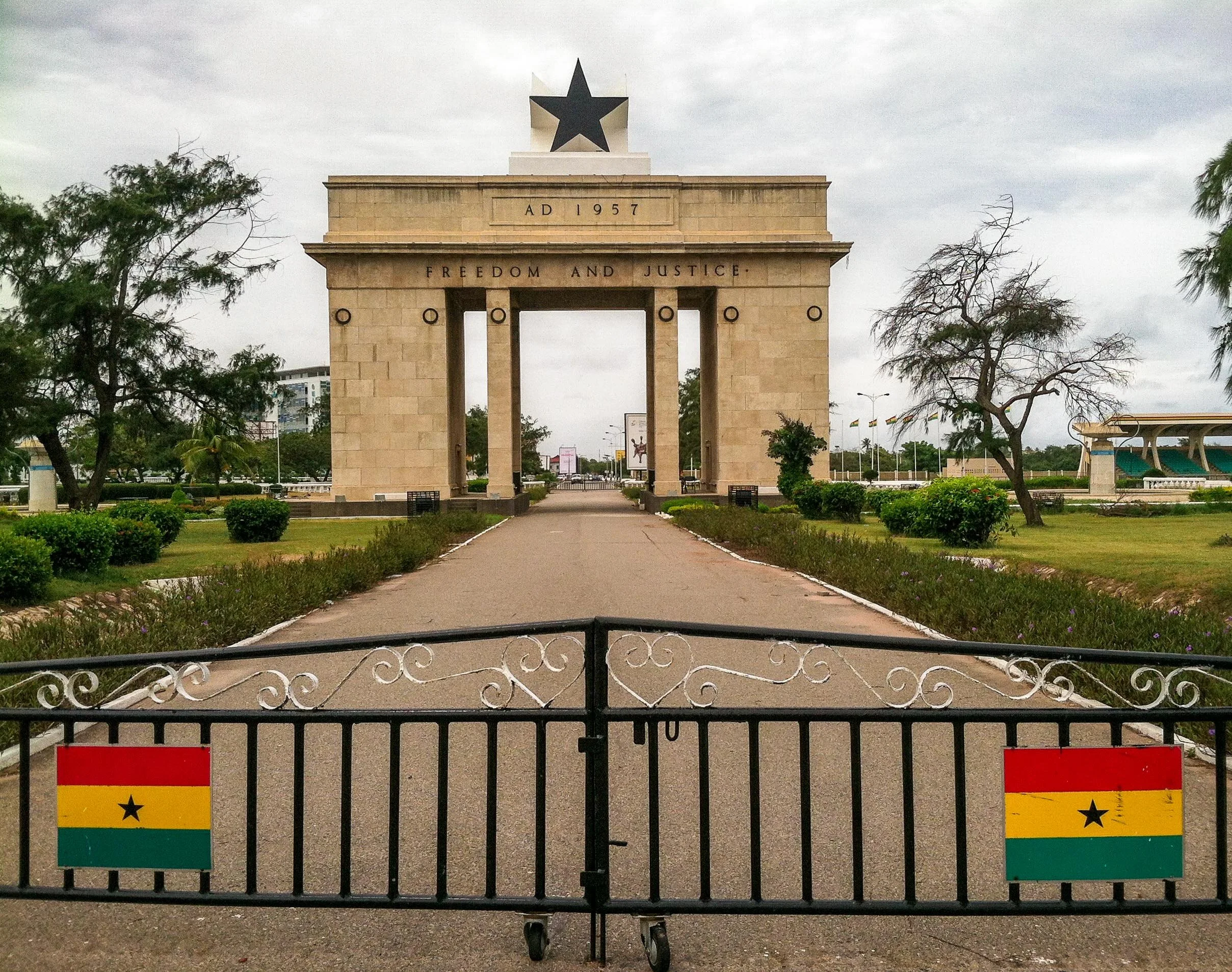
Black Star Gate in downtown Accra, Ghana
5. GO BACK IN TIME AT OSU CASTLE
Once referred to as Christiansborg, Osu Castle is now a UNESCO World Heritage Site and stands on the shores of the Atlantic Ocean, serving as a constant reminder to Ghana’s gut-wrenching past.
Over the years, control of the castle changed hands between the Danes, Norwegians, Portuguese, and British and even served as the seat of the Ghanaian government in the post-slavery era up until it was moved to its current location at the Jubilee House in 2013.
Today, the castle offers visitors the chance to wander the halls British officials once walked and explore the harsh conditions of the slave dungeons.
The most meaningful experience, however, is the solemn “Door of No Return,” ominously named to symbolize the final time that those held captive would step foot on their native soil before boarding a ship bound for the New World.
It’s worth a visit, especially if you don’t have the time to travel to Cape Coast’s castles. Keep in mind that Osu Castle remains within a security zone and, as a result, is only open to the public on Fridays between the hours of 9:00 am and 4:00 pm.
6. WATCH A SOCCER MATCH AT ACCRA SPORTS STADIUM
The Accra Sports Stadium is a 39,800 seat facility that’s mostly used as the home venue for the Hearts of Oak and Accra Great Olympics F.C. soccer teams of the Ghana Premier League.
Although an upbeat atmosphere accompanies match day, it doesn’t come without its fair dose of unfortunate history.
In 2001, it was the site of the worst stadium disaster in all of Africa that claimed the lives of 126 fans. On that fateful day, Hearts of Oak was playing in a match against Asante Kotoko and trailed 1-0 until two quick goals changed their fortune.
Disappointed Kotoko fans responded by throwing plastic bottles on the pitch before law enforcement retaliated with tear gas. Due to the stadium’s poor design, fans bottlenecked at the limited exits and 116 supporters died of compressive asphyxia while another 10 passed away from trauma.
Today, a bronze statue of a fan carrying another fan to safety stands proudly outside of Accra Sports Stadium and reads “I am my brother’s keeper.”
Attending a professional match here remains one of my all time favorite experiences in Accra. In all honesty, I don’t remember how the game unfolded. We were too busy singing, dancing, and blowing vuvuzelas in the rain with the diehard supporters.

Accra Sports Stadium and home of Hearts of Oak, the most successful club soccer team in Ghana
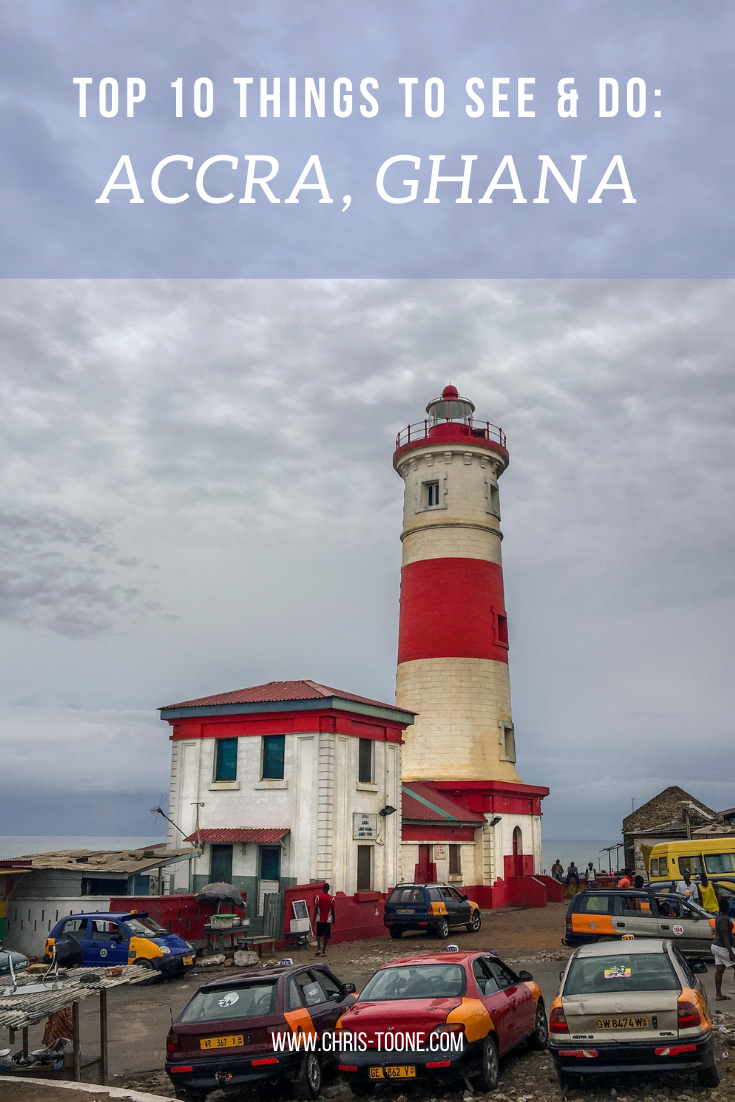
7. JAMESTOWN LIGHTHOUSE
The 92 ft tall Jamestown Lighthouse was built in the 1930s and stands as an iconic staple of the Jamestown neighborhood, which was once a major settlement of Europeans during the slave trade.
Although no longer operational, it’s still possible to climb to the top and take in the fresh air the blows in off the Gulf of Guinea while overlooking the fishing village, historic Fort James, and surrounding Accra.
Pay close attention to where slabs of cement jut out into the ocean. That’s where slaves once walked en route to ships bound for the New World.
The lighthouse is kept under lock and key by local volunteers. They represent a non-profit organization that works in the area and although the building is technically free to visit, it is expected that you provide a donation for their willingness to guide a short tour.
They may try to encourage you to visit Fort James and the fishing village as well, but it’s okay to say no. Simply donate a comfortable amount (5 GHC per person usually suffices) and continue on your way!

Jamestown Lighthouse standing tall in Accra, Ghana
8. KICK BACK AND RELAX AT LABADI BEACH
Adored by locals and foreigners alike and commonly referred to as “La Pleasure", Labadi Beach is a scenic stretch of sand in the Labadi neighborhood of Accra.
Visit during the day and enjoy the views as you sip on a local beer while waiting for your fresh fish at one of the various stalls before wading into the waves. Grilled tilapia, spicy kebabs, and jollof rice are just a few of the dishes available.
Once the sun goes down, the music turns up and the party begins! It’s not uncommon to find reggae artists, disco DJs, and other live bands blasting a cacophony of sounds late into the night.
As you might imagine, a large part of Accra turns up on the weekends, so for a more relaxing experience, it’s best to visit during the weekday. Either way, the small entrance fee (around 20 GHC) is worth the price!
9. SHOP ‘TIL YOU DROP AT THE CENTER FOR NATIONAL CULTURE
Although the Center for National Culture may sound like a museum of sorts, it’s actually a souvenir mecca. From wood carvings to backpacks made with the traditional kente cloth, jewelry, gorgeous canvas paintings, and even musical instruments, these vendors have it all - and they’re not afraid to tell you about it!
Don’t be surprised to find yourself surrounded by new “friends” the moment you step out of the taxi, eagerly ushering you to their respective shops. Stand your ground, tell them you’ll stop by later, and stick to your plan.
Right away you’ll notice that the market is inundated with lookalike items, which quickly explains everyone’s urgency to sell their version. My best advice is to take a lap: slow enough to get eyes on what’s available, but quick enough to avoid any aggressive selling strategies.
Another useful tactic is to use your instincts and make a friend. Spend some time talking, build trust, and ask for advice as to how much the items around the market that peaked your interest should cost. It makes the ensuing negotiations much easier!

An artisan delicately carves a bowl at the Center for National Culture in Accra, Ghana
10. HEIGHTEN YOUR SENSES AT THE ARTISTS ALLIANCE GALLERY
Three stories of unique artwork and crafts fill the halls of an old tower that overlooks the Gulf of Guinea.
The Artists Alliance Gallery was first established by the famous artist, Ablade Glover, and has since grown to include the work of both well-known but also up and coming artists of Ghana.
From woven kente cloth pieces to vibrant canvas paintings, a wide array of eye-catching visuals are available to peruse as well as purchase.
Pay special attention to the exorbitantly carved coffins in the shape of crabs or a pair of Nike shoes. In Ghana, it’s popular in to bury a loved one in something that represents their being - whether depicting a favorite item or former occupation.
Admission is free and it makes for a great afternoon of embracing the vibrant and artistic culture of Ghana!
So, there you have it. It’s time to get out and explore Accra, Ghana!
What interests you most on this top 10 list? Is there something I’ve missed? Let me know in the comments below!
As always, stay safe & happy travels.
Don’t want to wander? Check out these tour options!
Sharing is caring… pin this post!

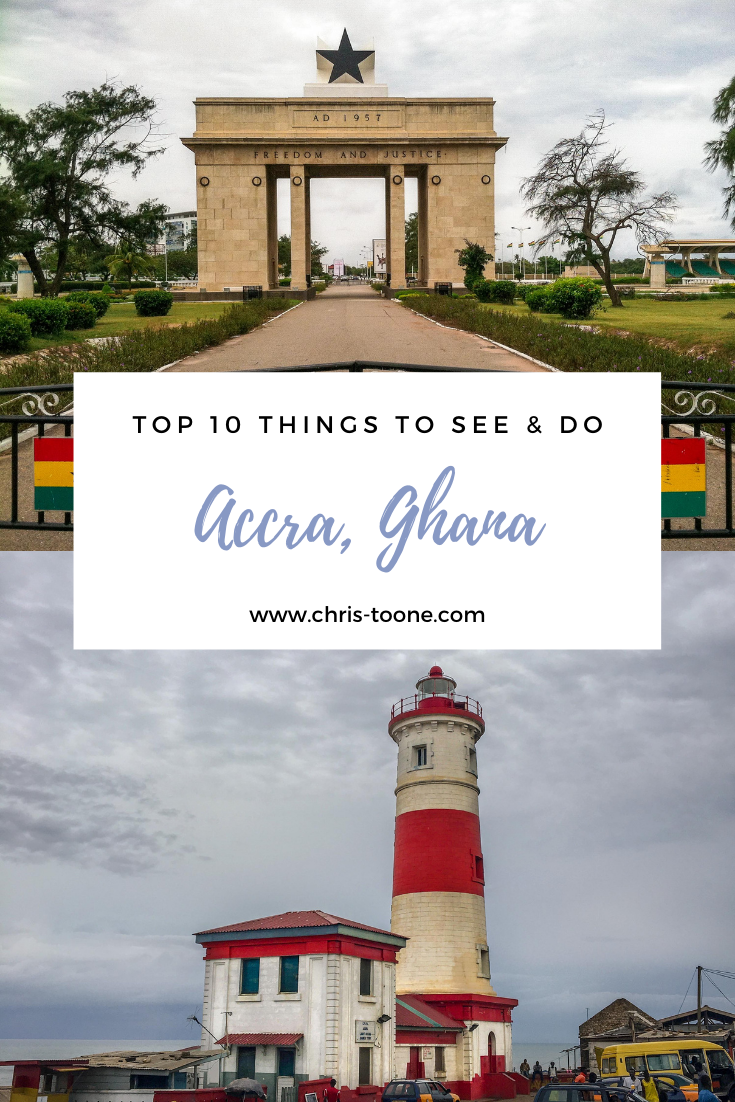

3 must-do day trips to take from Accra, Ghana
Ghana's capital city certainly has plenty to offer as is, but don't overlook the country's rich culture, natural beauty, and storied past. Here are 3 must-do day trips to take the next time you find yourself in Accra!
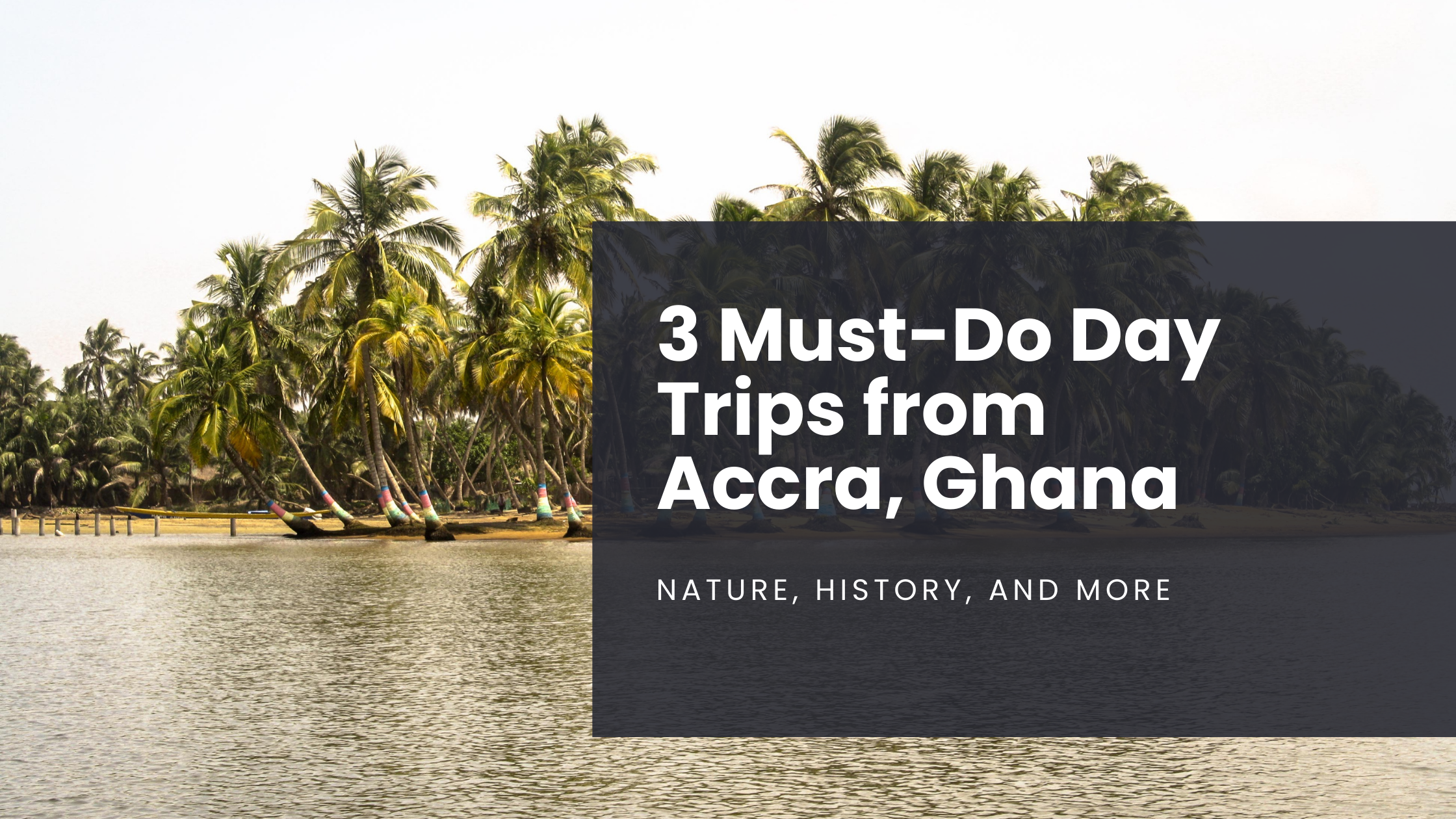
Please note: This post has been updated as of December 2023
A city of over 1.5 million people, Ghana’s capital of Accra certainly has plenty to do as is, but don’t let that stop you from seeing more! Step outside of the hustle and bustle to unlock the natural beauty, rich culture, and storied past of this West African nation.
Here are 3 must-do day trips to take the next time you find yourself visiting Accra, Ghana!
KAKUM NATIONAL PARK
Located 170km from Accra along Ghana’s southern coast, Kakum National Park is home to 360 square-kilometers of the country’s rapidly receding rainforest and protects several endangered species such as the forest elephant, bongo antelope and more.
The park itself was established in 1992 and has since seen steady growth. Ghanaians and foreigners alike come from all around to hike through the butterfly-rich forest, birdwatch along the SunBird Trail and, most frequently, experience the famed canopy walkway (one of three on the African continent).
Suspended 30m above the forest floor, the 7 suspended bridges span a length of over 330m, zig-zagging between the trees along the way. It’s certainly not for the faint of heart as the precariously placed single planks of wood that separate you from plummeting to the ground seem suspiciously unstable, but rest assured it’s perfectly safe.
However you decide to experience Kakum National Park, trained guides are available every step of the way to help spot wildlife, discuss the environmental and economic impact of the area, as well as explain local medicinal purposes of the flora and fauna.
Once exhausted from a day of exploration, the visitors area at the main entrance offers a relaxing atmosphere amongst educational exhibits and the Rainforest Cafe, a place to rest your weary legs and enjoy a refreshing beverage. The cafe sources fresh produce and ingredients from the surrounding communities, so a meal here not only supports the national park but local farmers as well.
Not ready to leave? Kakum National Park offers several overnight accommodations from the primitive Afrafranto Campground (equipment not included) to the comfortable onsite Rainforest Lodge, but for a unique experience book a night in the canopy treehouse and fall asleep to the sounds of the surrounding forest.

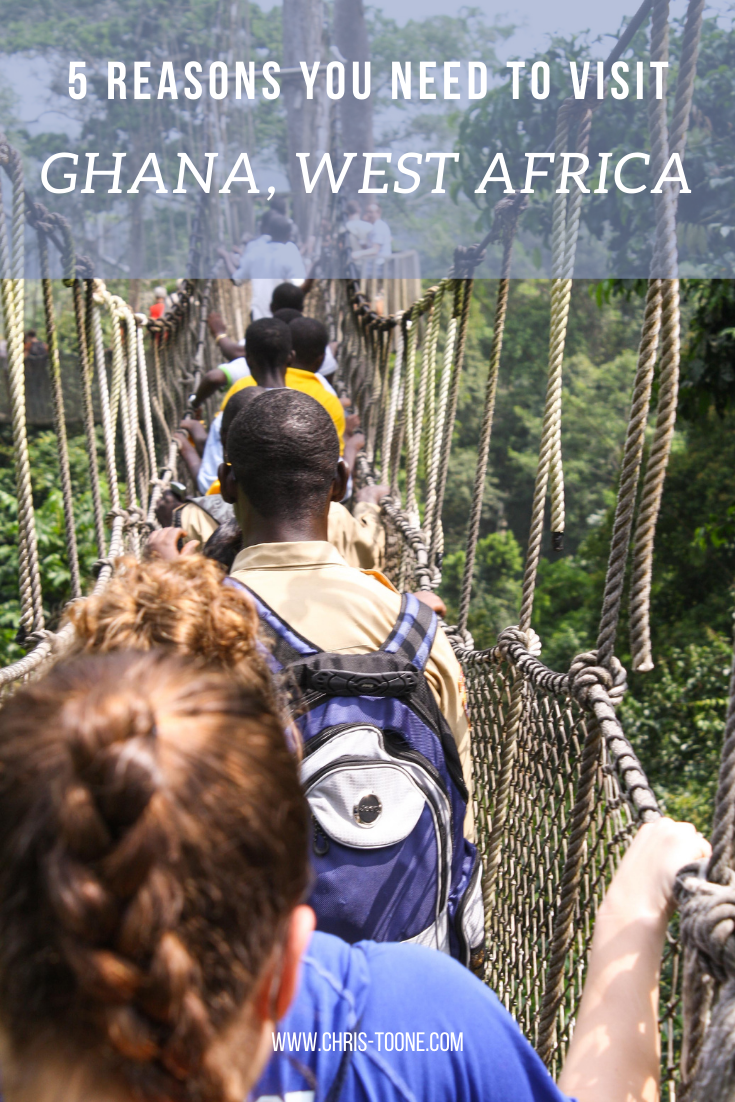
Walking along the swinging bridges of Kakum National Park in Ghana
Associated Fees with Kakum National Park’s Canopy Walkway
Standard entrance fee: 2 GHC per person
Canopy Walkway: 60 GHC for non-Ghanaian adult (not including tips)
Guided Hike (1 hour): 50 GHC for non-Ghanaian adult (not including tips)
Cost fluctuates based on nationality and age, as well as inflation. For a full breakdown, visit the official website
Kakum National Park’s Hours of Operation
The park gate is open daily from 8 am - 4 pm
If using park accommodation, arrangements can be made to arrive earlier/later as needed
How to get to Kakum National Park
Hop on a shared tro-tro from Kaneshie Station in Accra. Once in Cape Coast, hire a taxi the rest of the way
VIP Bus from Accra to Cape Coast before hiring a taxi
Arriving via rental car is possible as the drive is fairly straight-forward. Be cautious and consider hiring a private driver as traffic in Accra can be overwhelming and be prepared for tolls and police stops along the way

Kakum National Park in Ghana
MARANATHA BEACH CAMP
Welcome to Maranatha Beach Camp, where the Volta River meets the Gulf of Guinea.
A short 2.5-hour drive east of Accra will land travelers in the small fishing town of Ada-Foah. Ask around enough and someone will inevitably be able to point you in the direction of the beach camp, located at the edge of town along a picturesque strip of sand that’s dotted with palm trees and thatched huts.
It’s one of the best places to kick back in a hammock and enjoy a cold beer, only breaking the cycle to cool off in the river. By day, time seemingly stands still but at night, the camp transforms into a local hangout with blaring music and a full dance floor.
The Maranatha Beach Camp was first established by a man named Winifred who saw a need for education within his community. By founding the guest house, he began using the profits to establish a nursery school on the beach. What was once an open-air shelter has since blossomed into a Government-supported and fully-enclosed school and to this day, profits from the beach camp continue to directly benefit the community. Upon arrival, you may be offered a tour of the community. Don’t shy away; it’s great to see where the money is going!
Looking to explore more of the area? The staff at Maranatha are well-connected and are more than happy to arrange a local fisherman to get you more acquainted with Volta Estuary. During one of my visits, we stopped at a local crocodile farm — something I never expected to find on an island in the middle of the river!

Maranatha Beach Camp from the water
Getting to Maranatha Beach Camp, Ghana:
The first step is to hop in a tro-tro from Accra to Ada-Foah (2.5hrs, but plan for longer), then there are two options:
Option 1: Find a motorbike willing to take you from Ada-Foah to Maranatha (ask around and don’t be afraid to negotiate the price)
Option 2: Give the beach camp a call and they will send a boat to meet you. Price is typically 30GHC per person for a one-way trip
If travel via tro-tro isn’t in your repertoire, then consider hiring a reliable taxi cab for the day to take you to/from Ada-Foah
Tips & Tricks for Visiting Maranatha Beach Camp:
The camp is a cash-only establishment and there is no way to get more. It’s important to plan ahead and overestimate what you’ll need. During one of my trips I had to ask the tro-tro to stop at an ATM on the way back to Accra so that I would be able to pay them because I had run out of money
The restaurant serves great food, but it may be difficult to find something that fits within a vegan diet, so come prepared with snacks if you’re staying for the day. Similar to the lack of ATMs, there are also no stores in the area
Contact Info:
Phone: (+233) 243528248
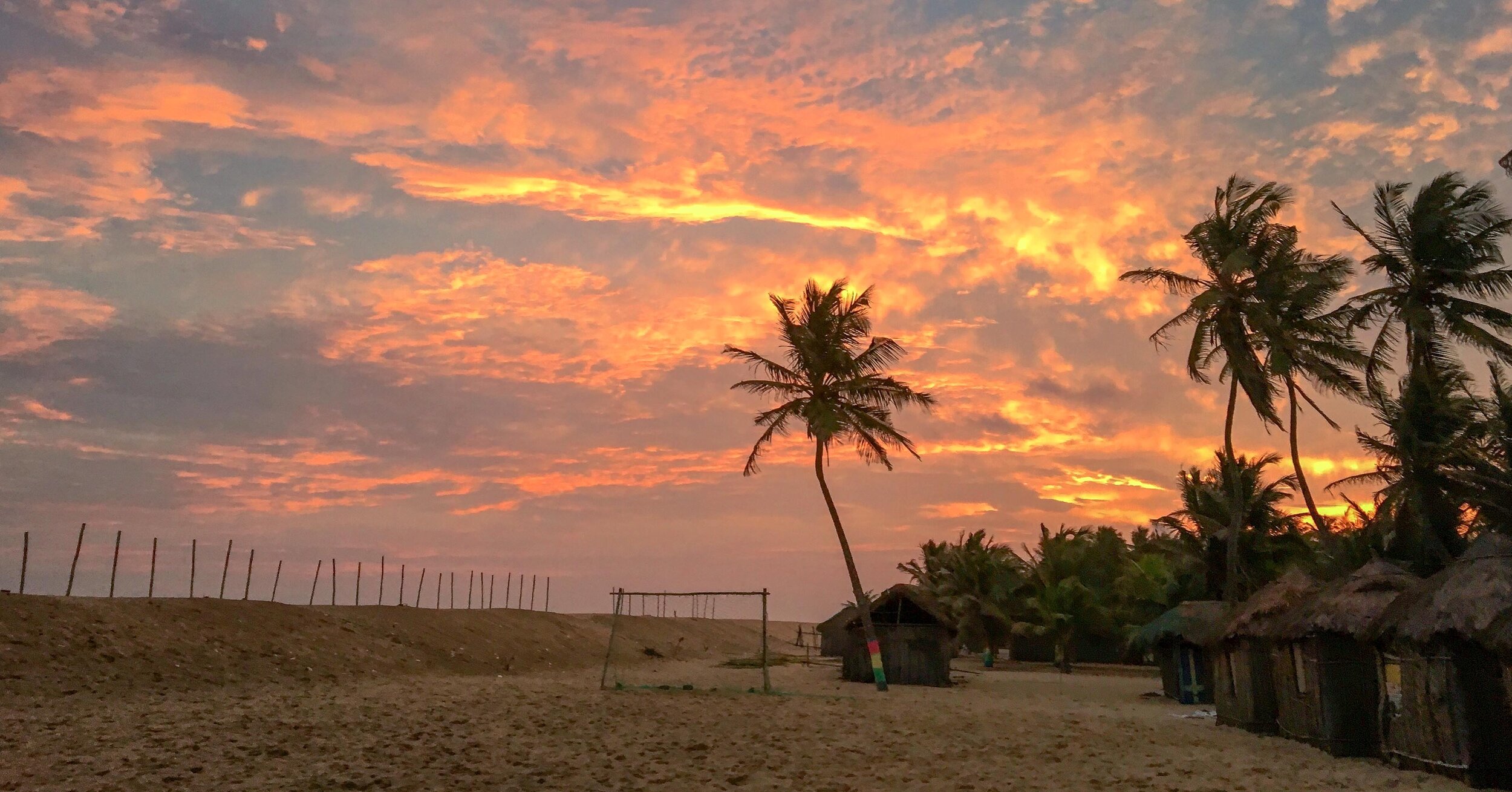
Sunset above the Maranatha Beach Camp
CAPE COAST CASTLE
A visit to Cape Coast Castle certainly isn’t an experience that will leave you feeling happy and fulfilled, but it’s an important place to visit firsthand and will shed a heart-wrenching light on all that the Ghanaian people have been through.
This particular castle is just one of forty slave forts that were built along the Gold Coast of West Africa by European traders and, since being acquired by the Ghana Museums and Monuments Board, is widely touted as one the most restored and best maintained. It’s possible to visit Fort James back in Accra, but the prison is held under lock and key by the locals and is a far less informative experience.
At Cape Coast Castle, there is an eye-opening museum and guests have the chance to take a somber tour around the grounds. Step inside the damp dungeons underground that once housed up to 1,000 males and 500 females in separate rooms and feel a shiver down your spine as the tour guide slowly closes the door and total darkness descends upon the room. It’s an out-of-body-experience I’ll never soon forget.
As if stepping foot inside the dungeons isn’t heavy enough, the tour culminates by leading visitors through the “Door of No Return.” The exact hole in the fort’s exterior in which slaves once marched through before boarding ships bound for the New World. For the estimated 15% of the 12 million slaves thought to have died at sea, this door not only embodies their final steps on their homeland but also on this Earth.
It’s an emotional experience to be a part of, but I promise that you will have a much deeper connection to the people and culture of Ghana. It’s important to confront the terrible past to truly understand how far things have come. Some of the most positive and resilient people I’ve ever met have been during my travels through this beautiful West African nation.
Inside Cape Coast Castle, looking towards the path that leads to the “Door of No Return”
Associated Fees with Cape Coast Castle:
40 GHC for adult foreigners which includes entry into the museum and a guided tour
Cape Coast Castle’s Hours of Operation:
Open daily from 9 am-5 pm
Getting to Cape Coast Castle:
Take a local tro-tro to Cape Coast before flagging down a taxi to drive the rest of the way. Expect a 3-4 hour trip if using local transportation
Hire a private car or taxi for the day to make the 127km trip from Accra

Relics of the former life of Cape Coast Castle are now on display for visitors
Wherever you go in Ghana and whatever you do, just remember that there is so much more to the country than what Accra has to offer! Travel farther, expand your mind, and experience something new.
Have you been to Ghana before? What were some of your favorite parts? Let me know in the comments below!
Find this post helpful? Pin it and save it for later!


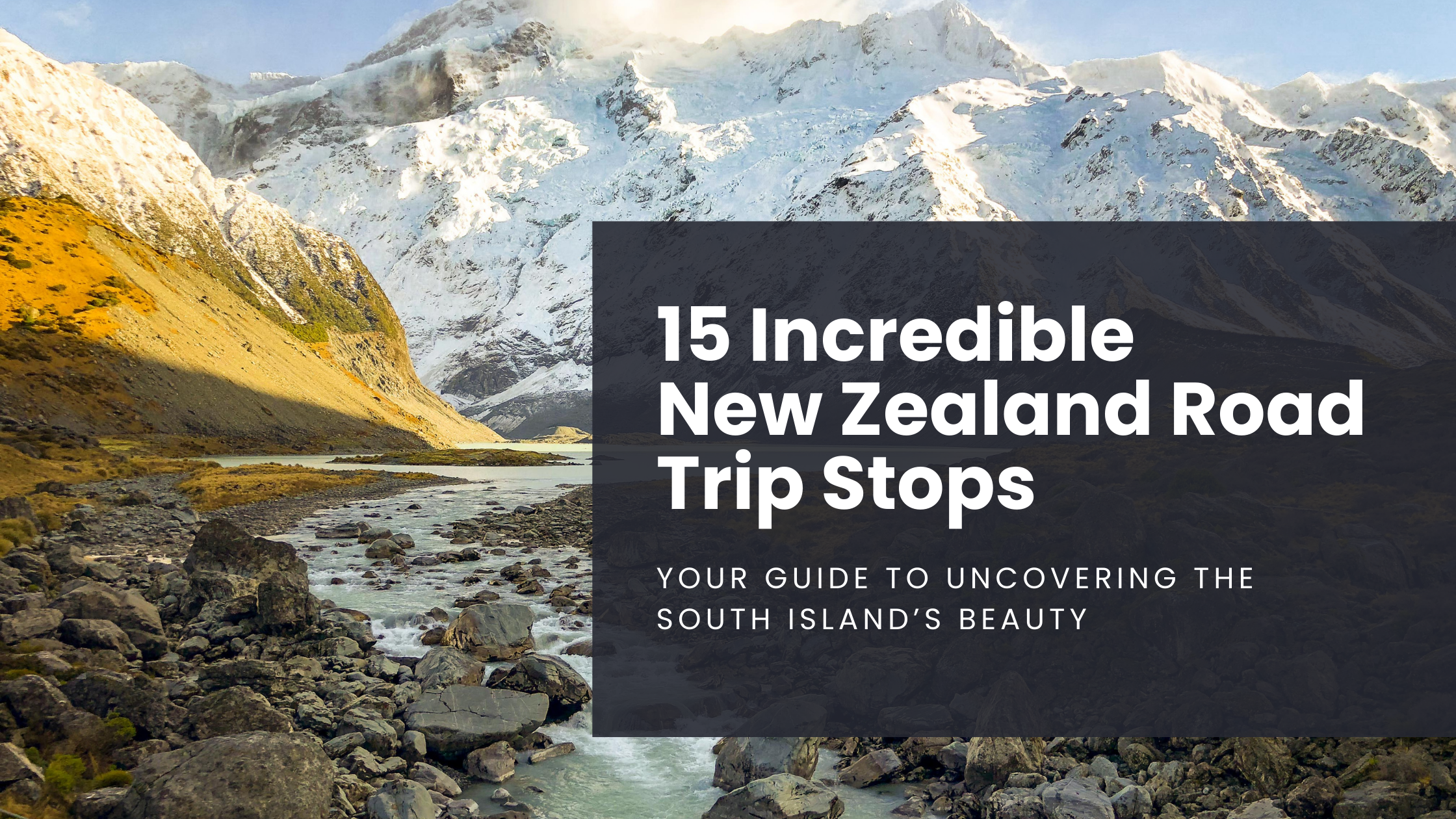
15 Incredible New Zealand Road Trip Stops: Your guide to uncovering the South Island's beauty
From Queenstown to the Milford Sound, New Zealand has plenty of natural beauty to offer, but what should you make time for during your trip? Here’s your guide to discovering 15 of the best road trip stops around the south island… you won’t be disappointed!
Please note: This post has been updated as of December 2023
New Zealand might seem like a blip on the map, but it is far more expansive than it appears.
The diversity of landscapes is unparalleled to anything I’ve ever encountered and with so much to offer, it can be overwhelming when attempting to narrow down what to see and where to go.
That’s certainly how I felt when my girlfriend and I planned a New Zealand road trip of our own last year.
So, I thought I’d throw together a short guide to unlocking the immense beauty that the south island holds. Here are 15 of the best road trip stops in New Zealand!
1. QUEENSTOWN
An adrenaline junkie’s heaven, Queenstown is situated on the shores of Lake Wakatipu and sits in the shadows of the famed Remarkable mountain range.
The raw beauty alone makes this stop worthwhile, but there’s plenty to do beyond staring at the surrounding mountainscape.
Strap yourself to the world’s first bungee jump and plummet 43 meters off of the Kawarau Bridge. or ride the Queenstown Gondola up to Skyline, a collection of restaurants, shops, and the most scenic zip-lining experience you’re likely to ever have. It’s also a perfect spot to observe the spectacular sunrise!

View from Queenstown Skyline
2. MOERAKI BOULDERS
The Moeraki Boulders are most easily described as unusual spherical rocks that dot the shoreline of Koekohe Beach along the south island’s Otago Coast.
Although formed through erosion of the adjacent coastal cliffs, Maori legend states that the boulders are remains of calabashes and eel baskets that washed ashore after the Araiteuru, a legendary canoe, capsized nearby.
Located 30min south of Oamaru, it makes for an easy day trip. Just be sure to visit during low tide, otherwise, the boulders become submerged in the South Pacific Ocean as the beach vanishes under the incoming water!
3. SLOPE POINT
The Catlins continues to be the hidden gem of the south island and here is where you will find Slope Point, the southernmost tip of New Zealand.
Once you’ve finished this short, albeit windy, walk out to the signpost, you’ll be standing closer to Antarctica than the equator, a pretty surreal experience if I’m being honest.
It takes less than an hour, is family-friendly and makes for a quick excursion along your road trip through the southern corridor of the island… just remember to pack a windbreaker!

Walk to Slope Point
4. PUNAKAIKI PANCAKE ROCKS
Hidden along the west coast is Punakaiki, best known for a collection of pancake rocks and blowholes that jut out into the Tasman Sea.
To get up close and personal with these 30 million-year-old limestone formations, take the short walking track that’s located across the highway from the visitors center.
Punakaiki is also the gateway to Paparoa National Park, so there are plenty of other activities in the area such as horseback riding, hiking, glow worm cave explorations, and more!

Punakaiki Pancake Rocks
5. HOKITIKA GLOW WORM DELL
Punakaiki is a great place to visit for a guided tour of the famous glow worms, but if your luck hasn’t panned out, be sure to make a quick stop in Hokitika.
Located along the side of the highway, the Hokitika Glow Worm Dell requires a 2 minute, family-friendly walk that’s well worth the small effort. Once the sun goes down, the walls of the forest light up with these luminescent creatures!
The best part? It’s completely free!
6. OAMARU BLUE PENGUIN COLONY
New Zealand prides itself on natural beauty and diverse wildlife, and the seaside town of Oamaru is no different.
It’s here you will find the Blue Penguin Colony, complete with nesting habitats and a grandstand for visitors to watch as the penguins make their return home from a long day at sea.
A visit is certainly not the cheapest of things to do (NZD 43 for general admission to the evening show), but to witness these creatures in their natural habitat is truly something special!
7. AORAKI NATIONAL PARK
Rising to over 3,700 meters, Mt. Cook is New Zealand’s largest peak and can be reached by visiting the sprawling Aoraki National Park.
Although the Hooker Valley Track is by far the most popular and easily accessible (and also leads to a glacier-filled lake in the winter months), there are plenty of other hikes to try as well.
Need to get your altitude fix in? Change things up and hop on a flight with nearby Lake Tekapo Air Safaris to view the landscape from above. Not that I didn’t already appreciate all that New Zealand has to offer, but being able to witness the expanse from the sky was a profound experience that I’ll never forget!

Hooker Valley Trek in Aoraki National Park
8. LAKE TEKAPO
Located just under an hour from Aoraki National Park sits the town of Tekapo, on the shores of… you guessed it… Lake Tekapo.
This tiny community packs a punch as the turquoise waters competing for your attention with the views of the Southern Alps across the horizon.
Make sure to visit the Church of the Good Shepherd, a small stone sanctuary that looks out over the water or stay the night and stare in awe of the expansive starry sky, taking full advantage of Tekapo’s distinction as an International Dark Sky Reserve. It will blow your mind, I promise!

Lake Tekapo as seen from Mt. John Observatory
9. CHRISTCHURCH
If not arriving through Queenstown, Christchurch will likely be your point of entry.
Do yourself a favor and set aside time to explore the town before starting your road trip as there’s plenty to do and see!
Take a jaunt through the Christchurch Botanical Gardens (NZD 25) or enjoy the surrounding scenery as you have a bite to eat aboard the Tramway Restaurant.
10. KAIKOURA
The sleepy seaside town of Kaikoura is located at the base of the Kaikoura mountain range and along the coast of the South Pacific Ocean.
It’s best known for having its own resident sperm whale population, making it the ideal spot to get out on the water with a whale watching tour.
Not confident in your sea legs? That’s ok! Take a stroll along the Kaikoura Peninsula Walkway and spot the colony of fur seals that reside on the nearby rocks.
With the mountains, sea and an abundance of wildlife, this is a road trip stop you won’t want to miss!

Dolphins in Kaikoura, New Zealand
11. FIORDLAND NATIONAL PARK
Also known as Te Wahipounamu, or “the place of greenstone,” Fiordland National Park can be found in the southwestern corner of the island.
With over 500km of trails, this slice of mountainous paradise offers hikers the chance to explore some of the most dramatic landscapes in all of the world. It’s so stunning that the park itself was listed as a UNESCO World Heritage Site in 1990.
Three of New Zealand’s Great Walks can also be found here: the Milford Track, the Kepler Track, and the Routeburn.
Here’s the moral of the story: Don’t just cruise in and out to visit the Milford or Doubtful Sounds, make sure you take some time to experience all that it has to offer!

Fiordland National Park
12. LAKE OHAU
It’s certainly not as popular as nearby Lake Pukaki or Lake Tekapo, but that doesn’t mean you should pass it by!
This off-the-beaten-path location is the perfect stop for a mini hideaway and offers the chance to ski at the Ohau Snow Fields or ride a section of the Alps 2 Ocean Cycle Trail. Be sure to say hi to Mike and Louise, the longtime owners and operators of the Lake Ohau Lodge and a friendly bunch, to say the least.
The drive through the McKenzie High Country to reach this remote location is worth it in its own right as the trademark yellow and orange hues of the fields sit in the shadows of the Southern Alps. The raw beauty here is truly unrivaled.
13. ABEL TASMAN NATIONAL PARK
Rainforests, waterfalls, golden beaches, and the beautiful ocean. Do you need me to name more reasons as to why you should swing by Abel Tasman National Park during your road trip? Although it’s New Zealand’s smallest national park, there are plenty of adventures to be had.
Low on time but still want to get out and stretch the legs? Take the short walk through the lush forest, over the swinging bridges, and up to Wainui Falls.
The hike is suitable for the entire family and, depending on impromptu stops along the way, should take just over an hour to complete.
We didn’t have long here during our travels, but the waterfall-rich forests seemingly colliding with the ocean made me feel as though I had truly discovered paradise.
14. WANAKA
This lakefront town is full of shops, restaurants, and cafes along the main road, providing a healthy dose of social interaction!
Here is where you will find That Wanaka Tree. It is what it sounds like, a tree in Lake Wanaka, and is one of the most popular things to photograph around town.
Wanaka also serves as the perfect home base to hike up to Roys Peak for stunning views towards Mt. Aspiring National Park. As popular as the trail is, it’s not the easiest of workouts, so make sure to do your research and plan accordingly.
Visiting in the winter months? Make some turns at the Treble Cone or Cardrona ski areas!
Much like Queenstown, Wanaka certainly opens the door to a seemingly endless amount of adventures.

Skiing at Treble Cone
15. MILFORD SOUND
Widely touted as New Zealand’s most spectacular attraction, Milford Sound is truly a sight to behold.
Hop on a cruise and get up close and personal with hundreds of waterfalls as they cascade down from the peaks above, or book a kayaking tour for a more serene experience.
We were lucky in that our visit coincided with a recent rainstorm that filled the waterfalls to max capacity and left a layer of clouds that slowly glided between the fiords.
It’s easy to hop on a fully-planned tour from nearby Queenstown, so there’s no reason to not visit this remote part of the country!

Milford Sound
Although I highly recommend these 15 stops based on my adventures, it’s important to note that New Zealand is full of less-traveled nooks and crannies, so be sure to improvise a bit on your road trip. After all, you never know what’s right around the corner until you check it out yourself.
Cheers to a great adventure ahead! Have you traveled through New Zealand’s south island before? What are some spots I should visit the next time I go? Let me know in the comments below and as always, stay safe & happy travels!
Pin this post!