
Aburi Botanical Gardens in Ghana: The Perfect Day Trip from Accra (2026 Guide)
It wasn’t until I began living here full-time that I slowed down enough to appreciate what this country truly offers beyond the cities. One place that continues to stand out is the Aburi Botanical Gardens in Ghana, a peaceful escape tucked into the Akuapem Hills and easily one of the best day trips from Accra. If you’re looking to trade chaos for calm, this is where you’ll find it…
When I first arrived in Ghana back in 2010 on Semester at Sea, most of my time was spent in transit—moving between bus stations and project sites.
It wasn’t until I began living here full-time that I slowed down enough to appreciate what this country truly offers. Although there are plenty of things to see and do in Accra, Ghana is so much more.
One place that continues to stand out is the Aburi Botanical Gardens, a peaceful escape tucked into the Akuapem Hills and easily one of the best day trips from Accra.
If you’re looking to trade chaos for calm, this is where you’ll find it. Here’s what to expect when visiting Ghana’s Aburi Botanical Gardens.
Aburi Botanical Gardens Quick Facts:
Location: Aburi, Eastern Region (1 hour from Accra)
Hours: 8:30am - 5pm (daily)
Entrance Fees: GHS 20-60 (see more below)
Best Time to Visit: Early morning before the crowds
History of the Aburi Botanical Gardens in Ghana
The history of the Aburi Botanical Gardens dates back to colonial times, specifically the late 19th century.
In 1875, British officials located the spot and built a sanatorium for recovering officers. The Akuapem Hills offer a peaceful environment with cool mountain air, providing the perfect combination to heal both mind and body.
It wasn’t until 1890 that Governor William Brandford-Griffith and his associate, Dr. John Farrell Easmon, officially converted the land into a botanical garden. At first, it played an important part in shaping Ghana’s agriculture by serving as a place of experimentation for the viability of crops, but as the early 20th century came to be, the site opened to the public on a recreational basis.
To this day, it remains an important partner in plant conservation and education, while serving as one of the most peaceful green spaces in Ghana.
Ready to visit the Aburi Botanical Gardens? Here’s everything you need to know.
Where are the Aburi Botanical Gardens Located? (Accra Distance & Map)
Nestled in the Akuapem Hills, the Aburi Botanical Gardens lies in the Eastern Region of Ghana and high above Accra.
Here’s a breakdown of the best options to reach the gardens:
Uber/Bolt: Costing ~GHS 150 one-way from Central Accra
Taxi: Use reliable contacts and negotiate down for the best rate
Tro-tro: Pick a car at Madina Market at head towards Aburi, costing between GHS 5 and 10 (ask to be dropped near the gardens)
Rideshares are less accessible once at the gardens for a return trip, so it’s important to arrange both ways. Hiring a car for half a day also allows you to visit other spots in the area (more below).
Getting to Aburi from Accra requires a steep climb up the mountainside, with plenty of tight turns. Driving in Ghana isn’t known for its calm energy, so if you tend to get motion sick, either ask the driver to be a bit safer or be sure to bring your medication. You won’t want to miss the stunning views along the way!
Check out these curated tours to make it a full day trip from Accra to Aburi:
Entrance Fees & Opening Hours of the Aburi Botanical Gardens
As of 2026, the price breakdown is as follows (cash only):
Ghanaian Adults: GHS 20
Ghanaian Students: GHS 3
Non-Ghanaian Adults: GHS 60 (~USD 5-6)
Non-Ghanaian Students/Volunteers: GHS 40 (just under USD 4)
In general, the Aburi Botanical Gardens are open to the public from 8:30am-5pm, 7 days a week.
With that said, morning hours tend to be cooler weather and fewer crowds, even more so during weekends when picnics, music, and activities tend to fill the grassy areas.
If you’re like me and prefer to decompress and bathe in the surrounding nature, prioritize an early visit from Accra.
In general, a self-planned trip to Aburi Botanical Gardens can cost between USD 10-40 (from Accra), depending on transportation, number of people traveling, snack and drink purchases onsite, etc.
What to Expect at Aburi Botanical Gardens (Highlights, Experience, and More)
If you’re looking for an escape from the intense heat and chaos of Accra, then a visit to Aburi is a must-add to your itinerary.
The Botanical Gardens provide a peaceful experience with far less crowds than other tourist locations and is popular with both expats and locals alike. On weekends, it’s not uncommon to see families making the winding drive up the hillside from the city below to enjoy the cool breeze and sit in the grass.
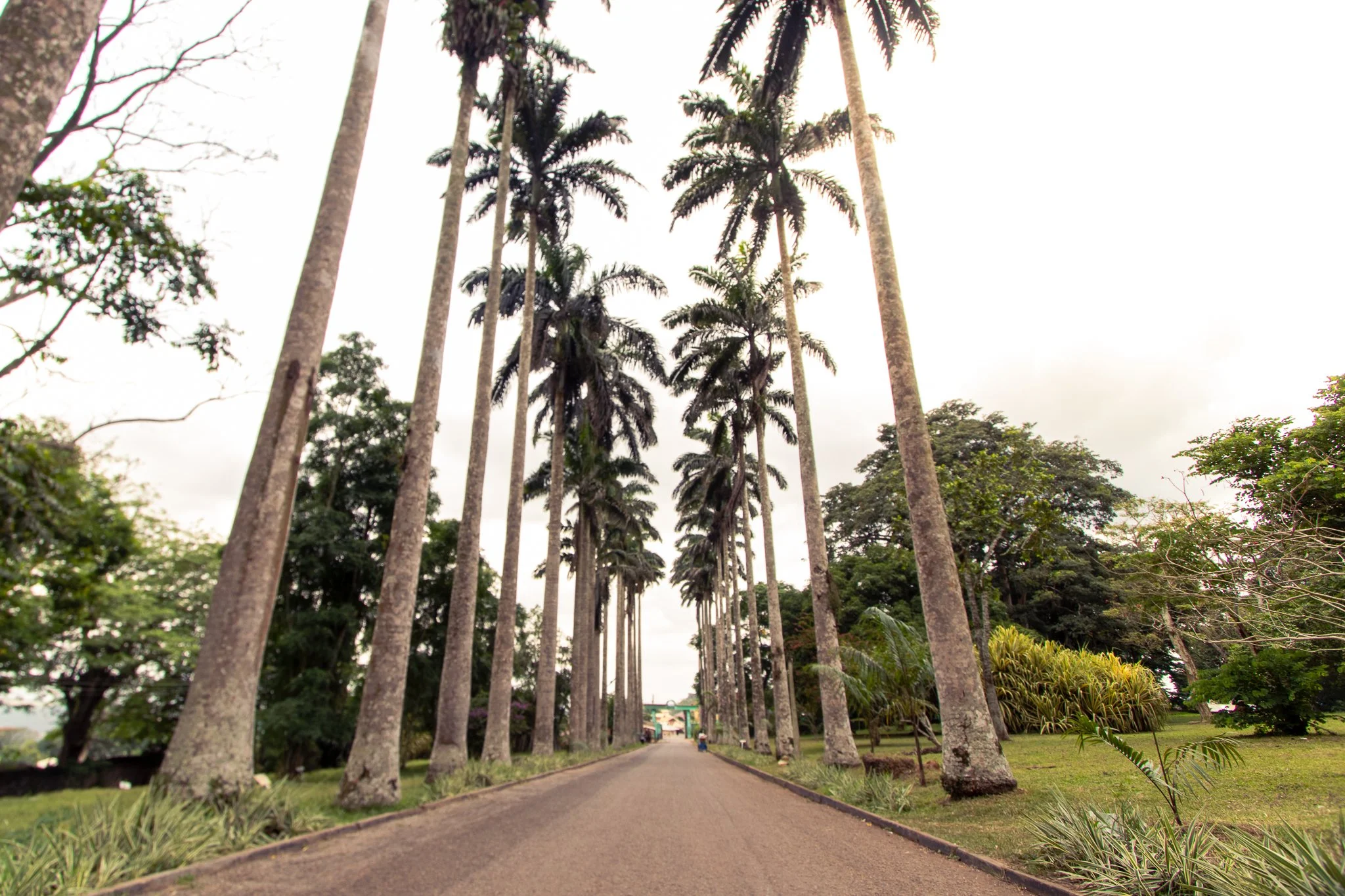
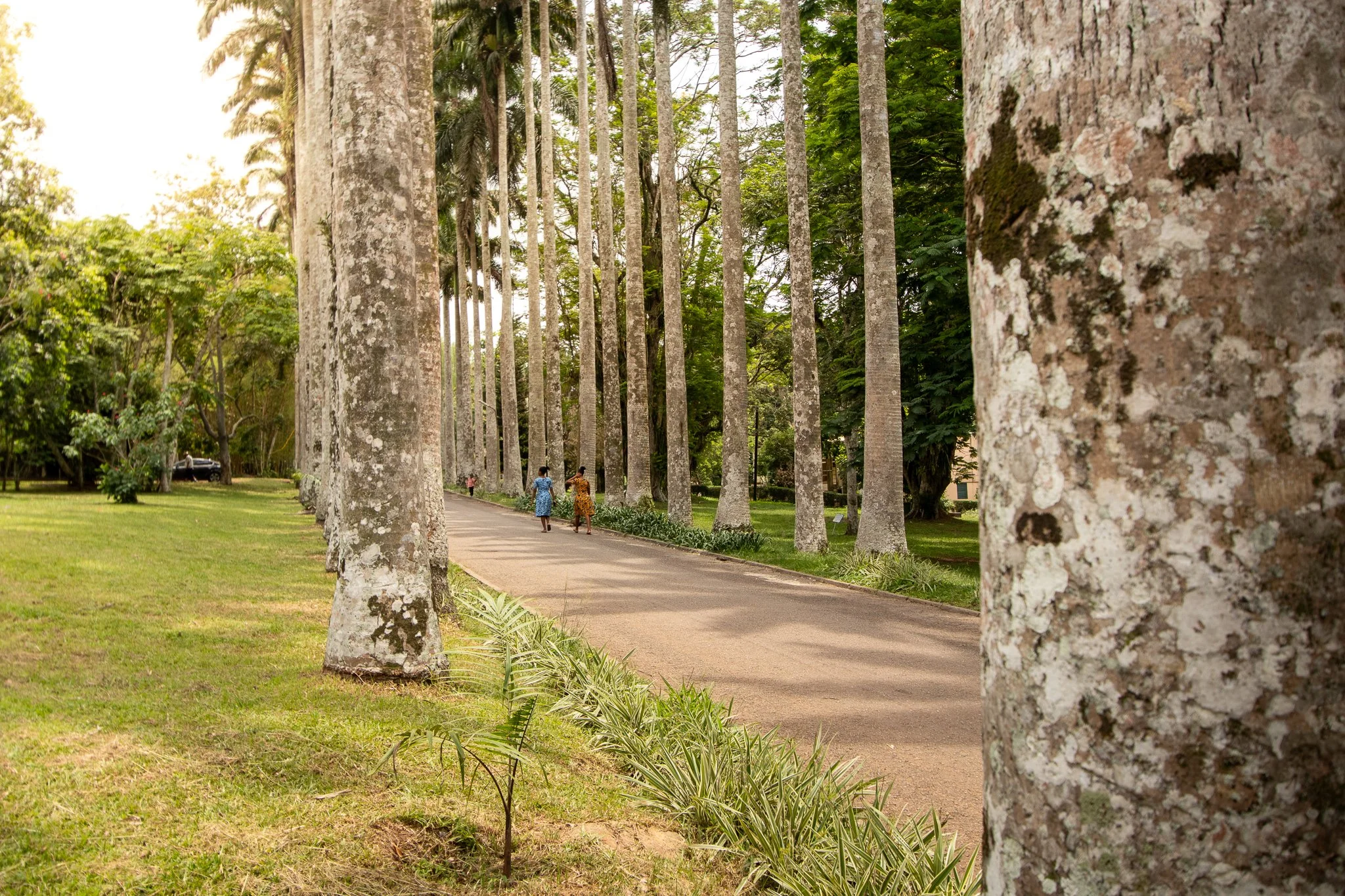
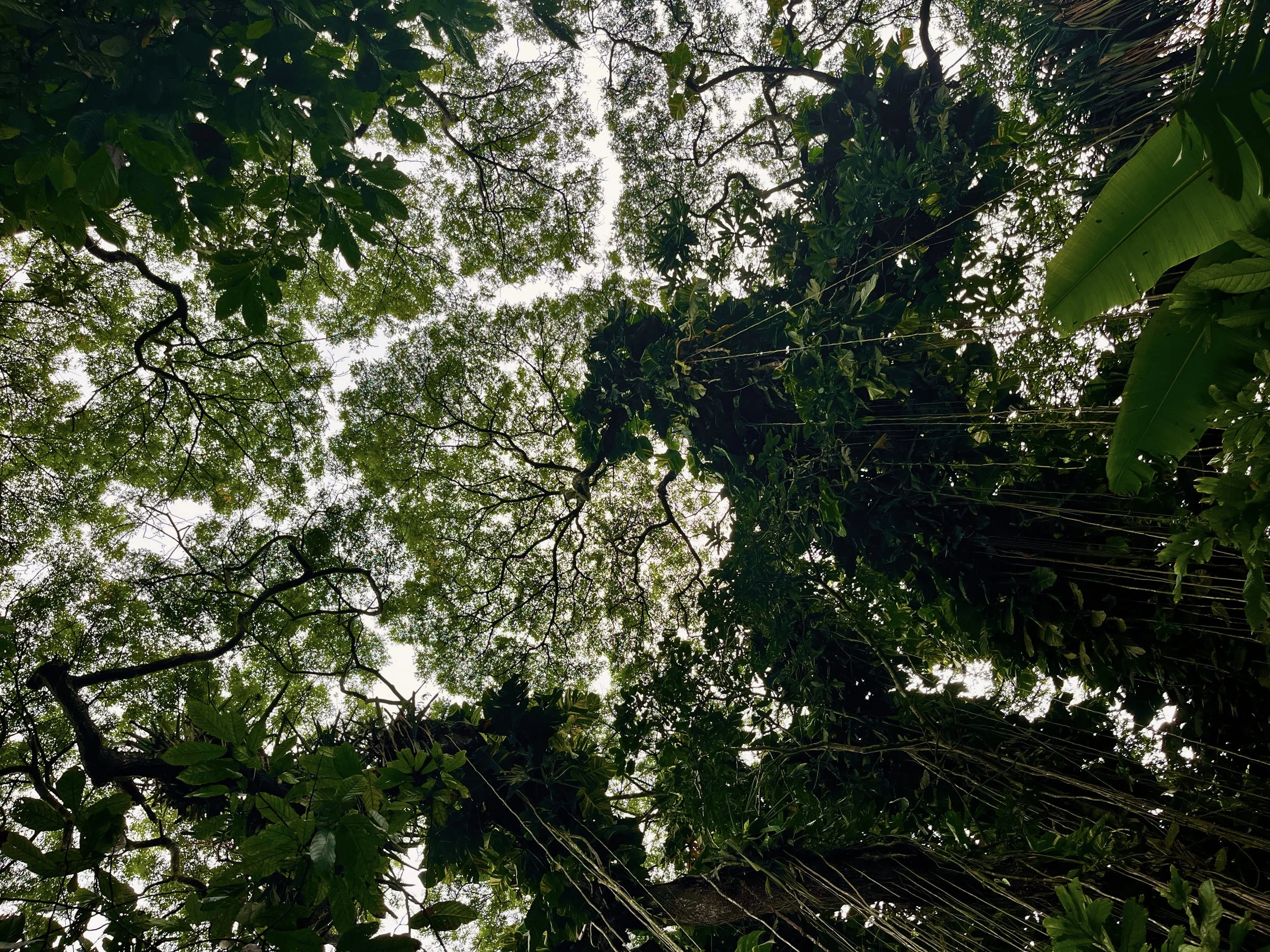
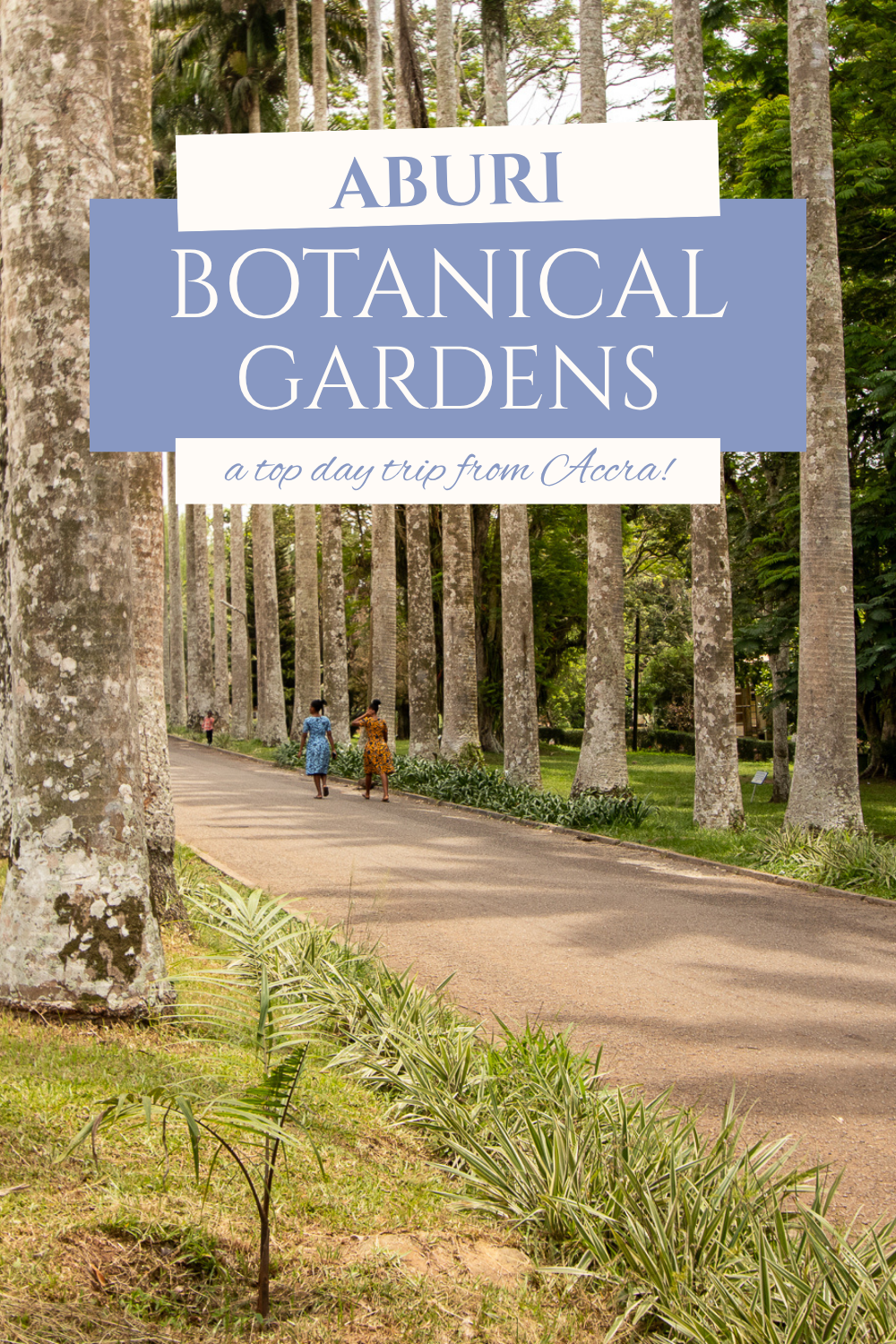
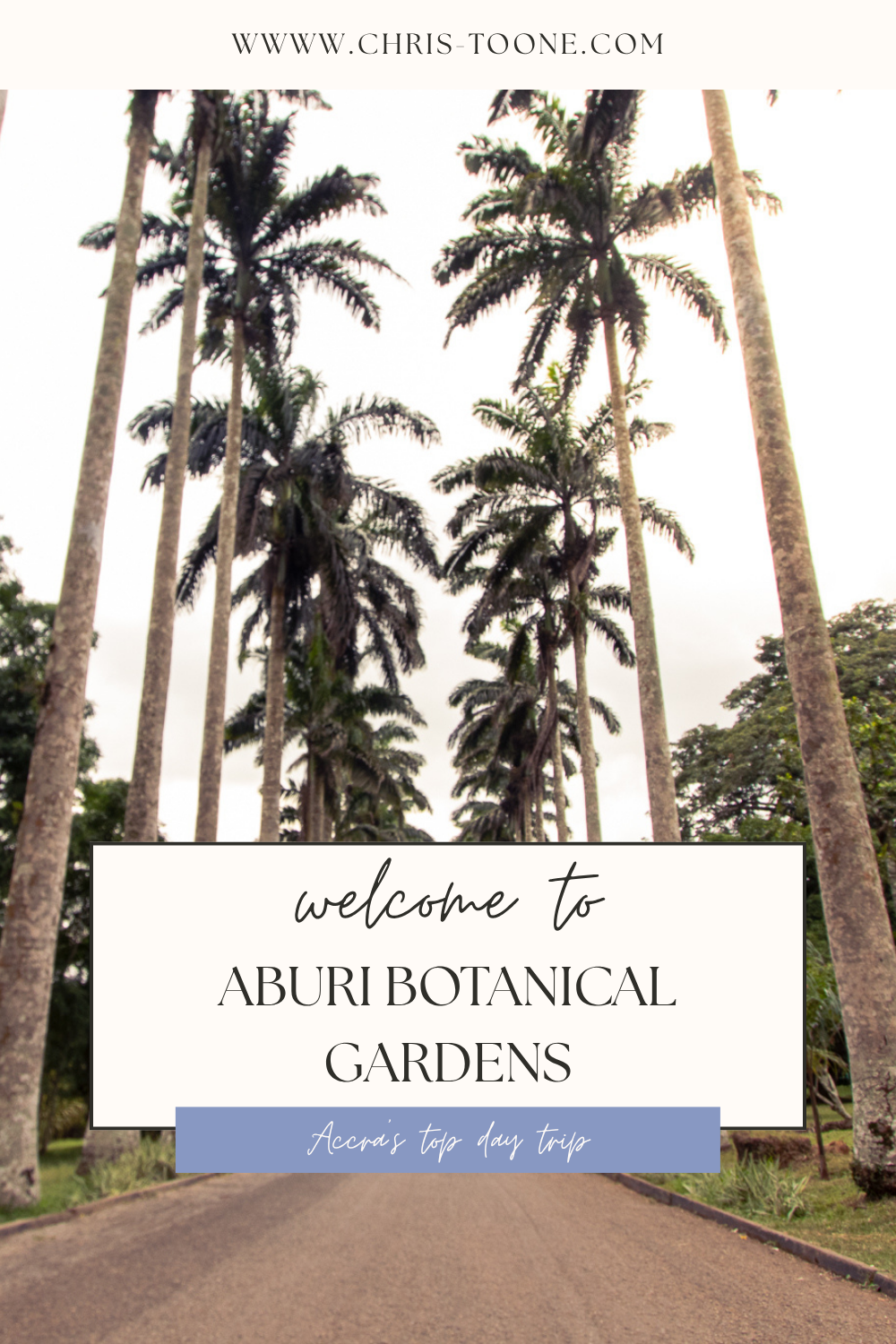
As you enter the park, you’ll immediately be mesmerized by the leading lines of the Royal Palm Tree Avenue. From here, the park is the perfect place to wander as paths are unmarked and the nature inviting for all levels of explorers.
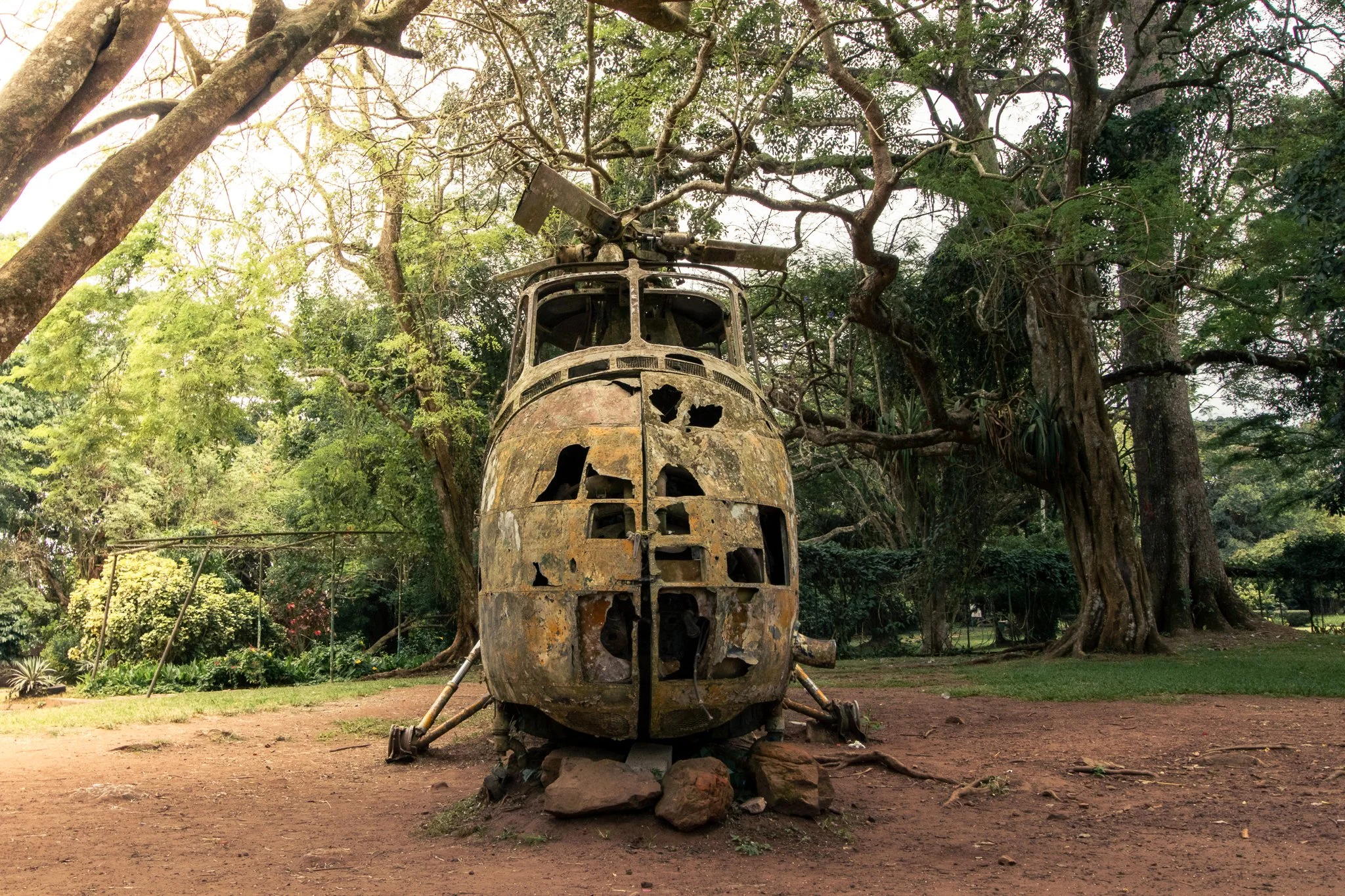
Pay close attention, and you’ll spot the first-ever cacao plant to penetrate Ghana’s soil, a cash crop that has brought the country to the second-world-leading producer, and an old rusted military helicopter provides the perfect photo opportunity.
Where to Eat Near Aburi Botanical Gardens
Although not many options inside the park, several restaurants near the Aburi Botanical Gardens provide quality meals. A few options include:
Hillburi ($$): A more middle-of-the-road option with stunning views of Accra and the surrounding mountains. The perfect place for an afternoon cup of coffee to pause and watch the world go by.
Peduase Chophouse ($): A staple of the community with everything from traditional dishes to delicious shawarma and even breakfast options. This is the local experience done right, and on a budget.
Peduase Valley Resort ($$$): Tucked deeper into the lush mountains, Peduase Valley Resort is an upscale option that has multiple restaurants to choose from.
Personally, I always recommend Hillburi to visitors. Quality food, peaceful ambiance, and friendly staff. Consistency in all of the above is often a challenge in Ghana, but I’ve never walked away disappointed from a meal there.
Pro Tip: Try the Obama Burger, still on the menu as a nod to Former United States President Barack Obama from when he visited during his time in office back in 2009.
If you’re planning more Ghana travel, don’t miss my guides to:
Things to Do Near Aburi Botanical Gardens
Although the Botanical Gardens are the main attraction in Aburi, there’s still plenty of experiences nearby, including:
Adom Waterfalls: Located in Obosomase, 5 minutes from the gardens
Obaka/Oboadaka Waterfalls: Approximately a 20-minute drive from the gardens
Aburi Craft Village: Aburi is known for its wood-working prowess. Here you’ll find everything from wooden utensils to tables and jewelry. It’s calmer and less frequented than the Accra Arts Center, so you’ll experience less hawking and be able to move about at a slower pace on your own terms.
We-Ape Adventure Park: A 15-minute drive from the gardens, We-Ape is an adventurer’s paradise. Situated on 3.5 acres of rainforest land, the facility offers two zipline adventure courses, one suitable for family members of all ages and a more advanced course for those looking for a bit more adrenaline.
Travel Tips When Visiting Aburi Botanical Gardens
When visiting Aburi, it’s important to come prepared, as amenities are few and far between once you leave Accra behind. Here are my top packing tips when visiting the Botanical Gardens and the surrounding Aburi area:
Bring Cash: ATMS are not easily accessible, and the gardens are cash-only. Cellular network is often poor and unstable, so even if there is an option to pay by card, it’s not always possible.
Wear Comfortable Shoes: Visiting the Aburi Botanical Gardens is the perfect way to get your steps in and immerse yourself in nature. Bring the right footwear and come prepared for any add-on excursion you may wish to check out.
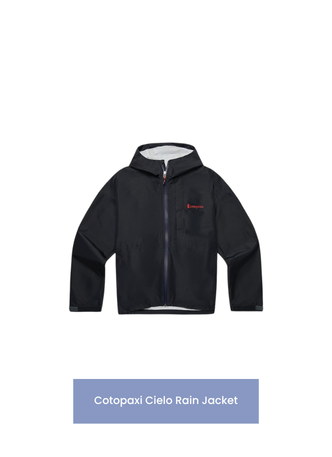
A Trustworthy Rain Jacket: It’s not uncommon, especially in rainy months, for storms to move through the mountains several times throughout the day, so it’s important to come prepared. I never stray too far away from my house in Ghana without packing my Cotopaxi Cielo Rain Jacket.
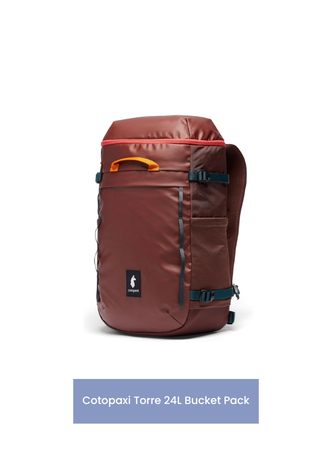
Daypack: A half-day trip to Aburi can easily turn into a full day with nearby attractions, so be sure to pack a bag with enough space to be prepared for any adventure that comes your way. The Cotopaxi CADA Dia 24L is the perfect size for everything I need, including camera gear.
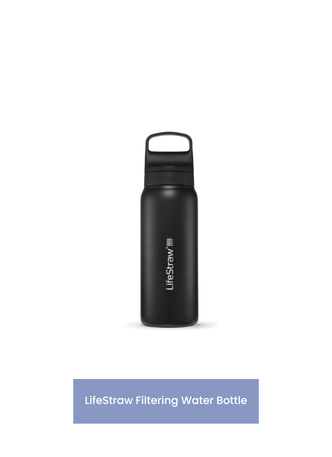
Water Bottle: Drink vendors are available within the park grounds. Ghana still relies heavily on plastics (including, at times, plastic satchels for drinking water). Consider a filtering water bottle to ensure you’re getting more hydration and fewer toxins.
A Good Book or Journal: Whether relaxing into nature with a book or writing in a journal, the botanical gardens are the perfect place to reflect.

Is it Worth Visiting the Aburi Botanical Gardens?
Overall, yes, as one of the best nature spots near Accra, visiting Aburi Botanical Gardens in Ghana is a must-do for travelers looking to experience a quieter, greener side of the country.
The grounds are ideal for both nature lovers and photographers, and offer a more relaxing experience to decompress, a stark contrast from the hustle and bustle of city life.
FAQs About Aburi Botanical Gardens
-
Yes—Aburi Botanical Gardens is one of the best day trips from Accra. It offers a peaceful escape from the city, cooler temperatures in the Akuapem Hills, and plenty of space to walk, relax, or take photos.
-
Aburi Botanical Gardens is located about 1 hour from Accra, depending on traffic. The drive includes a scenic climb into the Akuapem Hills, with winding roads and great views along the way.
-
The gardens are open daily from 8:30 AM to 5:00 PM. Visiting early in the morning is recommended for cooler weather and fewer crowds.
-
Yes, the gardens are easy to explore on your own. While local guides may be available at the entrance, they are optional, and most visitors choose to wander independently.
-
You can reach Aburi by:
Uber/Bolt or taxi (most convenient)
Private driver (best for flexibility)
Tro-tro + taxi (budget option)
It’s recommended to arrange your return trip in advance, as transport options at the gardens can be limited.
I’m fortunate to live along the banks of the Volta River, but anytime I transit to Accra, I’ll always try to find time to pass through Aburi and spend an hour enjoying the fresh mountain air in the gardens.
It’s the perfect way to spend a slow afternoon; you won’t regret it.
Have you ever been to the Aburi Botanical Gardens before? Anything to add? Be sure to like, comment, and share and, as always, stay safe and happy travels!
Sharing is caring! Pin this post for later.


Staying at the Maranatha Beach Camp: Where the river meets the sea
Traveling through Ghana? Don't miss out on staying at the Marantha Beach Camp. Complete with thatched huts and a surplus of coconuts along a blissful stretch of sand, you'll fall asleep to the sound of the crashing waves after a day full of relaxation or adventure - whatever you choose!

Please note: This post is updated as of December 2023
Have you ever found yourself scrolling through Instagram and stumbling upon someone else’s picture-perfect beach vacation, only to look up from your phone and realize it’s time to get back to work?
Me, too.
Luckily for all of the budget travelers in the world, there’s a magical place just outside of Accra, Ghana where the Volta River flows out to the Gulf of Guinea and palm trees provide shade to the tiny thatched huts that dot the coastline.
Welcome to the Maranatha Beach Camp where, quite literally, the river meets the sea.
THE HISTORY
Maranatha Beach Camp was founded by Winfred Dzinado back in 2005 and started as a one-man operation with only a couple of huts on a strip of sand in Ada-Foah, Ghana. Since that time, it has expanded to 30 available bungalows.
His motivation stemmed from a perceived need for the education of children within his community. Families had been neglecting to send their children to school because of the distance or required financial commitment, both common problems throughout the country.
As Winfred continued his business, he began using the profits to fund affordable and convenient education, starting with the construction of one small classroom and thus establishing the Maranatha Community School.
Today, the school now holds classes for children from 4-15 years old and is partially Government supported while the beach camp’s profits continue to pay for building upkeep and a few teacher salaries.
Needless to say, you can feel good about where your money is going!

Maranatha Beach Camp as seen from the water
BOOKING
The beauty of the Maranatha Beach Camp is that you won’t find it on any booking site. Outside of reviews on TripAdvisor, there’s really not a whole lot of information out there, which only adds to the allure of this isolated oasis.
Don’t worry, I can see your confusion. If there’s no information available, then how does one book accommodation?
Send an e-mail request. Once a response is received, you’re good to go! That’s all it takes.
There is no online payment processing and no deposits necessary. Simply show up and pay on site in cash.
GETTING THERE
The first step in reaching the beach camp is to find your way to the small fishing town of Ada-Foah. This can be accomplished by either private taxi from Accra or using the public transportation system, commonly referred to as Tro-Tros (find the van heading to Ada-Foah from the Tudu Station in Accra).
After the 2 hour drive east from the capital, you can either hire a motorbike to Maranatha and walk the rest of the way through the town (the walk is across the sand, so it’s not ideal if you’re dragging large suitcases) or you can arrange to be picked up by boat (additional charge per person).
If opting for the latter, it’s best to arrange it through the beach camp prior to arrival in order to save money. Other people will offer their boat services once you arrive in Ada-Foah, but these will typically be a bit more expensive.

Arriving via fishing boat
THE ACCOMMODATION
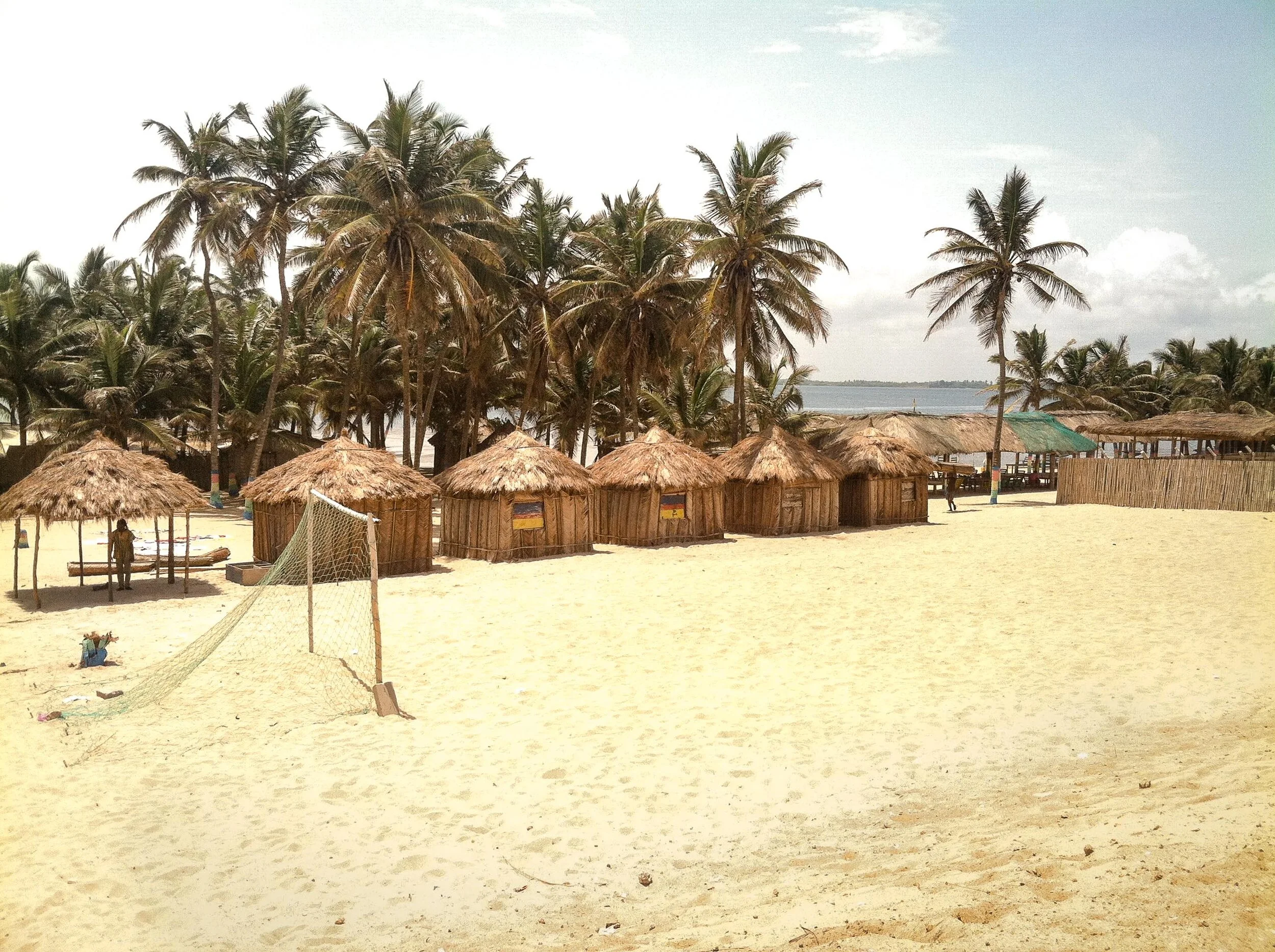
It’s important to keep things in perspective when talking about what’s available. Maranatha Beach Camp is off the beaten track, comprised of thatched huts on the beach, and is relatively isolated meaning that electricity and running water are scarce.
Does that mean you should stay away? Absolutely not. It’s just important that you know what to expect before you show up with a mental image of a pristine beachfront cabana.
With that being said, I was pleasantly surprised with the overall quality and cleanliness. It’s clear that Winfred and his staff care deeply about what has been built and it shows in how they maintain and continuously improve their facilities!
Rooms (prices as of 2023):
It’s almost inconceivable how affordable room rates are, making it a great place to visit for any budget traveler. Here’s the gist:
Sand Floor Rooms: 60-100 GHC per night
Turtle Lodge Rooms (enclosed with solid floor): 100-200 GHC per night
VIP room with washroom: 250 GHC per night
Keep in mind that each hut is mere feet away from the water’s edge. There’s no such thing as a “good or bad location” here.
Facilities:
Communal vault toilets and bucket showers are available and cleaned daily. It’s not luxury by any means, but trust me when I say that guests have everything they need.
A small soccer pitch and volleyball court have been drawn out in the sand and there are plenty of games to play and hammocks to lounge in throughout the day.
Food and drinks are available by cash purchases at the restaurant/bar on site. Everything is sourced locally and is very affordable, so you won’t break the bank by eating 3 meals a day.

Beach huts dot the beach along the soccer pitch
WHAT TO EXPECT
Maranatha Beach Camp isn’t just a hangout for foreigners, but it’s a local hotspot as well! You’re just as likely to meet fellow travelers from around the world as you are to converse with people from the surrounding communities, especially on the weekends.
Upon arrival, you'll be offered the chance to tour the Maranatha Community School. Take it. It’s a great way to learn about the history of the operation and will shed new light on just what the beach camp means to the community.
The daytime atmosphere is laid back and friendly. Lounge in a hammock as local vendors pass through with fresh coconuts, start a game of volleyball, swim in the Volta River (much calmer than the Gulf of Guinea) or, if visiting on the weekend, dance the night away around the infamous beach bonfire.
It’s also possible to organize a boat tour around the Volta Estuary to places like Rum Island, where locally sourced sugar cane is turned into this satisfying spirit. The Volta River is an important part of Eastern Ghana, and spending some time cruising around is a great way to gain insight as to just how vital of a role it plays in sustaining life.
As the day ends, grab a cold beer while sunset illuminates the sky. One of my favorite things to do in the evenings is simply to sit on the beach and watch the twinkling lights of passing ships as they move across the horizon. My body may relax, but my mind never stops wandering!
Looking for more trips in and around Accra? Check out these can’t miss posts:
IMPORTANT TIPS
Charge electronics ahead of time: With limited electricity, it’s important to make sure larger electronics you plan on using have full juice ahead of time (i.e. a camera). A portable power bank is a great item to pack for smaller gadgets!
Overestimate cash needed: Maranatha Beach Camp is a cash-only establishment. Normally this wouldn’t mean much except there are no ATMs available in the area. It’s important to bring enough money for accommodation, transportation, meal costs, extra boat tours, drinks at the bar, etc.
During one of my visits, I was forced to ask the tro-tro to stop at an ATM on the way back to Accra because I had no more cash in my pockets and wouldn’t have been able to pay for the ride!
Bring supplemental snacks: This is especially important if you are a vegan. Although food is fresh and available at the restaurant, it can be difficult to find something to fit that specific dietary need. Make sure to shop ahead of time as, like ATMs, there are no supermarkets to be found.
Plan on buying goods: Whether a bottle of local sugar cane rum or handmade jewelry from a vendor on the beach, plan on at least having the opportunity to purchase some sort of souvenir and factor that into your cash withdrawal.
WORTH IT?
Absolutely.
The friendly atmosphere is second to none and it’s a great opportunity to engage with the local community.
Most visitors spend 2-3 days here and leave feeling rested and relaxed, but if you’re in search of a longer escape then it may be worthwhile to learn about the community’s organized volunteer programs.
Either way, next time you find yourself in Ghana, make the effort to visit the Maranatha Beach Camp!
It’s certainly not the easiest of places to reach, but the most beautiful ones never are and I won’t soon forget this little slice of paradise.
So, are you ready to claim your very own beach bungalow and unwind for a few nights? I know I am!
Feel free to leave any questions in the comments below and I’ll do my best to answer them.
Until next time, stay safe & happy travels!
Enjoy what you read? Pin this post!



After three years living in Ghana, these are ten of the most unforgettable travel experiences across Africa that changed how I see the world…